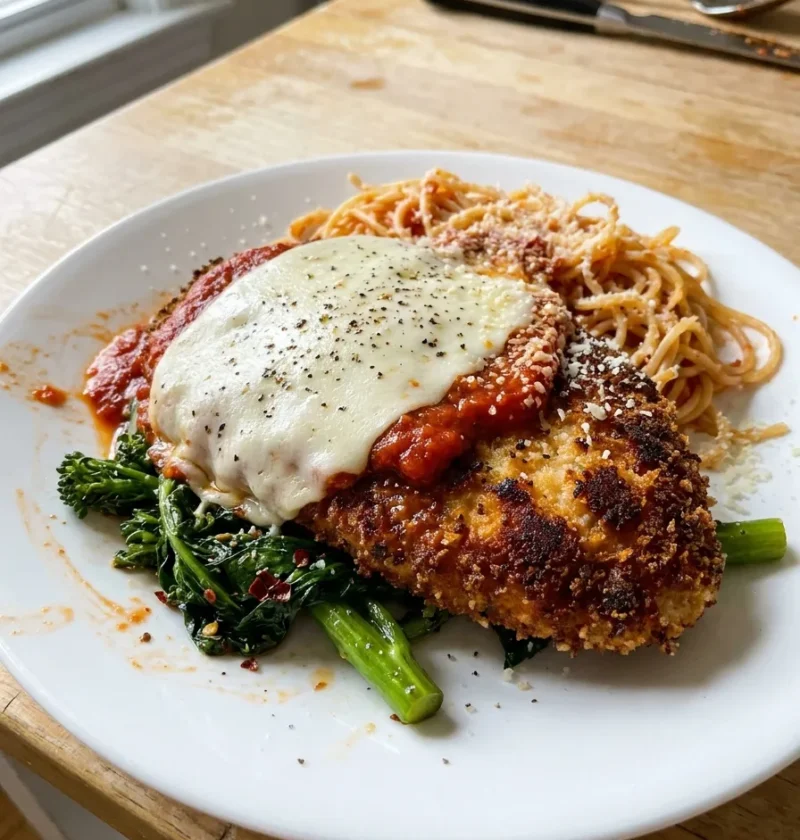
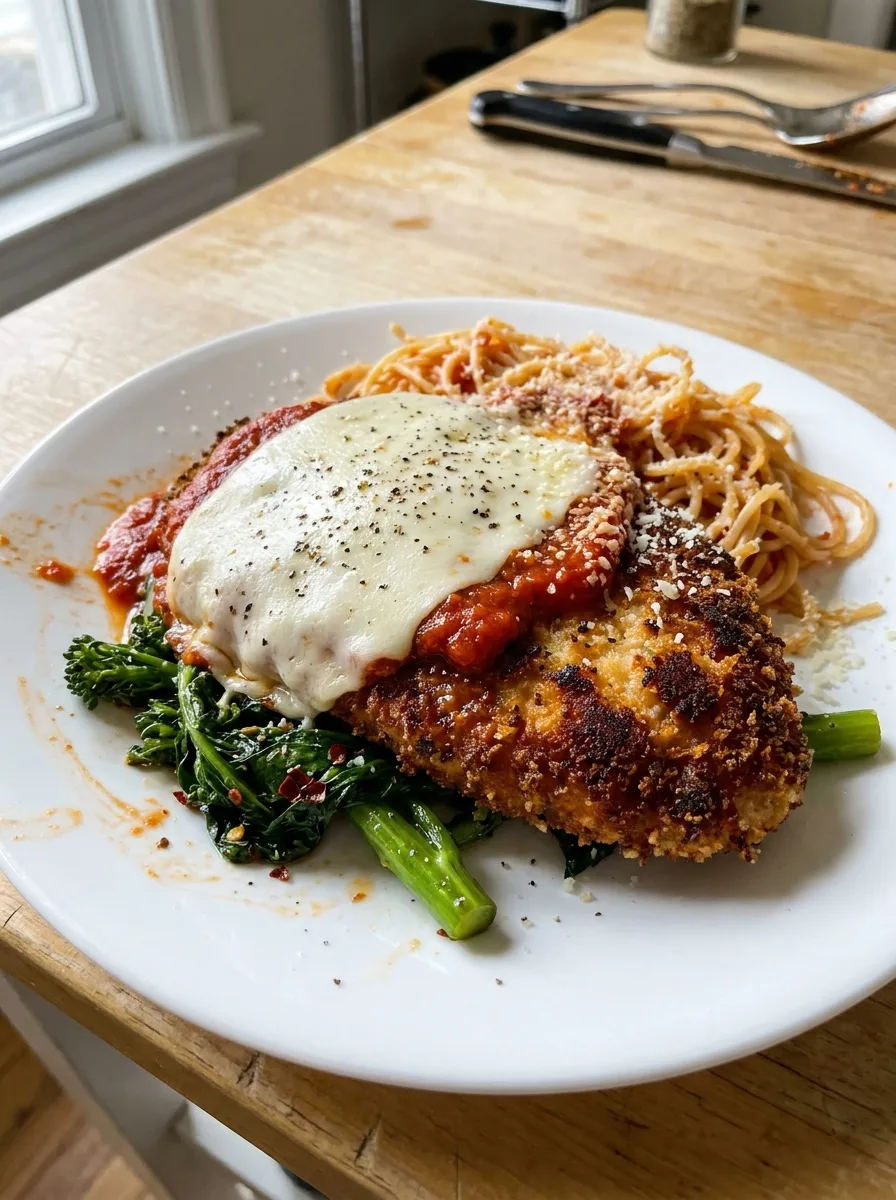
Gordon Ramsay’s chicken parmesan is a butterflied breast pounded thin, coated in Parmesan breadcrumbs with smoked paprika, and shallow-fried in one tablespoon of oil with butter tucked underneath for colour. Topped with marinara and fresh mozzarella, then finished in the oven. Ready in about 20 minutes.
This recipe comes from The F Word US (Season 1, Episode 3) where Ramsay calls it “one of the most exciting chicken dishes anywhere on the planet.” He doesn’t publish this in any cookbook, so the technique is from the video and the measurements are adapted from what he shows on screen.
The step nobody else copies is rolling the breaded chicken between parchment paper a second time before cooking. That presses the breadcrumbs into the meat so they don’t fall off in the pan. He says to do this “literally 10 minutes before you cook it and those breadcrumbs stay on there.”
Cooked this recipe? Send a photo or tell me what you changed at fans@gordonramsayrecipes.uk and I’ll share your experience live on this page.
Gordon Ramsay Chicken Parmesan
Course: DinnerCuisine: Italian-AmericanDifficulty: Medium2
servings15
minutes10
minutes480
kcal25 minutes
Shallow-fried chicken parmesan from Ramsay’s F Word, not deep fried. Butterflied breast rolled thin, coated in Parmesan and smoked paprika breadcrumbs, pan-fried with butter for a golden crust. Adapted from the video since Ramsay demos by eye without published measurements. About 480 kcal per serving.
Ingredients
- For the chicken:
2 large boneless, skinless chicken breasts, tenderloins removed
50g (1¾ oz) plain flour (all-purpose)
2 large eggs, beaten
100g (3½ oz) panko breadcrumbs
30g (1 oz) Parmesan, finely grated, plus extra to finish
½ tsp smoked paprika
Sea salt and freshly ground black pepper
1 tbsp rapeseed oil (canola oil) per breast
15g (1 tbsp) unsalted butter per breast
- For the topping:
4-5 tbsp marinara sauce
125g (4½ oz) fresh mozzarella, sliced
- To serve (optional):
200g (7 oz) spaghetti
Fresh basil and flat leaf parsley
1 bunch broccoli rabe (tenderstem broccoli)
Pinch of chilli flakes
Squeeze of lemon juice
Directions
- Butterfly and flatten: Remove the tenderloin from each breast. Slice horizontally through the middle, almost all the way through, and open like a book. Place between two sheets of baking parchment and roll flat with a rolling pin until evenly thin.
- Bread the chicken: Set up three shallow bowls. Bowl one: flour seasoned with salt and pepper. Bowl two: beaten eggs. Bowl three: panko mixed with the Parmesan and smoked paprika. Dust each breast in flour, shake off excess, dip in egg, then press firmly into the breadcrumb mix. Cover all exposed chicken.
- Roll again and rest: Place each breaded breast back between parchment and roll gently with the rolling pin to press the breadcrumbs into the meat. Leave to rest for 10 minutes before cooking.
- Shallow fry: Heat 1 tablespoon of rapeseed oil in a frying pan over a medium-high heat. Lay the chicken in and fry for 2½ minutes. Tuck small pieces of butter underneath the chicken, then flip. Cook for another 2½ minutes. Turn once only. Lift onto a baking tray.
- Top and melt: Spoon marinara sauce into the centre of each breast, leaving the edges exposed so they stay crispy. Lay sliced mozzarella on top and season with salt and pepper. Place under a hot grill or into a 200°C (400°F) oven until the cheese is melted and smooth.
- Serve: Finish with freshly grated aged Parmesan. Serve with spaghetti lightly stained with sauce and torn basil, and broccoli rabe sautéed with chilli flakes and lemon juice.
Notes
- Roll the breaded chicken between parchment a second time. That presses the breadcrumbs in so they don’t fall off.
FAQs
Why does Ramsay roll the chicken twice?
The first roll flattens the raw breast into an even escallop so it cooks at the same speed everywhere. The second roll happens after breading: he lays the coated chicken between parchment and rolls gently to press the breadcrumbs into the surface.
That second roll is why his coating doesn’t fall off in the pan. Most recipes skip this, which is why home cooks end up with bare patches. Resting for 10 minutes after the second roll lets the egg set and lock everything in place.
Why shallow fry instead of deep fry?
Ramsay is direct about this: “Once the chicken is that thin, it doesn’t need to be deep fried. Sometimes chicken parm gets cooked in too deep oil.” One tablespoon of rapeseed oil per breast is all he uses.
Deep frying makes the coating greasy and heavy. Shallow frying in a thin layer of oil gives you a crispier, lighter crust because the breadcrumbs toast against the hot pan rather than soaking in oil. Ramsay’s chicken nuggets use a similar shallow-fry approach for the same reason.
What does the butter do?
This is his restaurant trick. Halfway through frying, he tucks small pieces of butter underneath the chicken. The butter foams and browns in the hot oil, which toasts the breadcrumbs to a deeper golden colour than oil alone can achieve.
It also adds a nutty richness to the crust. You won’t taste “butter” in the finished dish, but you’ll notice the coating is darker and more flavourful than a standard chicken parm.
Why does he season the mozzarella?
Most recipes just lay cheese on top and melt it. Ramsay seasons the mozzarella slices with salt and pepper before it goes into the oven. Fresh mozzarella is quite bland on its own, so that seasoning makes the cheese layer taste like part of the dish rather than just a melted topping.
He also places the sauce only in the centre, leaving the edges of the chicken exposed. That way the crust stays crispy around the outside while the middle is saucy and cheesy. If you like a rocket salad on the side, the peppery leaves cut through the richness nicely.
What does Ramsay serve with chicken parm?
Spaghetti and broccoli rabe, which is also called tenderstem broccoli in the UK. He sautées the broccoli rabe with a teaspoon of olive oil, chilli flakes, and a squeeze of lemon, then plates it under the chicken.
The pasta gets “stained” with sauce, not drowned. He says “a teaspoon of sauce in the pasta, don’t drown it.” Torn basil, fresh parsley, and a final grating of aged Parmesan over everything.
A Caesar salad also works if you want something lighter. The same spaghetti works as the base for the spaghetti bolognese if you want a standalone pasta night instead.
Does chicken parm store well?
The chicken reheats fine the next day in a 180°C (350°F) oven for 10-15 minutes. The coating won’t be quite as crispy but it holds up better than you’d expect because the breadcrumbs were pressed in and the chicken was shallow-fried, not drenched in oil.
Don’t microwave it. The steam turns the coating soggy and the mozzarella goes rubbery. Reheat uncovered on a baking tray so the air can circulate.