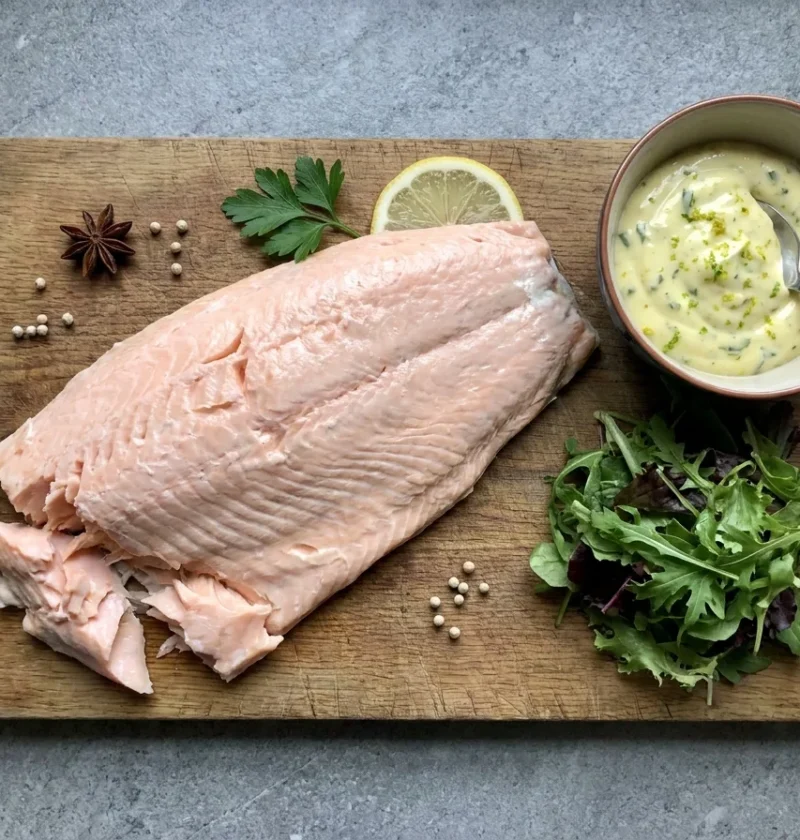
Gordon Ramsay’s poached salmon is a whole side of salmon cooked gently in a fragrant court bouillon of fennel, celery, white wine, star anise and lemon, then served with a light tarragon mayonnaise. It needs just 4 to 5 minutes of simmering. The recipe is from his Christmas with Gordon book and serves four.
This is a festive recipe, not an everyday one. Ramsay makes it over Christmas as a break from all the heavy meat, and the clever bit is the seasoning. As he says in his video, there’s “no need to season it because the court-bouillon is all seasoned beautifully”, so the flavour goes into the liquid, not the fish.
The technique that matters most is what you do after the heat goes off. You simmer the salmon for a few minutes, then turn the hob off and leave it to cool right down in the poaching liquor. That gentle cooling is what finishes the fish, so it stays moist instead of drying out.
Cooked this recipe? Send a photo or tell me what you changed at fans@gordonramsayrecipes.uk and I’ll share your experience live on this page.
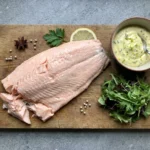
Gordon Ramsay Poached Salmon
Course: MainCuisine: BritishDifficulty: Easy4
20
minutes5
minutes530
kcal1 hr 20 min
(includes cooling)Gordon Ramsay’s poached side of salmon from Christmas with Gordon, cooked in a seasoned court bouillon and served cold with his tarragon mayonnaise. Perfect for a festive platter or a next-day niçoise.
Ingredients
- For the salmon and poaching liquor:
700g (1 lb 9 oz) side of salmon, or larger
Trimmings from 2 fennel tops
Trimmings from 1 head of celery
1 small onion, peeled and sliced
Large pinch of sea salt
150ml (5 fl oz) white wine
Splash of tarragon vinegar
2 star anise
A few white peppercorns, crushed
Small handful of flat leaf parsley
2 bay leaves
1 lemon, sliced
- For the tarragon mayonnaise:
1 large egg yolk
1 tsp English mustard
1 tbsp tarragon white wine vinegar
300ml (10 fl oz) sunflower oil
Squeeze of lemon juice
Splash of water
1 tbsp chopped tarragon leaves
Finely grated zest of 1 lemon
Sea salt and freshly ground black pepper
Directions
- Build the court bouillon: Half-fill a roasting tray, or a pan big enough to hold the salmon, with water. Add everything except the salmon. Bring to the boil, then drop to a gentle simmer.
- Poach the salmon: Lower the side of salmon in skin side down and spoon some of the veg and lemon on top. Top up with water if it isn’t covered. Simmer very gently for 4 to 5 minutes.
- Cool in the liquor: Turn the heat off completely and leave the salmon to cool right down in the poaching liquid. This finishes the cooking gently and keeps it moist.
- Start the mayonnaise: Put the egg yolk, mustard and tarragon vinegar in a bowl. Steady the bowl with a tea towel wrapped round its base, then whisk until thick and pale. Don’t season yet.
- Emulsify: Whisk in the oil a thin drizzle at a time until it all comes together into a thick mayonnaise. Stir in the lemon juice and loosen with a splash of water.
- Finish the mayo: Stir in the chopped tarragon and lemon zest, then season with salt and pepper to taste.
- Skin and serve: Lift the cooled salmon out with two fish slices onto a board. Peel off the skin, check for pin bones, then divide into portions and serve with the tarragon mayonnaise and a leafy salad.
Notes
- Turn the hob off and let the salmon cool in the liquor. The gentle cooling finishes the fish without drying it.
FAQs
Should poached salmon go skin side up or down?
Skin side down, always. Ramsay lowers the side into the liquid skin side down so the flesh sits up out of direct contact with the base of the pan and poaches evenly. You can watch him slip it in gently, skin side down in his video.
The skin comes off at the end anyway. Once the salmon has cooled in the liquor, you lift it onto a board and peel the skin away in one piece, which is far easier than fighting with it raw.
How long do you poach a side of salmon?
Only 4 to 5 minutes of actual simmering, which surprises people. A 700g side needs about 4 minutes, and you add a minute for anything bigger. The water should barely tremble, not bubble, or the fish toughens.
The real cooking happens off the heat. You turn the hob off and let the salmon sit in the warm liquid as it cools, so it keeps cooking gently to the centre. If you want to check doneness on thicker pieces, our salmon cooking times guide breaks it down.
Can you make poached salmon without wine?
Yes. Swap the 150ml of wine for the same amount of water, but add an extra splash of tarragon vinegar or a squeeze of lemon to put back the acidity. That sharpness matters, because Ramsay uses the vinegar to “give it bite” and it’s what makes the court bouillon taste alive rather than flat.
Without any acidity the salmon ends up bland and a little flabby. So even alcohol-free, keep the vinegar or lemon in.
Why does Gordon use tarragon instead of dill?
Most poached salmon recipes reach for dill, but Ramsay goes with tarragon all the way through, in the poaching vinegar and again in the mayonnaise. Tarragon has a soft aniseed note that echoes the fennel and star anise in the broth, so the whole dish tastes joined up rather than just fishy and herby.
It also sets this version apart from the Jamie Oliver and supermarket versions you’ll find, which nearly all lean on dill. If you only have dill, it works, but you lose that aniseed thread that ties Ramsay’s dish together.
What do you serve with poached salmon?
His tarragon mayonnaise and a simple leafy salad, that’s the classic plate. Because the salmon is rich but delicate, you want fresh and sharp alongside, so a few boiled new potatoes or steamed greens round it out nicely. If you’d rather a warm sauce, a proper hollandaise suits it too.
The best trick is Ramsay’s own. He poaches a big side so there’s plenty left to flake into the tuna niçoise salad for lunch the next day, swapping the salmon in for the tuna.
Can you make it ahead, serve it cold or freeze it?
This dish is built to be made ahead. It’s meant to cool completely in the liquor, so you can poach it the night before, keep it covered in the fridge and serve it cold straight from there. That’s exactly why it works as a Christmas platter and why the leftovers are so handy.
Freezing is where I’d stop. Salmon gives off a lot of water as it thaws, so the texture turns soft and watery. It keeps two to three days in the fridge though, and if you fancy something hot another night, Ramsay’s grilled salmon is quick. The rest of the salmon recipe collection are compared in one guide if you want more options.