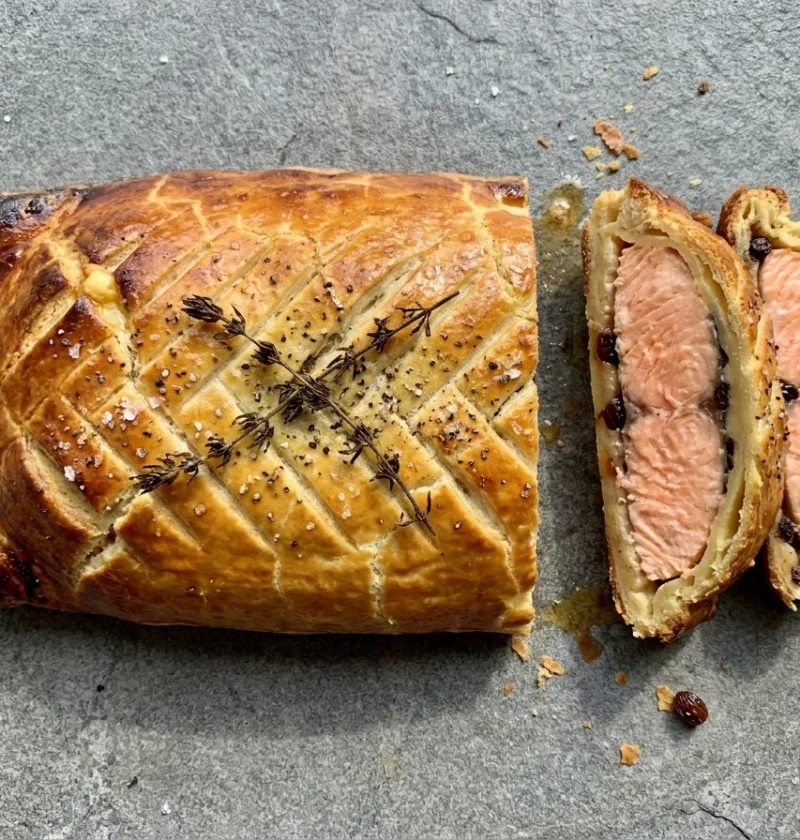
Gordon Ramsay’s salmon en croûte wraps a side of salmon in crisp shortcrust pastry, sandwiched with a spiced currant butter. It bakes at 200°C (400°F) in 20 to 25 minutes. The recipe comes from his Sunday Lunch book and feeds six.
Most recipes online reach for puff pastry, but Ramsay doesn’t. In Sunday Lunch he picks shortcrust “as a change from the more typical puff pastry”, and he fills it the old way with currants, ginger and warm spice. He also makes a different herb butter version on TV, which I’ll come to below.
The part that makes or breaks it is keeping the pastry dry so it crisps instead of steaming. On Cookalong Live his whole focus is sticking the pastry tight to dried fish. Get that wrong and the base turns to mush.
Cooked this recipe? Send a photo or tell me what you changed at fans@gordonramsayrecipes.uk and I’ll share your experience live on this page.

Gordon Ramsay Salmon en Croûte
Course: MainCuisine: BritishDifficulty: Medium6
30
minutes25
minutes920
kcal1 hr
(plus chilling)Ramsay’s only cookbook version of salmon in pastry, from Sunday Lunch, where a whole side is sandwiched with currants, lemon and warm spice and baked in shortcrust until crisp. Works out about £4.40 a head and serves six.
Ingredients
- For the salmon:
2 thick salmon fillets, about 500g (1 lb 2 oz) each, skinned and pin-boned
A little olive oil
- For the spiced currant butter:
60g (2 oz) unsalted butter, softened
Finely grated zest of 1 lemon
1 tbsp crystallised stem ginger, finely chopped
75g (2½ oz) currants
½ tsp freshly grated nutmeg
¼ tsp ground cloves
Sea salt and freshly ground black pepper
- For the pastry:
1kg (2 lb 4 oz) shortcrust pastry
Plain flour, to dust
2 egg yolks, beaten
A few thyme sprigs
Directions
- Prep the salmon: Check the fillets for pin bones and pull any out with tweezers. Line a baking tray with lightly oiled foil.
- Make the currant butter: Mix the softened butter with the lemon zest, ginger, currants, nutmeg and cloves. Pat the salmon dry and season lightly.
- Sandwich the fillets: Spread the butter over one fillet on the boned side. Sit the second fillet on top facing the opposite way, so both ends are an even thickness.
- Wrap in pastry: Roll the shortcrust on a floured surface to the thickness of a £1 coin. Sit the salmon in the centre, brush the pastry around it with egg yolk, then fold it into a neat parcel. Trim the excess, tuck the ends in, and turn it seam-side down on the tray.
- Score and chill: Brush all over with egg yolk. Score lines to mark 6 to 8 portions, then add a herringbone or cross-hatch pattern. Season, lay the thyme on top and chill for 15 minutes.
- Bake: Heat the oven to 200°C (400°F/Gas 6) and bake for 20 to 25 minutes. Push a skewer into the middle to check: warm means medium, piping hot means well done.
- Rest and slice: Rest for 5 minutes, then slice thickly along your scored lines.
Notes
- Wrap the salmon in a thin crêpe before the pastry. It catches moisture before it reaches the crust.
FAQs
Should you use puff or shortcrust pastry?
Shortcrust, if you’re following Ramsay. He says in Sunday Lunch he uses it as a change from the puff pastry most cooks reach for. Shortcrust is sturdier, so it holds the heavy salmon parcel without tearing and stays crisp underneath.
Puff still works if it’s what you have. You’ll get a lighter, flakier crust, though it’s more likely to go soggy where it meets the fish.
How do you stop salmon en croûte going soggy?
Three things, and Ramsay does all of them. Pat the salmon properly dry, because wet fish steams the pastry from the inside. Then be generous with the egg wash but don’t flood it, or the pastry gets too wet to wrap.
The third is his cookbook trick: wrap the salmon in a thin crepe before the pastry. It soaks up moisture before it reaches the crust. It’s the same drying-and-sealing logic he uses for beef Wellington, so once you’ve got it you can wrap anything.
What’s the herb butter version Gordon makes on TV?
On Cookalong Live he skips the currants completely. He mixes softened butter with dill, roughly chopped basil and lemon zest, spreads it on one fillet, then adds wholegrain mustard to the other before sandwiching them. It’s lighter and more savoury than the book version.
If you prefer that route, you’re basically heading towards the salmon Wellington, which uses a similar herb-and-mustard idea with puff pastry and a spinach filling. Same chef, two takes on salmon in pastry.
Why does Gordon put currants and ginger in salmon en croûte?
It’s a nod to the old British way of baking fish in pastry, where dried fruit and warm spice balanced the richness. The currants go sweet and plump in the oven, while the ginger and cloves cut through the buttery salmon.
James Martin and most modern recipes keep it savoury with spinach or watercress, so Ramsay’s sweet-spiced butter is genuinely unusual. If it sounds odd, use half the currants the first time and see what you think.
What do you serve with salmon en croûte?
In Sunday Lunch he plates it with minted hollandaise, creamed leeks and braised cos lettuce. The minted hollandaise is the one I’d keep, because its sharpness cuts straight through the pastry and butter.
Skip heavy mash, since the shortcrust already brings plenty of starch. A simple green salad, steamed greens or minted peas keeps the plate light against such a rich centrepiece.
Can you make salmon en croûte ahead or freeze it?
Yes for ahead. Assemble the whole parcel, then chill it for a few hours before baking, which actually helps because cold pastry crisps better. You can also make individual parcels: wrap single fillet portions in smaller pastry rectangles and knock a few minutes off the bake.
Freezing is where I’d stop. Salmon throws out water as it thaws, so the pastry softens from the inside and never crisps again. Leftovers keep a day in the fridge, though the base won’t be as crisp.
For a quicker salmon dinner another night, Ramsay’s teriyaki salmon takes about fifteen minutes. Or pick your next one from the the salmon recipe collection, compared by time and difficulty.