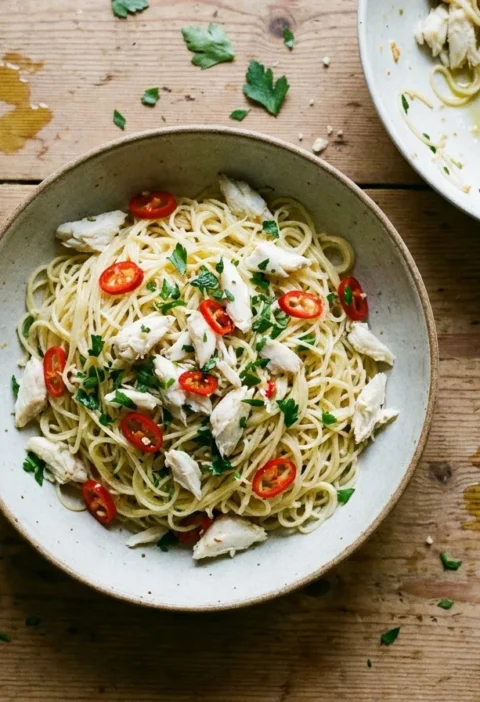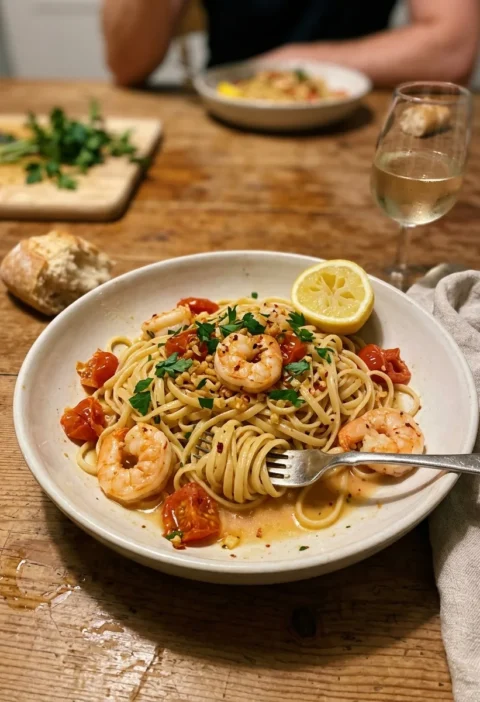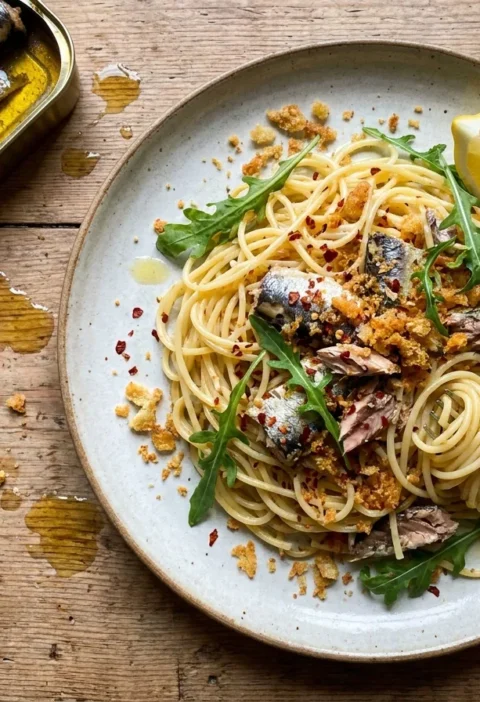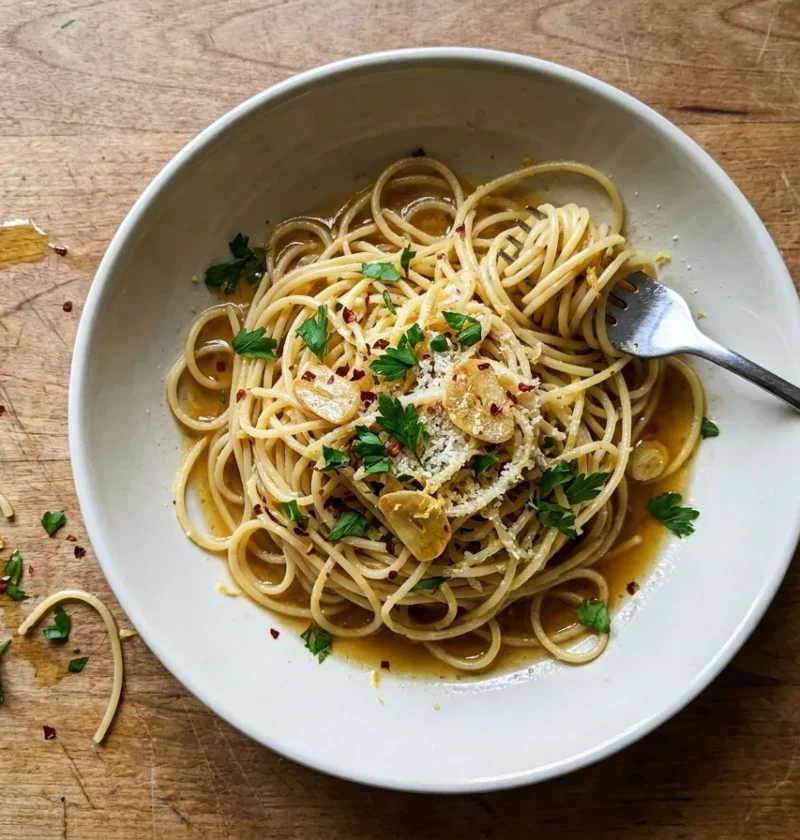
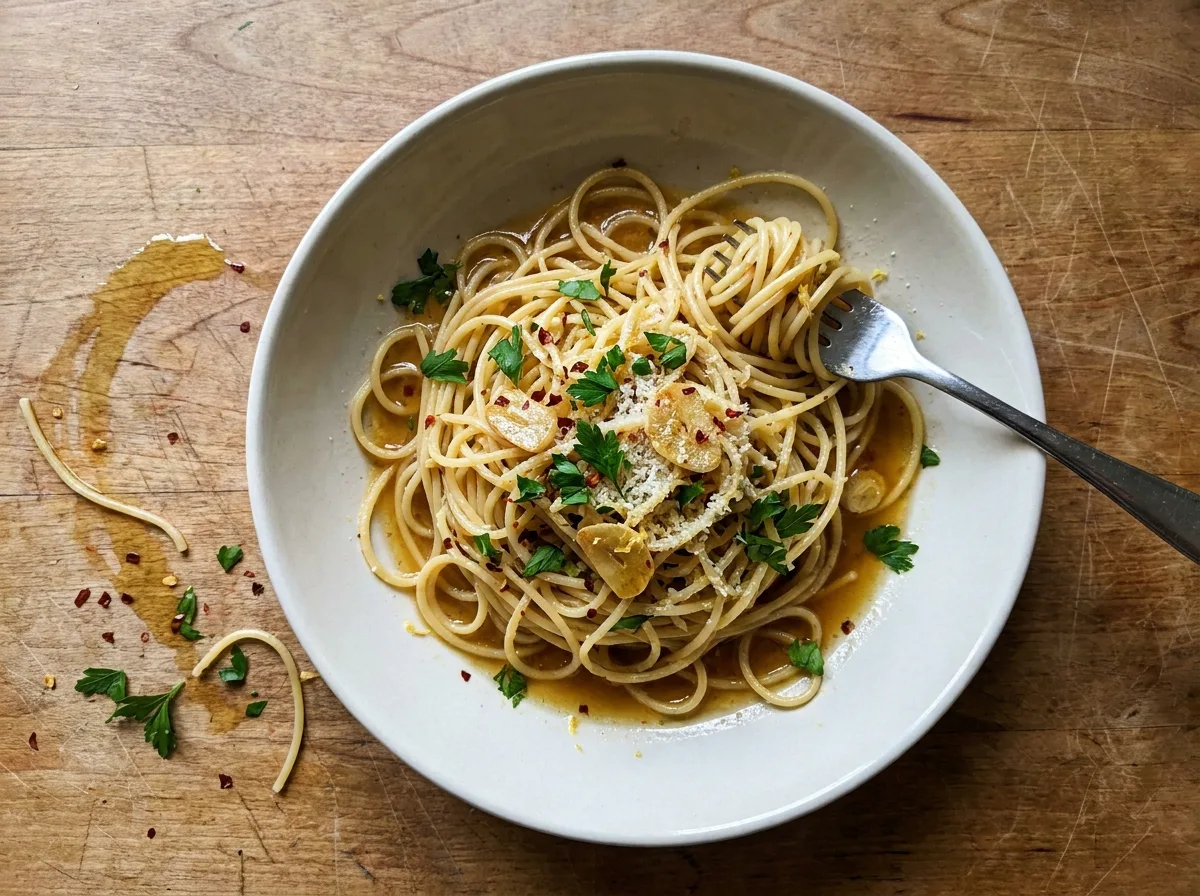
Gordon Ramsay’s aglio olio is spaghetti tossed through golden garlic, good olive oil, and a little chilli. A splash of starchy pasta water pulls it into a silky sauce. It takes about 20 minutes and lives or dies on three things: the oil, the garlic, and that pasta water.
There is no single “aglio olio” page in Gordon’s books, so I have built this from the garlic-and-oil method he uses across his pasta dishes. In his Fast Food spaghetti he fries thinly sliced garlic until golden in good olive oil. And in his broccoli spaghetti he is firm that you flavour the oil gently, so the garlic doesn’t, in his words, “overpower the dish.”
The bit most people miss is the pasta water. While the spaghetti cooks in well-salted water, that liquid turns starchy. It is what binds the oil and garlic into a sauce that clings, rather than a slick of grease at the bottom of the bowl.
Cooked this recipe? Send a photo or tell me what you changed at fans@gordonramsayrecipes.uk and I’ll share your experience live on this page.
Gordon Ramsay Aglio Olio
Course: MainCuisine: ItalianDifficulty: Easy4
servings5
minutes15
minutes520
kcal20
minutesSpaghetti aglio e olio built from Gordon’s garlic-and-oil pasta method, thinly sliced garlic cooked to gold in good olive oil with a hint of chilli, emulsified with starchy pasta water and finished with parsley and lemon. Serves 4, around 520 kcal, ready in 20 minutes.
Ingredients
400g (14 oz) dried spaghetti
80ml (1/3 cup) good extra virgin olive oil
6 garlic cloves, peeled and thinly sliced
1 fresh red chilli, deseeded and finely chopped (or 1 tsp dried chilli flakes)
Small bunch of flat-leaf parsley, finely chopped
Zest of 1 lemon, plus a squeeze of juice
Sea salt and freshly ground black pepper
Freshly grated Parmesan, to serve (optional)
Directions
- Salt the water well: Bring a large pot of water to the boil and salt it generously, until it tastes of the sea. Use a little less water than usual so it turns nice and starchy as the pasta cooks.
- Cook the spaghetti: Add the spaghetti and cook until just before al dente, about a minute shy of the packet time. Before draining, scoop out a mugful of the cooking water.
- Soften the garlic gently: While the pasta cooks, warm the olive oil in a large pan over low to medium heat. Add the sliced garlic and chilli with a pinch of salt, and cook slowly until the garlic is golden at the edges, not brown.
- Pull it before it burns: The moment the garlic turns golden, it is ready. If the pasta is not drained yet, take the pan off the heat, since burnt garlic turns the whole dish bitter.
- Bring it together: Tip the drained spaghetti into the pan with a good splash of the starchy water. Toss hard, off the heat, until the oil and water turn glossy and coat every strand.
- Finish and serve: Stir through the parsley and lemon zest, then add a squeeze of juice and a grind of pepper. Taste, loosen with a little more pasta water if needed, and serve at once with Parmesan if you like.
Notes
- Toss off the heat, that is what emulsifies the oil and water into a sauce rather than splitting it. Use the best olive oil you have, since with so few ingredients it is the flavour you taste most.
FAQs
Why is my aglio olio bland or tasteless?
It is almost always one of three things, and none of them are the garlic. Most often the pasta water was not salted enough, so the spaghetti itself has no seasoning. No amount of oil on top can fix bland pasta underneath.
The other two culprits are cheap olive oil and not enough starchy water. While the oil is the main flavour here, a flat supermarket bottle gives a flat dish. And without that pasta water tossed in at the end, the sauce never emulsifies, so it slides off the strands instead of coating them.
Why does the garlic have to be golden, not brown?
Garlic is the line between a great aglio olio and a ruined one. You want it cooked low and slow until it is golden and sweet, because that is where all the mellow, nutty flavour lives.
Take it a shade too far and it turns bitter, and there is no rescuing it once it does. This is exactly Gordon’s point about not letting it colour too much. Slicing the garlic thinly rather than crushing it also keeps the flavour gentle, so it infuses the oil rather than catching and burning.
Do you put cheese in aglio olio?
Traditionally, no. Purists in Italy serve it without Parmesan, letting the garlic and oil stand on their own, and that is the classic Neapolitan way.
That said, Gordon finishes his garlic-oil spaghetti with grated Parmesan, and a little does add a savoury depth. So treat it as optional: keep it off for the authentic version, or add a light grating if you like it rounder. It pairs well alongside Ramsay’s carbonara on a pasta night.
How much garlic and what oil should I use?
Six cloves for four people is a good starting point, though this is a dish named after garlic, so add more if you love it. Slice it thinly so it cooks evenly and melts into the oil.
The oil matters even more. Since it is the main flavour rather than just a cooking fat, use the best extra virgin olive oil you have. While you would not pour your finest bottle into a heavy ragu, here it is the star, so it is worth the splash.
Can I make a prawn or seafood version?
Yes, and it is a lovely way to turn it into a proper supper. For prawn aglio olio, add raw peeled prawns to the pan once the garlic is golden. Cook them for a couple of minutes each side until pink, then add the pasta, much like the prawn pasta.
For a seafood version, the same goes for a mix of prawns, squid, and mussels. Just give them long enough to cook through in the garlicky oil. A little extra lemon at the end lifts the seafood.
You would skip the Parmesan here, since cheese and seafood are not usually paired in Italy.
What goes well with aglio olio?
Because it is rich and garlicky, it likes fresh, sharp things alongside. A peppery rocket salad cuts through the oil, and warm garlic bread is perfect for the last of the sauce.
To drink, a crisp white such as pinot grigio or a light vermentino sits beautifully against the garlic and oil. Keep the sides simple though, since the whole point of this dish is letting a few good ingredients do the talking.