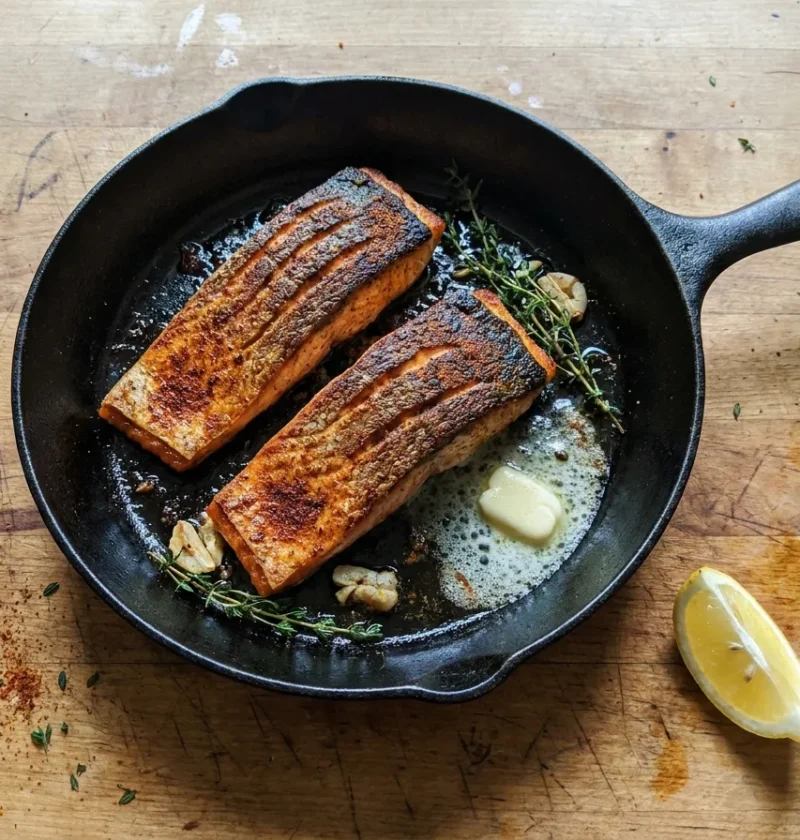
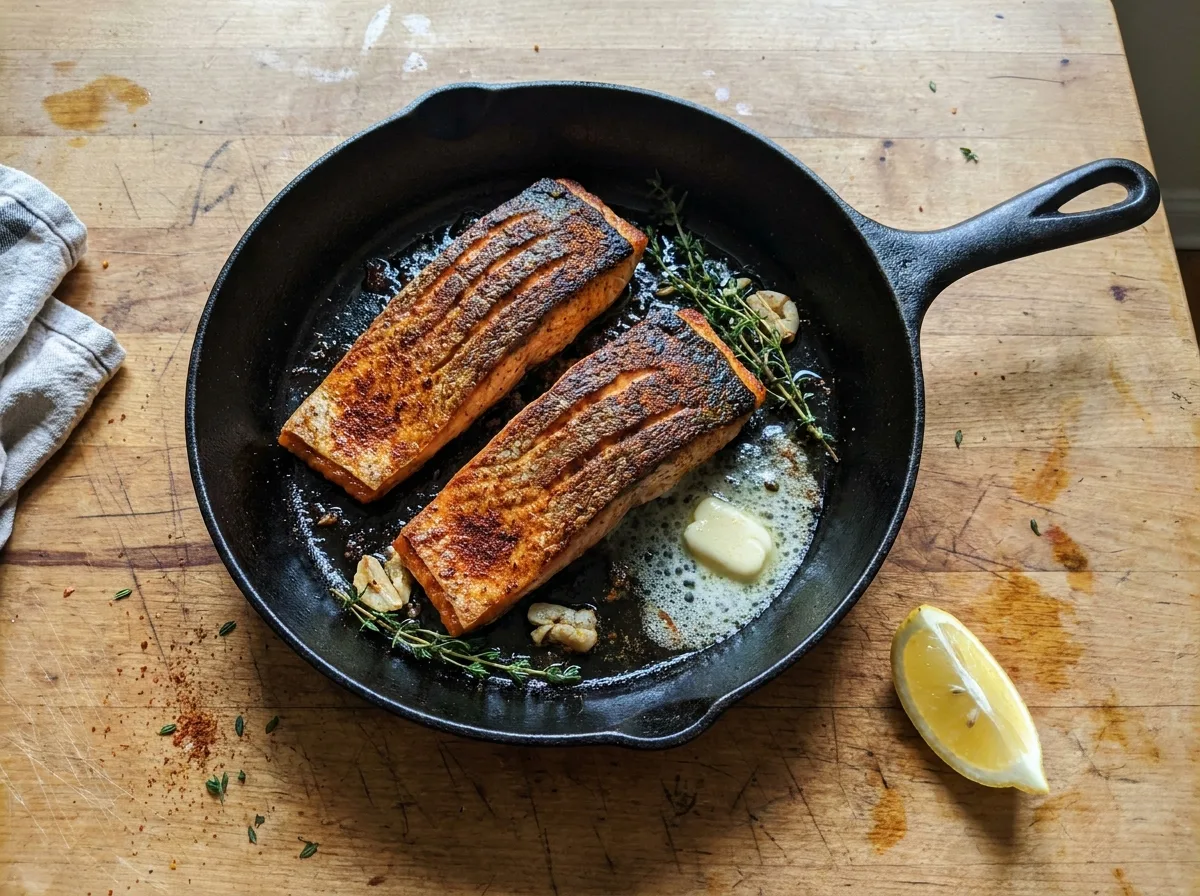
This is the salmon Gordon cooks on The F Word, and the skin comes out like glass. You score it, rub it with Cajun spice, then sear it skin-down and baste it with garlic, thyme, and butter. About 12 minutes, start to plate.
Gordon is blunt about the one rule that matters. “The secret is making sure you cook it skin side down,” he says in the F Word video. The skin shields the soft flesh from the heat, so it stays moist. Score it first and it crisps harder while cooking through faster.
Two small things trip people up. Cold fish straight from the fridge dries out, so he leaves it to warm up a little. And the pan goes on the heat before the oil, otherwise the oil scorches before the salmon ever hits it.
Cooked this recipe? Send a photo or tell me what you changed at fans@gordonramsayrecipes.uk and I’ll share your experience live on this page.
Gordon Ramsay Pan Seared Salmon
Course: MainCuisine: BritishDifficulty: Easy2
servings5
minutes12
minutes380
kcal17
minutesGordon’s F Word salmon, scored and rubbed with Cajun spice, seared hard on the skin then basted low and slow with garlic, thyme, and butter. Two fillets, a glass-crisp skin, a moist centre, around 380 kcal each and done in roughly 12 minutes.
Ingredients
2 salmon fillets, skin on (about 150g / 5 oz each)
1 to 2 tsp Cajun spice
Sea salt and freshly ground black pepper
1 tbsp olive oil
Knob of butter
2 garlic cloves, lightly crushed
2 sprigs fresh thyme
1 lemon, to finish
Directions
- Score the skin: Hold a fillet and bend it so the skin pulls tight. Run a sharp knife across in straight lines, shallow ones, letting the blade do the work. Deep cuts only dry the fish out.
- Spice it: Work the Cajun spice, salt, and pepper into both sides, pushing it down into the scored skin so the whole fillet turns fragrant.
- Let it warm up: Sit the seasoned salmon out for a few minutes. Ice-cold fish cooks unevenly and toughens on the outside before the middle is done.
- Get the pan hot: Heat the pan dry, then pour in the oil. Oil in a cold pan just burns by the time the pan is ready.
- Lay it in skin-down: Place each fillet skin-down, away from you so it does not spit. Hold it flat with a spatula for a few seconds, then leave it alone until the skin is deep golden.
- Butter, garlic, thyme: Turn the fillets, drop in the butter with the garlic and thyme, and spoon the foaming butter over the top for about a minute.
- Slow finish: Flip them back onto the skin and leave on a gentle heat for 6 to 7 minutes, until just done. Finish with a squeeze of lemon.
Notes
- The scoring is the whole trick, it crisps the skin and speeds the cook, but keep it shallow. Finishing on a low heat rather than a fierce one is what keeps the inside soft.
FAQs
Why bother scoring the skin?
Bend the fillet so the skin tightens, then draw a sharp knife across it in a few straight lines. Those cuts give the heat more surface to work on, so the skin crisps harder and the fish cooks through quicker.
The catch is depth. Gordon keeps the scores shallow on purpose. Cut too far into the flesh and the salmon dries out before the skin has had its chance to crackle.
Cajun spice on salmon, really?
That is what Gordon reaches for here, pressed into both the skin and the flesh. It makes the fillet fragrant, and the scored skin holds onto the spice instead of letting it slide off in the pan.
There is method to it beyond the salmon. He seasons the succotash alongside with a little Cajun too. The same warm spice then carries across the whole plate, not just the fish.
Does it matter if the salmon is cold?
It does, more than people think. Gordon’s line is simply “don’t cook salmon ice cold,” and the reason is even cooking. Fridge-cold fish hits the pan and the outside seizes up while the centre lags behind.
Give it a few minutes on the side first. Warmer fish cooks faster and more evenly, and you avoid that dry, overdone rim around a barely-warm middle.
Why drop the heat right at the end?
Once the skin is seared and the fillet basted, Gordon turns it back onto the skin. It sits on a low flame for six or seven minutes. The skin takes the heat so the flesh underneath stays gentle and moist.
It is the opposite of blasting it. That slow stretch at the end, with a little butter in the pan, is what matters. It is the difference between salmon that flakes softly and salmon gone dry.
What goes on the plate with it?
On the show he builds a whole plate around it. The star side is Ramsay’s sweetcorn succotash, flicked over the salmon “like raindrops,” which he reckons goes brilliantly with the fish.
Next to that sit the crispy smashed potatoes and some lemony mustard greens. He calls the finished plate Alaskan spiced salmon with succotash.
Is this the same as his crispy skin salmon?
They start the same way, skin-on fillet in a hot pan, but they end up different dishes. The crispy skin salmon is the stripped-back Quick & Delicious one: salt, pepper, oil, nothing else.
This F Word version dresses it up. The skin gets scored, the fish gets Cajun spice, and it finishes in garlic-thyme butter.
So if you want plain and fast, go to that one. For something with more going on, stay here. And if neither is quite it, the salmon recipe collection covers every one.