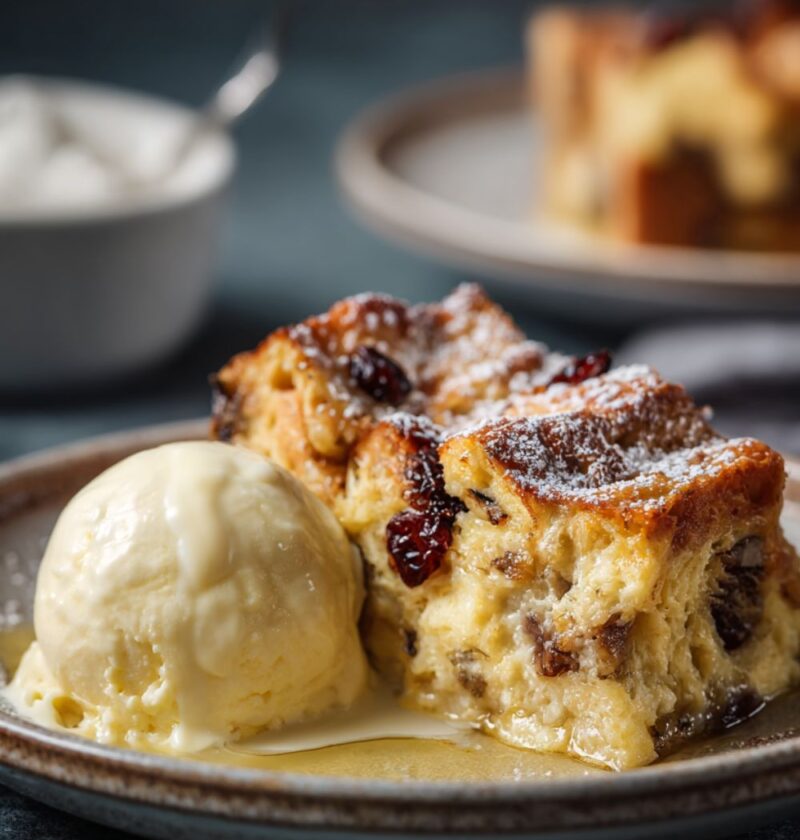
Gordon Ramsay Bread and Butter Pudding transforms a humble, frugal dessert into a restaurant-quality showstopper. While traditional recipes can sometimes be heavy or soggy, Ramsay elevates the dish by swapping standard sliced bread for rich brioche or buttery croissants. He also employs a lighter, vanilla-flecked custard and finishes the dish with a warm apricot glaze, giving it a professional sheen and a sharp tangy sweetness that cuts through the rich cream. Ideally served warm, it features a contrasting texture of crispy, golden peaks on top and a soft, soufflé-like custard interior.
Try More Recipes:
- Gordon Ramsay Chocolate Semifreddo Recipe
- Gordon Ramsay Apple Crumble Recipe
- Gordon Ramsay Chocolate Cream Cheese Pound Cake
Why You Will Love This Bread and Butter Pudding Recipe:
- Elevated Texture: Using brioche or croissants creates a much lighter, airier pudding compared to dense sandwich bread.
- The Glaze: The signature apricot jam glaze brushed on after baking adds a beautiful shine and a necessary hit of acidity to balance the sugar.
- Citrus Note: Ramsay infuses the custard with lemon or orange zest, which brightens the flavor profile significantly.
- Waste Reduction: It is the single best way to use up stale pastries or leftover holiday bread (like Panettone).
- Foolproof Custard: The ratio of cream to milk ensures a silky set that wobbles just right, without curdling.
Gordon Ramsay Bread and Butter Pudding Ingredients
The Base
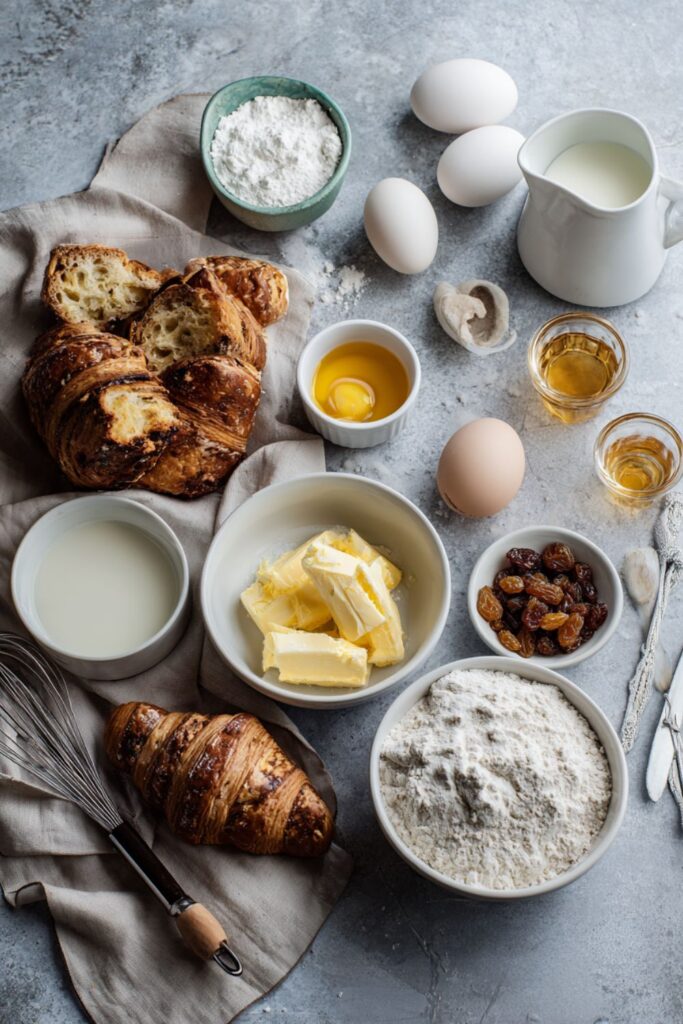
- 8 croissants (stale is best) or 1/2 loaf of brioche, sliced
- 40g (3 tbsp) unsalted butter, softened (for greasing and spreading)
- 50g (1/3 cup) sultanas or raisins
- 2 tbsp Amaretto, Rum, or Brandy (optional, for soaking fruit)
The Custard
- 300ml (1 ¼ cups) double cream (heavy cream)
- 100ml (1/2 cup) whole milk
- 4 large egg yolks
- 1 whole large egg
- 75g (1/3 cup) caster sugar
- 1 vanilla pod (seeds scraped) or 1 tsp high-quality vanilla paste
- Zest of 1/2 lemon or orange
The Glaze
- 4 tbsp apricot jam
- 1 tbsp water
How To Make Gordon Ramsay Bread and Butter Pudding
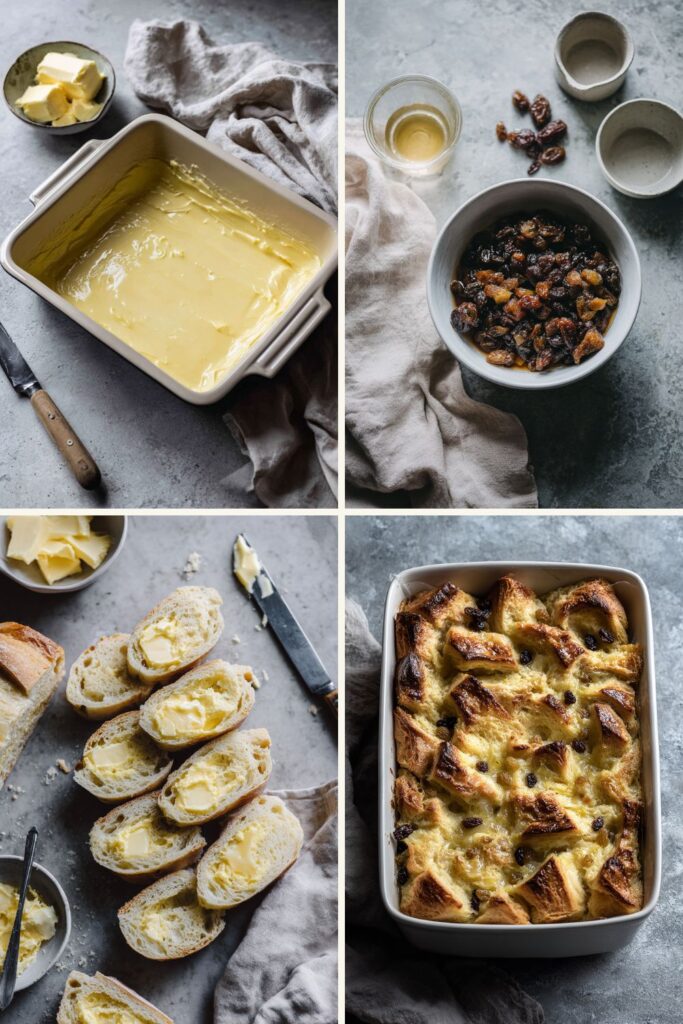
- Prep: Preheat your oven to 180°C (350°F). Lightly grease a roughly 9×9 inch baking dish with softened butter.
- Soak Fruit: If you have time, place the sultanas in a small bowl with the alcohol and let them soak for 20 minutes to plump up.
- Prepare the Bread: If using croissants, slice them in half horizontally (like a sandwich) and butter the cut sides. If using brioche, slice into triangles and butter one side.
- Layer: Arrange the bread slices in the dish, overlapping them slightly (like roof tiles). Scatter the soaked sultanas and the lemon/orange zest between the layers. Ensure the top layer of bread has plenty of peaks sticking up—these will get crispy.
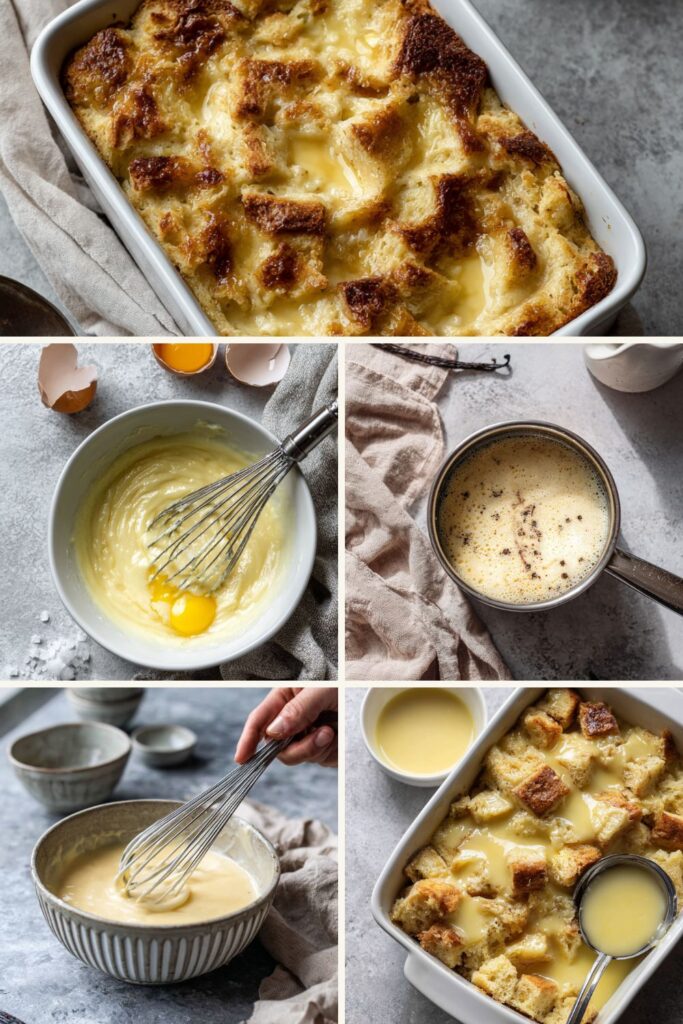
- Make Custard Base: In a mixing bowl, whisk together the egg yolks, whole egg, and sugar until pale and slightly thickened.
- Heat Cream: Pour the milk and cream into a saucepan. Add the vanilla seeds (and pod). Heat gently until it just reaches the scalding point (steaming, but not boiling). Remove the vanilla pod.
- Combine: Pour the hot cream mixture slowly over the egg mixture, whisking constantly to prevent the eggs from scrambling.
- Soak: Pour the custard through a sieve (optional, for extra smoothness) all over the bread in the dish. Press the bread down gently with a spoon to help it absorb the liquid.
- Crucial Step: Let it stand for 20 minutes before baking. This allows the bread to soak up the custard so the pudding doesn’t separate.
- Bake: Place the dish in the oven and bake for 35 to 40 minutes.
- Doneness: The custard should be set but still have a slight wobble in the center, and the tips of the bread should be golden brown and crisp.
- Glaze: While the pudding bakes, warm the apricot jam and water in a small pan until runny. Pass it through a sieve to remove fruit chunks. Brush this glaze over the pudding immediately when it comes out of the oven.
Recipe Tips
- The “Crunch” Factor: Don’t submerge the bread completely. You want the top 20% of the bread slices sticking out of the custard. This creates the textural contrast between the soft bottom and the crunchy, caramelized top.
- Stale is Better: Fresh bread turns to mush. Leave your croissants or brioche out on the counter overnight to dry out before making this.
- Bain-Marie (Optional): For an ultra-silky texture, you can place the baking dish inside a larger roasting pan filled halfway with hot water. This cooks the custard more gently, though it may take slightly longer to bake.
- Zest is Key: Do not skip the lemon or orange zest. Without it, the dish can be cloyingly sweet.
What To Serve With Bread and Butter Pudding?
This dessert is rich enough to stand alone, but it pairs beautifully with:
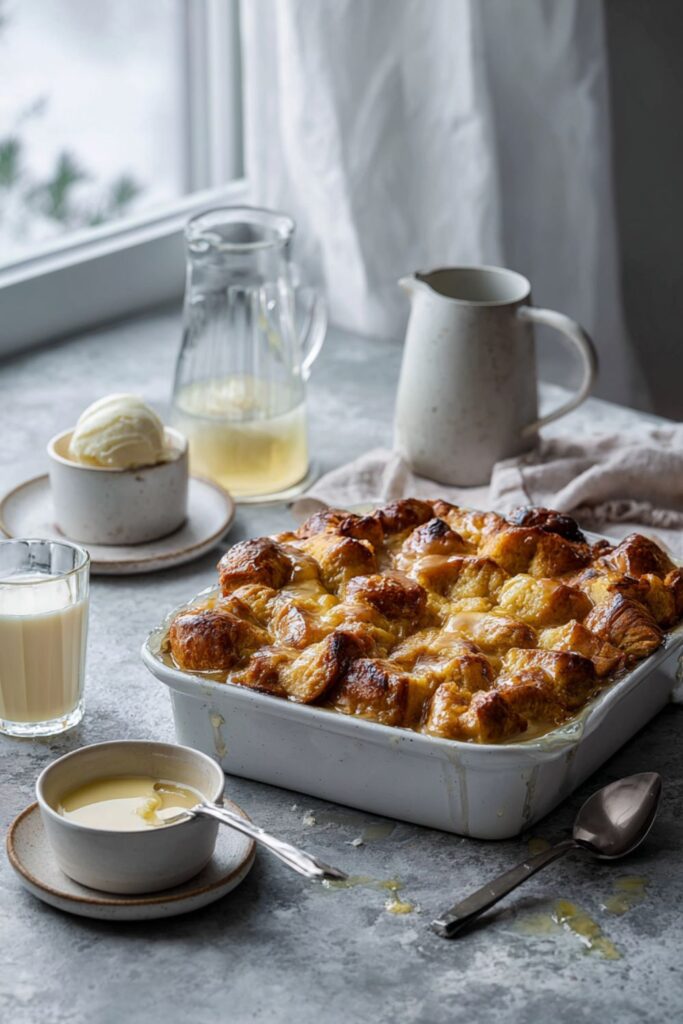
- Vanilla Ice Cream: The temperature contrast of hot pudding and cold ice cream is classic.
- Pouring Cream: A simple jug of chilled heavy cream.
- Custard: If you really love custard, you can serve it with more warm crème anglaise.
How To Store Leftovers Bread and Butter Pudding?
- Fridge: Cover the cooled pudding tightly with foil or cling film and refrigerate for up to 3 days.
- Freeze: It is possible to freeze it, but the texture of the custard may weep slightly upon thawing. Freeze in airtight containers for up to 1 month.
How To Reheat Leftovers Bread and Butter Pudding?
- Oven (Best Method): To restore the crispy top, cover the pudding with foil and heat in a 160°C (325°F) oven for 15 minutes. Remove the foil for the last 5 minutes to crisp up the edges.
- Microwave: You can microwave individual portions for 30 to 45 seconds, but the bread will be soft, not crispy.
FAQs
Yes, but the texture will be denser and more u0022nursery foodu0022 style. If using white bread, cut the crusts off and butter it generously to mimic the richness of brioche.
Absolutely you can soak the raisins in hot tea (Earl Grey works well) or orange juice instead of Amaretto on Bread and Butter Pudding.
This usually happens if the custard wasn’t cooked enough to set, or if the bread didn’t have enough time to soak up the liquid before baking. Ensure you let it stand for 20 minutes before putting it in the oven.
More Recipes:
Bread and Butter Pudding Nutrition Facts
Serving Size: 1 square (approx 150g)
- Calories: 450 kcal
- Total Fat: 28g
- Saturated Fat: 15g
- Cholesterol: 180mg
- Sodium: 190mg
- Total Carbohydrate: 42g
- Dietary Fiber: 1g
- Sugars: 22g
- Protein: 8g
Gordon Ramsay Bread And Butter Pudding Recipe
Course: Dessert, Breakfast, BrunchCuisine: American, BritishDifficulty: Easy6
servings40
minutes40
minutes450
kcalGordon Ramsay Bread and Butter Pudding transforms a humble, frugal dessert into a restaurant-quality showstopper. While traditional recipes can sometimes be heavy or soggy, Ramsay elevates the dish by swapping standard sliced bread for rich brioche or buttery croissants. He also employs a lighter, vanilla-flecked custard and finishes the dish with a warm apricot glaze, giving it a professional sheen and a sharp tangy sweetness that cuts through the rich cream. Ideally served warm, it features a contrasting texture of crispy, golden peaks on top and a soft, soufflé-like custard interior.
Ingredients
8 croissants (stale is best) or 1/2 loaf of brioche, sliced
40g (3 tbsp) unsalted butter, softened (for greasing and spreading)
50g (1/3 cup) sultanas or raisins
2 tbsp Amaretto, Rum, or Brandy (optional, for soaking fruit)
- The Custard
300ml (1 ¼ cups) double cream (heavy cream)
100ml (1/2 cup) whole milk
4 large egg yolks
1 whole large egg
75g (1/3 cup) caster sugar
1 vanilla pod (seeds scraped) or 1 tsp high-quality vanilla paste
Zest of 1/2 lemon or orange
- The Glaze
4 tbsp apricot jam
1 tbsp water
Directions
- Prep: Preheat your oven to 180°C (350°F). Lightly grease a roughly 9×9 inch baking dish with softened butter.
- Soak Fruit: If you have time, place the sultanas in a small bowl with the alcohol and let them soak for 20 minutes to plump up.
- Prepare the Bread: If using croissants, slice them in half horizontally (like a sandwich) and butter the cut sides. If using brioche, slice into triangles and butter one side.
- Layer: Arrange the bread slices in the dish, overlapping them slightly (like roof tiles). Scatter the soaked sultanas and the lemon/orange zest between the layers. Ensure the top layer of bread has plenty of peaks sticking up—these will get crispy.
- Make Custard Base: In a mixing bowl, whisk together the egg yolks, whole egg, and sugar until pale and slightly thickened.
- Heat Cream: Pour the milk and cream into a saucepan. Add the vanilla seeds (and pod). Heat gently until it just reaches the scalding point (steaming, but not boiling). Remove the vanilla pod.
- Combine: Pour the hot cream mixture slowly over the egg mixture, whisking constantly to prevent the eggs from scrambling.
- Soak: Pour the custard through a sieve (optional, for extra smoothness) all over the bread in the dish. Press the bread down gently with a spoon to help it absorb the liquid. Crucial Step: Let it stand for 20 minutes before baking. This allows the bread to soak up the custard so the pudding doesn’t separate.
- Bake: Place the dish in the oven and bake for 35 to 40 minutes. Doneness: The custard should be set but still have a slight wobble in the center, and the tips of the bread should be golden brown and crisp.
- Glaze: While the pudding bakes, warm the apricot jam and water in a small pan until runny. Pass it through a sieve to remove fruit chunks. Brush this glaze over the pudding immediately when it comes out of the oven.
Notes
- The “Crunch” Factor: Don’t submerge the bread completely. You want the top 20% of the bread slices sticking out of the custard. This creates the textural contrast between the soft bottom and the crunchy, caramelized top.
Stale is Better: Fresh bread turns to mush. Leave your croissants or brioche out on the counter overnight to dry out before making this.
Bain-Marie (Optional): For an ultra-silky texture, you can place the baking dish inside a larger roasting pan filled halfway with hot water. This cooks the custard more gently, though it may take slightly longer to bake.
Zest is Key: Do not skip the lemon or orange zest. Without it, the dish can be cloyingly sweet.