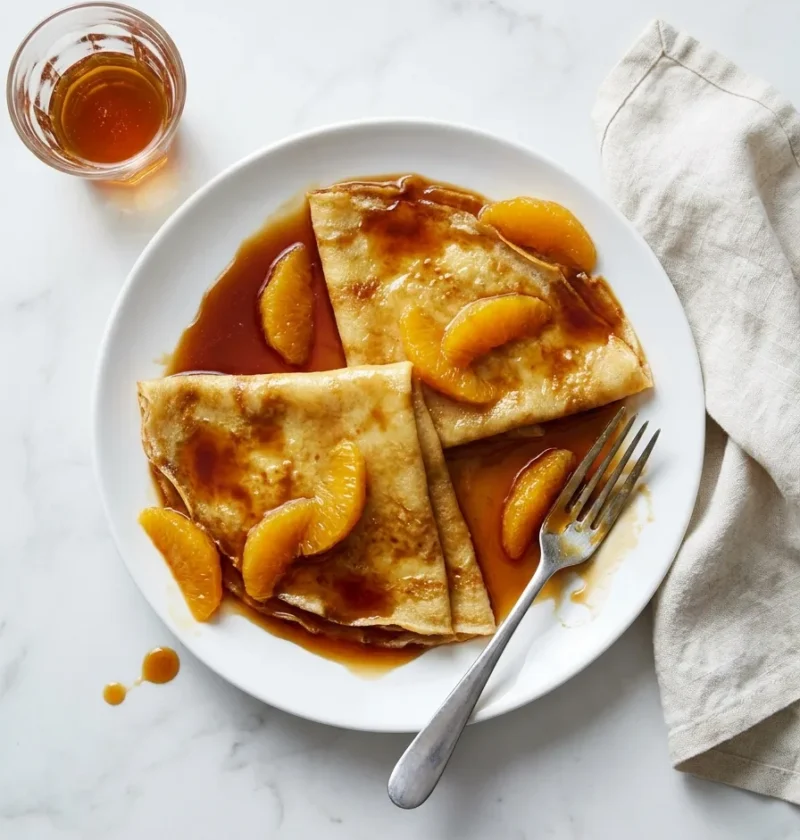
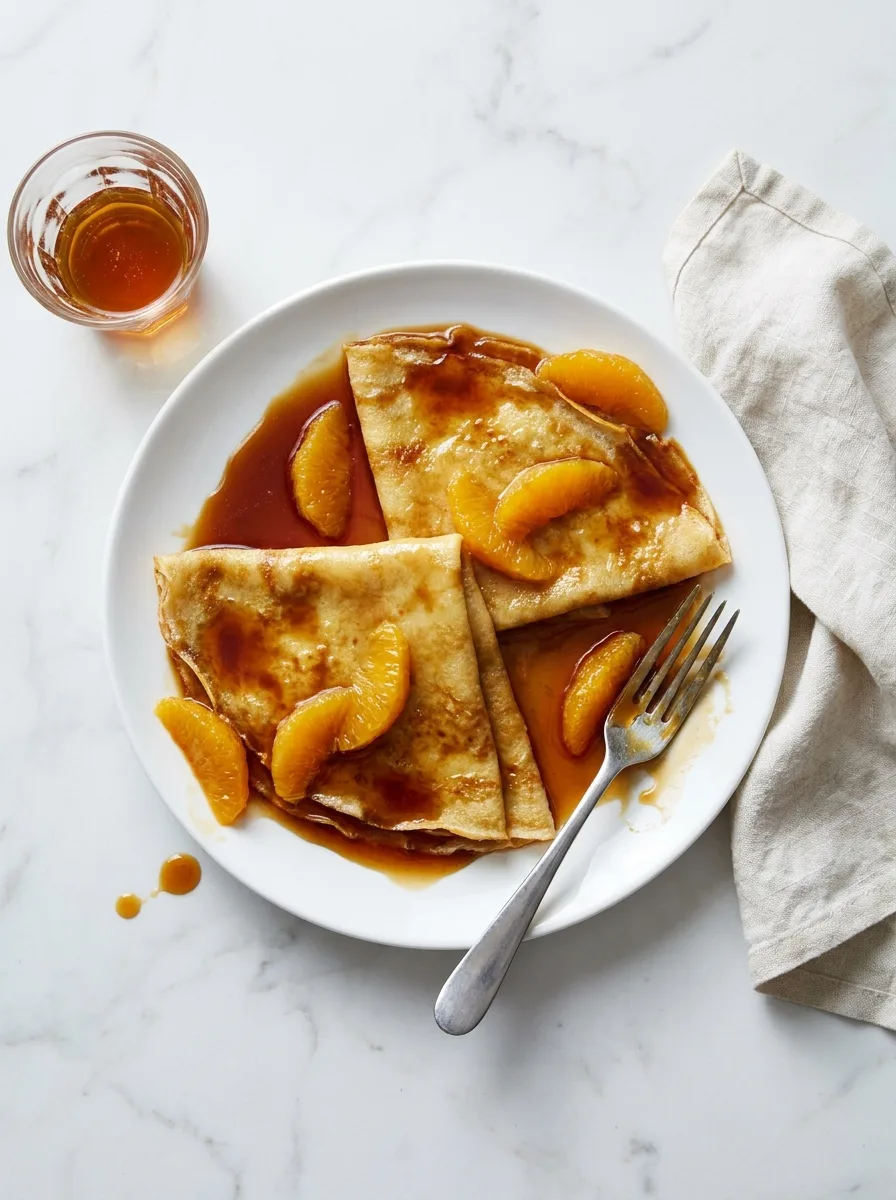
Gordon Ramsay’s crepe suzette is thin, buttery crêpes folded into quarters and drenched in a dark caramel orange sauce flambéed with Grand Marnier. Three oranges, a few pantry staples, and about 40 minutes is all it takes.
Ramsay demonstrates this on The F Word, calling it “basically pancakes, a real old school classic.” The batter follows the same method he uses across his cookbooks, but with one suzette-specific twist: orange zest whisked straight into the crêpe mix so the citrus flavour comes from every layer, not just the sauce on top.
The technique that separates this from every other version is the caramel. Ramsay takes the sugar past golden into a deep, dark amber before the Grand Marnier goes anywhere near it. That bitterness is what stops the sauce tasting like warm orange squash.
Cooked this recipe? Send a photo or tell me what you changed at fans@gordonramsayrecipes.uk and I’ll share your experience live on this page.
Gordon Ramsay’s Crêpe Suzette
Course: DessertCuisine: FrenchDifficulty: Medium4
25
minutes15
minutes320
kcal40
minutesFrom Gordon Ramsay’s The F Word, verified against his crêpe technique in Ultimate Cookery Course and Sunday Lunch. Thin crêpes soaked in a dark caramel orange sauce, flambéed with Grand Marnier.
Ingredients
- For the crêpes:
125g plain flour
¼ tsp fine sea salt
2 medium eggs, beaten
1 tbsp melted butter
300ml whole milk
Finely grated zest of 2 oranges
- For the sauce:
3 large oranges (for segments and juice)
50g caster sugar
100ml Grand Marnier or Cointreau
- To cook:
A few knobs of unsalted butter
Directions
- Make the batter: Sift the flour and salt into a large bowl and make a well in the centre. Pour in the beaten eggs, melted butter, milk, and the orange zest. Whisk until smooth but don’t overwork it. Ramsay describes the ideal consistency as the thickness of double cream. Set aside for at least 15 minutes.
- Segment the oranges: Slice the top and bottom off each orange. Stand it on the board and cut down the sides to remove the peel and pith in strips. Hold the orange over a sieve set on a bowl and cut along each membrane to release the segments. Let the juice collect below. Set segments and juice aside separately.
- Make the caramel: Tip the caster sugar into a heavy-based pan over medium heat. Stir gently as it dissolves and let it cook until it turns a deep, dark amber. Ramsay pushes this further than most recipes suggest, so don’t pull it at pale gold.
- Flambé: Pour the Grand Marnier into the hot caramel and stand well back. It will spit and may catch fire from the heat of the pan. If it doesn’t ignite on its own, tip the pan slightly toward the flame or use a long lighter. Let the flames die down naturally.
- Build the sauce: Pour in the reserved orange juice and let it bubble until reduced by about half. Remove from the heat and gently fold in the orange segments. Keep warm.
- Cook the crêpes: Heat a non-stick frying pan over medium heat with a small knob of butter. Give the batter a stir, then pour in a small ladleful and quickly swirl the pan to coat the base thinly. Cook for about 1 minute until golden underneath, then flip and give the other side 30 seconds. Stack on a plate while you cook the rest.
- Serve: Fold each crêpe into quarters and lay them into the warm sauce. Spoon the orange segments and sauce over the top and serve straight away.
FAQs
Why does Ramsay take the caramel so dark?
Most recipes say stop at golden. Ramsay doesn’t.
He pushes the sugar into deep amber, almost the colour of dark honey. That extra bitterness is the backbone of the whole dessert, because without it the sauce is just sweet orange syrup with nothing to balance it.
It’s the same principle behind a good crème brûlée. The caramel is there to cut through sweetness, not add to it.
Why does Ramsay use two eggs in the suzette batter?
His standard crêpe recipe in Sunday Lunch uses one egg. The Ultimate Cookery Course version uses one egg too. But the suzette batter from The F Word calls for two eggs plus melted butter.
The extra egg adds protein, which means the crêpe holds its shape when you soak it in hot caramel sauce. With one egg, they’d tear apart the moment they hit the pan.
Same logic behind his beef wellington crêpe. That one wraps around wet mushroom duxelles, so it also needs the extra structure to survive without shredding.
Why does Ramsay add Grand Marnier before the orange juice?
The order matters more than most people realise. In the video, the Grand Marnier goes into the dry, hot caramel first. The alcohol hits the scorching sugar, vaporises instantly, and that’s what creates the flambé.
The orange juice comes after, once the flames die down. It deglazes the pan and loosens the caramel into a pourable sauce.
If you add the juice first, you cool everything down. Then the Grand Marnier just sits in warm liquid and won’t catch. No flame, no flavour reduction, flat sauce.
Why does Ramsay put orange zest in the batter?
His crêpe recipes in Sunday Lunch and Ultimate Cookery Course don’t include it. The suzette version does: zest from two oranges whisked directly into the batter.
When you fold the crêpe into quarters, that’s four layers of orange-infused crêpe stacked on top of each other. Every bite carries citrus through the layers, not just on the surface where the sauce sits.
It’s a small addition that changes the whole experience. Without it, you’re eating plain pancake with an orange sauce. With it, the crêpe itself tastes like it belongs in the dish.
Is crêpe suzette the same as Ramsay’s crêpe yuzette?
Same technique, completely different dessert. The Yuzette is Ramsay’s restaurant twist from Maze, swapping orange for yuzu and Grand Marnier for sake.
Yuzu is sharper and more floral than orange, so the whole flavour shifts toward something lighter and more tart. You can find yuzu juice at most Asian supermarkets, though it costs more.
If you’d rather skip the flambé entirely, the crêpes and orange sauce still taste brilliant without it. Just simmer the Grand Marnier for a couple of minutes instead to cook off the alcohol.