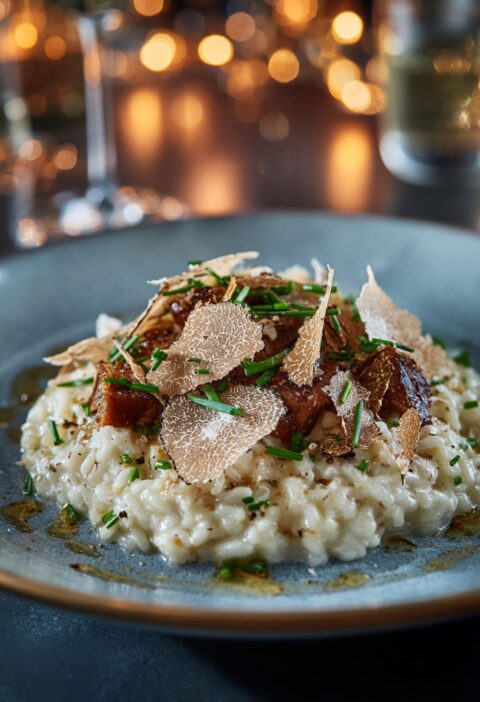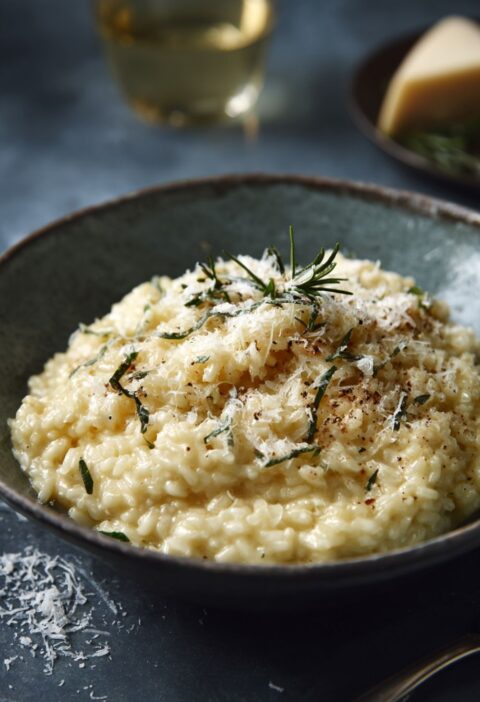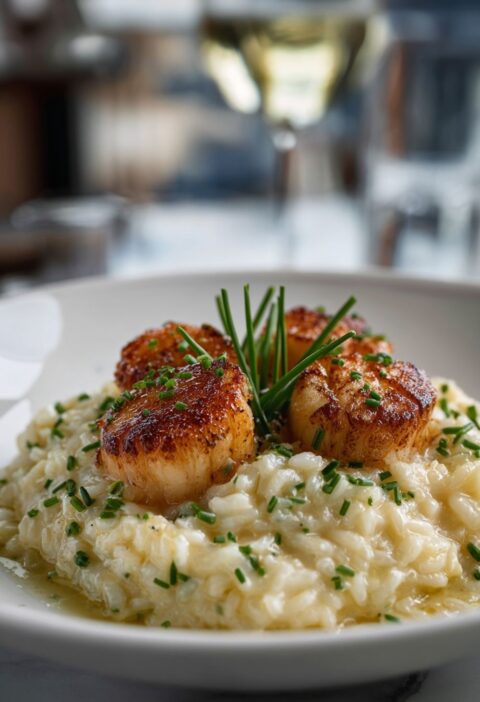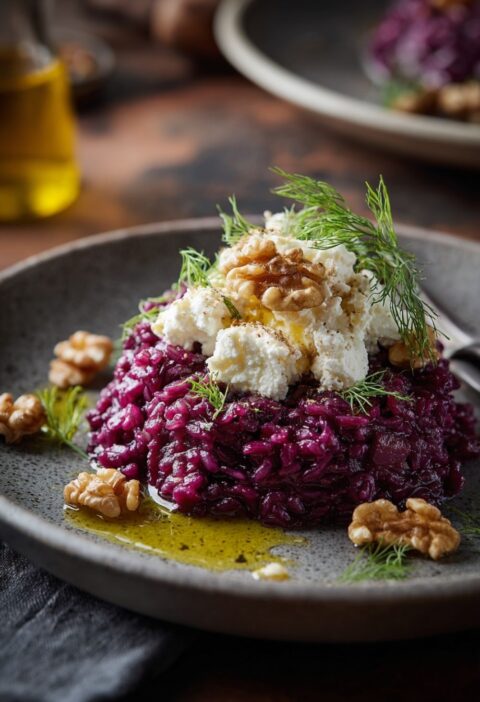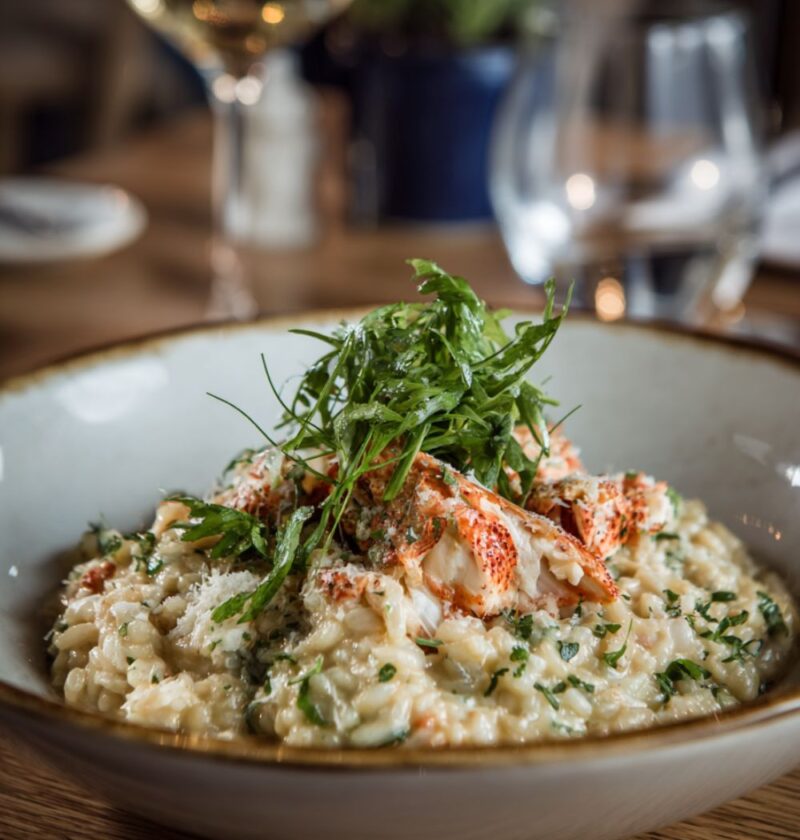
Gordon Ramsay Crab Risotto is a masterclass in balance, combining the creamy, rich texture of a classic Italian risotto with the delicate, sweet flavor of fresh crab. The secret to this dish—as Gordon often emphasizes is “patience and the transition of textures.” It is finished with a touch of lemon zest and fresh herbs to ensure the seafood stays bright and isn’t overwhelmed by the starch.
Try More Risotto Recipes:
- Gordon Ramsay Truffle Risotto Recipe
- Gordon Ramsay Lobster Risotto Recipe
- Gordon Ramsay Asparagus Risotto Recipe
Why You Will Love This Crab Risotto Recipe:
- The Texture: It achieves that perfect all’onda (wavy) consistency—not a thick porridge, but a creamy sauce that flows on the plate.
- Pure Seafood Flavor: By using a high-quality fish or shellfish stock, the crab flavor is reinforced in every single grain of rice.
- Masterclass Technique: Learning to toast the rice and emulsify the butter at the end (the mantecatura) will improve all your future risotto dishes.
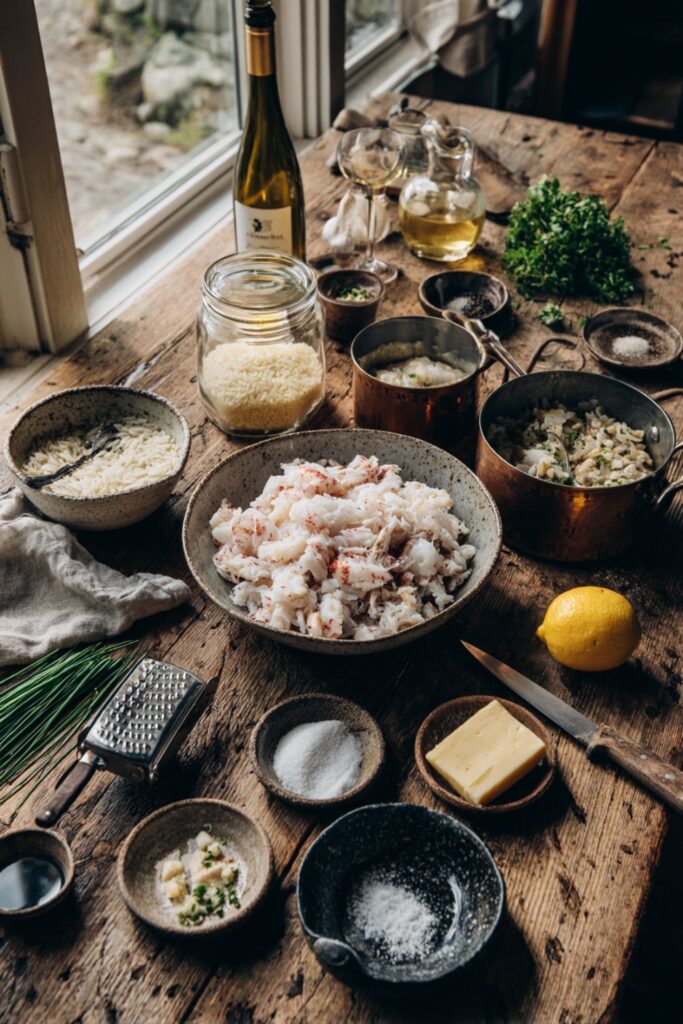
Gordon Ramsay Crab Risotto Ingredients
- The Foundation
- 1 ½ cups Arborio or Carnaroli rice
- 1 ½ quarts Fish or Shellfish stock (kept hot)
- 1 shallot, finely minced
- 2 cloves garlic, minced
- ½ cup dry white wine (like Pinot Grigio or Sauvignon Blanc)
- The Seafood
- 8–10 oz fresh lump crab meat (pick through for shells)
- The Finishers
- 3 tbsp unsalted butter (cold)
- ¼ cup Mascarpone or freshly grated Parmesan (Gordon often uses Mascarpone for extra silkiness)
- Zest of 1 lemon
- 2 tbsp fresh chives or flat-leaf parsley, finely chopped
- Olive oil, salt, and freshly ground black pepper
How To Make Gordon Ramsay Crab Risotto
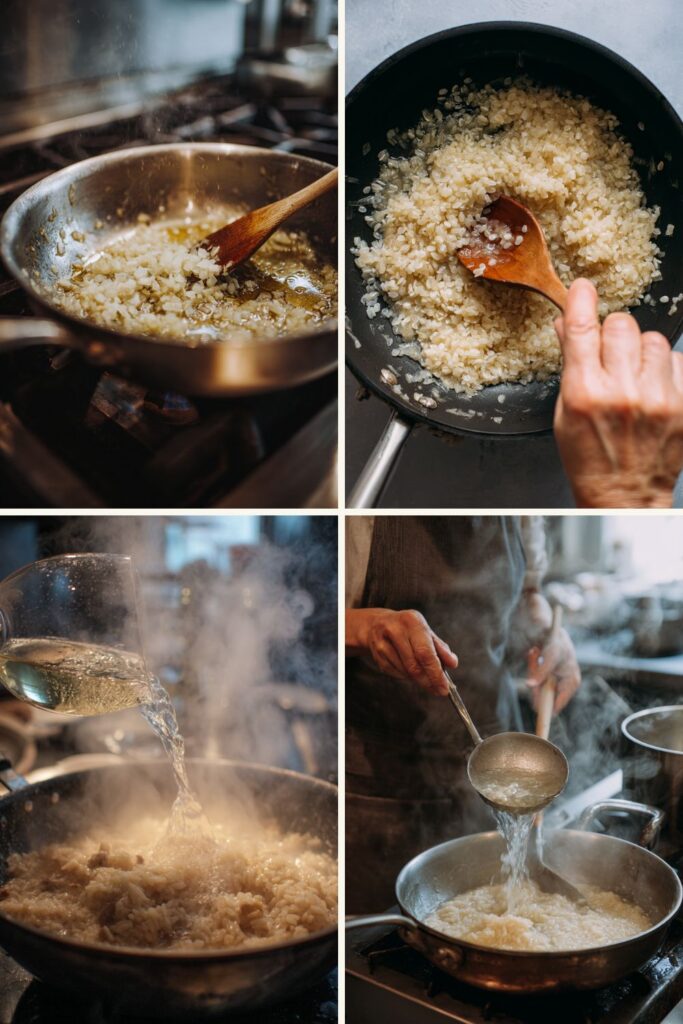
- Sauté Aromatics: Heat a splash of olive oil in a large, wide-bottomed pan over medium heat. Add the shallots and garlic. Sauté for 2–3 minutes until soft but with no color.
- Toast the Rice: Add the rice to the pan. Stir constantly for 2 minutes until the edges of the grains become translucent. This “toasting” locks in the starch so the rice doesn’t turn mushy.
- Deglaze: Pour in the white wine. Stir until the liquid has been almost completely absorbed by the rice.
- The Ladle Method: Add one ladle of hot stock at a time. Stir frequently. Wait until the liquid is absorbed before adding the next ladle. This friction releases the starch, creating the creaminess. Continue for about 15–18 minutes.
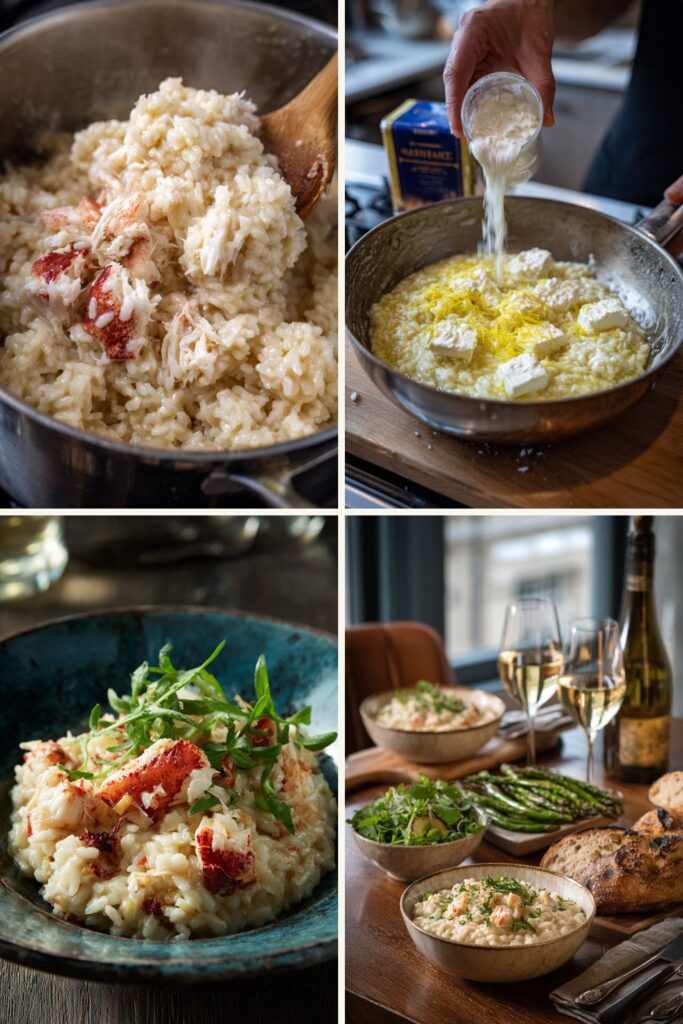
- Fold in the Crab: When the rice is al dente (tender but with a slight bite), add the last splash of stock and gently fold in the crab meat. You want to warm the crab through without breaking the lumps.
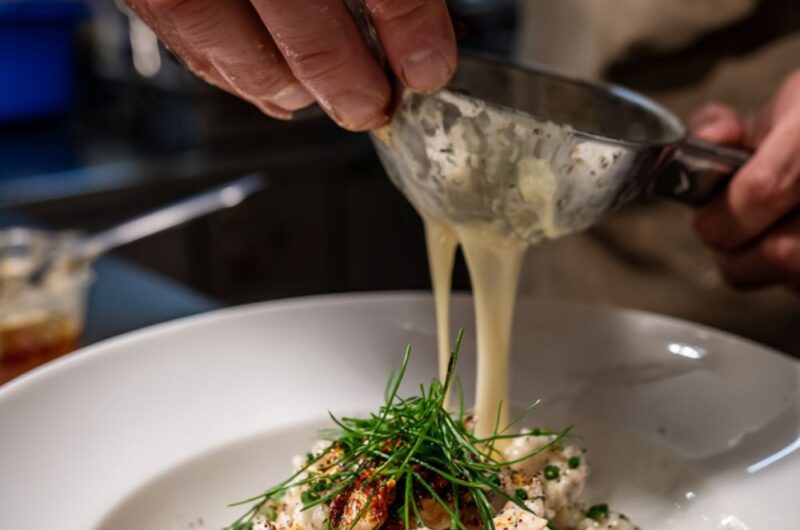
- The Mantecatura: Remove the pan from the heat. This is crucial. Add the cold butter, Mascarpone (or Parmesan), and lemon zest. Vigorously beat it in to create a silky, emulsified sauce.
- Final Touch: Fold in the fresh herbs and season with salt and pepper. The risotto should “flow” when you tilt the plate.
Recipe Tips
- Hot Stock Only: Adding cold stock to hot rice shocks the grain and stops the cooking process, leading to unevenly cooked risotto.
- Don’t Over-Stir: While you need to stir to release starch, constant “beating” throughout the whole process can make the rice gummy. Stir enough to prevent sticking.
- Acid is Key: The lemon zest at the end is non-negotiable; it cuts through the butter and Mascarpone to make the crab “pop.”
What To Serve With Crab Risotto?
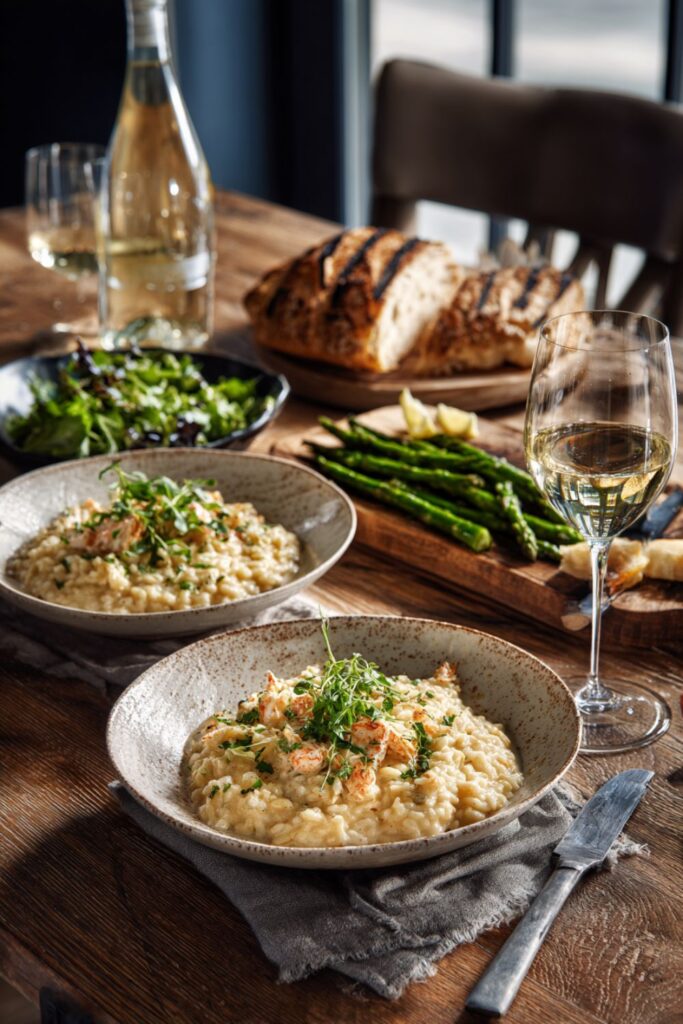
Serve crab risotto with a light lemon-dressed green salad, grilled asparagus, or steamed green beans to keep it fresh. Crusty bread adds texture. Pair with a crisp white wine like Sauvignon Blanc or Pinot Grigio for balance.
How To Store Leftovers Crab Risotto?
- Cool Quickly: Do not leave the risotto sitting out at room temperature for more than an hour. To cool it faster, spread it out in a shallow layer in a container.
- The Fridge (Short Term): Place the cooled risotto in an airtight glass container. Because it contains fresh crab, it is best eaten within 1–2 days.
- The Freezer (Not Recommended): Avoid freezing risotto. The rice grains lose their structure and become unpleasantly grainy and mushy once thawed, and the cream/mascarpone base will likely separate.
How to Reheat (Restoring the Creaminess)?
When you take risotto out of the fridge, it will be very stiff. You need to “loosen” it back up without overcooking the crab.
- Stovetop Method (Best): Place the leftovers in a small pan over medium-low heat.
- Add Liquid: Add a splash of fish stock, chicken broth, or even a little water. Use about 2 tablespoons per cup of risotto.
- Gentle Stirring: Stir gently as it warms. The starch will start to relax. Once it reaches a creamy consistency again, remove it immediately from the heat so the crab doesn’t become rubbery.
- Finish: Add a tiny pat of fresh butter and a squeeze of lemon to brighten the flavors that often dull in the fridge.
FAQs
You must use a high-starch, short-grain rice. Arborio is the most common and easiest to find, providing a thick, creamy consistency. However, many chefs (including Ramsay) often prefer Carnaroli, known as the “king of rice,” because it holds its shape better and is harder to overcook.
While fresh lump crab meat is the gold standard for flavor, you can use high-quality refrigerated “pasteurized” crab meat found in the seafood section. Avoid the shelf-stable canned crab found in the tuna aisle; it is often too salty and the texture is too fine, which will get lost in the rice.
Mantecatura is the Italian word for the final thickening process. You add cold butter and cheese after removing the pan from the burner. The residual heat is enough to melt the fats, while the vigorous stirring emulsifies them into the liquid. Doing this over direct heat can cause the cheese to become stringy or the butter to separate into oil.
Use the “Smear Test.” Take a single grain of rice and smear it on a flat surface. If it’s smooth but has a tiny, white, pin-sized dot of firm starch in the center, it is perfectly al dente.
The wine provides a necessary acidity that cuts through the richness of the starch and butter. If you prefer not to use alcohol, substitute it with a tablespoon of lemon juice or white wine vinegar mixed into a half-cup of stock to ensure the dish doesn’t taste “flat.
More Risotto Recipes:
- Gordon Ramsay’s Shrimp Risotto
- Gordon Ramsay Parmesan Risotto Recipe
- Gordon Ramsay Pea Risotto Recipe
Crab Risotto Nutrition Facts
- Calories: 420 kcal
- Total Fat: 18g
- Saturated Fat: 10g
- Cholesterol: 115mg
- Sodium: 780mg
- Total Carbohydrate: 45g
- Protein: 22g
Gordon Ramsay Crab Risotto Recipe
Course: Risotto, Dinner, Lunch, SidesCuisine: American, ItalianDifficulty: Easy4
servings10
minutes25
minutes420
kcalGordon Ramsay Crab Risotto is a masterclass in balance, combining the creamy, rich texture of a classic Italian risotto with the delicate, sweet flavor of fresh crab. The secret to this dish—as Gordon often emphasizes is “patience and the transition of textures.” It is finished with a touch of lemon zest and fresh herbs to ensure the seafood stays bright and isn’t overwhelmed by the starch.
Ingredients
1 ½ cups Arborio or Carnaroli rice
1 ½ quarts Fish or Shellfish stock (kept hot)
1 shallot, finely minced
2 cloves garlic, minced
½ cup dry white wine (like Pinot Grigio or Sauvignon Blanc)
- The Seafood
8–10 oz fresh lump crab meat (pick through for shells)
- The Finishers
3 tbsp unsalted butter (cold)
¼ cup Mascarpone or freshly grated Parmesan (Gordon often uses Mascarpone for extra silkiness)
Zest of 1 lemon
2 tbsp fresh chives or flat-leaf parsley, finely chopped
Olive oil, salt, and freshly ground black pepper
Directions
- Sauté Aromatics: Heat a splash of olive oil in a large, wide-bottomed pan over medium heat. Add the shallots and garlic. Sauté for 2–3 minutes until soft but with no color.
- Toast the Rice: Add the rice to the pan. Stir constantly for 2 minutes until the edges of the grains become translucent. This “toasting” locks in the starch so the rice doesn’t turn mushy.
- Deglaze: Pour in the white wine. Stir until the liquid has been almost completely absorbed by the rice.
- The Ladle Method: Add one ladle of hot stock at a time. Stir frequently. Wait until the liquid is absorbed before adding the next ladle. This friction releases the starch, creating the creaminess. Continue for about 15–18 minutes.
- Fold in the Crab: When the rice is al dente (tender but with a slight bite), add the last splash of stock and gently fold in the crab meat. You want to warm the crab through without breaking the lumps.
- The Mantecatura: Remove the pan from the heat. This is crucial. Add the cold butter, Mascarpone (or Parmesan), and lemon zest. Vigorously beat it in to create a silky, emulsified sauce.
- Final Touch: Fold in the fresh herbs and season with salt and pepper. The risotto should “flow” when you tilt the plate.
Notes
- Hot Stock Only: Adding cold stock to hot rice shocks the grain and stops the cooking process, leading to unevenly cooked risotto.
Don’t Over-Stir: While you need to stir to release starch, constant “beating” throughout the whole process can make the rice gummy. Stir enough to prevent sticking.
Acid is Key: The lemon zest at the end is non-negotiable; it cuts through the butter and Mascarpone to make the crab “pop.”