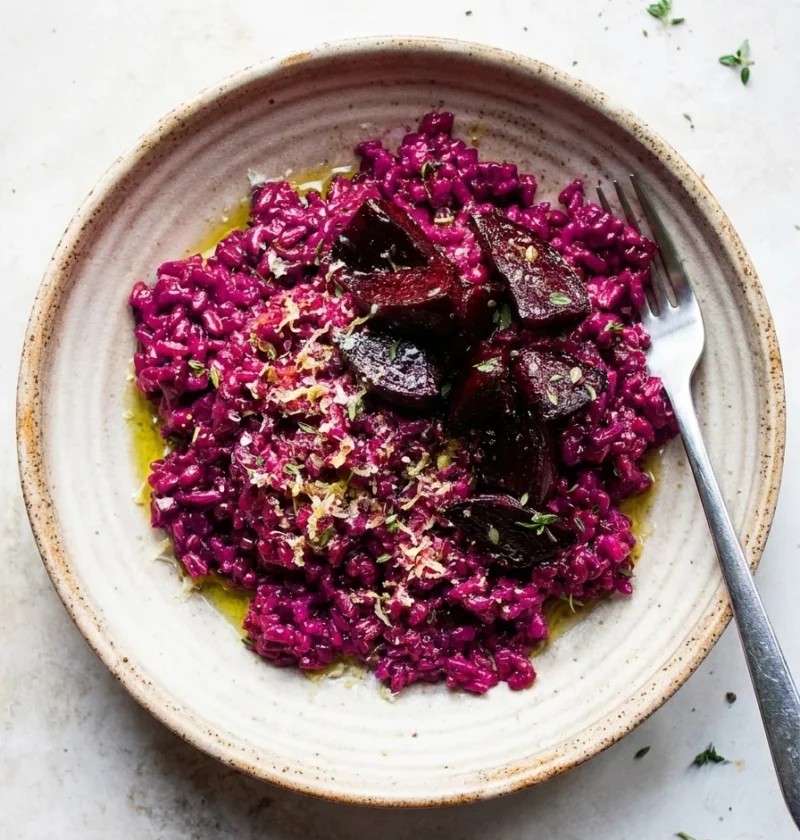
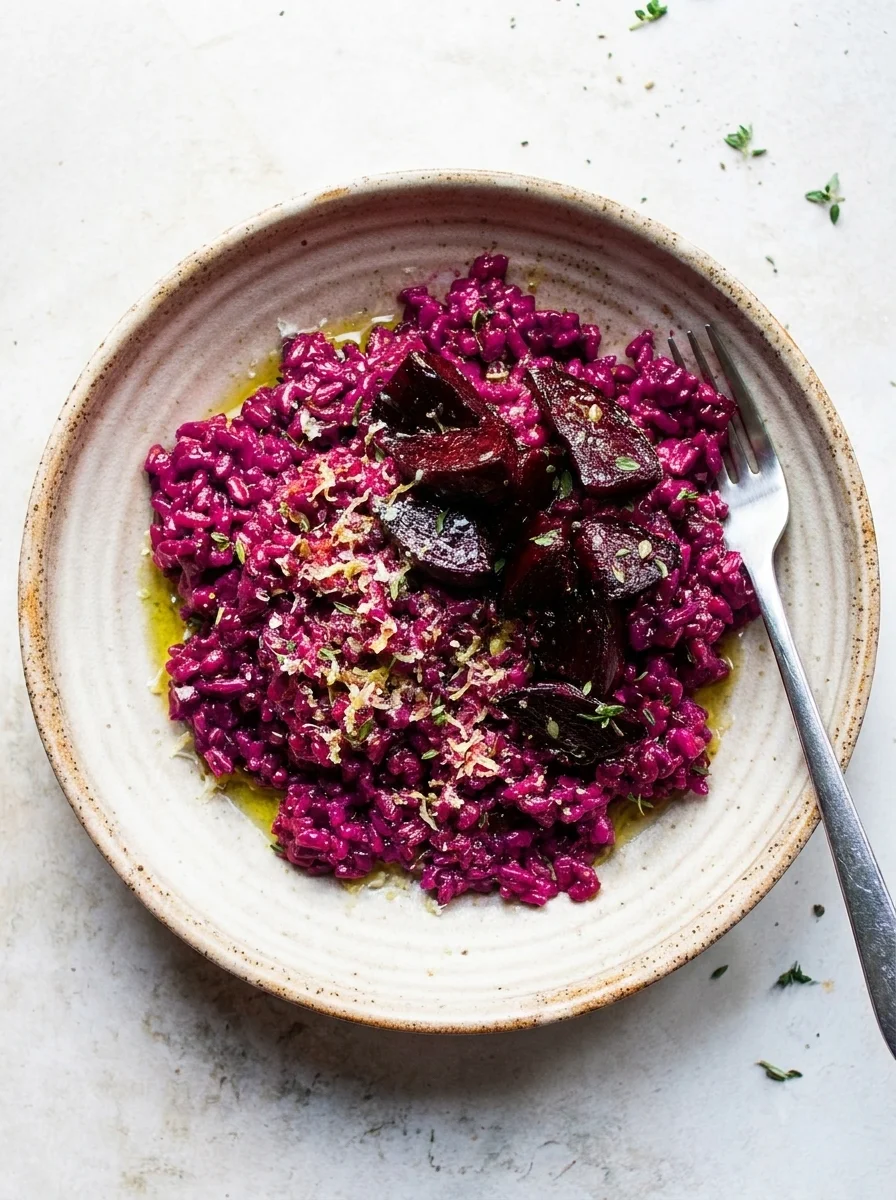
Gordon Ramsay’s beetroot risotto is earthy, sweet and stained a deep purple, made with roasted beetroot, red wine, thyme, vegetable stock and Parmesan, ready in about 55 minutes. This is the only risotto in his books that uses red wine instead of white, which gives it a deeper, more rounded flavour than you’d expect.
The recipe comes straight from Ultimate Home Cooking, where he writes that beetroot “has a lovely sweet, earthy flavour and will stain the risotto a glorious purple colour.” He also adds balsamic vinegar and sugar to the roasting tin, which caramelises the outside of each chunk before it goes into the rice.
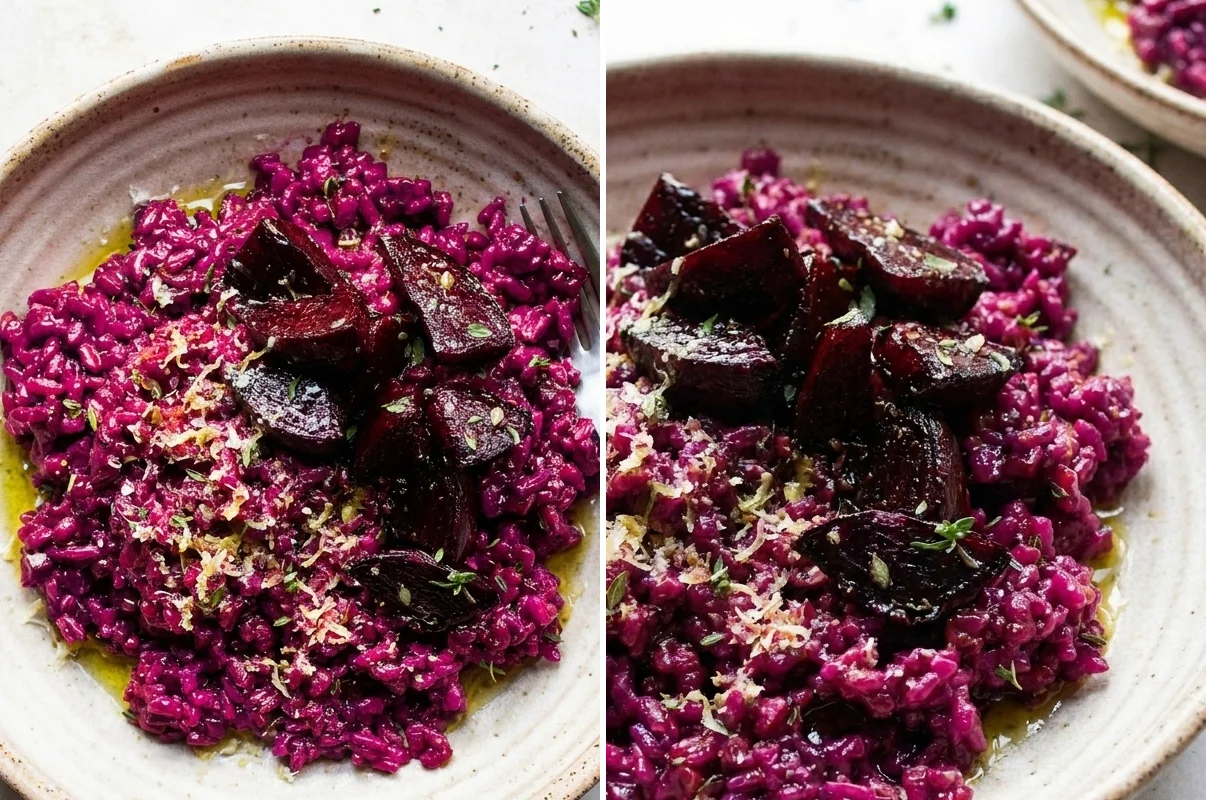
What surprised me when I made this is how the beetroot splits into two textures. Two-thirds gets stirred through so it colours the rice, while the last third sits on top in whole chunks so you still get that roasted bite. In his YouTube video he says “risotto should be like lava, it just flows out,” and keeping those whole chunks on top is what gives you contrast against that flowing rice.
Cooked this recipe? Send a photo or tell me what you changed at fans@gordonramsayrecipes.uk and I’ll share your experience live on this page.
Gordon Ramsay Beetroot Risotto Recipe
Course: Dinners, RisottoCuisine: British, ItalianDifficulty: Medium4
servings10
minutes45
minutes380
kcal55
minutesA deep purple risotto with roasted beetroot chunks, red wine and Parmesan, straight from Ramsay’s Ultimate Home Cooking. The balsamic and sugar in the roasting bring out the beetroot’s natural sweetness. About £2.15 per person and completely vegetarian.
Ingredients
- For the Beetroot:
500g beetroot, peeled and chopped into chunks
Olive oil, for roasting
Pinch of sugar
Dash of balsamic vinegar
Sea salt and freshly ground black pepper
- For the Risotto:
Extra virgin olive oil
2 banana shallots, halved lengthways and finely sliced
2 garlic cloves, finely sliced
4 thyme sprigs, leaves only
250g Arborio rice
150ml red wine
800ml hot vegetable stock
50g butter
75g Parmesan, grated (vegetarian if needed)
Directions
- Roast the beetroot: Preheat the oven to 180°C/Gas 4. Toss the beetroot chunks with olive oil, sugar, salt, pepper and a dash of balsamic vinegar in a roasting tin. Roast for 30 minutes, then add another dash of balsamic, stir, and cook for 10 more minutes until tender.
- Start the risotto: Place a wide heavy-based pan over medium heat and add olive oil. Sauté the shallots and garlic with salt and pepper until softened but not browning. Stir in the thyme leaves, then pour in the rice and stir until the grains begin to change colour.
- Deglaze with red wine: Pour in the red wine and scrape up any bits from the bottom of the pan. Stir for 2-3 minutes until the rice has absorbed the wine completely.
- Ladle the stock: Add hot vegetable stock one ladle at a time, stirring until each is absorbed before adding the next. Keep going until the rice is just cooked with a rich, creamy consistency.
- Add the beetroot: Stir two-thirds of the roasted beetroot chunks through the risotto.
- Finish: Turn off the heat and stir in the butter and three-quarters of the Parmesan. Taste and adjust the seasoning. Serve dotted with the remaining beetroot, the rest of the Parmesan and a drizzle of olive oil.
FAQs
Why does Ramsay use red wine instead of white?
Every other risotto in his books uses white wine, but this one specifically calls for 150ml of red. The earthiness of red wine works with beetroot in a way white wine doesn’t: it deepens the purple colour and adds body that matches the root vegetable’s sweetness. If you used white here, the risotto would taste thinner and the colour would be more pink than purple. He confirms this on his YouTube video where he makes the dish with Tilly, saying they’re adding red wine “to go with our deep red beetroot theme.” Every copycat recipe uses white wine because none of them have read the cookbook or watched the video.
Why add balsamic vinegar and sugar to the roasting?
The sugar helps caramelise the outside of the beetroot chunks while they roast, and the balsamic adds a sharp sweetness that concentrates in the oven heat. Ramsay adds a second dash of balsamic halfway through the roasting time, which builds layers of flavour rather than dumping it all in at once. Without this step you get plain roasted beetroot, which is fine but much less interesting in a risotto.
Is this risotto vegetarian?
Yes, and Ramsay makes a point of it. He writes in Home Cooking that it’s “a perfect dish for non-meat eaters” and reminds readers that “vegetarian Parmesan is readily available.” The stock is vegetable, not chicken. If you’re cooking for someone who eats fish, a a pan-seared duck breast alongside on the side turns this into something really special.
How much does beetroot risotto cost per serving?
About £8.50 for four servings, so roughly £2.15 per person. Tesco raw beetroot costs about £1.00 for 300g and you need 500g, so two packs. The Parmesan is the biggest single expense at about £2 for 75g (he uses more Parmesan in this recipe than any other risotto in his books). Red wine, rice, stock and aromatics fill the rest. One of the cheapest vegetarian dinners you can make that still looks impressive.
Can I use pre-cooked or vacuum-packed beetroot?
You can, but you’ll miss out on the roasting step which is where the balsamic caramelisation happens. Pre-cooked beetroot is already soft, so it won’t hold its shape as well when you stir two-thirds through the rice. If you’re short on time it’s a reasonable shortcut, just dice it smaller and fold it in gently near the end. The colour will still be great, the texture just won’t be quite as interesting.
Does beetroot risotto store well?
It keeps for two days in the fridge, and the purple colour actually deepens overnight which looks dramatic when you reheat it. The rice stiffens as usual but a splash of stock on low heat brings it back. Be warned though: everything it touches turns purple, so use a container you don’t mind staining. His his roast pork loin with crackling is a better option if you want to cook ahead for a dinner party without the colour management. If you’re planning a dinner party menu, I’ve compared all his risotto recipes by cost and difficulty to help you pick.