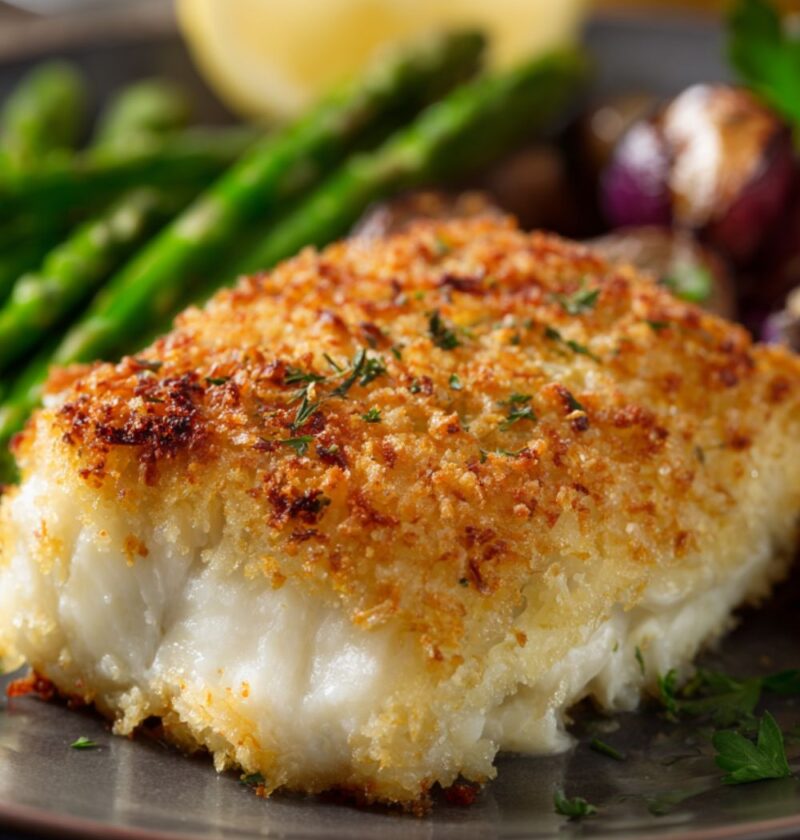
Gordon Ramsay Potato Crusted Halibut is a show-stopping seafood dish that combines delicate, flaky white fish with a crispy, golden “scale” made of potato slices. Often featured in his restaurants, this technique serves a dual purpose: the overlapping potato slices protect the delicate halibut flesh from direct heat, keeping it incredibly moist, while providing the textural crunch of a crust without the need for heavy breading or batter. It is an elegant, technically impressive dish that is surprisingly achievable for the home cook with a little patience.
Try More Recipes:
Why You Will Love This Potato Crusted Halibut Recipe:
- Moisture Lock: The layer of potato acts as a shield, steaming the fish gently from the top while the bottom roasts, ensuring the halibut never dries out.
- Texture Contrast: You get the satisfying crunch of a potato chip combined with the buttery softness of premium fish in a single bite.
- Visual Drama: The “scale” pattern of the potato slices looks professional and intricate on the plate.
- Minimal Ingredients: The recipe relies on the quality of the fish and the technique, rather than a long list of spices or sauces.
- Versatile: While halibut is the star, this technique works beautifully with other firm white fish like cod or sea bass.
Gordon Ramsay Potato Crusted Halibut Ingredients
The Fish & Crust
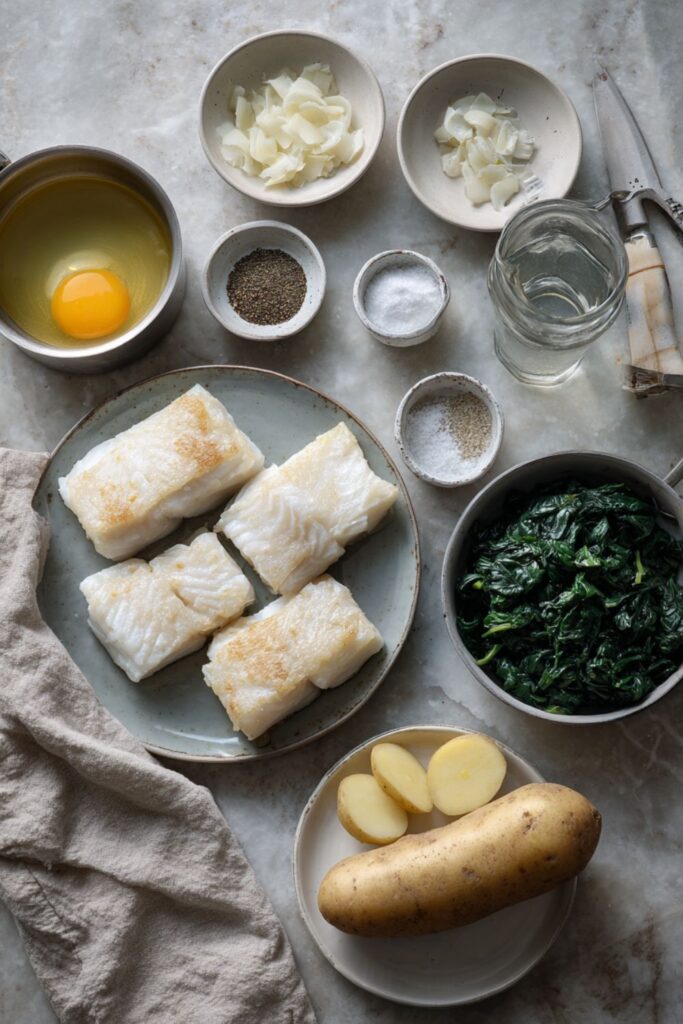
- 4 halibut fillets (skinless, about 6 oz / 170g each)
- 1 large Yukon Gold or Maris Piper potato (long shape is best)
- 1 large egg yolk, beaten
- 2 tbsp clarified butter (or vegetable oil/ghee) for frying
- Salt and white pepper (for seasoning)
The Serving Suggestion (Classic Ramsay Pairing)
- Minestrone of vegetables or sautéed spinach
- Lemon butter sauce or a simple drizzle of high-quality olive oil and lemon juice
How To Make Gordon Ramsay Potato Crusted Halibut
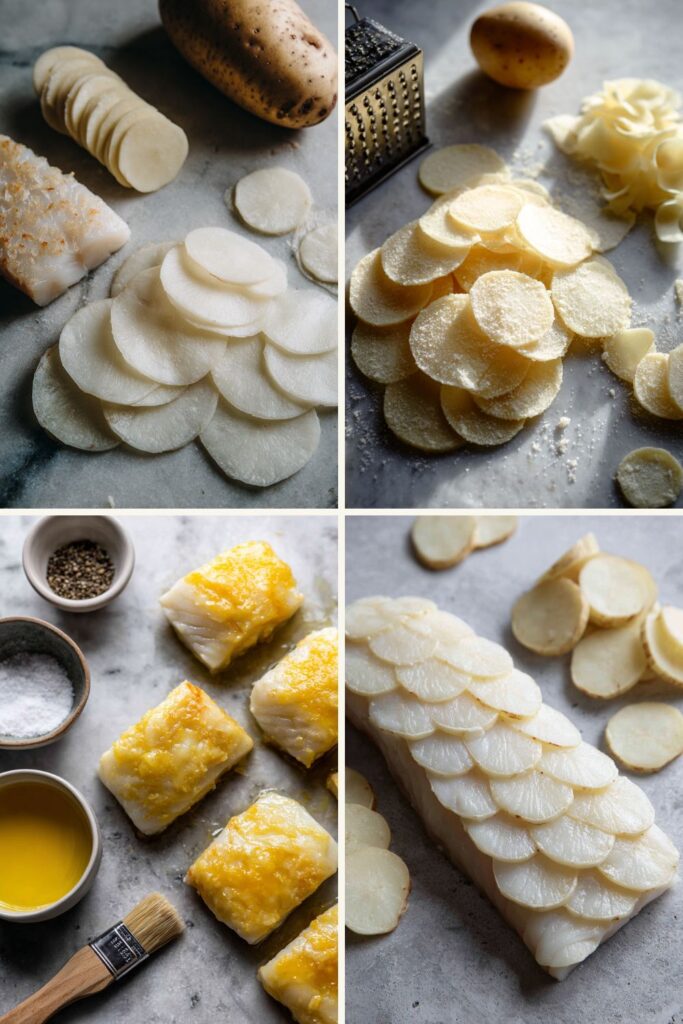
- Prep the Potatoes: Peel the potato. Using a mandoline or a very sharp knife, slice the potato into paper-thin rounds. They must be thin enough to bend slightly without snapping, but not translucent.
- Tip: Using a small round cookie cutter (approx 1.5 – 2 cm) to stamp out perfect circles from the slices makes the final presentation much neater, though it is optional.
- Prep the Fish: Pat the halibut fillets completely dry with paper towels. Season both sides generously with salt and white pepper.
- The Binding Agent: Brush the top side of each halibut fillet with the beaten egg yolk. This acts as the glue for the potatoes.
- Create the Crust: Lay the potato slices onto the egg-washed side of the fish. Start from one end and overlap them slightly (like roof tiles or fish scales) until the entire surface is covered. Gently press down to seal them.
- Crucial Step: Brush a little more clarified butter or egg wash over the top of the potatoes and season the potato layer with a pinch of salt.
- Chill: Place the prepared fillets in the fridge for 15 to 20 minutes. This helps the egg set and the “scales” adhere firmly so they don’t slide off during cooking.
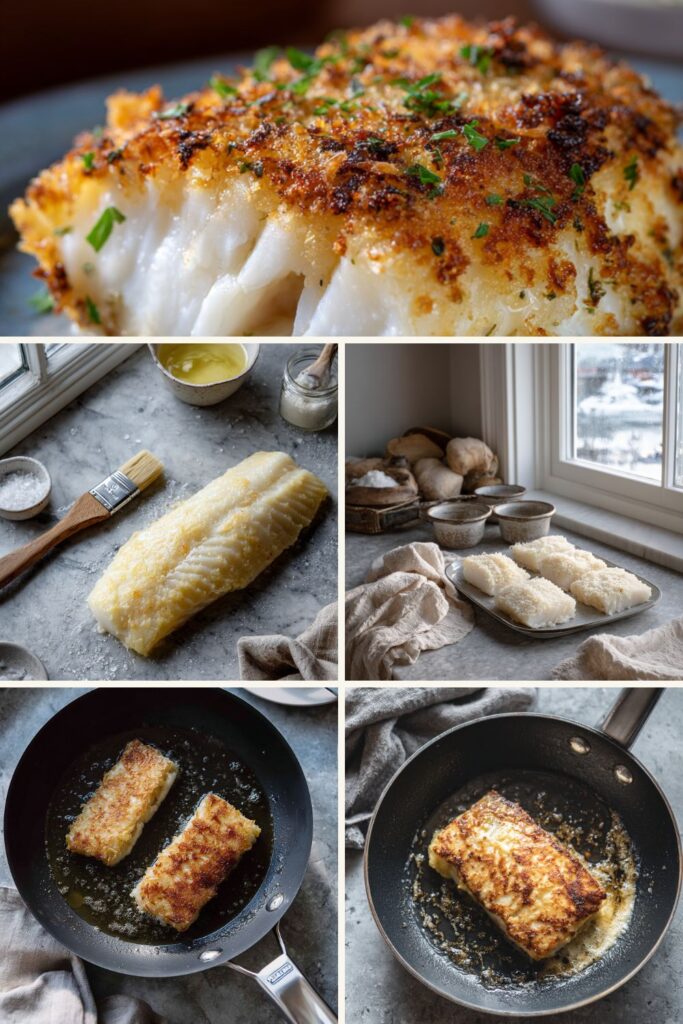
- Pan-Sear: Preheat a non-stick skillet over medium-high heat. Add the clarified butter or oil.
- Cook the Crust: Carefully place the fish into the pan, potato-side down. Press down gently with a spatula for 10 seconds to ensure even contact. Cook for 3 to 4 minutes until the potatoes are golden brown and crispy. Do not try to move the fish too early.
- Flip and Finish: Carefully flip the fish over. Cook for another 3 to 4 minutes on the flesh side, depending on the thickness of the fillet. The fish is done when it is opaque and flakes easily with a fork.
- Alternative: If the fillets are very thick, sear the potato side for 3 minutes, flip, and transfer the pan to a 200°C (400°F) oven for 4-5 minutes to finish cooking through.
Recipe Tips
- Mandoline Safety: A mandoline is the best tool for consistent thin slices. Always use the hand guard. If cutting by hand, take your time; thick potatoes will not cook through before the fish overcooks.
- Clarified Butter: Regular butter contains milk solids that burn at high heat. Clarified butter (ghee) allows you to get the potatoes golden and crispy without burning the pan.
- Potato Choice: Use a waxy or semi-waxy potato (like Yukon Gold) rather than a very starchy baking potato, as they hold their shape better when sliced thin.
- The “Glue”: Do not skip the egg yolk. Without it, the potatoes will slide right off when you flip the fish.
What To Serve With Potato Crusted Halibut?
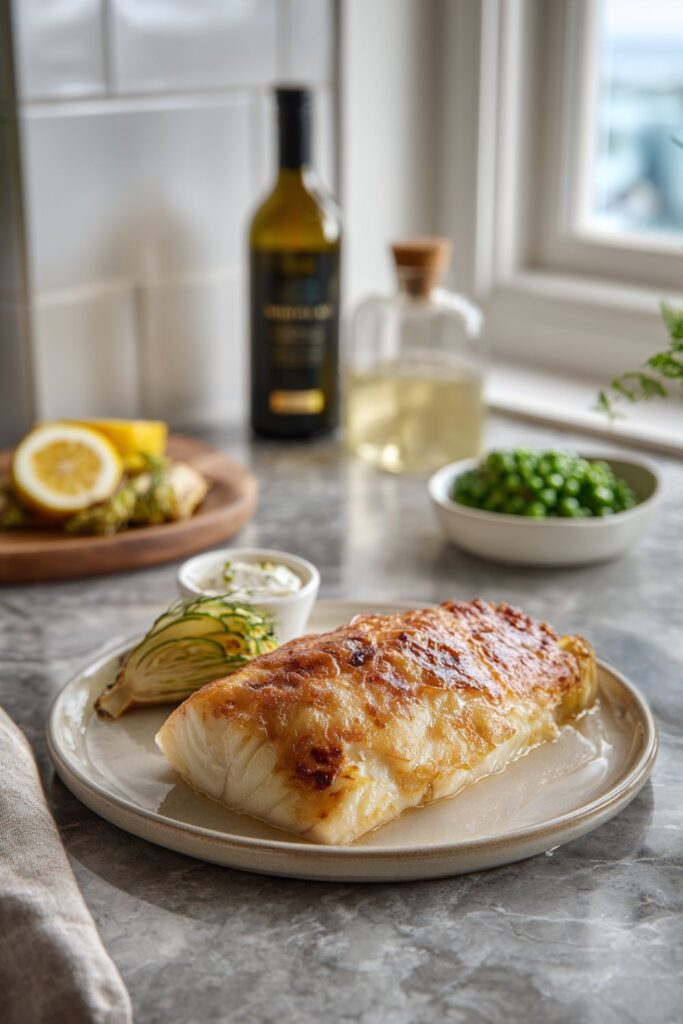
This is a rich dish that benefits from acidic or fresh sides.
- Vegetables: Sautéed zucchini ribbons, minted peas, or braised fennel.
- Sauce: A Beurre Blanc or a lemon-caper sauce complements the richness of the potato crust.
- Carb: Since the potato is already on the fish, you don’t necessarily need a heavy starch side like mashed potatoes.
How To Store Leftovers Potato Crusted Halibut?
- Refrigerate: Store in an airtight container for up to 2 days.
- Freeze: It is not recommended to freeze this dish once cooked. The potato crust will become soggy and mushy upon thawing, and the delicate texture of the halibut will be ruined.
How To Reheat Leftovers Potato Crusted Halibut?
- Oven (Only Method): Do not microwave, or the crust will be soggy. Place the fish on a wire rack over a baking sheet. Heat in a 180°C (350°F) oven for 8 to 10 minutes.
- The Grill/Broiler: You can flash the potato side under the broiler for the last minute to re-crisp the edges.
FAQs
Yes, but it must be completely thawed and thoroughly patted dry. Excess moisture is the enemy of the potato crust adhering properly.
This usually happens if the fish wasn’t dry enough before adding egg wash, or if you skipped the refrigeration step. The protein in the egg needs time to bond the potato to the fish.
Yes, sweet potato works beautifully and adds a nice color contrast, though it burns slightly faster than white potato, so lower the heat a fraction.
More Recipes:
- Gordon Ramsay Prawn Pasta Recipe
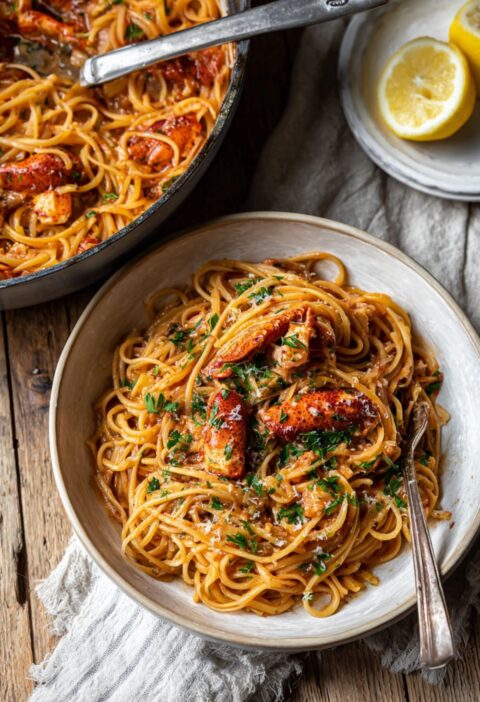
- Gordon Ramsay’s Lobster Pasta
- Gordon Ramsay Pan Fried Salmon Recipe
Potato Crusted Halibut Nutrition Facts
Serving Size: 1 fillet
- Calories: 320 kcal
- Total Fat: 14g
- Saturated Fat: 4g
- Cholesterol: 85mg
- Sodium: 210mg
- Total Carbohydrate: 15g
- Dietary Fiber: 2g
- Sugars: 1g
- Protein: 32g
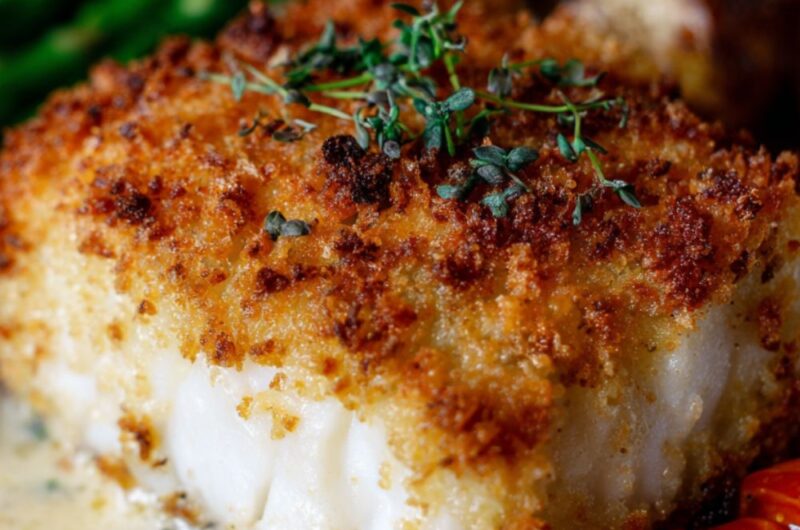
Gordon Ramsay’s Potato Crusted Halibut Recipe
4
servings25
minutes8
minutes320
kcalGordon Ramsay Potato Crusted Halibut is a show-stopping seafood dish that combines delicate, flaky white fish with a crispy, golden “scale” made of potato slices. Often featured in his restaurants, this technique serves a dual purpose: the overlapping potato slices protect the delicate halibut flesh from direct heat, keeping it incredibly moist, while providing the textural crunch of a crust without the need for heavy breading or batter. It is an elegant, technically impressive dish that is surprisingly achievable for the home cook with a little patience.
Ingredients
4 halibut fillets (skinless, about 6 oz / 170g each)
1 large Yukon Gold or Maris Piper potato (long shape is best)
1 large egg yolk, beaten
2 tbsp clarified butter (or vegetable oil/ghee) for frying
Salt and white pepper (for seasoning)
- The Serving Suggestion (Classic Ramsay Pairing)
Minestrone of vegetables or sautéed spinach
Lemon butter sauce or a simple drizzle of high-quality olive oil and lemon juice
Directions
- Prep the Potatoes: Peel the potato. Using a mandoline or a very sharp knife, slice the potato into paper-thin rounds. They must be thin enough to bend slightly without snapping, but not translucent. Tip: Using a small round cookie cutter (approx 1.5 – 2 cm) to stamp out perfect circles from the slices makes the final presentation much neater, though it is optional.
- Prep the Fish: Pat the halibut fillets completely dry with paper towels. Season both sides generously with salt and white pepper.
- The Binding Agent: Brush the top side of each halibut fillet with the beaten egg yolk. This acts as the glue for the potatoes.
- Create the Crust: Lay the potato slices onto the egg-washed side of the fish. Start from one end and overlap them slightly (like roof tiles or fish scales) until the entire surface is covered. Gently press down to seal them. Crucial Step: Brush a little more clarified butter or egg wash over the top of the potatoes and season the potato layer with a pinch of salt.
- Chill: Place the prepared fillets in the fridge for 15 to 20 minutes. This helps the egg set and the “scales” adhere firmly so they don’t slide off during cooking.
- Pan-Sear: Preheat a non-stick skillet over medium-high heat. Add the clarified butter or oil.
- Cook the Crust: Carefully place the fish into the pan, potato-side down. Press down gently with a spatula for 10 seconds to ensure even contact. Cook for 3 to 4 minutes until the potatoes are golden brown and crispy. Do not try to move the fish too early.
- Flip and Finish: Carefully flip the fish over. Cook for another 3 to 4 minutes on the flesh side, depending on the thickness of the fillet. The fish is done when it is opaque and flakes easily with a fork. Alternative: If the fillets are very thick, sear the potato side for 3 minutes, flip, and transfer the pan to a 200°C (400°F) oven for 4-5 minutes to finish cooking through.
Notes
- Mandoline Safety: A mandoline is the best tool for consistent thin slices. Always use the hand guard. If cutting by hand, take your time; thick potatoes will not cook through before the fish overcooks.
Clarified Butter: Regular butter contains milk solids that burn at high heat. Clarified butter (ghee) allows you to get the potatoes golden and crispy without burning the pan.
Potato Choice: Use a waxy or semi-waxy potato (like Yukon Gold) rather than a very starchy baking potato, as they hold their shape better when sliced thin.
The “Glue”: Do not skip the egg yolk. Without it, the potatoes will slide right off when you flip the fish.