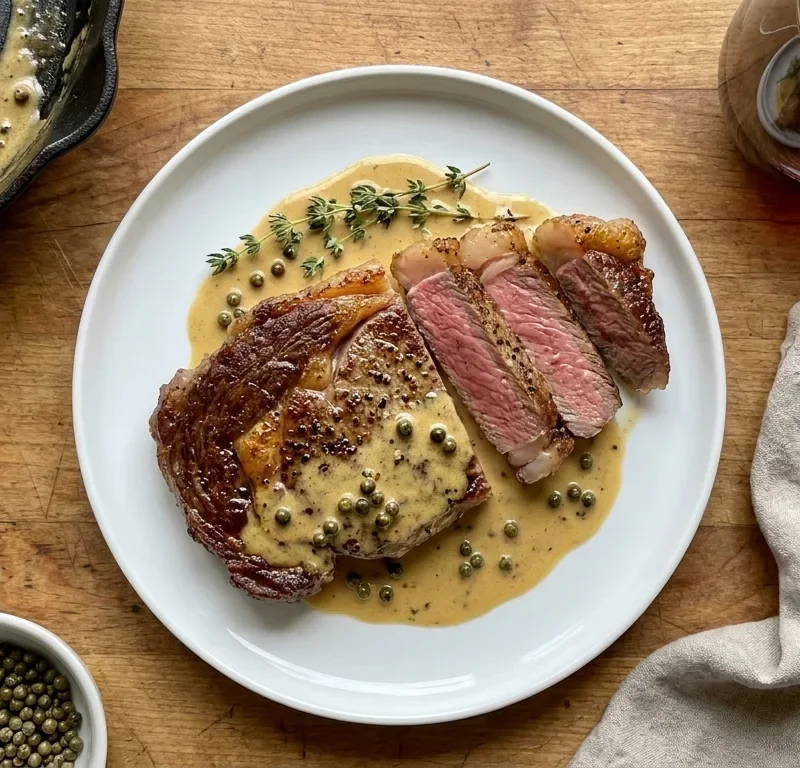
Gordon Ramsay’s steak au poivre from Quick and Delicious sears rib-eye in olive oil, bastes in thyme butter, then builds a cognac cream sauce. Green peppercorns, Dijon mustard and Worcestershire give it a depth most online recipes miss. The whole thing is on the table in 15 minutes.
Ramsay writes in Quick and Delicious that ordering steak in restaurants but never cooking it at home “is just daft.” His point is that the technique is simple: sear, baste, rest, build sauce. The only thing you can’t fake is the steak itself, because “no amount of basting can make a rubbish steak taste anything but rubbish.”
The GBPF has a second version using sirloin with English mustard instead of Dijon, which gives a sharper hotter sauce. He also uses crushed black peppercorns on the steak before searing, which the Q&D version skips. Between the two books you get the full picture of how he thinks about this dish.
Cooked this recipe? Send a photo or tell me what you changed at fans@gordonramsayrecipes.uk and I’ll share your experience live on this page.
Gordon Ramsay’s Steak Au Poivre
Course: DinnerCuisine: French, BritishDifficulty: Medium2
servings5
minutes15
minutes750
kcal20
minutesFrom Quick and Delicious, rib-eye steaks basted in thyme butter with a cognac, green peppercorn and double cream sauce. Six ingredients in the sauce that most recipes leave out: garlic, Dijon mustard, Worcestershire, thyme, green peppercorns and beef stock.
Ingredients
- For the steak:
2 x 250g (9 oz) rib-eye steaks
2 tbsp olive oil
Sea salt and freshly ground black pepper
4 thyme sprigs
30g (1 oz) butter
- For the sauce:
1 banana shallot, peeled and finely diced
2 tbsp green peppercorns
1 large garlic clove, peeled and finely chopped
50ml (3 tbsp) cognac
1 tsp Dijon mustard
200ml (scant 1 cup) beef stock
2 dashes of Worcestershire sauce
150ml (⅔ cup) double cream (heavy cream)
Directions
- Sear: Rub the olive oil over the steaks and season with salt and pepper. Heat a large non-stick frying pan until smoking hot. Add the steaks and cook for 2-3 minutes on each side for medium-rare.
- Baste: Remove the pan from the heat. Add the thyme and butter and baste, baste, baste the steaks for at least a minute. Turn and baste again. Transfer the steaks and thyme to a warm plate to rest.
- Sauté: Return the pan to medium heat. Add the shallot and cook for 2-3 minutes until softened. Add the green peppercorns and garlic and cook for 1-2 minutes.
- Flambé: Pour in the cognac and carefully flambé. Let the flames die down.
- Build the sauce: Add the mustard, beef stock and Worcestershire sauce. Stir well, increase the heat and let the stock reduce by half. Add the cream and cook for another few minutes until thickened.
- Serve: Place the steaks on plates. Pour any resting juices into the sauce, stir well, season to taste, and pour generously over the steaks.
Notes
- Let the steaks rest while you build the sauce. The pan stays hot and the fond is where all the flavour lives.
FAQs
What is the difference between the two cookbook versions?
The Quick and Delicious version uses rib-eye with green peppercorns in the sauce only, Dijon mustard and Worcestershire. The steak gets basted with thyme butter but no peppercorns are pressed into the meat.
The GBPF version uses sirloin, crushed black peppercorns on the steak before searing, then a sauce with green peppercorns in brine, English mustard and cognac. No stock, no Worcestershire, just cream and mustard. Ramsay’s peppercorn sauce has a deeper breakdown of the sauce on its own.
Why does Ramsay flambé the cognac?
Flambéing burns off the raw alcohol so you get the flavour of the cognac without the harshness. Ramsay pours it into the hot pan, tilts to catch the flame and lets it burn out.
If you’re nervous about the flames, just let the cognac simmer for 30 seconds without lighting it. The alcohol evaporates either way. Brandy works as a substitute if you don’t have cognac.
Which cut works best for steak au poivre?
Ramsay uses rib-eye in Quick and Delicious and sirloin in Great British Pub Food. Both are thick, well-marbled cuts that stand up to the crushed pepper and rich cream sauce.
Neither version uses fillet. Fillet is too lean and mild for the aggressive pepper crust, so you want a cut with enough fat to balance the heat. The sirloin steak method covers the basic searing technique if you go that route.
What does Ramsay serve with steak au poivre?
The Q&D cookbook suggests mustard mash or green beans with tarragon and pine nuts. Both are designed to balance the richness of the cream sauce without competing with it.
For a French bistro feel, serve with thin crispy chips for a proper steak frites. The steak Diane uses a similar pan-sauce technique if you want mushrooms and tarragon instead of peppercorns.
How do you get a better sear on the crust?
“Always dry meat and fish thoroughly with kitchen paper before frying” Ramsay writes in the Q&D chef’s tip. Any moisture on the surface slows caramelisation and you risk overcooking while waiting for colour.
He also says “baste, baste, baste the steaks for at least a minute” with the thyme butter. That repeated spooning is what gives the rich nutty finish that makes restaurant steak taste different from what most people cook at home.