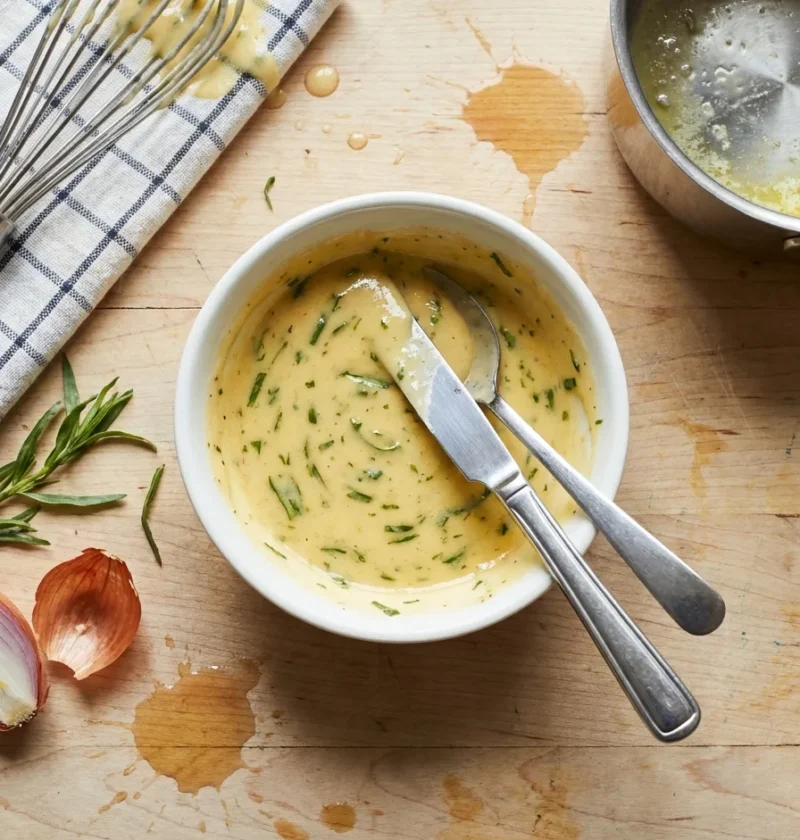
Gordon Ramsay’s béarnaise sauce is sharp, silky and buttery, made with a tarragon vinegar reduction, egg yolks and clarified butter, ready in about 25 minutes. With only a handful of ingredients, the technique has to be right because there’s nothing to hide behind.
In Bread Street Kitchen, Ramsay builds his reduction with both red and white wine vinegar, three tablespoons of each. Most béarnaise recipes call for white alone, but the red adds a rounder depth that stops the sauce tasting flat. That double-vinegar base is what separates his version.
The sauce lives or dies at the bain-marie. The bowl sits over barely simmering water but never touches it, because direct contact scrambles the yolks in seconds. Once the sabayon holds a ribbon trail, you pull it off the heat and start adding butter.
Cooked this recipe? Send a photo or tell me what you changed at fans@gordonramsayrecipes.uk and I’ll share your experience live on this page.

Gordon Ramsay Béarnaise Sauce Recipe
Course: SaucesCuisine: British, FrenchDifficulty: Medium4-6
servings10
minutes15
minutes260
kcal25
minutesGordon Ramsay’s béarnaise from Bread Street Kitchen, built on a double-vinegar reduction with tarragon, egg yolks and clarified butter. Sharp, silky and thick enough to coat the back of a spoon.
Ingredients
- For the Reduction:
3 tbsp red wine vinegar
3 tbsp white wine vinegar
1 shallot, very finely chopped
Small handful of parsley stalks
Small handful of tarragon sprigs, leaves picked and chopped, stalks kept
- For the Sauce:
175g (6 oz) unsalted butter
3 large egg yolks
1-2 tbsp chopped tarragon leaves (from the sprigs above)
Sea salt and freshly ground black pepper
Directions
- Clarify the butter: Melt the 175g butter in a small saucepan over a low heat. Skim off the white milk solids from the top. Pour the clear golden liquid into a jug, leaving the milky residue behind. Keep it warm but not hot.
- Build the reduction: Put both vinegars into a small pan with the shallot, parsley stalks and tarragon stalks. Bring to the boil, then reduce over a medium heat until you have about 1 tablespoon of liquid left, roughly 5 minutes. Set aside to cool slightly, then strain through a sieve and press the solids to get every drop of flavour out.
- Make the sabayon: Add the egg yolks and strained reduction to a heatproof bowl set over a pan of barely simmering water. The base of the bowl must not touch the water. Whisk continuously for about 2 minutes until the mixture turns pale, thickens and holds a ribbon trail when you lift the whisk.
- Emulsify with butter: Take the bowl off the heat. Slowly drizzle in the warm clarified butter while whisking constantly. Start with just a few drops, then move to a thin steady stream as the sauce thickens. It should reach a glossy, spoonable consistency.
- Finish and serve: Season with salt and pepper. Stir through the chopped tarragon leaves. Serve straight away while warm.
Notes
- Whisk constantly over gentle heat. The second you stop, the yolks scramble.
FAQs
Why does Ramsay use two types of vinegar in his béarnaise?
Most béarnaise recipes use white wine vinegar only, which gives a clean but one-note acidity. In Bread Street Kitchen, Ramsay uses equal parts red and white wine vinegar in his reduction. The red brings a rounder, slightly sweeter depth that balances the sharp tarragon hit.
I’ve made it both ways and the difference is obvious. The single-vinegar version tastes thin and sharp against steak. The double-vinegar version has a fuller flavour that holds its own next to rich meat without being drowned out.
Why does Ramsay separate the tarragon stalks from the leaves?
In Bread Street Kitchen, Ramsay picks the tarragon leaves off the sprigs, chops them and sets them aside. The stalks go straight into the boiling reduction with the vinegar and shallot. The chopped leaves only go in right at the end, once the sauce is completely finished.
The stalks release deep herbal flavour into the reduction because they can handle the heat. Fresh leaves would turn bitter and brown if you boiled them. So you get two layers of tarragon in the finished sauce: cooked depth from the stalks and bright freshness from the leaves stirred through at the last second.
How do you rescue a béarnaise that splits?
Ramsay gives two fixes in Bread Street Kitchen depending on how bad it is. For a slight split where the sauce just looks oily, whisk in an ice cube. The cold shock should pull the emulsion back together.
For a full curdle, start fresh. Put a new egg yolk into a clean heatproof bowl over the simmering water, then whisk the broken mixture back in one tablespoon at a time until it emulsifies again. It costs you an extra yolk but it works every time.
I’ve had to do this once and it genuinely saved the sauce.
Why does Ramsay clarify the butter first?
Whole butter has water and milk solids in it alongside the fat. When those hit the egg yolks, the water fights the emulsion and the sauce is more likely to split. Clarifying removes both, so you’re left with pure butterfat that binds cleanly into the sabayon.
Ramsay calls for clarified butter in the Bread Street Kitchen béarnaise. The hollandaise in Quick and Delicious does the same thing: “melt the butter, carefully pour the golden liquid into a jug, discarding the milky solids at the bottom.” I’ve tried it with whole butter and the sauce held for about ten minutes before it started weeping oil. Not worth the risk.
Does béarnaise sauce keep well?
Not really, and I’d rather be honest about that than pretend it freezes perfectly like some sites claim. Béarnaise is best eaten within the hour. You can hold it covered with cling film over warm water for 30-45 minutes, but once it cools the butter solidifies into a firm block.
Reheating over a gentle bain-marie sometimes brings it back, though it splits just as often. Make it last, serve it first. If you’re cooking for a crowd and need something you can prep ahead, Ramsay’s madeira sauce is much more forgiving, or even a dry steak seasoning rub takes the pressure off entirely.
What does Gordon Ramsay serve béarnaise with?
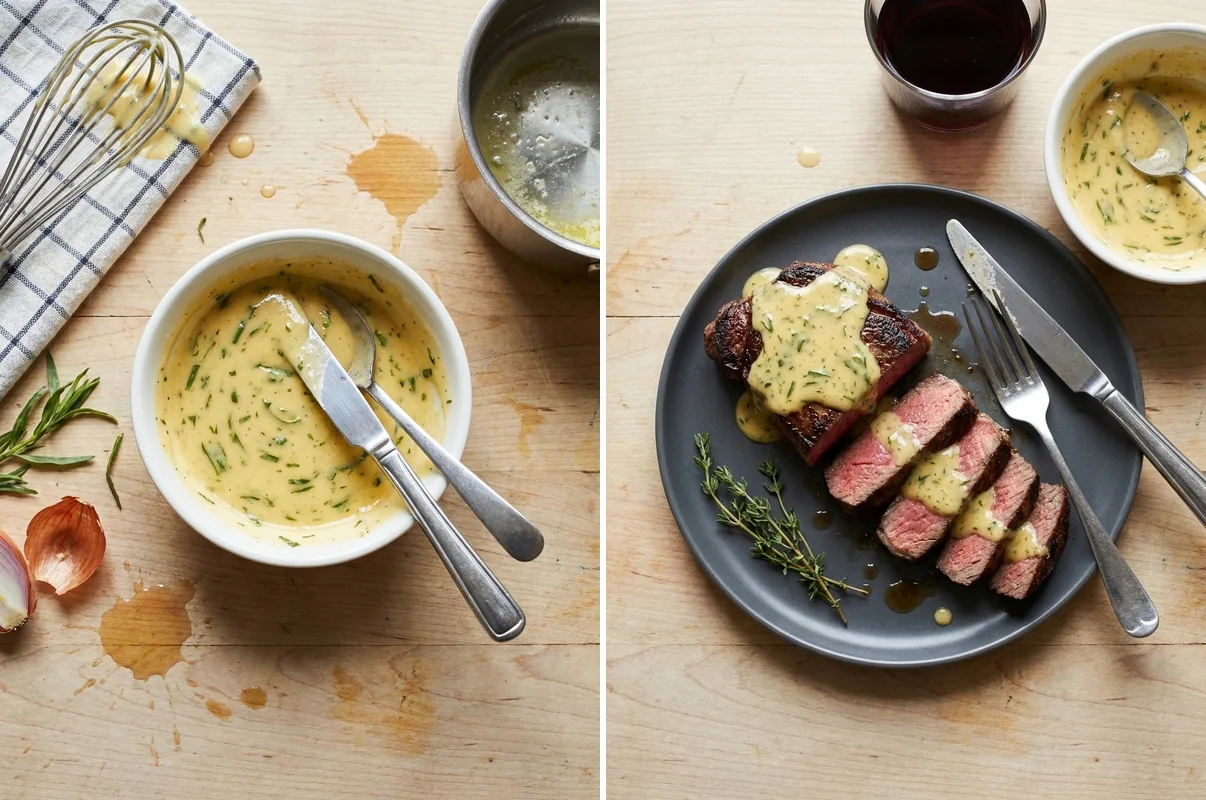
In Bread Street Kitchen he serves it alongside sirloin steak seared in butter with thyme and garlic. In Sunday Lunch he calls béarnaise the traditional partner for steak, though he offers a lighter tomato tarragon dressing as an alternative for anyone watching their weight.
It goes well beyond red meat though. Spooned over grilled salmon it cuts through the oiliness of the fish, and I’ve tucked it inside a beef wellington alongside the duxelles which works brilliantly. Steamed asparagus with warm béarnaise is a classic French starter, or pour it over poached eggs on toast for a breakfast worth getting up for.