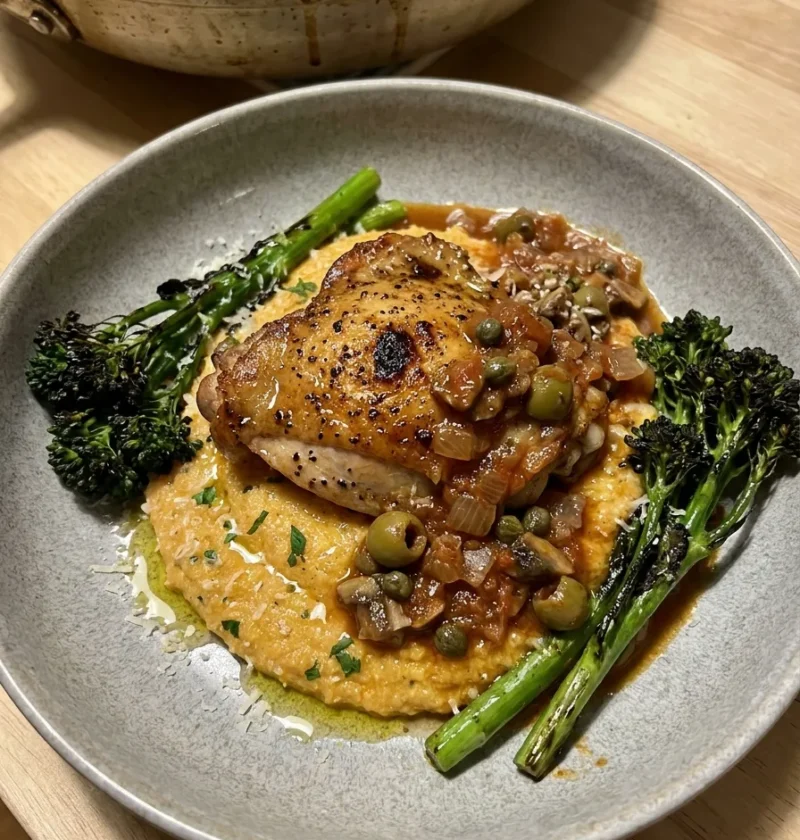
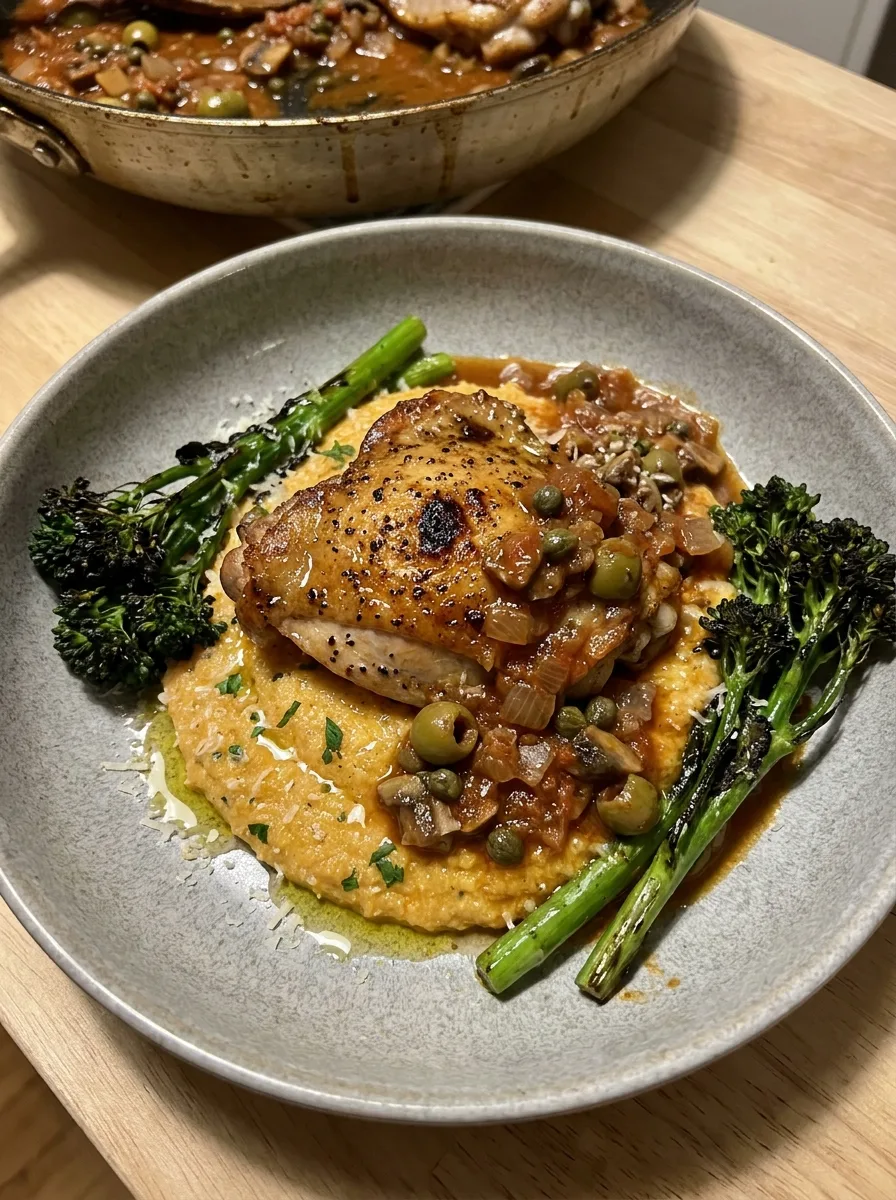
Gordon Ramsay’s chicken cacciatore is skin-on thighs seared in their own fat, then braised with tomatoes, mushrooms, olives, capers, and red wine until the sauce thickens around them. Served over cheesy Parmesan polenta with grilled broccolini. About 45 minutes, feeds four.
This recipe comes from Next Level Kitchen and an earlier version on The F Word. He calls it “the Hunter’s chicken, a dish that dates back centuries in Italy” and says there are “so many variations of this dish.”
The technique that separates this from every other cacciatore recipe online is roasting the tomato purée. Instead of stirring it into the sauce raw, Ramsay pushes it to the centre of the pan and fries it directly on the hot surface. He says “the difference in flavour when you roast tomato purée is night and day” because it removes the acidity and deepens the tomato taste.
Cooked this recipe? Send a photo or tell me what you changed at fans@gordonramsayrecipes.uk and I’ll share your experience live on this page.
Gordon Ramsay Chicken Cacciatore
Course: DinnerCuisine: ItalianDifficulty: Easy4
servings10
minutes35
minutes520
kcal45
minutesHunter’s chicken from Ramsay’s Next Level Kitchen. Thighs seared in rendered chicken fat, braised with tomatoes, mushrooms, red wine, olives, and capers, finished in the oven. The roasted tomato purée technique is what gives this sauce its depth. Served with Parmesan polenta. About 520 kcal per serving.
Ingredients
- For the cacciatore:
4 bone-in, skin-on chicken thighs
1 large onion, roughly chopped
150g (5 oz) chestnut mushrooms, left whole
200g (7 oz) cherry tomatoes, left whole
2-3 garlic cloves, finely chopped
1 tbsp tomato purée
1 x 400g tin chopped tomatoes
100ml (3½ fl oz) red wine
150ml (5 fl oz) chicken stock
Handful of green olives, left whole
1 tbsp capers
1 tbsp balsamic vinegar
Few sprigs of rosemary and thyme, leaves picked and roughly chopped
Pinch of chilli flakes
Olive oil, for cooking
25g (1 oz) butter
Sea salt and freshly ground black pepper
- For the polenta:
750ml (1¼ pints) chicken stock
150g (5 oz) quick-cook polenta
30g (1 oz) Parmesan, finely grated, plus extra to finish
15g (½ oz) butter
1 tbsp chopped flat leaf parsley
Drizzle of extra virgin olive oil
- For the broccolini:
200g (7 oz) tenderstem broccoli, halved lengthways
Olive oil, for drizzling
Pinch of chilli flakes
1 tsp balsamic vinegar
Sea salt and freshly ground black pepper
Directions
- Sear the chicken: Season the thighs with salt and pepper. Heat a splash of olive oil in a large ovenproof pan over a medium-high heat. Lay the thighs skin-side down and cook for 4-5 minutes until the skin is golden and the fat has rendered. Flip briefly, then remove to a plate. Preheat the oven to 180°C (350°F).
- Build the sauce: In the same pan with the chicken fat, add the onion with a little olive oil. Cook for 3-4 minutes until starting to soften. Add the rosemary, thyme, and chilli flakes. Add the whole mushrooms and cherry tomatoes, season, and add the butter. Cook until the tomatoes start to blister and the mushrooms release their liquid.
- Roast the tomato purée: Push the vegetables aside and add the tomato purée to the centre of the pan. Let it fry directly on the hot surface for about a minute, then stir it through the vegetables. This removes the acidity and deepens the flavour.
- Add the liquids: Pour in the red wine and let it evaporate. Add the tinned tomatoes and chicken stock. Stir in the balsamic vinegar. Season and bring to a simmer.
- Braise the chicken: Nestle the thighs back in skin-side up so the skin stays crispy. Spoon sauce around (not over) the skin. Transfer to the oven for 15 minutes.
- Make the polenta: Bring the chicken stock to the boil, season, and add a drizzle of olive oil. Slowly whisk in the polenta. Cook for a few minutes until thick. Take off the heat and beat in the Parmesan, butter, and parsley. Finish with a drizzle of extra virgin olive oil.
- Grill the broccolini: Toss in olive oil, salt, pepper, and chilli flakes. Grill on a hot griddle pan until charred. Finish with the balsamic vinegar.
- Finish and serve: Remove the cacciatore from the oven. Scatter the olives and capers into the sauce and stir through. Spoon polenta onto plates, place a thigh on top, and spoon the sauce over. Arrange broccolini alongside and finish with grated Parmesan.
FAQs
Why does Ramsay roast the tomato purée?
Most recipes stir tomato purée straight into the sauce, which leaves a raw, acidic taste. Ramsay pushes the vegetables aside, drops the purée directly onto the hot pan, and fries it for a minute before mixing it in.
He calls the difference “night and day.” The direct heat caramelises the sugars in the purée and burns off the sharp acidity, leaving a deeper, roasted tomato flavour that you can’t get any other way. It’s the same principle as why a roasted tomato tastes sweeter than a raw one.
Can you use chicken breast instead of thighs?
In the F Word version of this dish, Ramsay does exactly that. He slices chicken breasts in half into thin escalopes, dusts them in seasoned flour, and sears them. The flour “protects the outside of the breast and stops it from drying out.”
Breast cooks faster, so it only needs 7-8 minutes simmering in the sauce instead of 15 in the oven. The thigh version is more forgiving because the dark meat stays moist even if you overcook it slightly.
Why add the olives and capers at the end?
Ramsay adds them after the oven, not before. Cooking olives and capers for too long softens them and dulls their flavour. Adding them at the end preserves the “saltiness” from the olives and the “tartness” from the capers, which is what gives cacciatore its signature punchy finish.
Fresh basil goes in at the very end too, chiffonaded and scattered through the sauce. If you like Italian flavours, his spaghetti bolognese uses a similar build-the-base approach with wine and tomatoes.
What is the best cheese for the polenta?
On Next Level Kitchen he uses aged Parmesan with butter, which gives a rich, salty, creamy polenta. On The F Word he uses fontina cheese instead, which melts smoother and has a slightly tangy, buttery flavour.
Either works. The key is whisking the cheese in off the heat: “if you boil it, the cheese starts to lose its fat and it looks greasy.” Polenta sets quickly, so serve it straight away or loosen it with a splash of hot stock if it thickens.
Does chicken cacciatore store well?
Better than most chicken dishes. The sauce keeps the meat moist and the flavours actually improve overnight as everything melds together. Fridge for 3-4 days, freezer for 2 months.
The polenta doesn’t store as well, but Ramsay has a trick for leftovers: “once you’ve used it, the leftovers you can refrigerate, cut into croutons and fry, and they’re the most amazing crouton, especially in a salad.” Cold polenta firms up, so slice it and pan-fry until golden on both sides. Try those crispy polenta croutons in a Caesar salad for a completely different meal.
What makes this different from a regular chicken stew?
Cacciatore means “hunter’s style” and the defining ingredients are the Mediterranean trio: olives, capers, and wine. Without those three, you’ve got a chicken stew. With them, you’ve got cacciatore.
Ramsay layers those flavours at different stages: wine goes in early to deglaze and reduce, tomatoes go in the middle to build body, and olives and capers go in at the very end to keep their bite. The balsamic vinegar is his personal addition for colour and an extra layer of acidity that ties everything together.