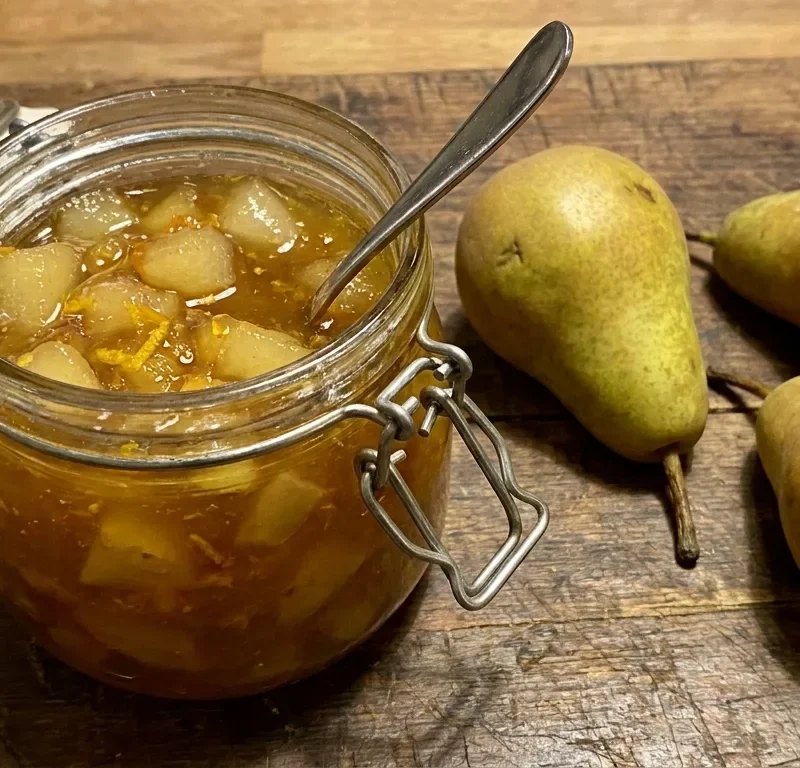
Gordon Ramsay’s pear and saffron chutney from his Christmas video is Williams pears and cooking apples simmered with saffron, orange, ginger and white wine vinegar until golden and chunky. He makes it alongside his honey glazed ham. Keeps for up to six months in a sealed jar.
I could not find this recipe in any of his 22 cookbooks, but he makes it step by step in the video. He gives exact amounts for two spices: a teaspoon of cinnamon and a teaspoon of cayenne. For the sugar, vinegar and fruit I matched standard British chutney ratios to what he shows on screen.
He says “the pear is the star of the chutney so keep it quite rustic” and warns not to chop it too fine. The saffron gives it a deep golden colour and the orange lifts everything.
Cooked this recipe? Send a photo or tell me what you changed at fans@gordonramsayrecipes.uk and I’ll share your experience live on this page.
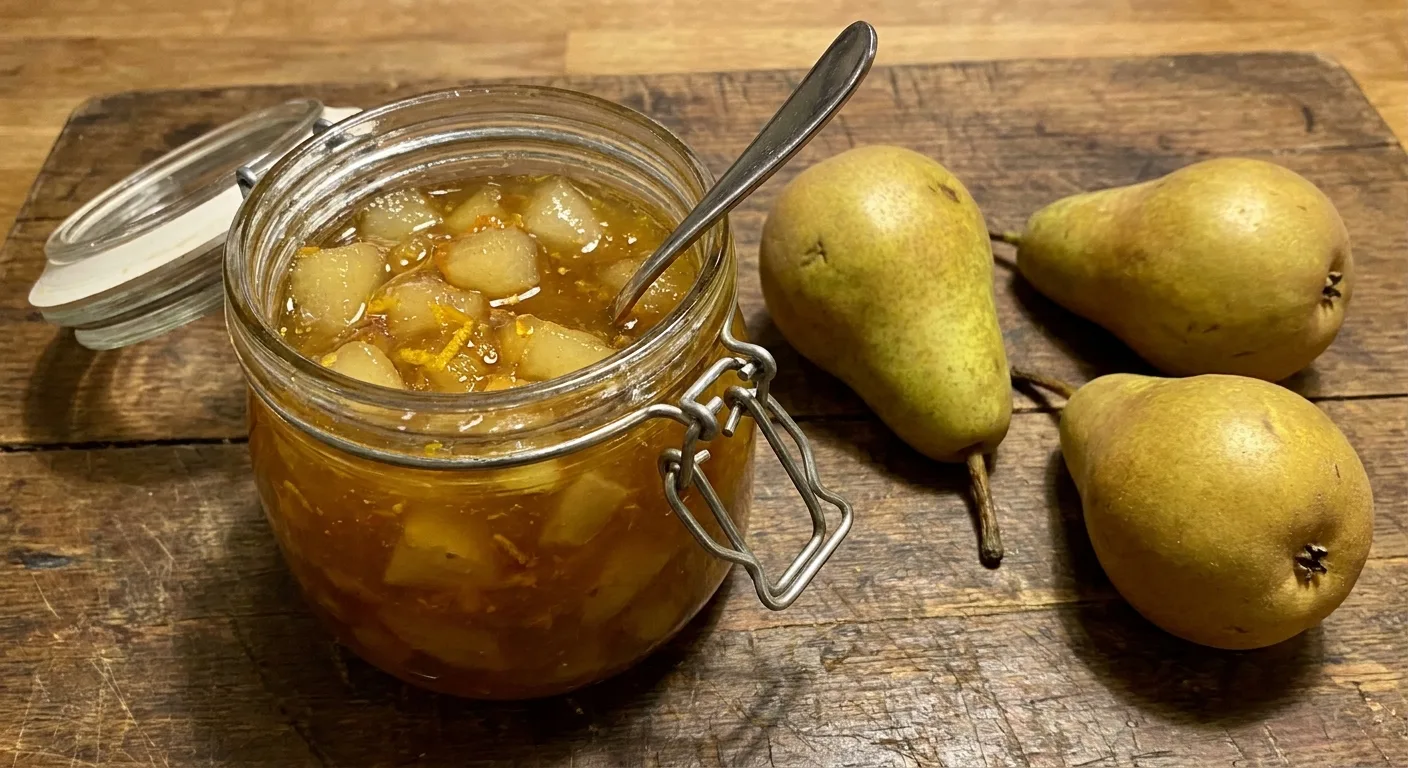
Gordon Ramsay’s Pear and Saffron Chutney
Course: CondimentCuisine: BritishDifficulty: Easy2-3
jars10
minutes20
minutes30
kcal per tbsp30 minutes
From his Christmas honey glazed ham video. Ramsay gives exact spice amounts on camera but cooks the rest by eye, so the sugar, vinegar and fruit quantities here follow standard British chutney ratios matched to what he shows. Makes 2-3 jars and keeps for 6 months.
Ingredients
1 onion, finely sliced
2 tbsp olive oil
50g (2 inch) piece of fresh ginger, grated
½ tsp freshly grated nutmeg
1 tsp ground cinnamon
1 tsp cayenne pepper
100g (3½ oz) demerara sugar
200ml (generous ¾ cup) white wine vinegar
2 Williams pears, peeled and cut into rustic chunks
2 cooking apples, peeled and chopped
100g (3½ oz) sultanas (golden raisins)
Pinch of saffron threads
Zest and juice of 2 oranges
2 tomatoes, roughly chopped
Directions
- Sweat the onion: Heat the olive oil in a large saucepan over a medium heat. Add the onion and cook gently without colouring until soft.
- Add the spices: Grate in the ginger and cook for a minute. Add the nutmeg, cinnamon and cayenne and stir through for another minute until fragrant.
- Dissolve the sugar: Add the demerara sugar and stir until dissolved. Pour in the white wine vinegar and let it bubble for a minute.
- Add the fruit: Add the pears in rustic chunks, the chopped apples, sultanas and saffron. Add the orange zest and juice. Ramsay says “the orange and the saffron go brilliantly well together.”
- Simmer: Bring to the boil, then reduce the heat and cook for 15 minutes until the pears are soft but still holding their shape and the liquid has reduced to a syrupy consistency.
- Finish with tomatoes: Add the chopped tomatoes, stir through and cook for just 30 seconds. They add freshness, so do not let them break down.
- Jar up: Spoon into sterilised jars and seal while hot. Ramsay says “as it matures its flavour gets better and better.”
Notes
- Ramsay gives exact amounts for the cinnamon and cayenne in the video. The sugar, vinegar and fruit quantities follow standard British chutney ratios matched to what he shows on screen. If the balance needs adjusting, add more vinegar for tang or more sugar for sweetness. If you make this, please leave a comment and let me know how the quantities worked for you.
FAQs
What does Ramsay serve this chutney with?
He makes it as part of his Christmas honey glazed ham, so it is designed to go alongside Ramsay’s gammon. The sweetness of the pear and the kick of cayenne cut through the rich, salty meat.
He also says it is “fantastic with cheese but equally delicious with fish, whether it is a roasted cod or a grilled fillet of mackerel.” A cheese board with strong cheddar or stilton and a spoonful of this chutney is one of the easiest Christmas starters you can put together. Ramsay’s chicken liver pâté with a spoonful on top is another classic.
Why do the tomatoes go in last?
Because tomatoes cooked for 15 minutes turn to sauce and disappear into the base. Added in the last 30 seconds, they keep their shape and give the chutney a burst of freshness that lifts the whole jar.
Most chutney recipes cook the tomatoes from the start, which is why they end up tasting one-note sweet. Ramsay adds them right at the end so you get that contrast between soft, jammy pear and bright, fresh tomato in the same spoonful.
How long does the chutney keep?
Up to six months in a sealed, sterilised jar at room temperature. Ramsay says “as it matures its flavour gets better and better,” so making it a few weeks before Christmas is ideal.
Once opened, keep it in the fridge and use within about 4 weeks. Sterilise the jars by running them through a hot dishwasher cycle or heating them in the oven at 140°C (280°F) for 10 minutes.
Can you use different pears?
Ramsay uses Williams pears because they are sweet, juicy and hold their shape when cooked. Conference pears work well as a UK substitute because they are available year-round at Tesco and Sainsbury’s.
Avoid very ripe or soft pears because they break down into mush. You want the chunks to stay visible. He says to keep it “quite rustic” so the pear stays the star of the jar, not dissolved into a smooth paste.
What makes this different from a regular chutney?
The saffron and orange. Most British chutneys are brown, vinegary and heavy. This one is golden and fragrant because the saffron gives it colour and depth while the orange zest and juice brighten everything.
Ramsay says he “recently spent a lot of time in India where chutneys originated” and learned that Indian chutneys are “normally fresh, spicier and quite sour” compared to the cooked, sweet British style. This recipe sits somewhere between the two: cooked but still bright, sweet but with cayenne heat.