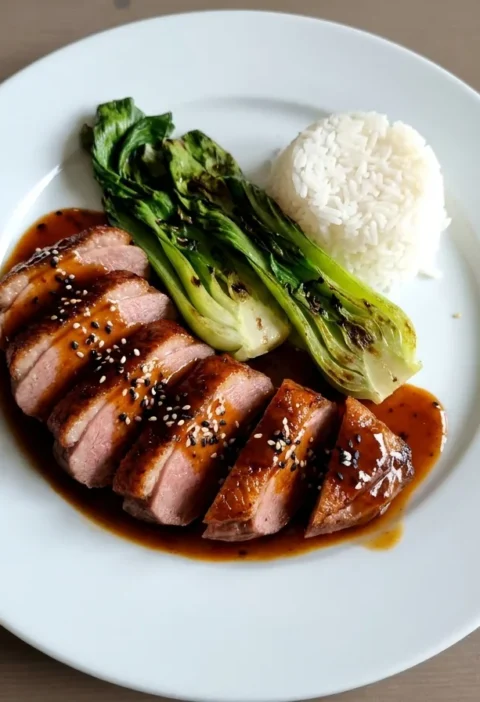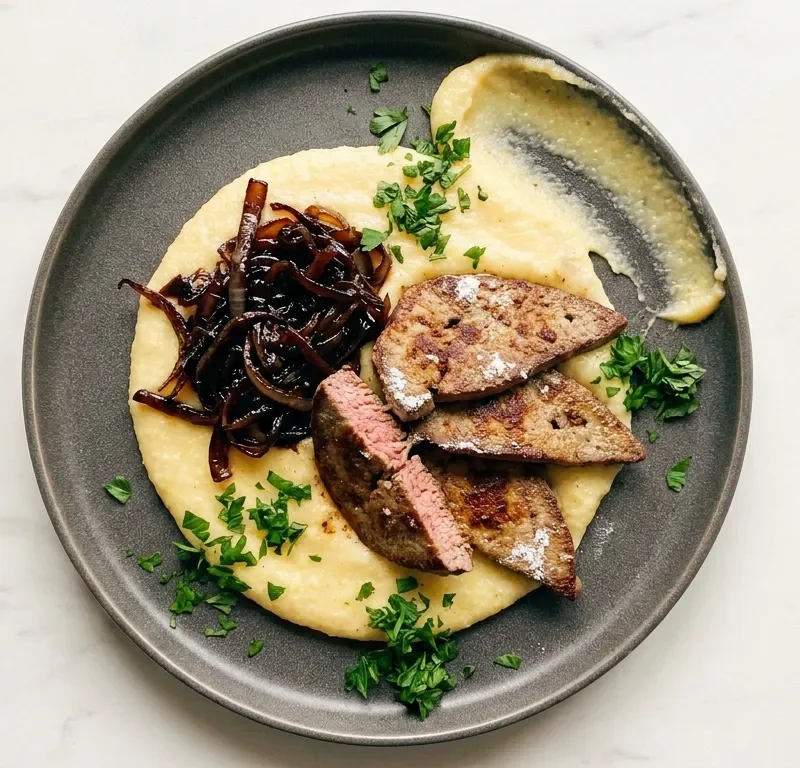
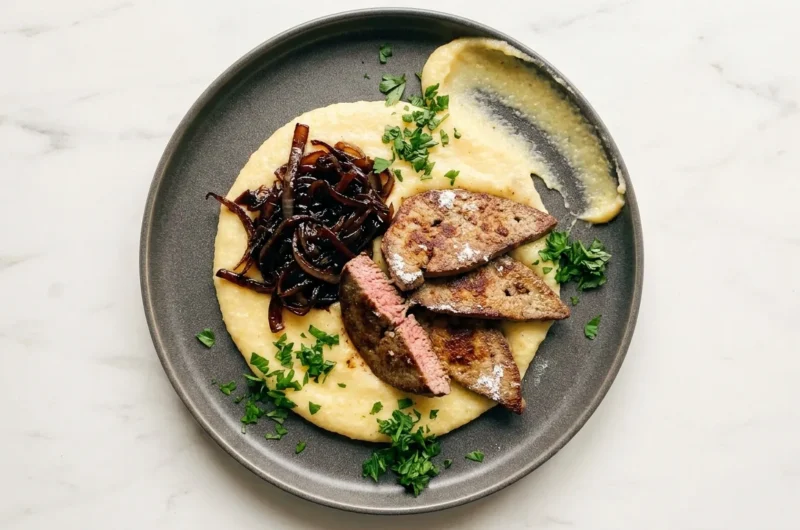
Gordon Ramsay’s beef liver recipe is thinly sliced calves liver coated in seasoned flour, then seared for just 40 seconds per side so it stays pink in the middle. Served with caramelised onions and lemon polenta. Ready in 35 minutes, serves 4.
In his cookbook he pairs liver with balsamic caramelised onions and a lemon polenta made with crème fraîche, which is a side you won’t find on any other liver recipe online. He calls offal “a personal favourite and a challenge” in Ramsay’s Secrets, so this isn’t a throwaway dish for him.
Most recipes say 3 minutes per side, which turns liver into shoe leather. Ramsay says 40 seconds. That difference matters because liver proteins tighten fast under heat, so even 30 extra seconds pushes it from silky to chalky. If you can cook a steak medium-rare, you can cook this.
Cooked this recipe? Send a photo or tell me what you changed at fans@gordonramsayrecipes.uk and I’ll share your experience live on this page.
Gordon Ramsay’s Calves Liver with Caramelised Onions
Course: DinnersCuisine: BritishDifficulty: Easy4
15
minutes20
minutes480
kcal35
minutesRamsay’s calves liver with balsamic caramelised onions and a crème fraîche lemon polenta. The whole thing takes 35 minutes and most of that is just the onions softening.
Ingredients
- For the liver:
350g (12 oz) calves liver
1 heaped tbsp plain flour
Sea salt and black pepper
1-2 tbsp olive oil
Small handful of flat-leaf parsley, chopped
- For the caramelised onions:
2 sweet onions, peeled and thinly sliced
2 tbsp olive oil
Pinch of caster sugar
Splash of balsamic vinegar
- For the lemon polenta:
200g (7 oz) instant polenta
550ml whole or semi-skimmed milk
550ml chicken stock
2 tbsp crème fraîche
Finely grated zest of 1 lemon
2 tbsp lemon juice
Directions
- Caramelise the onions: Heat the olive oil in a pan and add the onions with a little seasoning. Cover and sweat for 6 to 8 minutes, stirring occasionally, until soft. Remove the lid and increase the heat. Stir in the sugar and cook, stirring often, until the onions are golden brown. Add a splash of balsamic vinegar and let it bubble until well reduced and the pan is quite dry. Keep warm.
- Make the polenta: Heat the milk and stock in a large saucepan with some seasoning. When it begins to simmer, gradually add the polenta while whisking constantly to stop lumps forming. Simmer and stir for about 5 minutes. Take off the heat and stir in the crème fraîche, lemon zest, and juice. Cover and keep warm.
- Prepare the liver: Trim the liver, peeling away the membrane if necessary. Cut into 1cm thick slices, then prise out any larger tubes with the tip of your knife. Mix the flour with a pinch each of salt and pepper on a plate, then lightly coat the liver slices.
- Sear the liver: Heat a large non-stick frying pan over a high heat. Add the olive oil, then fry a few slices of liver for about 40 seconds on each side until nicely browned but still pink in the middle. Remove to a warm plate and repeat with the rest, adding more oil if needed.
- Serve: Spoon the polenta onto warm plates. Top with the caramelised onions and pan-fried liver. Sprinkle over the chopped parsley and serve at once.
FAQs
Why does Ramsay use calves liver instead of beef liver?
Calves liver comes from younger animals, so it tastes milder and cooks more tender than mature beef liver. That’s why Ramsay doesn’t soak his in milk before cooking, the flour coating and fast sear are enough to get a golden crust without any bitterness underneath.
If you can only find beef liver, soak it in whole milk for an hour first because the casein draws out the iron taste that puts most people off. Pat it bone dry after soaking though, because wet liver steams instead of browning. His beef stroganoff has the same problem: wet strips of fillet turn grey instead of golden when the pan isn’t hot enough.
Why is 40 seconds per side enough?
Liver is dense protein with almost no fat, so it cooks much faster than a steak of the same thickness. At 1cm thick, 40 seconds gives you a browned crust while the centre stays pink and creamy. By 2 minutes per side, those proteins have squeezed out all their moisture and you’re chewing on something dry and grainy.
Think of it as the opposite of his beef cheek ragu where the whole point is hours of slow braising to break down tough connective tissue. Liver has none of that tissue, so speed is everything. Get in, get colour, get out.
Can you skip the polenta and serve with mash?
You can, though you’ll lose the lemon brightness that cuts through the richness of the liver. The crème fraîche and lemon zest in Ramsay’s polenta are there for a reason: without them the plate feels heavy because liver and caramelised onions are both rich on their own.
His mashed potatoes work well underneath because the garlic cream has a similar weight to the polenta. Just squeeze some lemon juice over the finished plate to bring back that sharpness you’d get from the original side.
How do you know when liver is overcooked?
Press it with your finger while it’s still in the pan. Soft and giving means it’s pink inside. Firm and springy means you’ve gone too far. The colour changes fast once you pass that window, maybe 20 seconds between pink and grey, which is why working in small batches matters so much.
Ramsay cooks liver the same way he handles his chicken liver pâté: quickly and carefully, because both turn bitter and chalky when overcooked. The pâté gets blended smooth after cooking while this stays in slices, but the searing principle is identical.
Does liver and onions store well as leftovers?
Not really. The liver dries out within hours of cooking because there’s almost no fat to keep it moist. The polenta sets solid as it cools and goes grainy when you reheat it. This is a cook-and-eat-now dish, so only make what you need for the table.
The onions are the exception. They’ll keep for 3 days in the fridge because the balsamic and sugar preserve them well. Stir the leftovers through his bolognese or pile them onto a sandwich the next day.