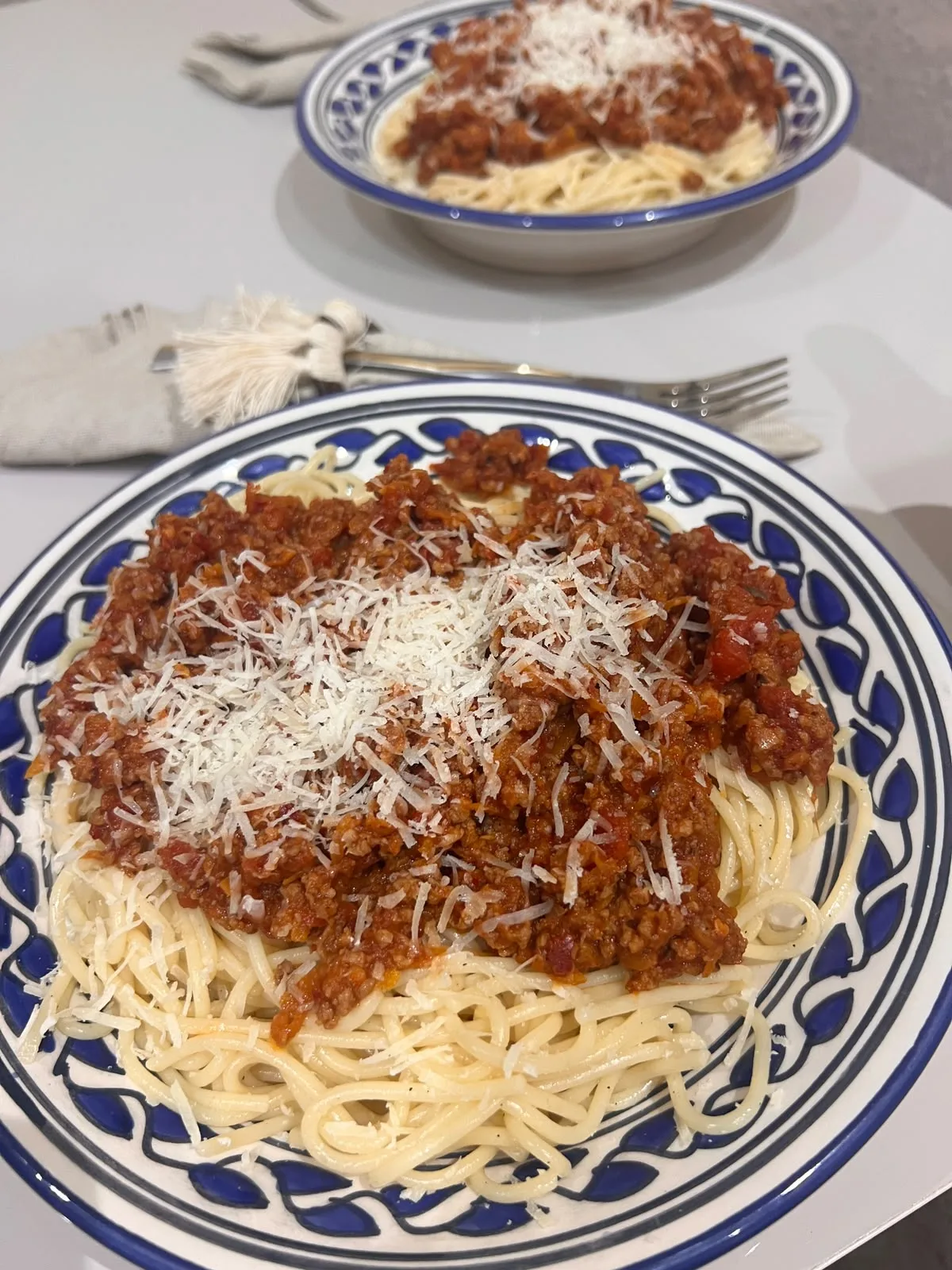
Gordon Ramsay’s spaghetti bolognese is rich, meaty and ready in under 30 minutes. It’s built on 500g beef mince (ground beef), grated vegetables and red wine reduced to a syrup. No slow cooking, no fuss. This is a weeknight bolognese that tastes like it simmered for hours.
Ramsay cooks this one on YouTube in his Channel 4 Cookalong Live video, where he calls the sauce “the heart of a really good lasagna.” I couldn’t find this exact bolognese in any of his books, so this page comes straight from that video and his pasta guide. I watched him cook it, then made it myself.
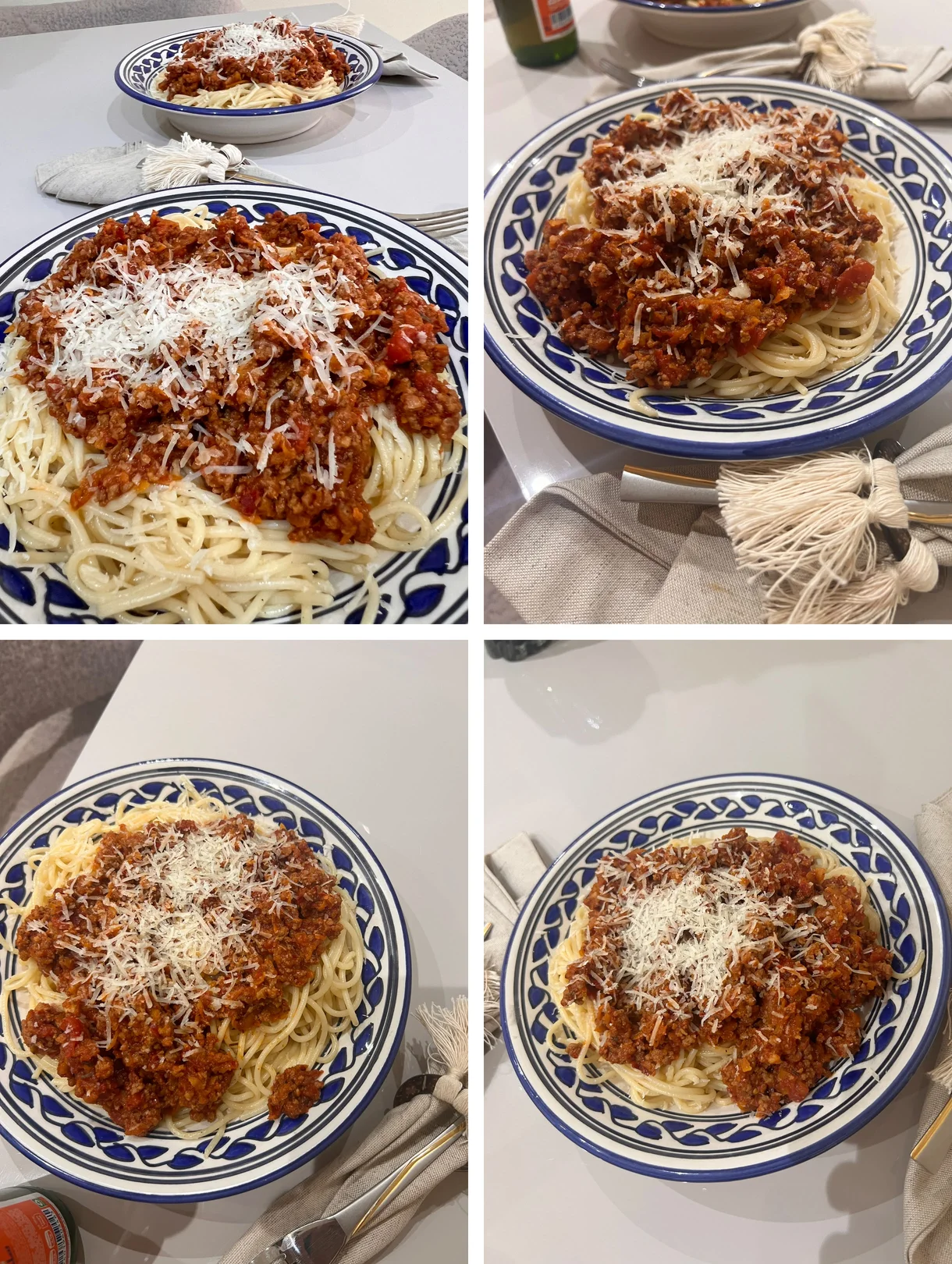
The step nobody else teaches is frying the tomato puree alone before it meets the mince. Ramsay says it “gets rid of the real tart taste” that sharpens most home bolognese. Every photo here is from my own cook of this recipe, harissa version and all, explained further down.
Cooked this recipe? Send a photo or tell me what you changed at fans@gordonramsayrecipes.uk and I’ll share your experience live on this page.
Gordon Ramsay Spaghetti Bolognese
Course: DinnerCuisine: British, ItalianDifficulty: Easy4
servings10
minutes20
minutes580
kcal30
minutesRamsay’s YouTube bolognese built around three restaurant techniques: grated vegetables that melt into the sauce, red wine reduced to a syrup for body, and milk stirred through at the end for a silky finish.
Ingredients
- For the bolognese:
1 tbsp olive oil
1 medium onion, grated
1 large carrot, grated
2 garlic cloves, crushed
2 tsp dried oregano
500g (1 lb 2 oz) beef mince (ground beef)
1 tbsp tomato puree (tomato paste)
150ml (⅔ cup) red wine
1 x 400g (14 oz) tin chopped tomatoes
1 tbsp Worcestershire sauce
2 tbsp whole milk
Salt and freshly ground black pepper
- For the pasta:
300g (10½ oz) dried spaghetti
2 tbsp olive oil, 1 for the water and 1 to finish
Salt and freshly ground black pepper
Directions
- Sweat the vegetables: Heat the olive oil in a large pan. Tip in the grated onion, grated carrot, crushed garlic and dried oregano, then season lightly. Give it 1.5-2 minutes, so everything softens into a puree without browning.
- Cook the mince: Push everything to the sides and make a well in the centre. Drop the mince into that hot spot, because sweating it fast stops it going grey. Break it up and cook until no pink is left.
- Sweat the puree: Make another well in the middle. Fry the tomato puree on its own for a few seconds, which cooks out that raw tart edge. Then fold it all together.
- Reduce the wine: Pour in the red wine and let it bubble down to a syrup. This concentrates the flavour and gives the sauce real body.
- Simmer the sauce: Stir in the chopped tomatoes and Worcestershire sauce. Turn the heat down and simmer for 5-6 minutes.
- Finish with milk: Stir through the milk for a smooth, silky finish. Taste and adjust the seasoning.
- Cook the spaghetti: Get a big pan of well-salted water with a tablespoon of olive oil to a proper rolling boil. Drop in the spaghetti and cook until al dente. Lift a strand out and pinch it, you want firm, never crunchy. Drain.
- Season and serve: Season the drained spaghetti with salt and pepper, then toss through a tablespoon of olive oil so it doesn’t clump. Pile it into bowls, spoon the bolognese over and grate Parmesan on top.
Notes
- Grate the onion and carrot instead of chopping. It melts into the sauce so there are no chunks.
FAQs
Why sweat the tomato puree on its own?
It’s the step from the intro that separates this sauce from an average bolognese. Most recipes stir the puree in with everything else. Ramsay clears a well in the pan and fries it alone first, only folding it through once it has sweetened.
There’s real science behind it too. Direct heat caramelises the sugars and cooks out that metallic tinned flavour, so by the time you fold it through the mince, it’s sweetened up. The result is a rounder, deeper tomato note without any sharpness.
Why reduce the wine to a syrup?
He doesn’t just splash the wine in and cook it off. He pours it in and lets it bubble until it’s almost gone, down to a sticky syrup. It’s the same principle behind the red wine jus in the Ultimate Cookery Course, just faster and on a smaller scale.
Reducing squeezes all the flavour into a fraction of the volume. The alcohol burns off completely and the tannins soften, leaving a dark glaze that gives the sauce real body. Skip it and you get a thin, slightly boozy sauce instead.
Can I make this bolognese without wine?
Yes, and I’ve done it myself, which is the harissa version I mentioned at the top. I swapped the 150ml of red wine for about 200ml (¾ cup) of water. Then I added a tablespoon of harissa paste and a tablespoon of hot paprika with the tomato puree. The harissa gives back the depth and warmth you lose from both the wine and the Worcestershire sauce.
Fair warning on the heat though. I grew up on serious spice, so start with half a tablespoon of harissa and taste before adding more.
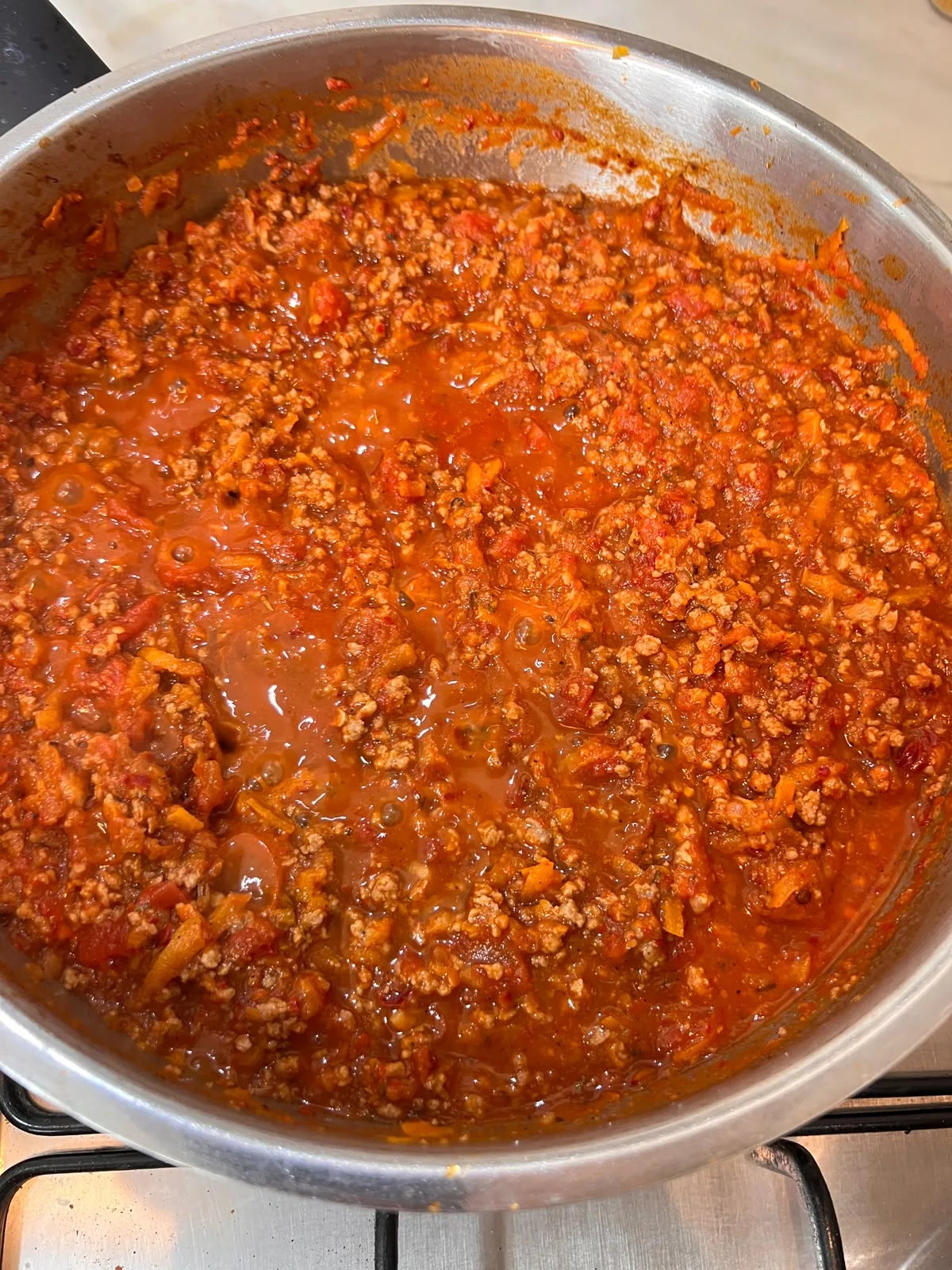
One mistake I made so you don’t have to: don’t reduce the water the way you just reduced that wine above. Water has no flavour to concentrate. I cooked mine down too far and ended up with a thick lasagne-style ragu instead of a sauce that coats spaghetti. Add it with the tomatoes, simmer for 8 to 10 minutes, and stop while it still looks a bit loose.
The nice surprise was how forgiving this recipe is. I forgot the garlic in step one, threw it in later with the paprika, and the sauce didn’t suffer at all.
How long does this recipe actually take?
The 30 minutes on the card is real, but only if you prep everything before the hob goes on. Once that pan is hot the steps come fast. It’s 2-3 minutes on the vegetables, a few minutes on the mince, then the sauce builds in one run. There’s no gap to grate a carrot mid-cook.
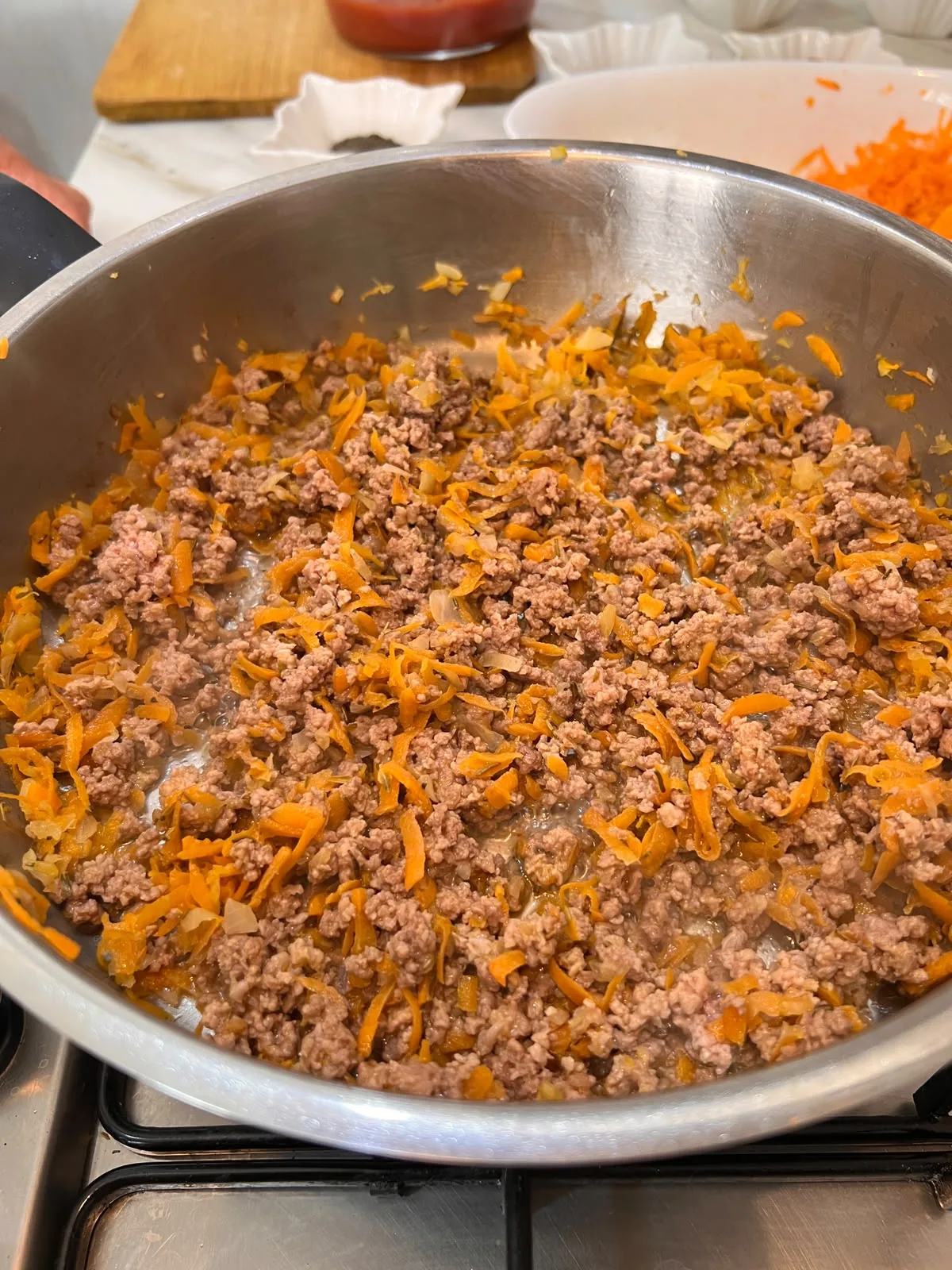
So do all the grating, crushing and tin-opening first, like laying out your ingredients before a race. My actual hands-on cooking was under 20 minutes, and honestly the smell told me it was ready as much as the clock did.
Why add milk at the end?
This is the last step in the video, and Ramsay calls it a “smooth silky finish.” The same trick appears in his lasagne al forno, where milk goes into the ragu before simmering, so it’s clearly a technique he trusts.
The milk fat coats the meat proteins and rounds out the acidity from the tomatoes. It’s traditional in the original Bolognese ragù from Bologna, though most British recipes leave it out. You won’t taste milk in the finished sauce, just a smoother, less sharp bolognese.
I’ll admit I forgot it on my own cook and the sauce was still lovely. That final silkiness is the one thing I missed, so it’s the first thing I’m adding next time.
Why add olive oil to the pasta water?
In a separate video on cooking pasta, Ramsay adds a tablespoon of olive oil to the water with the salt. He says “that stops the pasta from sticking together.” He insists on a proper rolling boil too, because it gently rolls the pasta around the pan.
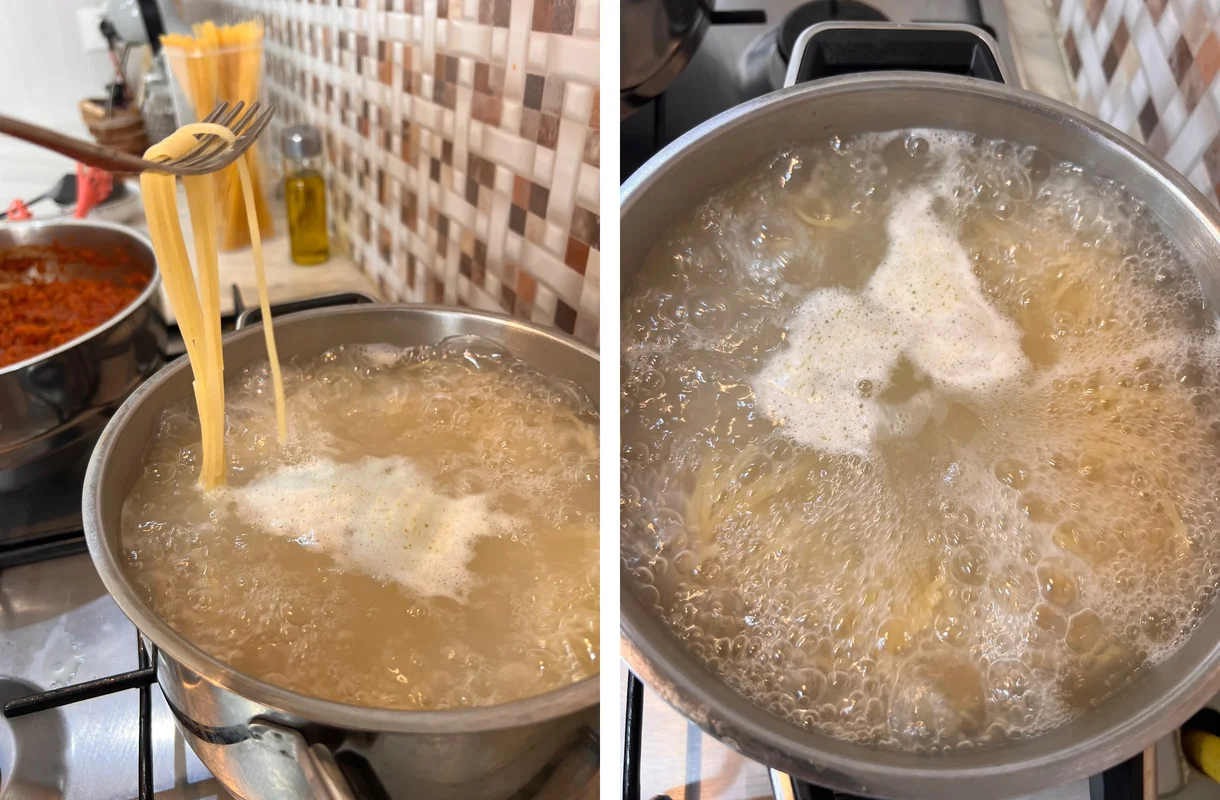
Most Italian chefs disagree and argue oil stops the sauce clinging to the pasta. Ramsay does it consistently across his videos though. He tosses more oil through after draining as well, which is why there are two tablespoons in the ingredient list. If you’d rather skip it, just stir the pasta every minute or two while it cooks.
How is this different from the lasagne bolognese?
Remember Ramsay calling this sauce “the heart of a really good lasagna” at the top? His lasagne al forno proves it, but the proportions change because the jobs are different. The lasagne version uses only 2 teaspoons of wine and simmers 15-20 minutes, since it must be thick enough to hold between pasta sheets.
This standalone version uses 150ml of wine reduced to a syrup and simmers just 5-6 minutes, so it stays loose enough to coat strands. Both use grated vegetables, both finish with milk, both stick with dried oregano over fresh herbs.
If you like this family of sauces, his quicker sausage meat bolognese with cherry tomatoes is the one for no-mince nights.
Watch Me Cook This Bolognese
The whole cook in under a minute, from the grated vegetables to two plates. Watch how fast the mince goes in and the sauce builds, this recipe really does move.