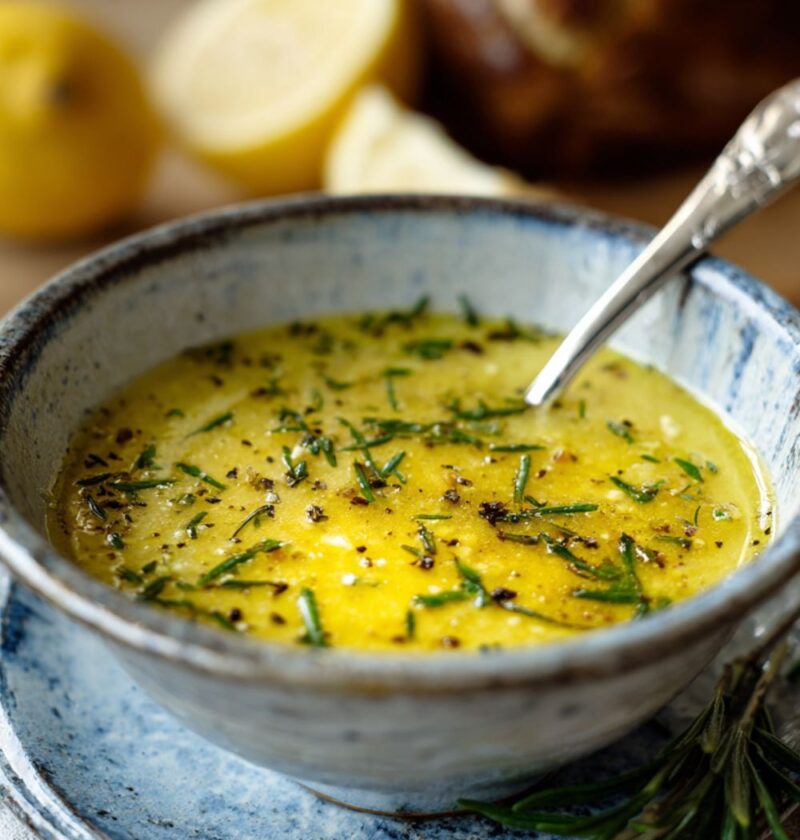
Gordon Ramsay Lemon Butter Sauce adds a luxurious finish to any seafood dish. It is made with fresh lemon juice, dry white wine, finely minced shallots, and cold unsalted butter. The result is a rich, tangy emulsion that coats the palate with a smooth, creamy texture. It is perfect for drizzling over pan-seared salmon, scallops, or roasted vegetables.
Try More Recipes:
- Gordon Ramsay Baked Salmon Recipe
- Gordon Ramsay Pan Fried Salmon Recipe
- Gordon Ramsay Teriyaki Salmon And Soba Noodles Recipe
Why You Will Love This Lemon Butter Sauce Recipe:
- Instant Elegance: This sauce transforms a plain piece of grilled chicken or steamed fish into a restaurant-quality dish in just minutes.
- Perfect Balance: It masters the delicate interplay between the rich, creamy fat of the butter and the sharp, bright acidity of the lemon and wine, so it never feels too heavy.
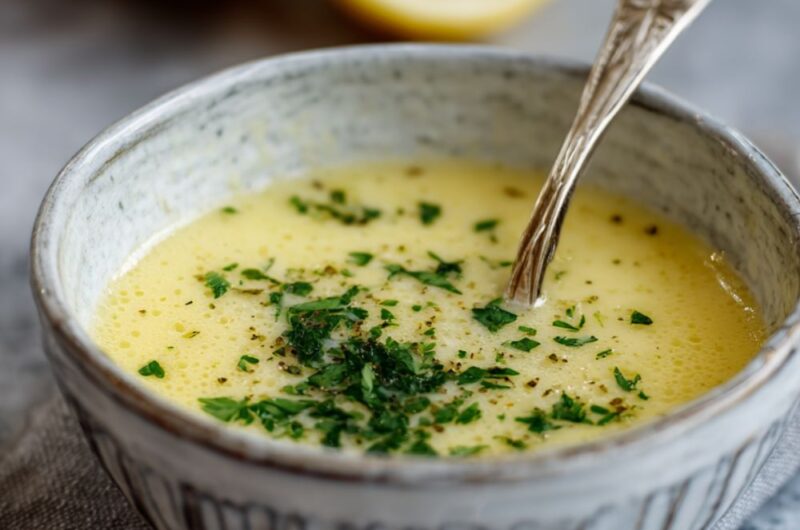
- Velvety Texture: Unlike flour-thickened gravies, this emulsion (beurre blanc) has a luxurious, silk-like mouthfeel that coats the palate beautifully.
- Versatility: While it is famous for pairing with salmon and scallops, it is equally delicious drizzled over roasted asparagus, poached eggs, or even a simple baked potato.
- Fast Preparation: You can make this sauce while your protein is resting, meaning it adds almost no extra time to your dinner routine.
Gordon Ramsay Lemon Butter Sauce Ingredients
- 1 large shallot, finely minced
- 1/2 cup dry white wine (e.g., Sauvignon Blanc)
- 2 tablespoons white wine vinegar
- 2 tablespoons fresh lemon juice
- 1 tablespoon heavy cream (optional, for stability)
- 1/2 cup cold unsalted butter, cut into small cubes
- 1 tablespoon fresh chives or dill, finely chopped
- 1/4 teaspoon sea salt
- 1/4 teaspoon white pepper
How To Make Gordon Ramsay Lemon Butter Sauce
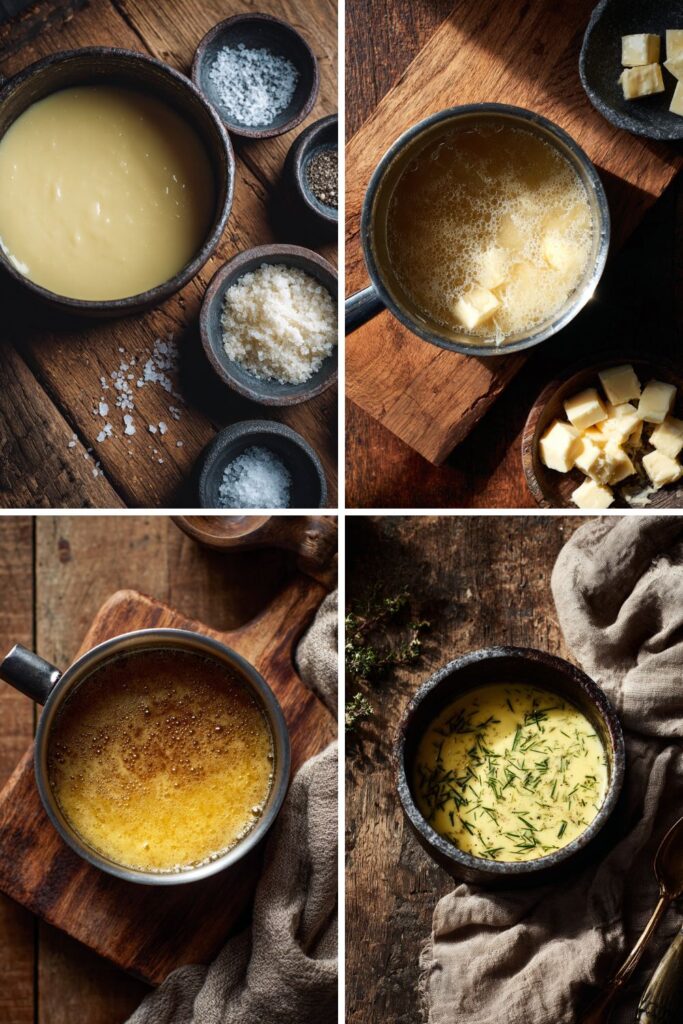
- Reduce the liquids by combining the minced shallot, white wine, vinegar, and lemon juice in a small saucepan over medium heat.
- Simmer the mixture for 5-7 minutes until the liquid has reduced by about two-thirds and looks syrupy.
- Add the cream (if using) to the reduction and let it bubble for 1 minute to help stabilize the sauce base.
- Lower the heat to the lowest setting (or remove the pan from the heat entirely if your stove is very hot).
- Emulsify the sauce by whisking in the cold butter one cube at a time, ensuring each piece melts completely before adding the next.
- Season the sauce with salt and white pepper once all the butter is incorporated and the texture is glossy and thick.
- Finish the dish by stirring in the fresh herbs just before serving; do not let the sauce boil or it will split.
Recipe Tips
- Use cold butter. This is the most critical rule. If the butter is soft or melted, the sauce will be oily and thin. The cold butter helps create a creamy emulsion as it melts slowly into the hot liquid.
- Dice shallots finely. You want the flavor of the shallots, not large crunchy chunks. If you prefer a perfectly smooth sauce, strain the shallots out before adding the herbs.
- Control the heat. Once you start adding the butter, the sauce should never boil. If it gets too hot, the fat will separate from the solids (break), and you will lose the creamy texture.
- Stabilize with cream. Gordon Ramsay often adds a splash of heavy cream to the reduction. This acts as a safety net, making it much harder for the sauce to split during the cooking process.
What To Serve With Lemon Butter Sauce?
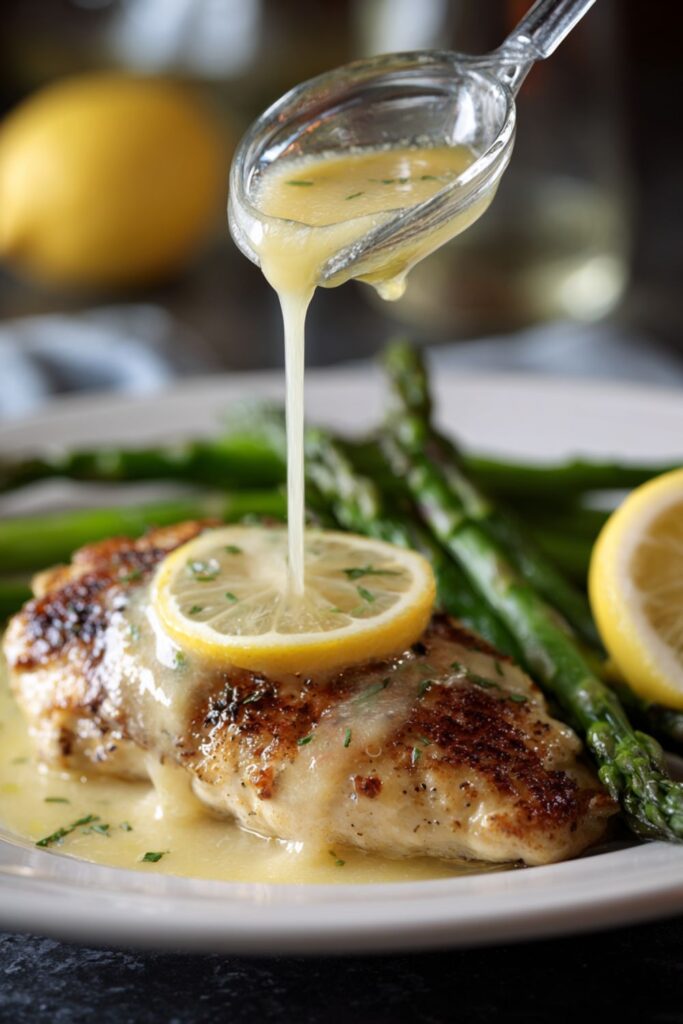
This Lemon Butter Sauce is the classic partner for pan-seared fish or poached chicken serve with a side of steamed asparagus or green beans to catch the extra drops. A glass of the same white wine used in the sauce makes the perfect pairing.
How To Store Leftovers Lemon Butter Sauce?
- In The Fridge: Refrigerate the sauce in an airtight container for up to 3 days it will solidify like butter.
- In The Freezer: Freezing is not recommended because the emulsion will likely break when thawed and reheated, leaving you with separated oil.
FAQs
If the sauce separates and looks oily, take it off the heat immediately. Whisk in a teaspoon of cold water or cream vigorously until it comes back together.
Yes, you can substitute the white wine with chicken stock or vegetable broth. However, you may need to add a little extra lemon juice or vinegar to maintain the necessary acidity.
It depends on your preference. For a rustic, homestyle sauce, leave the shallots in for texture. For a fine-dining presentation, strain the sauce through a fine-mesh sieve before adding the herbs.
More Recipes:
- Gordon Ramsay Crispy Skin Salmon
- Gordon Ramsay Salmon Wellington
- Gordon Ramsay Steak Seasoning Recipe
Lemon Butter Sauce Nutrition Facts
- Calories: 120 kcal
- Total Fat: 12g
- Saturated Fat: 8g
- Cholesterol: 35mg
- Sodium: 150mg
- Total Carbohydrate: 2g
- Dietary Fiber: 0g
- Sugars: 1g
- Protein: 0g
Gordon Ramsay Lemon Butter Sauce
Course: Sides, Dinner, Lunch, SauceCuisine: American, FrenchDifficulty: Easy4-6
servings5
minutes10
minutes120
kcalGordon Ramsay Lemon Butter Sauce adds a luxurious finish to any seafood dish. It is made with fresh lemon juice, dry white wine, finely minced shallots, and cold unsalted butter. The result is a rich, tangy emulsion that coats the palate with a smooth, creamy texture. It is perfect for drizzling over pan-seared salmon, scallops, or roasted vegetables.
Ingredients
1 large shallot, finely minced
1/2 cup dry white wine (e.g., Sauvignon Blanc)
2 tablespoons white wine vinegar
2 tablespoons fresh lemon juice
1 tablespoon heavy cream (optional, for stability)
1/2 cup cold unsalted butter, cut into small cubes
1 tablespoon fresh chives or dill, finely chopped
1/4 teaspoon sea salt
1/4 teaspoon white pepper
Directions
- Reduce the liquids by combining the minced shallot, white wine, vinegar, and lemon juice in a small saucepan over medium heat.
- Simmer the mixture for 5-7 minutes until the liquid has reduced by about two-thirds and looks syrupy.
- Add the cream (if using) to the reduction and let it bubble for 1 minute to help stabilize the sauce base.
- Lower the heat to the lowest setting (or remove the pan from the heat entirely if your stove is very hot).
- Emulsify the sauce by whisking in the cold butter one cube at a time, ensuring each piece melts completely before adding the next.
- Season the sauce with salt and white pepper once all the butter is incorporated and the texture is glossy and thick.
- Finish the dish by stirring in the fresh herbs just before serving; do not let the sauce boil or it will split.
Notes
- Use cold butter. This is the most critical rule. If the butter is soft or melted, the sauce will be oily and thin. The cold butter helps create a creamy emulsion as it melts slowly into the hot liquid.
Dice shallots finely. You want the flavor of the shallots, not large crunchy chunks. If you prefer a perfectly smooth sauce, strain the shallots out before adding the herbs.
Control the heat. Once you start adding the butter, the sauce should never boil. If it gets too hot, the fat will separate from the solids (break), and you will lose the creamy texture.
Stabilize with cream. Gordon Ramsay often adds a splash of heavy cream to the reduction. This acts as a safety net, making it much harder for the sauce to split during the cooking process.