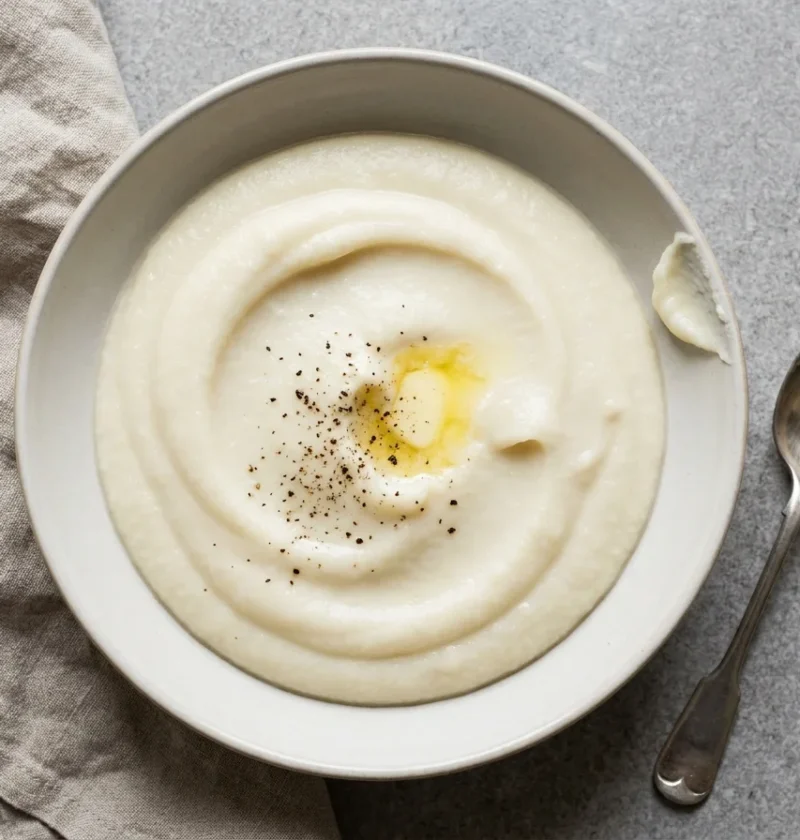
Gordon Ramsay’s cauliflower puree is a silky blended side of cauliflower, butter, milk and single cream, ready in 25 minutes. It’s the smooth, restaurant-style puree he serves under scallops, not a chunky mash. The method comes from his Sunday Lunch book and his F Word scallops dish.
The trick that makes it his is the milk. Ramsay sweats the florets in butter, then adds milk before the cream, because the milk “helps to keep the puree really nice and vibrant white”. Most recipes go straight to cream and end up dull and beige.
The other key is heat. You blend it piping hot, since “the hotter it is the finer it becomes”, and if you let it cool first you get lumps. That’s how you get the glossy, smooth finish that, in his words, will “beat cauliflower and cheese any day”.
Cooked this recipe? Send a photo or tell me what you changed at fans@gordonramsayrecipes.uk and I’ll share your experience live on this page.
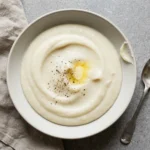
Gordon Ramsay Cauliflower Puree
Course: SideCuisine: BritishDifficulty: Easy4
10
minutes15
minutes210
kcal25
minutesGordon Ramsay’s silky cauliflower puree from his Sunday Lunch book and F Word scallops dish. Florets sweated in butter, kept white with milk, enriched with single cream and blended hot until smooth. The restaurant-smooth side for scallops, sea bass or any pan-fried fish.
Ingredients
1 medium head cauliflower (about 600g), cut into small florets
50g butter
2 to 3 tbsp milk
150ml single cream
Sea salt and white pepper
Directions
- Sweat the cauliflower: Melt the butter in a saucepan over a medium heat. Add the florets and cook gently for 2 to 3 minutes until they start to soften, without letting them colour.
- Add the milk: Pour in the milk, cover, and let it come to the boil. The milk keeps the puree bright white rather than beige.
- Add the cream: Pour in the single cream and bring to a gentle boil. Partially cover and cook for 3 to 4 minutes more, until the florets are very soft. Season well.
- Blend hot: Tip the cauliflower and cream into a blender or food processor while piping hot. Blend for a few minutes until completely silky, scraping down the sides. The hotter it is, the finer it gets.
- Season and serve: Taste, adjust the salt and white pepper, and serve hot. For an ultra-fine, fine-dining finish, pass it through a sieve.
FAQs
What’s the difference between cauliflower puree and cauliflower mash?
Mash is left with some texture, roughly crushed with a masher or fork. Puree is blended until completely smooth and silky, which is what Ramsay does here. He tips the soft cauliflower into a processor and runs it for a few minutes until there’s no graininess left.
So a Ramsay cauliflower mash and his cauliflower puree start the same way, with butter, milk and cream. The only real difference is the blending, since the mash stops at crushed while the puree keeps going until glossy.
How do you make cauliflower puree really smooth, like in a restaurant?
Two things. First, blend it while it’s piping hot, because as Ramsay puts it, “the hotter it is the finer it becomes”. A cooled mix turns lumpy. Second, give it a few full minutes in the processor rather than a quick blitz, scraping down the sides as you go.
For the silkiest, fine-dining finish, push the blended puree through a fine sieve with the back of a ladle. That last step is what separates a smooth home version from a glassy restaurant one served under fish.
Why does Gordon add milk to his cauliflower puree?
The milk is there for colour, not richness. Ramsay adds it before the cream because it “helps to keep the puree really nice and vibrant white”. That gives a clean, bright look instead of a dull beige.
The cream comes after, for the rich, smooth body. Keeping the two separate, milk first then cream, is the small detail that makes his puree look as good as it tastes.
What does Gordon serve cauliflower puree with?
His signature pairing is scallops. In the F Word he spoons the puree down first, then sits pan-fried scallops on top. He finishes with a caper and raisin vinaigrette for a sharp contrast against the sweet shellfish. If you’re cooking the scallops too, our scallop cooking times guide keeps them from going rubbery.
It also works under sea bass, cod or a spiced fish like his tandoori halibut. The smooth puree cools the heat and balances the crisp edges. That’s why chefs reach for a puree rather than a mash on the plate, since it spreads clean and holds the fish.
Can you flavour cauliflower puree differently?
Yes. Ramsay has a second version in his Secrets book. He simmers the florets in milk with bay and thyme, because cauliflower “emits a rather unpleasant aroma when you cook it in the usual way”. The herbs scent the milk and carry through into the puree.
Other cooks roast the cauliflower first for a nuttier, caramelised flavour, brown the butter, or stir in a spoon of white miso for umami. None of those are Ramsay’s classic version, but they all build on the same blended base if you fancy a change.
Can you make parsnip, carrot or sweet potato puree the same way?
The butter, milk and blend method carries straight over to other root veg. His silky parsnip purée does exactly this, caramelising the parsnips in butter first, then simmering in milk and blitzing smooth. His carrot purée uses the same trick, and celeriac works too. They just need a little longer than cauliflower to soften before blending.
Sweet potato is the exception. Ramsay makes his sweet potato mash differently, cooked in chicken stock with caramelised shallots rather than blended with cream. It lands savoury and light instead of rich. Pick the cream-blend route when you want a smooth bed for fish, and the stock route when you want a fluffier crush.