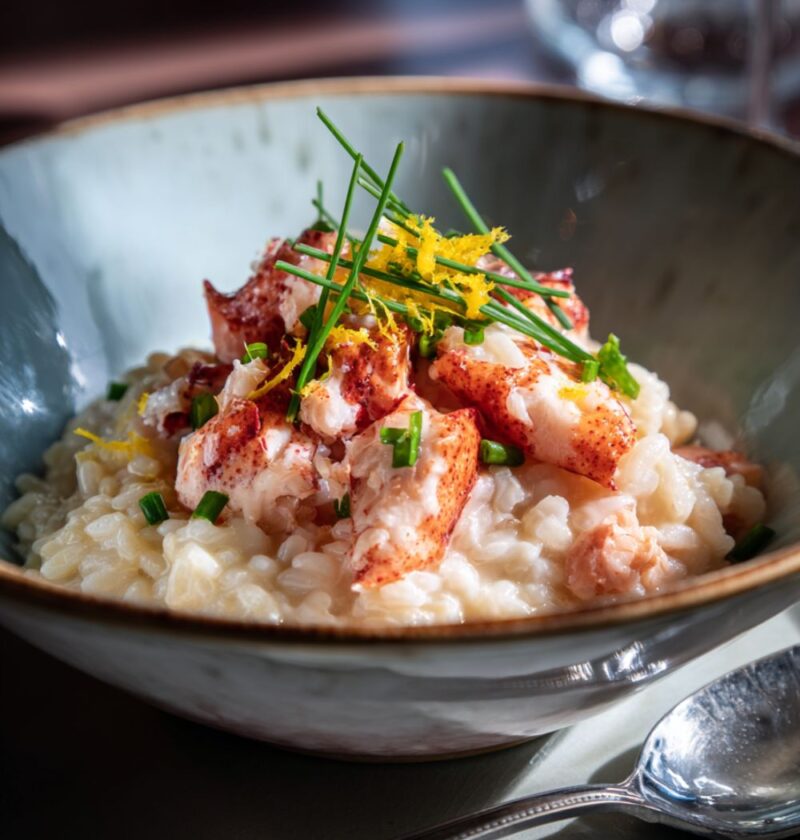
Gordon Ramsay Lobster Risotto is a signature Hell’s Kitchen dish that epitomizes fine dining comfort food. It is made with premium Arborio rice cooked slowly in a rich seafood stock, infused with white wine and aromatic shallots. The secret weapon is the finish: a generous folding in of mascarpone cheese and cold butter, which gives the risotto an impossibly creamy, velvety texture without overpowering the delicate sweetness of the butter-poached lobster. It is luxurious, elegant, and surprisingly achievable at home.
Try More Risotto Recipes:
- Gordon Ramsay’s Shrimp Risotto
- Gordon Ramsay Parmesan Risotto Recipe
- Gordon Ramsay Pea Risotto Recipe
Why You Will Love This Lobster Risotto Recipe:
- The “Mantecatura”: Gordon’s technique of beating in cold butter and mascarpone at the very end creates a glossy, rich finish that ordinary risottos lack.
- Perfect Lobster: The lobster is cooked gently and added at the last second, ensuring it remains tender and sweet, never rubbery.
- Layered Flavor: The acidity of the wine, the richness of the cheese, and the brightness of fresh lemon zest create a perfectly balanced bite.
- Impressive: It is the ultimate date-night or anniversary meal.
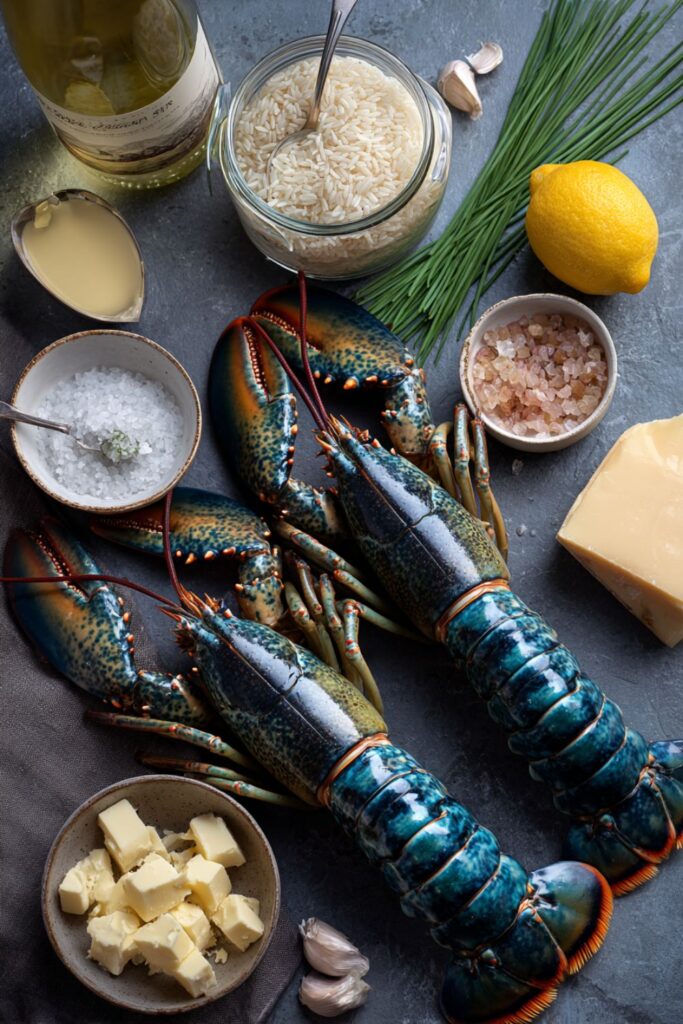
Gordon Ramsay Lobster Risotto Ingredients
- The Seafood
- 2 fresh lobster tails (raw)
- 1 tbsp butter (for poaching the lobster)
- 1 liter high-quality fish stock or lobster stock (hot)
- The Base
- 300g Arborio or Carnaroli rice (do not wash!)
- 2 shallots, finely diced
- 1 clove garlic, minced
- 150ml dry white wine (Sauvignon Blanc or Pinot Grigio)
- 2 tbsp olive oil
- The Finish
- 50g cold unsalted butter, cubed
- 2 generous tbsp mascarpone cheese
- 50g Parmesan cheese, grated
- Fresh chives, chopped
- Zest and juice of 1/2 lemon
- Salt and white pepper
How To Make Gordon Ramsay Lobster Risotto
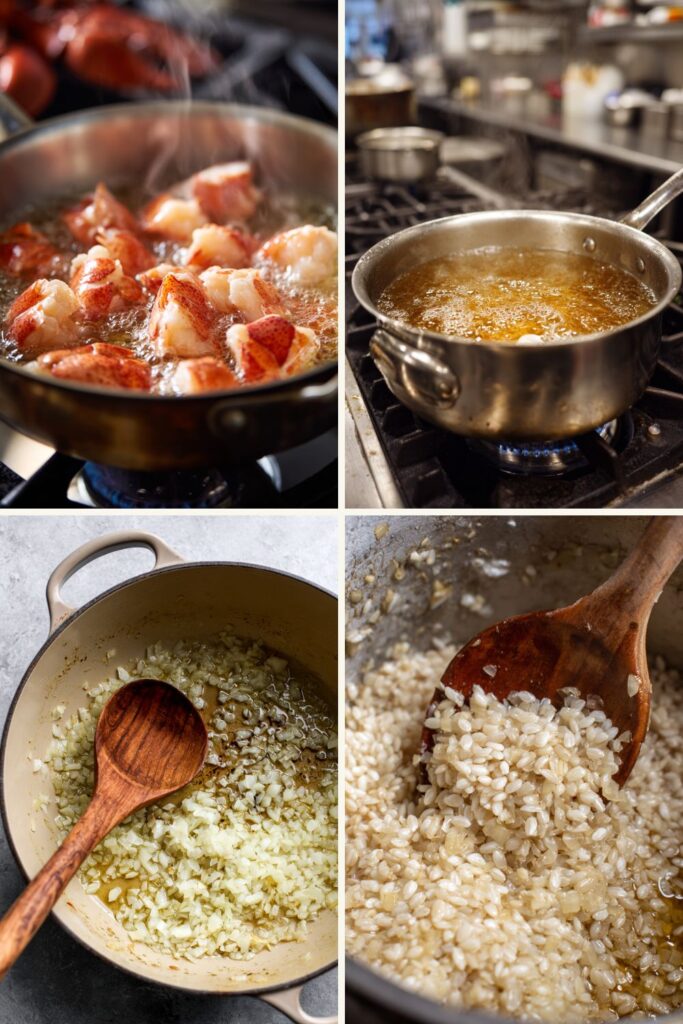
- Prep the lobster: Remove the lobster meat from the shells and chop into bite-sized chunks (save the shells to flavor your stock if you like). In a small skillet, melt 1 tbsp butter and gently sauté the lobster meat for 2–3 minutes until opaque and just cooked. Remove from heat immediately and set aside.
- Heat the stock: Pour your fish stock into a saucepan and keep it simmering gently on a back burner. Adding cold stock to hot rice will ruin the cooking process.
- Sauté aromatics: In a heavy-based pan or large skillet, heat the olive oil over medium heat. Add the diced shallots and cook for 5 minutes until soft but not brown. Add the garlic and cook for another 30 seconds.
- Toast the rice: Stir in the rice. Cook for 1–2 minutes, stirring constantly, until the edges of the grains turn translucent (pearl-like) and you smell a nutty aroma. This is crucial for texture.
- Deglaze: Pour in the white wine. It will hiss and steam. Stir continuously until the wine has completely evaporated and soaked into the rice.
- The Ladle Method: Add one ladle of hot stock to the rice. Stir gently but constantly. Wait until the liquid is almost fully absorbed before adding the next ladle. Repeat this process for about 18 to 20 minutes.
- Check doneness: Taste the rice. It should be tender but still have a slight “bite” (al dente) in the center. The texture should be creamy and fluid, not stiff or dry.
- The Finish (Mantecatura): Remove the pan from the heat. This is vital! Add the cold cubed butter, mascarpone, and Parmesan. Stir vigorously to emulsify the fats into the starch, creating a glossy sauce.
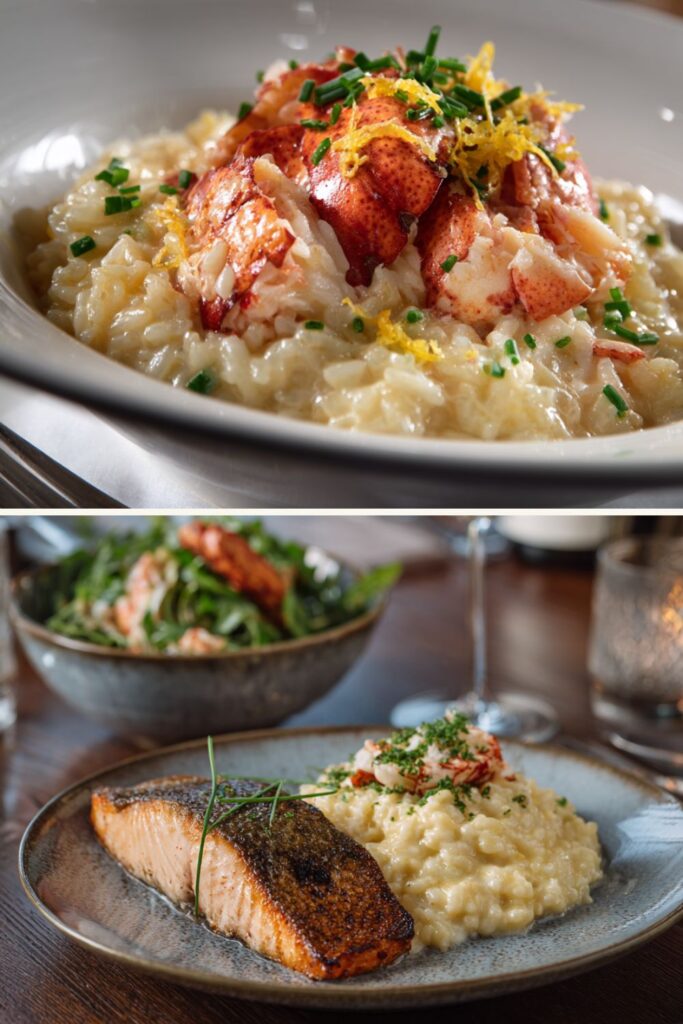
- Fold and Serve: Gently fold in the cooked lobster meat, lemon zest, lemon juice, and chopped chives. Season with salt and white pepper. Serve immediately.
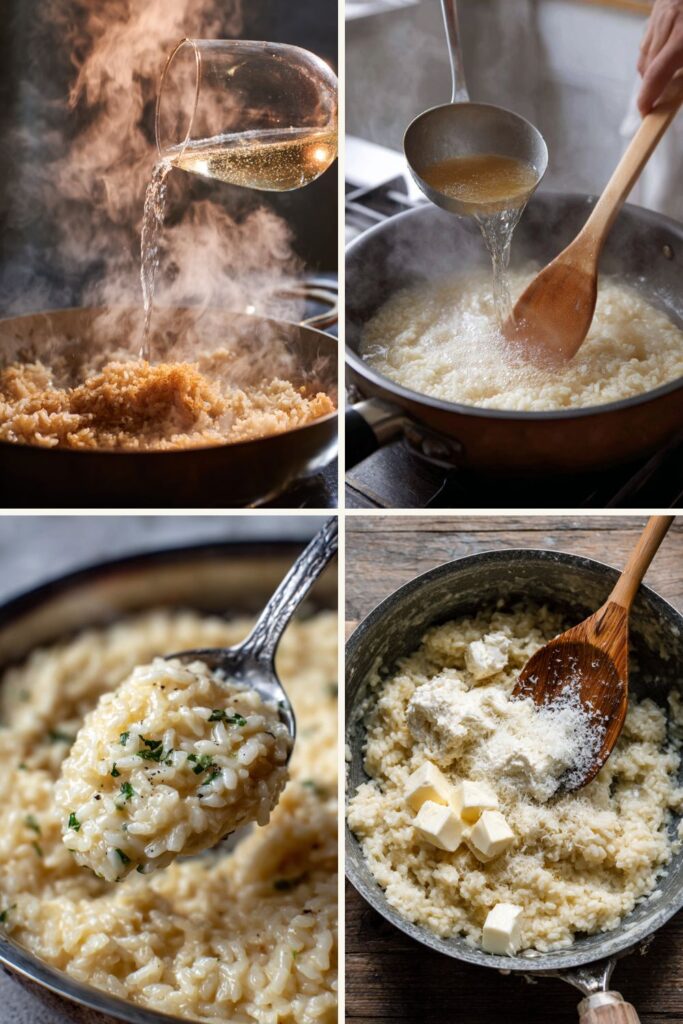
Recipe Tips
- Don’t Wash the Rice: Never rinse risotto rice. You need that surface starch to create the signature creamy consistency.
- Cold Butter: Using cold butter at the end (rather than melted) helps create an emulsion, making the sauce glossy rather than greasy.
- The “Wave” Test: When finished, if you tilt the plate, the risotto should slowly flow like lava (all’onda). If it stands up like a pyramid, it is too dry—add a splash more stock.
- Mascarpone: This is Gordon’s secret for richness. If you don’t have it, you can use heavy cream, but mascarpone offers a better texture.
What To Serve With Lobster Risotto?
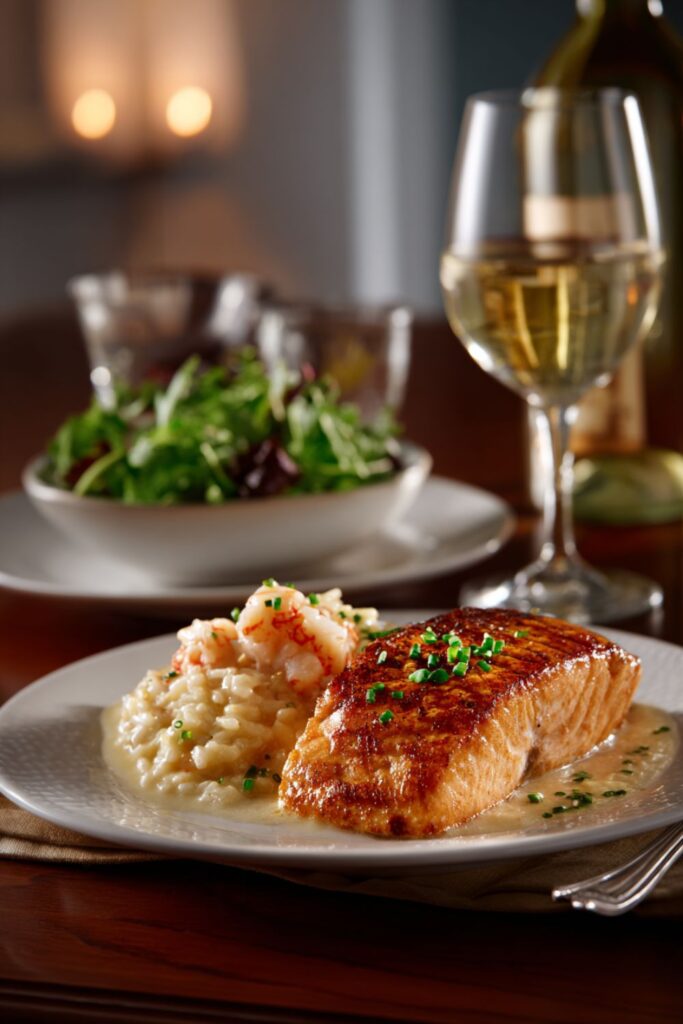
- Arugula Salad: A peppery arugula salad with lemon vinaigrette cuts through the richness of the mascarpone.
- Crispy Skin Salmon: If serving a smaller portion of risotto as a side, it pairs beautifully with pan-seared fish.
- Wine: Pair with the same dry white wine you used to cook the risotto (e.g., a crisp Chardonnay or Sauvignon Blanc).
How To Store Leftovers Lobster Risotto?
- Refrigerate: Store in an airtight container for up to 2 days.
- Freeze: Do not freeze risotto; the rice will become grainy and chalky.
- Leftover Hack: The best way to use cold leftover risotto is to roll it into balls, breadcrumb them, and fry them to make Arancini.
How To Reheat Leftovers Lobster Risotto?
Reheating risotto (especially with delicate seafood) requires care to prevent the rice from becoming gummy and the lobster from turning rubbery.
- Stovetop (Best Method): Place the cold risotto in a saucepan over low heat. It will be stiff, so you must add about 1/4 to 1/2 cup of stock, water, or white wine to loosen it up. Stir gently and constantly. If you can spot large chunks of lobster, try to pick them out and add them back only at the very end to warm through, preventing them from overcooking.
- Microwave: Place a portion in a microwave-safe bowl. Add a splash of liquid (water or stock) and cover with a damp paper towel. Heat on 50% power in 30-second intervals, stirring in between, until hot.
FAQs
Gumminess usually comes from one of two things: stirring too aggressively (which breaks the grains) or cooking the rice for too long. Alternatively, you may have washed the rice before cooking—never wash risotto rice.
If the rice is crunchy or chalky in the middle, it is undercooked. You likely cooked it at too high a heat or didn’t add enough liquid. Turn the heat down, add another ladle of hot stock (or water), and cook for a few more minutes.
No you must use a high-starch, short-grain rice like Arborio or Carnaroli. Long-grain rice (like Basmati or Jasmine) does not release enough starch to create the creamy sauce; you will end up with a pilaf, not a risotto.
Risotto is best served immediately. However, restaurants often “par-cook” it. Cook the risotto for about 12 minutes (until halfway done), then spread it on a baking sheet to cool rapidly. When ready to serve, put it back in the pan with hot stock and finish the last 5–8 minutes of cooking.
More Risotto Recipes:
- Gordon Ramsay Beetroot Risotto Recipe
- Gordon Ramsay Tomato Risotto Recipe
- Gordon Ramsay Scallop Risotto Recipe
Lobster Risotto Nutrition Facts
- Calories: 650 kcal
- Total Fat: 35g
- Saturated Fat: 18g
- Cholesterol: 120mg
- Sodium: 950mg
- Total Carbohydrate: 55g
- Dietary Fiber: 2g
- Sugars: 3g
- Protein: 28g
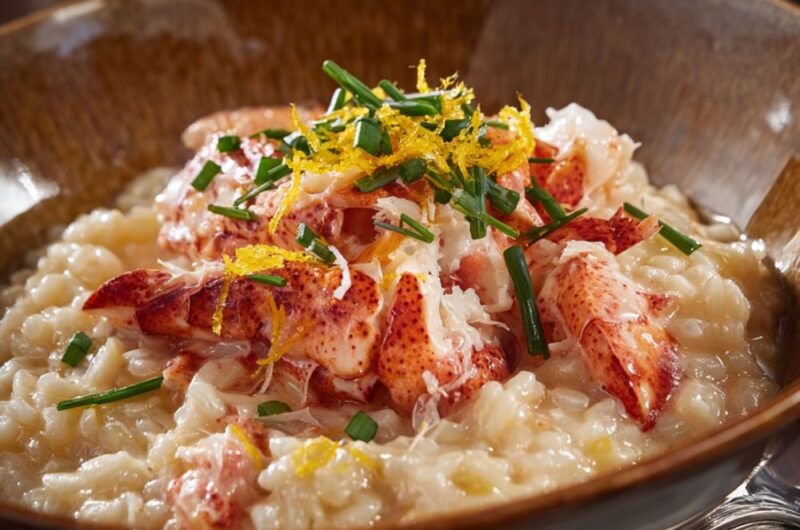
Gordon Ramsay Lobster Risotto Recipe
Course: Dinners, Risotto, Lunch, SidesCuisine: American, British, ItalianDifficulty: Easy2
servings15
minutes25
minutes650
kcalGordon Ramsay Lobster Risotto is a signature Hell’s Kitchen dish that epitomizes fine dining comfort food. It is made with premium Arborio rice cooked slowly in a rich seafood stock, infused with white wine and aromatic shallots. The secret weapon is the finish: a generous folding in of mascarpone cheese and cold butter, which gives the risotto an impossibly creamy, velvety texture without overpowering the delicate sweetness of the butter-poached lobster. It is luxurious, elegant, and surprisingly achievable at home.
Ingredients
2 fresh lobster tails (raw)
1 tbsp butter (for poaching the lobster)
1 liter high-quality fish stock or lobster stock (hot)
- The Base
300g Arborio or Carnaroli rice (do not wash!)
2 shallots, finely diced
1 clove garlic, minced
150ml dry white wine (Sauvignon Blanc or Pinot Grigio)
2 tbsp olive oil
- The Finish
50g cold unsalted butter, cubed
2 generous tbsp mascarpone cheese
50g Parmesan cheese, grated
Fresh chives, chopped
Zest and juice of 1/2 lemon
Salt and white pepper
Directions
- Prep the lobster: Remove the lobster meat from the shells and chop into bite-sized chunks (save the shells to flavor your stock if you like). In a small skillet, melt 1 tbsp butter and gently sauté the lobster meat for 2–3 minutes until opaque and just cooked. Remove from heat immediately and set aside.
- Heat the stock: Pour your fish stock into a saucepan and keep it simmering gently on a back burner. Adding cold stock to hot rice will ruin the cooking process.
- Sauté aromatics: In a heavy-based pan or large skillet, heat the olive oil over medium heat. Add the diced shallots and cook for 5 minutes until soft but not brown. Add the garlic and cook for another 30 seconds.
- Toast the rice: Stir in the rice. Cook for 1–2 minutes, stirring constantly, until the edges of the grains turn translucent (pearl-like) and you smell a nutty aroma. This is crucial for texture.
- Deglaze: Pour in the white wine. It will hiss and steam. Stir continuously until the wine has completely evaporated and soaked into the rice.
- The Ladle Method: Add one ladle of hot stock to the rice. Stir gently but constantly. Wait until the liquid is almost fully absorbed before adding the next ladle. Repeat this process for about 18 to 20 minutes.
- Check doneness: Taste the rice. It should be tender but still have a slight “bite” (al dente) in the center. The texture should be creamy and fluid, not stiff or dry.
- The Finish (Mantecatura): Remove the pan from the heat. This is vital! Add the cold cubed butter, mascarpone, and Parmesan. Stir vigorously to emulsify the fats into the starch, creating a glossy sauce.
- Fold and Serve: Gently fold in the cooked lobster meat, lemon zest, lemon juice, and chopped chives. Season with salt and white pepper. Serve immediately.
Notes
- Don’t Wash the Rice: Never rinse risotto rice. You need that surface starch to create the signature creamy consistency.
Cold Butter: Using cold butter at the end (rather than melted) helps create an emulsion, making the sauce glossy rather than greasy.
The “Wave” Test: When finished, if you tilt the plate, the risotto should slowly flow like lava (all’onda). If it stands up like a pyramid, it is too dry—add a splash more stock.
Mascarpone: This is Gordon’s secret for richness. If you don’t have it, you can use heavy cream, but mascarpone offers a better texture.