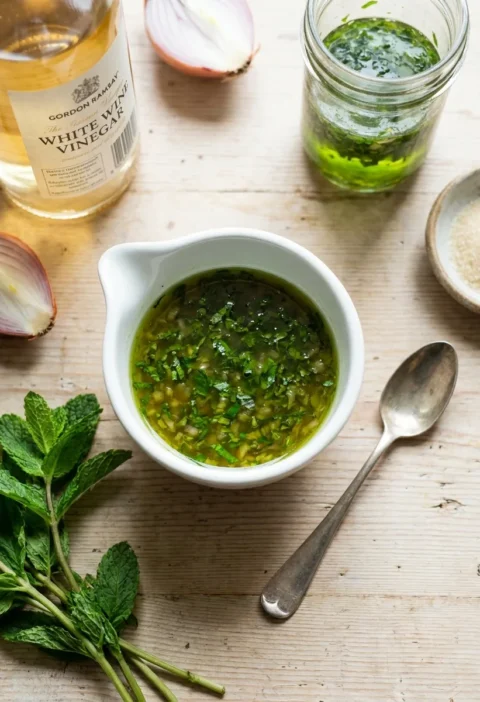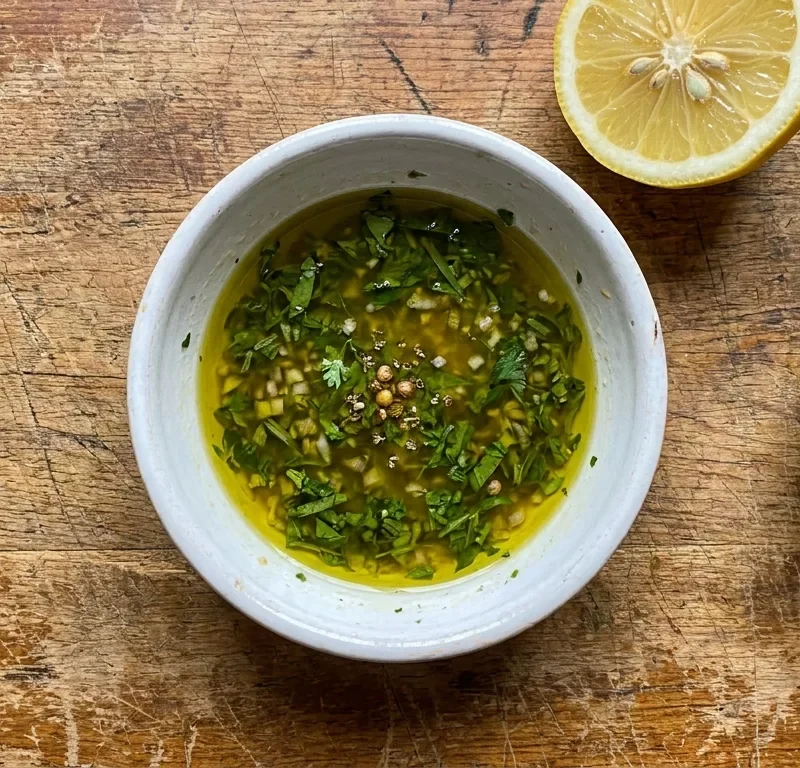
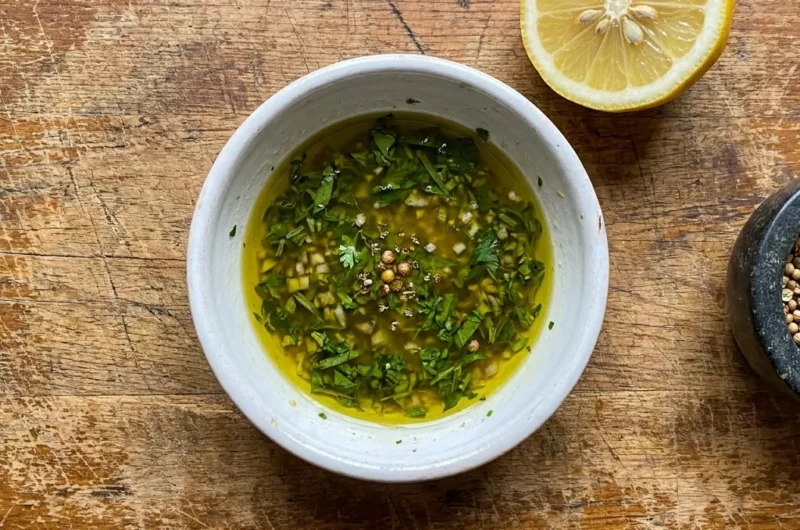
Gordon Ramsay’s sauce vierge is a warm herb-and-oil dressing made with crushed coriander seeds, basil, shallot confit and balsamic vinegar, which he serves with pan-fried fish. The recipe comes from the Building Blocks chapter of Passion for Flavour (1996) and takes about 5 minutes to assemble.
What most recipe sites get wrong is the tomatoes. The recipe Ramsay titles “Sauce vierge” in Passion for Flavour contains none at all. The tomato version sitting right next to it on the same page is a separate recipe he calls “Sauce Antiboise,” which means almost every “Gordon Ramsay sauce vierge” recipe online is giving you the wrong dish.
The technique is gentle heat rather than proper cooking. He warms the olive oil and lemon juice very gently, adds everything else to the pan, stirs once and pulls it off the heat. The sauce then sits for 5 to 30 minutes so the flavours infuse without any ingredient actually cooking through.
Cooked this recipe? Send a photo or tell me what you changed at fans@gordonramsayrecipes.uk and I’ll share your experience live on this page.
Gordon Ramsay Sauce Vierge Recipe
Course: SaucesCuisine: FrenchDifficulty: Easy6
servings5
minutes2
minutes85
kcal7
minutesFrom page 20 of Passion for Flavour (1996), where Ramsay describes it as “a coriander and basil dressing” for red mullet, scallops and pan-fried tuna. No tomatoes, no cooking, just warm oil and fresh herbs left to infuse.
Ingredients
- For the sauce vierge:
6 basil leaves
6 large coriander (cilantro) leaves
6 coriander seeds
50ml (2fl oz / ¼ cup) extra-virgin olive oil
2 tablespoons fresh lemon juice
1 heaped teaspoon shallot confit (slow-cooked diced shallots in olive oil)
½ teaspoon balsamic vinegar
Sea salt and ground white pepper
Directions
- Prepare the herbs and seeds: Shred the basil and coriander leaves into fine julienne strips, then crush the coriander seeds using a pestle and mortar.
- Warm and combine: Heat the olive oil and lemon juice very gently in a small saucepan, then add the shallot confit, shredded herbs, crushed coriander seeds, balsamic vinegar and seasoning. Stir briefly.
- Infuse and serve: Remove from the heat and leave to infuse for at least 5 and up to 30 minutes. Serve warm, at room temperature or chilled.
FAQs
Why does Ramsay’s sauce vierge have no tomatoes?
Because he treats it as a separate recipe from the tomato version. In Passion for Flavour, the tomato sauce right next to it on the same page is called Sauce Antiboise, which peels and dices fresh tomatoes then sweats them with shallots, garlic and herbs. His sauce vierge stays as a pure herb-and-oil infusion with coriander seeds and balsamic, so the two share a family resemblance but the ingredients are different.
Most other recipe sites merge them into one because later chefs added tomatoes to their own vierge over time. Ramsay’s version keeps them out, which gives the sauce a cleaner, lighter taste that works better on delicate white fish.
Can I use raw shallots instead of shallot confit?
You can, but the result will be sharper and more oniony because raw shallots have a bite that the confit does not. Ramsay’s confit is just finely diced shallots cooked very slowly in olive oil with thyme and bay for about 2 hours until they go soft and sweet, almost like a jam.
If you want to skip that, soften a finely minced shallot in a little olive oil over low heat for 10 minutes until translucent and sweet. It won’t be as silky as the real confit but it gets you closer than raw.
How do I make the shallot confit?
Finely dice 8 to 10 large shallots and place them in a heavy-based saucepan with 150ml (¼ pint) extra-virgin olive oil, a sprinkling of rock salt, a sprig of thyme and a bay leaf. Heat until the oil is hot, then drop to the lowest setting your hob allows and leave for about 2 hours until the shallots are meltingly tender.
Cool and store in a screw-top jar in the fridge for up to a week, or covered with a layer of olive oil for up to a month. You only need a heaped teaspoon per batch of sauce vierge, so one jar lasts through many rounds. The recipe is from page 94 of the same book.
What fish goes best with sauce vierge?
Ramsay recommends red mullet, scallops or fresh pan-fried tuna in the recipe headnote, so firm white fish and shellfish with clean flavours work best because the oil-based dressing is light enough not to overpower them. His sea bass with pepper sauce uses the same pan-frying approach he suggests for the tuna, which makes sea bass another natural match.
The oil base is what makes this the right choice over a butter sauce for delicate fish. Where his beurre blanc coats and clings to richer proteins like salmon and lobster, the vierge sits alongside the fish without masking it.
How long should I leave the sauce to infuse?
Ramsay says at least 5 minutes and up to 30, so anywhere in that range works. At 5 minutes the coriander seeds and shallot confit have released their flavour into the warm oil but the herbs still taste fresh and bright. At 30 minutes the flavours are deeper and more blended but the basil starts to lose its colour.
For a dinner party, making it at the 20-minute mark while your fish cooks is the sweet spot. The sauce is ready when the fish hits the plate and neither one has been sitting around waiting.
Can I serve sauce vierge cold?
Yes. Ramsay gives three serving temperatures in the recipe: warm, at room temperature or chilled. That flexibility is why it works well for entertaining, because you can make it before the guests arrive and not worry about reheating.
The only thing to watch is the herbs. Basil and coriander are best freshly cut, so if you plan to serve it chilled, shred the herbs and stir them in just before plating rather than letting them sit in the lemon juice for hours.