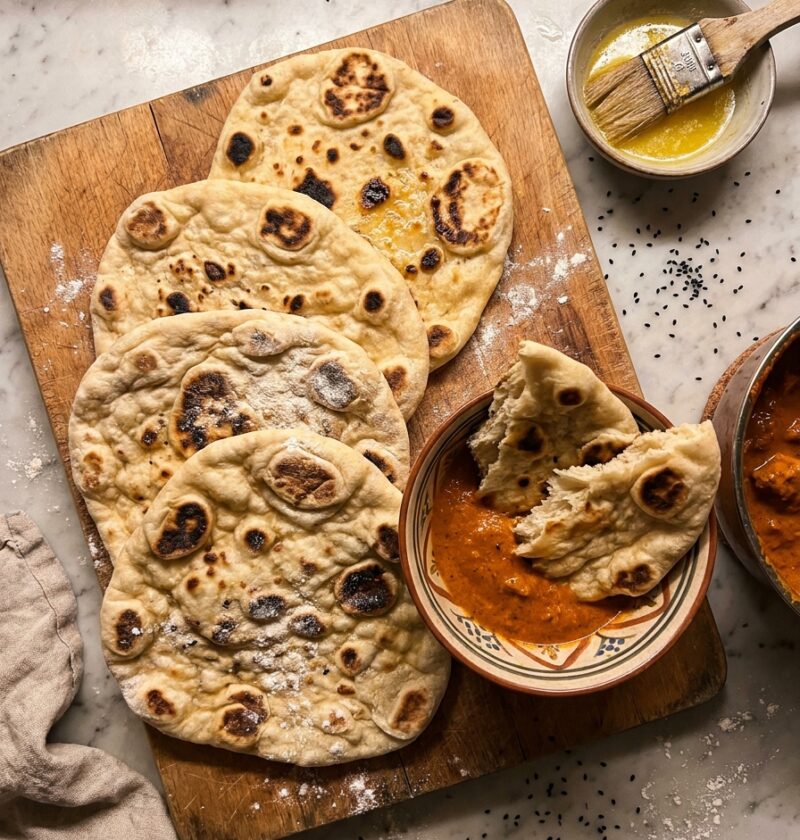
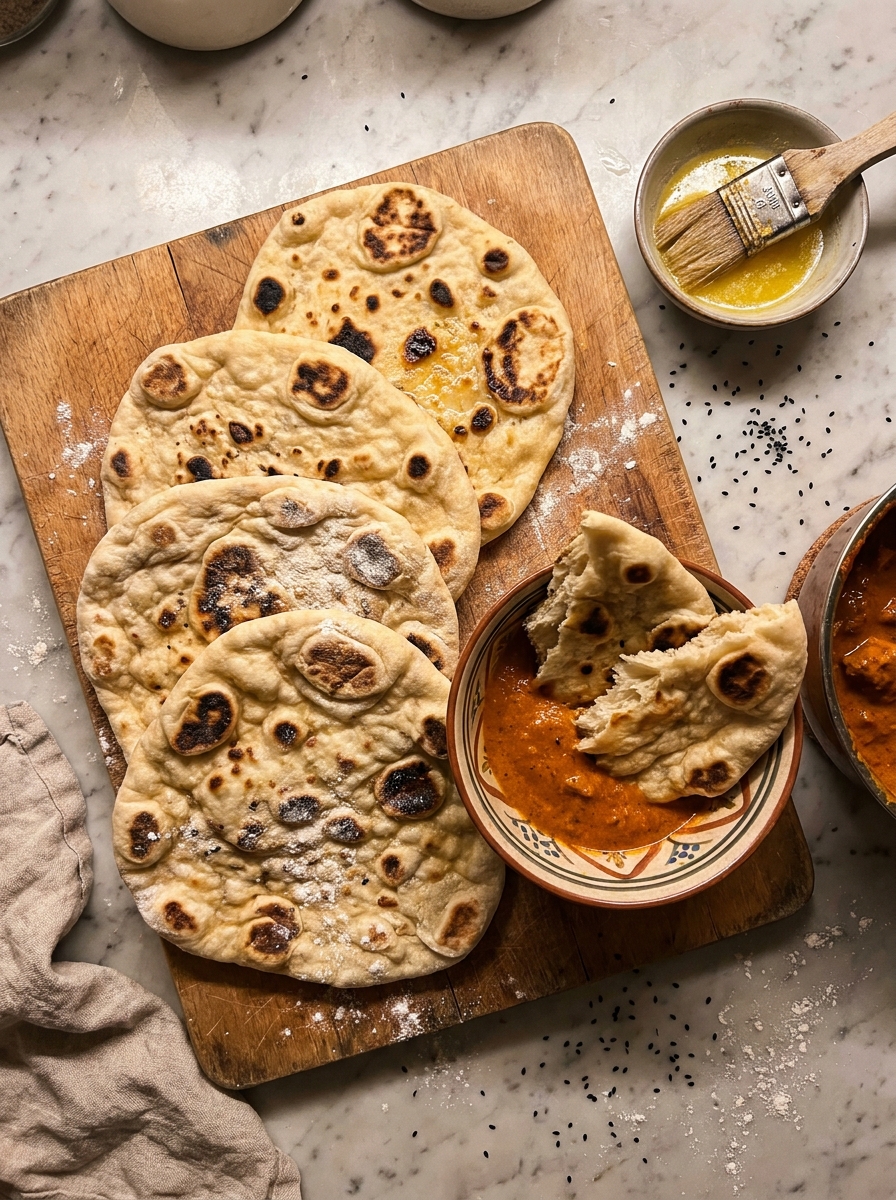
Gordon Ramsay’s naan bread is made with yoghurt, ghee, and dried yeast, shaped into teardrops and baked on preheated trays at 220°C for just 4-5 minutes. The recipe is from his Great Escape India cookbook and makes 8.
In that book Ramsay writes that supermarket naans are “no match for homemade ones, not least because the varieties sold by supermarkets tend to be thick and doughy, resembling a blend of Indian and Western bread.” He learned this the hard way. In a Cookalong Live episode he worked the tandoor at Brilliant restaurant in Southall on a busy night, got destroyed by it, came out with “blisters everywhere and charcoal tandoori arms.” That’s why his cookbook recipe uses a domestic oven instead: he knows the real thing and designed a version that actually works at home.
The trick is the preheated baking trays. Most home naan recipes use a skillet, which only cooks one side at a time. Ramsay puts heavy trays in the oven first, then slides the shaped naans onto the scorching surface. The blast of heat from all directions puffs the bread and creates those brown spots in under 5 minutes, closer to how a real tandoor surrounds the bread with heat.
Gordon Ramsay Naan Bread
Course: SidesCuisine: IndianDifficulty: Easy8
naans15
minutes5
minutes210
kcal80
minutesFrom Gordon Ramsay’s Great Escape India cookbook. A simple yoghurt and yeast dough baked on preheated trays at high heat for restaurant-style naans without a tandoor. Ramsay calls supermarket versions thick and doughy, and this recipe proves why.
Ingredients
150-175ml tepid milk
1 tsp caster sugar
1 tbsp dried yeast
450g plain flour, plus extra for rolling
½ tsp fine sea salt
1 tsp baking powder
2 tbsp natural yoghurt
2 tbsp ghee or melted unsalted butter, plus extra for brushing
Poppy, sesame, or black onion seeds for sprinkling (optional)
Directions
- Activate the yeast: Pour the tepid milk into a bowl, sprinkle in the sugar and yeast, stir well. Set aside for 20 minutes until it becomes frothy.
- Make the dough: Sift the flour, salt, and baking powder into a large bowl. Add the yoghurt, ghee or butter, and the yeast mixture. Bring everything together to form a soft ball of dough.
- Knead: Tip the dough onto a lightly floured surface and knead for 10 minutes until smooth. Place in a lightly oiled bowl, cover with a damp tea towel or cling film. Leave to rise in a warm place for an hour or until doubled in size.
- Shape: Preheat the oven to 220°C (425°F)/Fan 200°C/Gas 7. Put two large, heavy baking trays in the oven to heat. Divide the dough into 8 balls. Work with one at a time, keeping the rest covered. Flatten with your palm, roll out to 5mm thick, then pull one side to form a teardrop shape. Prick all over with a fork.
- Top (optional): Sprinkle with poppy, sesame, or black onion seeds and gently press into the dough.
- Bake: Transfer the naans to the hot baking trays. Bake for 4-5 minutes until puffed up slightly with brown spots on the surface. Brush with ghee or butter and serve immediately.
FAQs
Why does Ramsay bake naan in the oven, not a skillet?
Because he tried the real thing and knows what it takes. In a Cookalong Live episode he worked the tandoor at Brilliant restaurant in Southall during a packed service. He called it “the busiest station in the kitchen” and spent three hours training before service even started. By the end he had blisters on his arms and called it “charcoal tandoori arms.”
A tandoor hits 480°C and cooks naan from all sides at once. A skillet only heats from below, so one side chars while the top stays pale and doughy. Ramsay’s oven method at 220°C with preheated heavy trays is the closest home version because heat comes from above and below simultaneously.
Why does this recipe use milk instead of water?
Most naan recipes start with water to activate the yeast. Ramsay uses tepid milk. The fat and lactose in milk create a softer, richer crumb and help the surface brown faster during the short bake time. Combined with the yoghurt in the dough, it gives the bread that slightly tangy chew you get from restaurant naan. Water-based doughs tend to dry out quicker and taste flatter.
What is Ramsay’s peshwari naan?
In the same chapter of Great Escape India, right after the basic naan, Ramsay includes a peshwari naan recipe using the same dough. You roll each ball into a round, fill one half with a mixture of pulsed blanched almonds, raisins, caster sugar, and freshly grated coconut, fold it over, and roll it out into a teardrop shape. Same bake time, same temperature.
He writes that they’re “one of my favourite Indian breads” and loves “the slight sweetness that you get from the raisins and coconut.”
What should you serve this with?
Naan is for scooping thick, saucy curries. It works best with dishes that have plenty of liquid to mop up. Ramsay’s chicken tikka masala is the obvious match: thick, creamy, and rich enough to cling to the bread. His chicken biryani comes from the same Great Escape India book and uses similar spice profiles.
Skip naan with dry dishes like tandoori chicken on its own. You want sauce.