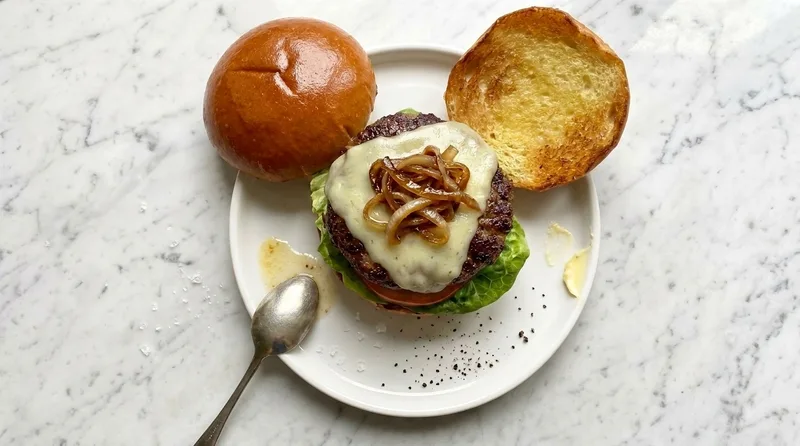
Gordon Ramsay’s wagyu burger is 500g of wagyu beef mince shaped into 4 patties with nothing added. The patties rest out of the fridge for 10 minutes, get seasoned in stages and finish with a butter baste. The marbling does the work a normal burger needs egg and fat for, and it’s done in 25 minutes.
Ramsay has no wagyu burger in his cookbooks, so I built this from how he handles burgers and what he says about wagyu on record. His one rule for burgers at home, from the Burger King campaign interviews, is to “literally take it out the fridge 10 minutes before you cook it” and let it rest. And the butter baste comes from his own grill demo: “at my burger restaurants in Las Vegas, we basted the burgers with Devonshire butter.”
The technique that changes with wagyu is restraint. His Bread Street Kitchen burger adds 80g of minced fat to a kilo of ordinary beef, because burgers need fat to stay juicy. Wagyu carries that fat inside as marbling which melts at a low temperature, so the patties cook over medium-high rather than screaming heat, or the fat you paid for ends up in the pan.
Cooked this recipe? Send a photo or tell me what you changed at fans@gordonramsayrecipes.uk and I’ll share your experience live on this page.
Gordon Ramsay Wagyu Burger Recipe (Butter-Basted)
Course: DinnerCuisine: AmericanDifficulty: Medium4
15
minutes10
minutes750
kcal25
minutesFour wagyu patties handled the way Ramsay treats expensive beef: nothing mixed in, a 10-minute rest out of the fridge, seasoning layered on in stages, and a butter baste at the end like his Vegas burger restaurants. The marbling replaces every binder a normal burger needs.
Ingredients
- For the patties:
500g wagyu beef mince
Sea salt flakes and coarsely ground black pepper
1 tbsp grapeseed oil
25g butter
4 slices Monterey Jack or Cheddar
- To build:
4 brioche burger buns
1 Little Gem lettuce, leaves separated
2 tomatoes, thickly sliced
Caramelised or grilled onions (optional)
Directions
- Shape without mixing: Divide the wagyu into 4 balls and press gently into patties about 2cm thick, handling the meat as little as possible and mixing nothing in.
- Rest out of the fridge: Leave the patties at room temperature for 10 minutes, his non-negotiable for burgers at home, since fridge-cold wagyu seizes in the pan and the fat leaks out instead of melting through.
- Season in stages: Just before cooking, season both sides generously and roll the edges through the seasoning on the board. You cannot season a burger after it’s cooked.
- Cook medium-high, not screaming: Oil the patties lightly, then cook for 3 to 4 minutes each side, flipping once and never pressing, which would squeeze out exactly the fat that makes wagyu worth buying.
- Butter baste at the end: Two minutes before they come off, add the butter and spoon it over the patties as it foams, then lay the cheese on and cover so it melts.
- Final seasoning and build: A light pass of seasoning from a distance as they come off, then build on toasted brioche: lettuce first to protect the bun, tomato, patty, onions if using, lid.
FAQs
Did Gordon Ramsay make the Burger King wagyu burger?
No, and the adverts say so themselves. Burger King UK launched an £11 wagyu burger in September 2025 with Ramsay fronting a campaign titled “Not Made by Gordon,” where he keeps trying to muscle into the kitchen and the staff keep him out. He endorsed it without creating it, saying “it’s amazing to see how Burger King UK have made wagyu so accessible to the public.”
What he genuinely cared about in those interviews was the farming. The patties use crossbred British wagyu from grass-fed herds across hundreds of UK farms, and his point was that nobody should assume good wagyu has to come from Japan.
What happened with the wagyu burgers on Kitchen Nightmares?
That was Burger Kitchen in Los Angeles, season 5 from 2011, still one of the most chaotic episodes ever filmed. Owner Alan Saffron called himself a “meat sculptor” and built the menu on wagyu beef, except his patties arrived pre-made and frozen. He later admitted he only chose wagyu because it sounded fancy and expensive.
Ramsay’s verdict on the frozen wagyu burger was brutal, while the chef’s fresh non-wagyu burger scored nine out of ten, which is the whole lesson of this page in one scene. Expensive beef treated badly loses to ordinary beef treated well, and the restaurant closed within months.
Can you use supermarket wagyu patties?
Yes, and for most people they’re the sensible way in. Aldi’s Specially Selected British wagyu burgers come two to a pack from Yorkshire-reared herds, and their range includes wagyu mince if you’d rather shape your own. The difference between these and the Burger Kitchen disaster above is treatment, not the patty itself.
So treat a bought patty exactly like the hand-shaped ones in the card: fully defrosted, properly rested, seasoned his way, butter at the end. Skip the oil the pack suggests, because wagyu releases more than enough of its own fat in the pan.
Should a wagyu burger be cooked rare like wagyu steak?
No, and this is where steak rules mislead people. A wagyu burger wants medium, because the marbling only turns from waxy to silky once it properly renders, and a cold rare centre leaves that fat solid and greasy on the tongue. Medium heat with a few extra minutes gives the fat time to melt through the patty.
The seasoning side doesn’t change though, and it’s covered properly in my burger seasoning method: layered on in stages, never after cooking, and lighter than you think, since wagyu needs even less help than ordinary beef.
Is wagyu actually worth it for a burger?
Ramsay rates the beef itself, writing in his travel cookbook that he’s had “some of the most extraordinary Wagyu.” But mince is where wagyu’s case is weakest, because grinding destroys the texture you pay for, and what survives is the buttery fat. Crossbred British wagyu mince at a sensible price makes a noticeably richer burger, while premium Japanese A5 ground into patties is money wasted.
If you’ve got your hands on a proper wagyu steak cut, treat it like his beef fillet instead, where searing and butter-basting a whole piece lets the marbling do what it was bred for.
What cheese and toppings suit a wagyu burger?
Restraint again, since the beef is the event. His burger restaurants run Monterey Jack as the house melt, the same cheese his Bread Street Kitchen book calls for, and the toppings stay classic and dry so nothing fights the fat.
The one big-flavour exception that works is blue cheese, and his blue cheese burger shows his method for it, crumbled through rather than melted on. On the side, his triple-cooked french fries are the proper match for a burger this rich.