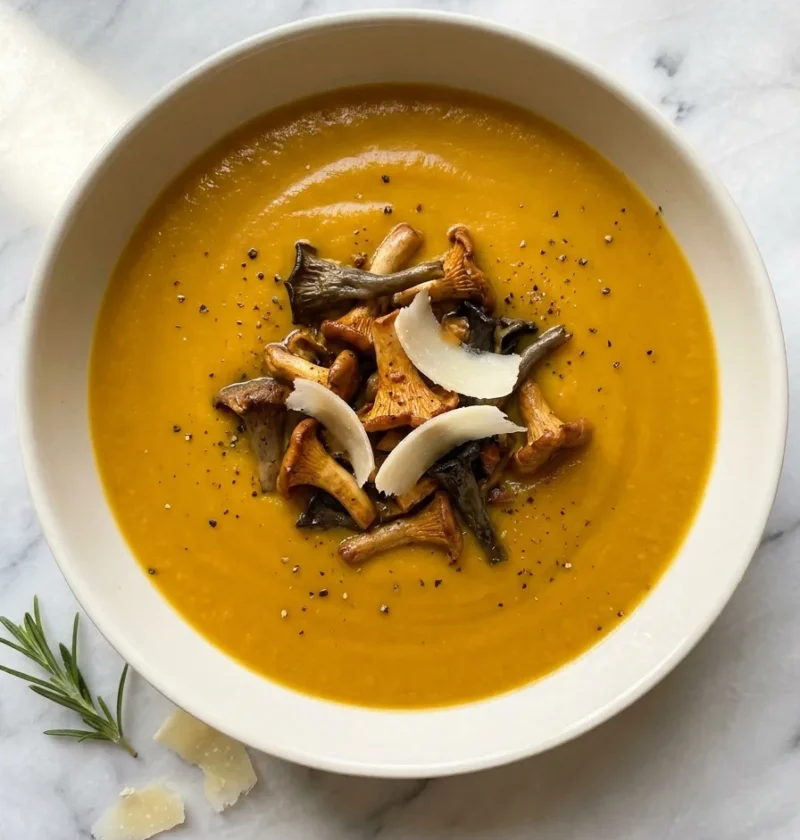
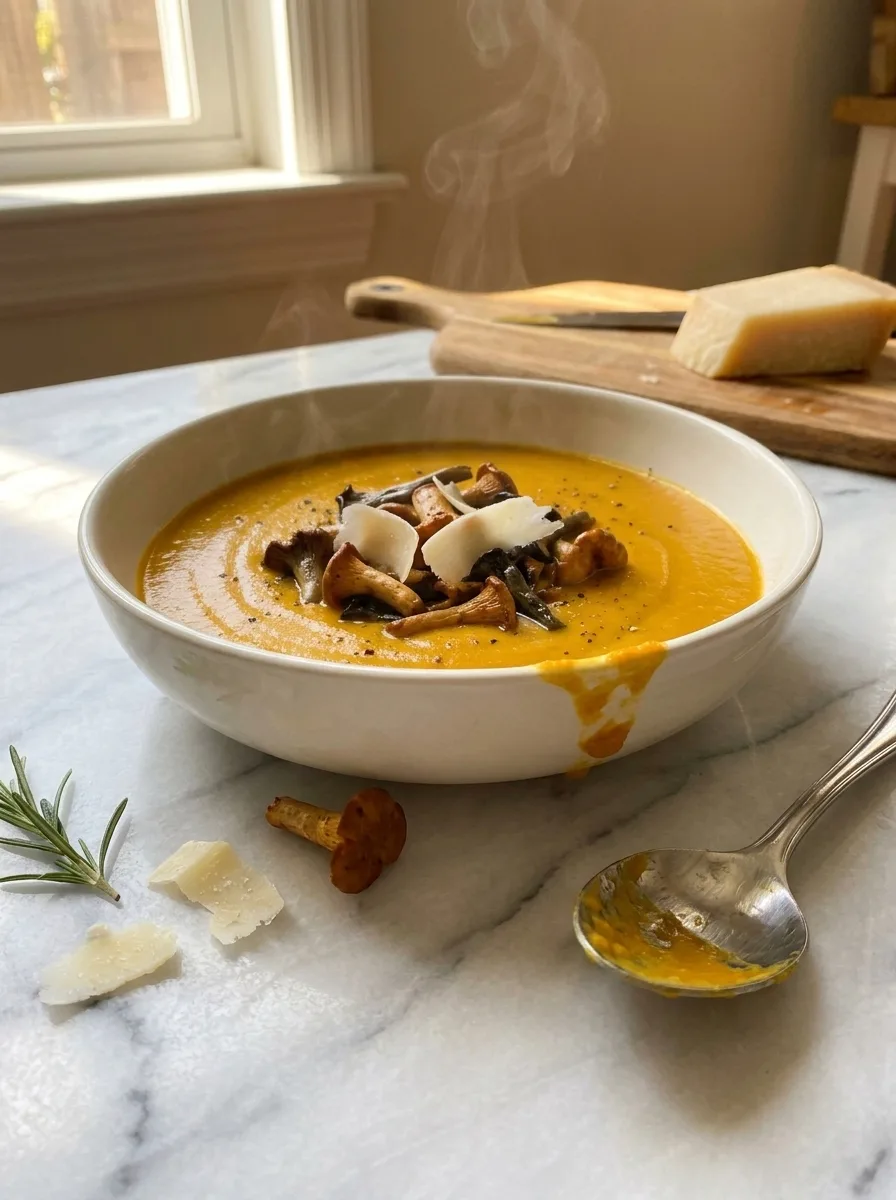
Gordon Ramsay’s pumpkin soup is smooth, velvety and rich, made by roasting a whole pumpkin with garlic and rosemary until the flesh caramelises, then blending it with Parmesan, cream and a knob of butter. Topped with sautéed wild mushrooms and Parmesan shavings, it serves 6 in about 90 minutes.
This is from his Ultimate Cookery Course, where he makes it at home with his daughter Holly on YouTube. Every other recipe site tells you to peel, chop and boil your pumpkin. Ramsay doesn’t. He roasts it whole because “roasted pumpkin intensifies the rich sweet flavour of its flesh,” and the difference in the finished soup is night and day.
The move nobody else mentions is Parmesan in the base, not just as a garnish. He grates 30g straight into the pot before adding stock because “its mellow caramel flavour and saltiness provide a lovely balance to the sweet pumpkin.” That savoury backbone is why this tastes like restaurant soup and not baby food.
Cooked this recipe? Send a photo or tell me what you changed at fans@gordonramsayrecipes.uk and I’ll share your experience live on this page.
Gordon Ramsay Roasted Pumpkin Soup
Course: Soup, Starter6
15
minutes1
hour15
minutes271
kcal90
minutesEasy
Roasted pumpkin soup from Gordon Ramsay’s Ultimate Cookery Course. The pumpkin roasts whole with garlic and rosemary for an hour, then gets pureed and blended with Parmesan, stock, cream and butter for a velvety finish. Topped with sauteed wild mushrooms and Parmesan shavings. Under 300 calories per serving.
Ingredients
- For the Pumpkin Puree:
1.5kg (3.3 lb) pumpkin, such as French pumpkin or Crown Prince
1 head of garlic, cut in half horizontally
Handful of fresh rosemary sprigs
Olive oil, for drizzling
Sea salt and freshly ground black pepper
- For the Soup:
1½ tbsp olive oil
1 onion, peeled and chopped
Pinch of freshly grated nutmeg
30g (1 oz) Parmesan, freshly grated
800ml (3⅓ cups) hot ham or chicken stock
100ml (scant ½ cup) double cream
15g (½ oz) butter
- For the Mushroom Garnish:
1½ tbsp olive oil
400g (14 oz) mixed wild mushrooms (chanterelles, trompettes), cleaned and trimmed
10g butter
Parmesan shavings, to serve
Directions
- Roast the pumpkin: Preheat the oven to 170°C (150°C fan / Gas 3 / 340°F). Cut the pumpkin in half horizontally and scoop out the seeds. Save the seeds for toasting. Score the flesh, season with salt and pepper, then rub with the cut garlic halves. Lay the rosemary sprigs and a garlic half inside each pumpkin half. Drizzle with olive oil and place on baking trays.
- Cook low and slow: Roast the pumpkin halves for about 1 hour until tender. The timing depends on the variety, density and thickness. It is ready when you can slip a knife into the thickest part without any resistance. Remove the rosemary and garlic, reserving the garlic.
- Toast the seeds: While the pumpkin roasts, clean the seeds in water and rub them together to remove the stringy flesh. Dry on kitchen paper, season with salt and spread on a baking tray. Roast for 10 to 15 minutes, shaking the tray every 5 minutes, until golden and crisp.
- Make the puree: While still hot, scoop out all the pumpkin flesh and puree in a blender or food processor until smooth. Discard the skins.
- Build the soup: Heat the olive oil in a large saucepan over a medium heat. Add the onion and cook for 5 to 6 minutes until soft and translucent. Squeeze the flesh from 2 or 3 roasted garlic cloves into the pan. Add the nutmeg and a little seasoning. Sauté for 1 to 2 minutes more.
- Add puree and stock: Stir in the pumpkin puree and grated Parmesan, then pour in the hot stock. Bring to the boil, lower the heat and simmer for 10 to 12 minutes. Stir in the cream and heat for a minute.
- Blend with butter: In batches, ladle the soup into a blender, filling it only halfway each time. Add the butter on top and blend until completely smooth and velvety. Pour into a clean pan to reheat.
- Fry the mushrooms: Heat the olive oil in a frying pan over a high heat. Add the mushrooms and fry for a few minutes until all the moisture has cooked off and the pan is quite dry. Add the butter, season with salt and pepper and stir. Remove from the heat.
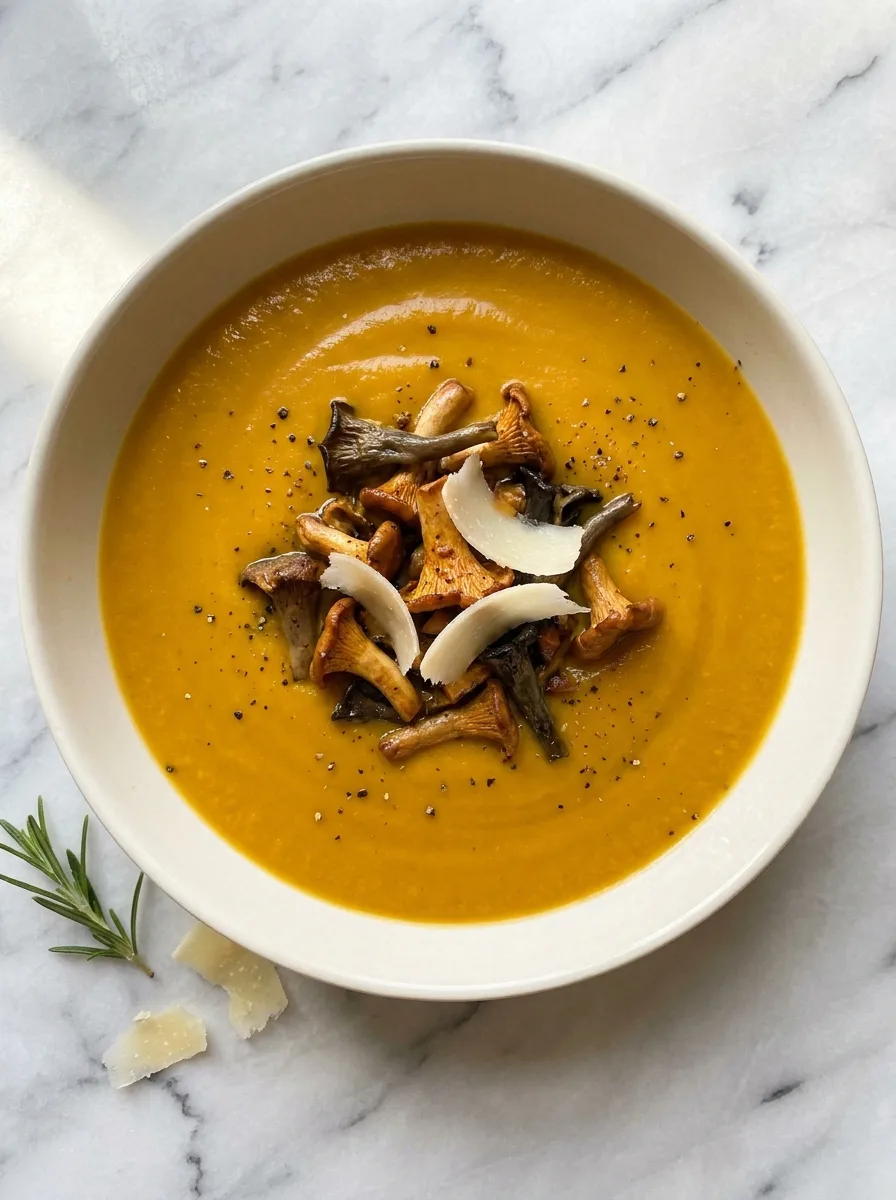
- Serve: Pour the hot soup into warmed bowls. Spoon the sautéed mushrooms into the centre. Top with Parmesan shavings and a grind of black pepper.
FAQs
Why does Ramsay roast the pumpkin whole instead of peeling and chopping it?
Roasting caramelises the natural sugars in the flesh, which gives the soup a deeper, sweeter flavour that boiling can’t match. And it’s far less work: you cut it in half, score the flesh, rub in garlic and rosemary, drizzle oil and let the oven do everything for an hour.
He scores the flesh before roasting so it absorbs the garlic and rosemary as they cook together. After an hour you scoop the soft flesh out with a spoon. No peeling, no wrestling with raw pumpkin on a chopping board.
What type of pumpkin works best for soup?
In the video Ramsay uses a French pumpkin, and in his Sunday Lunch cookbook he says “we usually cook with iron bark pumpkins at the restaurant, jack o’lantern Halloween pumpkins are too watery and stringy.” Small to medium eating pumpkins from supermarkets in autumn are what you want.
He says you can use butternut squash instead, “allowing a little longer for it to cook.” Tesco stocks Crown Prince and Natura Delica pumpkins from September onwards which both work well. If you’re serving this as a starter before roast pork loin, the lighter squash version pairs especially well.
Why does Ramsay add Parmesan to the soup base?
Most recipes save Parmesan for a garnish, but Ramsay grates 30g directly into the pot with the pumpkin purée before adding stock. He says it’s “brilliant for enriching this soup” because the caramel saltiness of aged Parmesan balances the sweetness of roasted pumpkin.
It also thickens the soup slightly and adds umami depth that you’d normally need hours of simmering to build. The Parmesan melts into the purée so you don’t taste cheese, just a richer, more rounded soup.
What is the butter blending trick?
Ramsay calls this “a bit of a naughty chef’s trick.” He drops 15g of cold butter on top of the hot soup in the blender before blitzing. The butter emulsifies into the liquid and makes the texture noticeably smoother.
He also only half-fills the blender each time so the soup gets aerated as it blends. The combination of butter and air is what gives it that silky restaurant finish. If you like this approach to building richness, his apple tarte tatin uses the same butter-and-heat philosophy for the caramel.
What stock should you use?
In the video Ramsay uses ham stock and calls it “Christmassy” and “delicious.” If you’ve cooked a ham or gammon joint, the leftover cooking liquid is perfect here. The saltiness and smokiness of ham stock gives the soup an extra savoury depth that works beautifully with the sweet roasted pumpkin.
Chicken stock is the safe swap if you don’t have ham stock. Vegetable stock works too but the soup will taste lighter. Whatever you use, heat it before adding so it doesn’t drop the temperature in the pan and slow down the simmer.