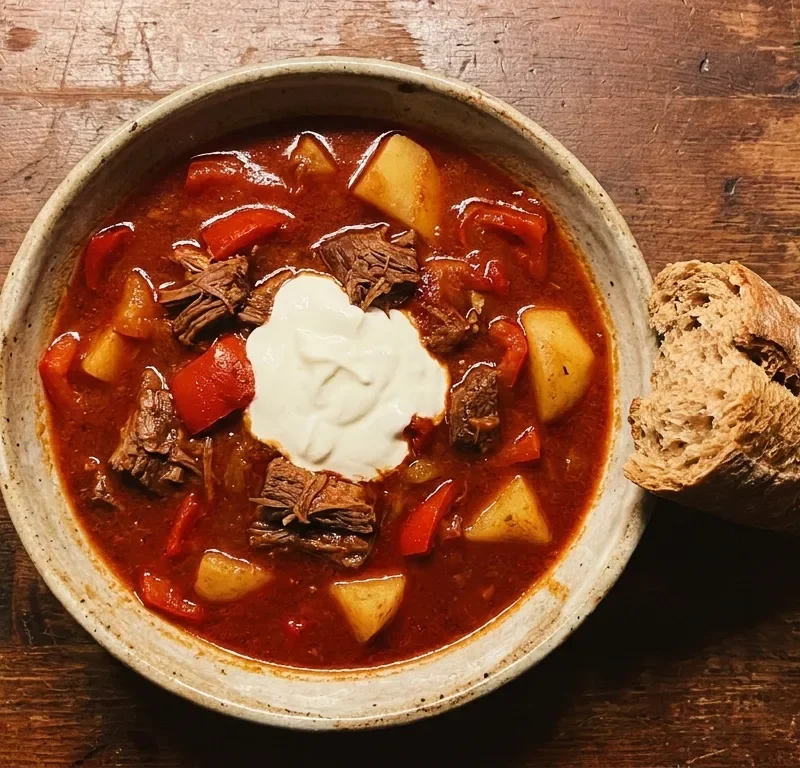
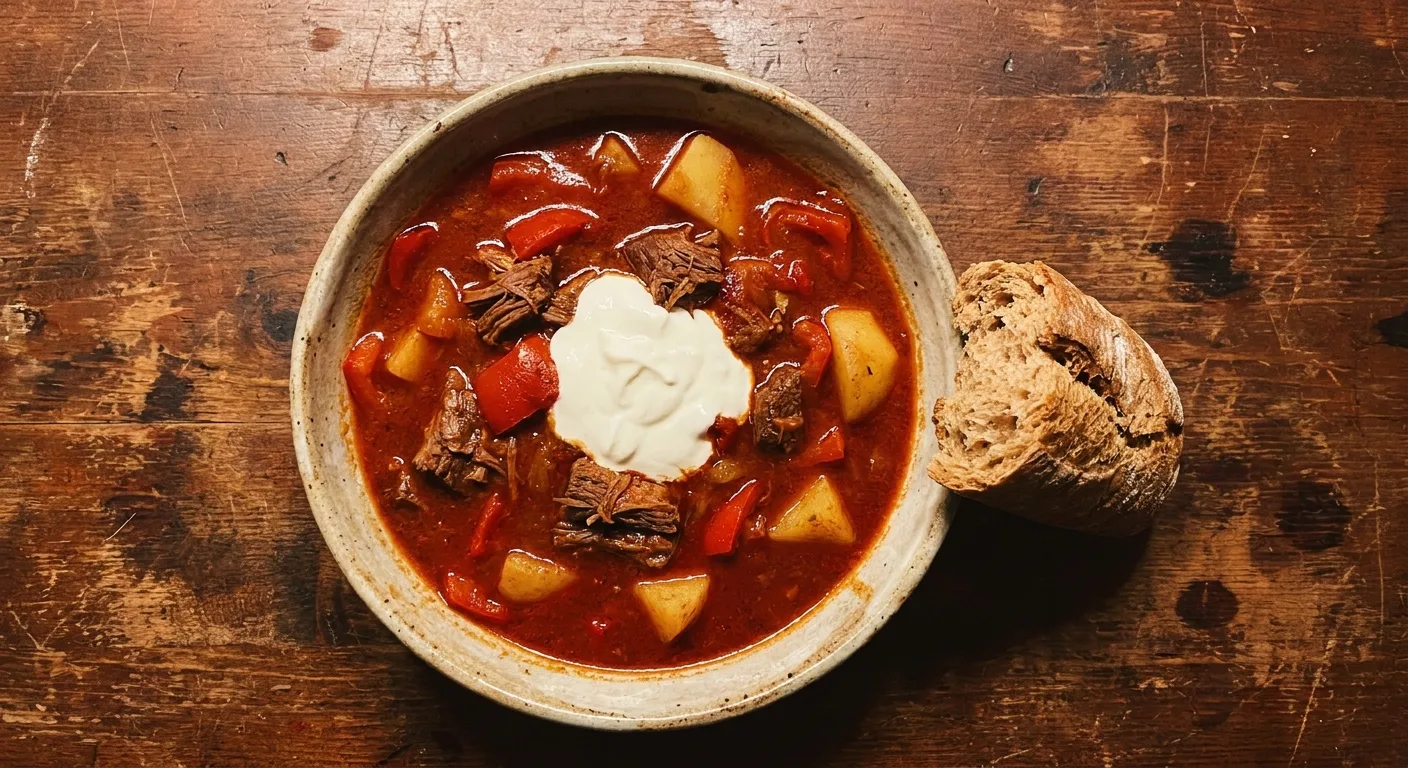
Gordon Ramsay’s Hungarian goulash is chuck steak slow-cooked with sweet paprika, caraway seeds, bell peppers and potatoes until the sauce turns a deep, rich red. It sits somewhere between a stew and a soup, thicker than broth but lighter than a casserole. About 2½ hours in a low oven and you have enough for six.
Ramsay does not have a goulash in any of his 22 cookbooks, so I built this from his beef stew in Ultimate Home Cooking. Same braising method: sear in batches, sweat the aromatics, add tomato purée, deglaze, and into a low oven. I swapped the beer for stock, the thyme for paprika and caraway, and the root vegetables for peppers and potatoes.
The one thing I learned from Hungarian cooks is that paprika is not a seasoning in goulash, it is THE ingredient. Most recipes use a teaspoon or two, but Hungarians use a full quarter cup.
That amount gives the sauce its deep red colour and sweet warmth, so the cheap jar from the spice aisle will not do it. In the UK, Tesco and Sainsbury’s sell decent sweet paprika, but for the real thing look for imported Hungarian tins at Polish supermarkets or online.
Cooked this recipe? Send a photo or tell me what you changed at fans@gordonramsayrecipes.uk and I’ll share your experience live on this page.
Gordon Ramsay’s Hungarian Goulash
Course: Dinner, MainCuisine: HungarianDifficulty: Easy6
servings20
minutes2
hours30
minutes420
kcal170
minutesBuilt from Ramsay’s braising method in Ultimate Home Cooking with the spice profile swapped to Hungarian. Sweet paprika by the tablespoon, caraway seeds, bell peppers, potatoes and no wine. Easy enough for a weeknight once the searing is done because the oven does the rest.
Ingredients
800g (1¾ lb) chuck steak, cut into 3cm chunks
2 tbsp olive oil or lard
3 large onions, peeled and diced
4 garlic cloves, finely sliced
4 tbsp sweet Hungarian paprika
2 tsp caraway seeds
2 tbsp tomato purée (tomato paste)
2 red bell peppers, deseeded and cut into chunks
1 litre (4¼ cups) beef stock
2 bay leaves
3 medium potatoes, peeled and cut into 2cm cubes
Sea salt and freshly ground black pepper
Sour cream, to serve
Directions
- Preheat the oven to 150C (300F/Gas 2).
- Sear the beef: Season the beef with salt and pepper. Heat the oil in a large cast iron casserole over a medium heat and brown the beef in batches until coloured on all sides. Do not crowd the pan. Remove to a plate.
- Sweat the onions: Add a little more oil and cook the onions over a medium heat for 8–10 minutes until soft and translucent. Add the garlic and cook for another minute.
- Add the paprika: Take the pan off the heat before adding the paprika, because it scorches and turns bitter on direct high heat. Stir it through the onions for 30 seconds so it coats everything. Set the pan back on a low heat, add the caraway seeds and tomato purée, then stir well.
- Build the stew: Return the beef to the casserole. Add the bell peppers, pour in the stock and add the bay leaves. Bring to a simmer, then cover with a lid slightly ajar and place in the oven for 2 hours.
- Add the potatoes: After 2 hours, stir in the potatoes. If the liquid looks low, add a splash more stock. Cover and return to the oven for 30 minutes until the potatoes are tender and the beef falls apart.
- Serve: Check the seasoning, adding more salt or paprika if needed. Ladle into bowls and finish with a spoonful of sour cream.
Notes
- I made this three times to get the balance right. The paprika must go in off the heat, otherwise the whole stew turns bitter and you cannot fix it. Use sweet Hungarian paprika, not smoked. If you want heat, add half a teaspoon of hot paprika at step 4. In the UK, Tesco and Sainsbury’s sell decent sweet paprika, but for the real thing try Polish supermarkets or online shops. If you try this, please leave a comment and let me know what you think because I genuinely want to know if it works in your kitchen too.
FAQs
Is this the same as American goulash?
No, completely different dishes. American goulash is ground beef with elbow macaroni in a tomato sauce, closer to a pasta bake. Hungarian goulash is chunks of beef slow-braised in paprika, closer to a thick soup.
If you have had “goulash pasta” and are expecting that, this is not it. Traditional Hungarian goulash has no pasta at all. It goes in a bowl with sour cream and bread, or sometimes over egg noodles or small dumplings called nokedli.
Why does authentic goulash not use flour?
Most British beef stews dust the meat in flour before searing, which thickens the sauce. Ramsay does this in his UHC beef stew. Hungarian goulash does not, because the sauce thickens naturally from the collagen breaking down and the onions dissolving into the liquid.
I left the flour out because I wanted the lighter, brothy texture that makes goulash feel different from a casserole. If you prefer it thicker, dust the beef in a tablespoon of plain flour before searing. For Ramsay’s thicker British version, his venison stew from Pub Food uses flour-dusted meat with port and juniper.
Why do Hungarians use so much paprika?
Because paprika in goulash is not a background spice, it is the main flavour. Most British recipes add a teaspoon and wonder why it tastes flat. Hungarian cooks use 3-4 tablespoons for a pot this size.
The quality matters as much as the quantity. Sweet Hungarian paprika dried in the sun tastes completely different from a dusty old jar. In the UK, Tesco sells sweet paprika for about £1, but for the real thing try Polish supermarkets or online shops like Sous Chef. Fresh Hungarian paprika makes a genuine difference.
Can you freeze goulash?
Yes, and it is one of the best things to freeze because the flavour improves after a day or two. Cool completely, portion into containers and freeze for up to 3 months. Thaw overnight in the fridge and reheat on the hob with a splash of stock.
The potatoes soften a little more after freezing, which is fine because they break into the sauce and thicken it. If you plan to freeze, cut the potatoes slightly larger so they hold their shape. For his beef bourguignon he uses the same slow braising with red wine, and that freezes just as well.
What do you serve with Hungarian goulash?
Traditionally it goes in a bowl with sour cream and crusty bread. His white bread makes a brilliant dipper because the crust holds up to the broth. Egg noodles are common in Hungary, and so are small semolina dumplings called nokedli.
If you leave the potatoes out of the stew, his twice baked potatoes on the side are rich enough to match the paprika. For something lighter, a simple kale salad with a sharp vinegar dressing cuts through the richness. His beef short ribs use the same low-and-slow approach if you want to try the technique with a different cut.

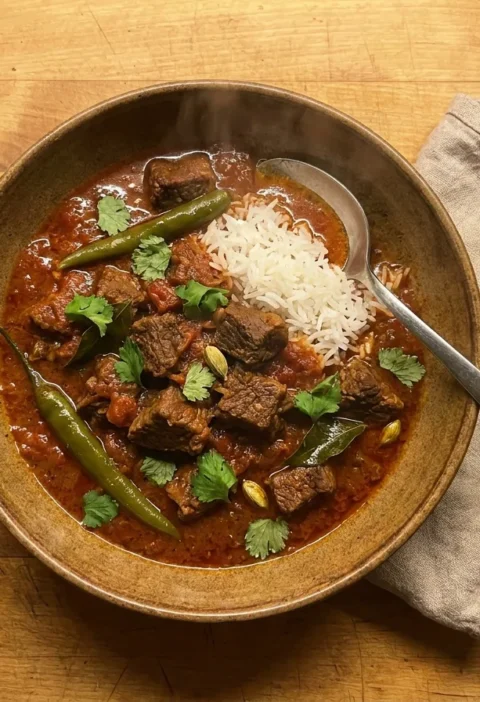
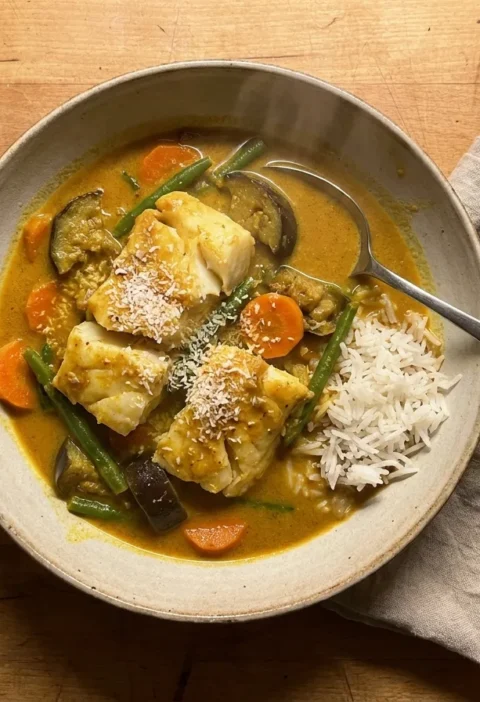
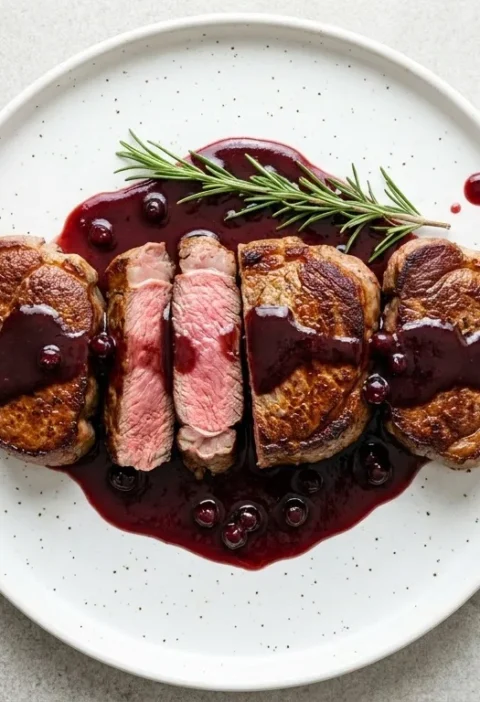
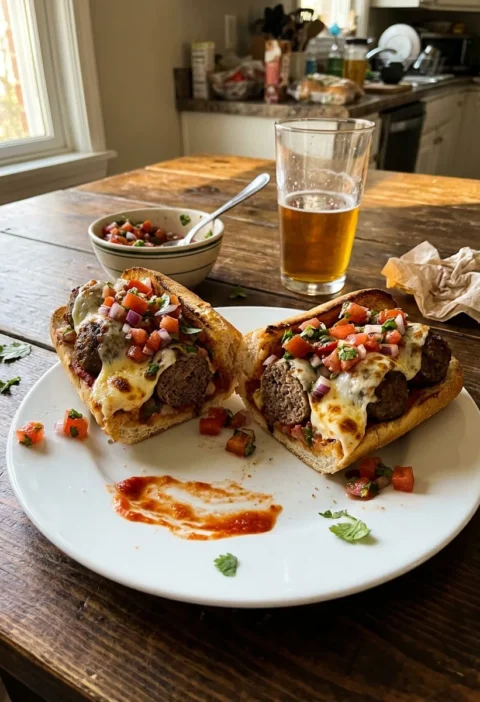
As soon as you stir in the paprika off the heat, it goes back on the heat, before adding the ingredients that follow? Haven’t made it yet
Hi Suzan, good spot. Yes, back on the heat. It only comes off for the paprika, so it doesn’t catch and turn bitter. Stir it through, then back on a low heat for the caraway and tomato purée before you build the stew. I’ve made that step clearer in the recipe now. If you do cook it, send me a photo of yours and I’ll add it to the page. Sophie