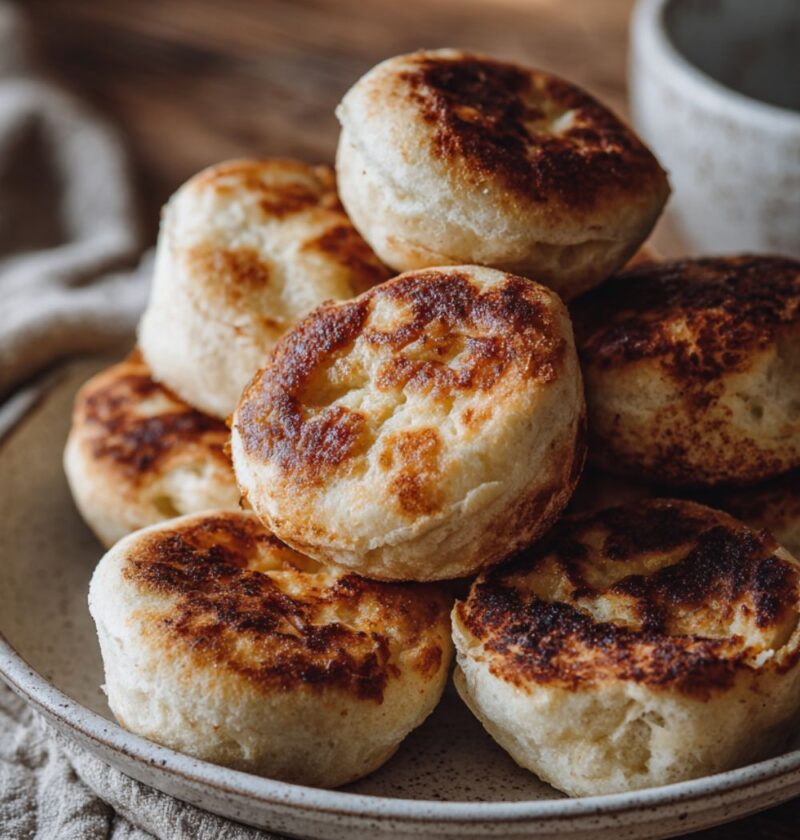
Gordon Ramsay’s English muffin recipe uses an overnight fermented dough that you cook in a pan, not in the oven, and that slow cold rise is what gives you the nooks and crannies that shop-bought ones never have. Plain flour (all-purpose flour), milk, yeast, butter, a starter that bubbles for hours, then 4 to 5 minutes per side on medium-low heat.
If you have never made bread at home, start here. I am not saying that to be encouraging, I am saying it because this is genuinely one of the most forgiving doughs I have worked with, and the worst that happens is they come out slightly flat, which still tastes better than anything from a packet.
More Bread and Baking Recipes:
Why the Overnight Rise Matters
Do not skip this step, even if you are in a rush, because a quick two-hour rise gives you a bland, dense muffin that tastes like a thick pancake. The overnight fridge rest lets the dough ferment slowly, which builds flavour and creates the open, cratered texture inside.
I tested both side by side and the difference was so obvious I threw the quick batch away. If you only take one piece of advice from this recipe, make the dough the night before.
How the Nooks and Crannies Actually Form
Everyone talks about nooks and crannies but nobody explains how they happen. Ramsay keeps this dough stickier than normal bread, and those air pockets form during the long rise because the loose gluten lets gas expand into large, uneven bubbles.
If you add too much flour to make the dough easier to handle, you kill those pockets. Flour your hands instead, not the dough, and accept that it will feel messy.
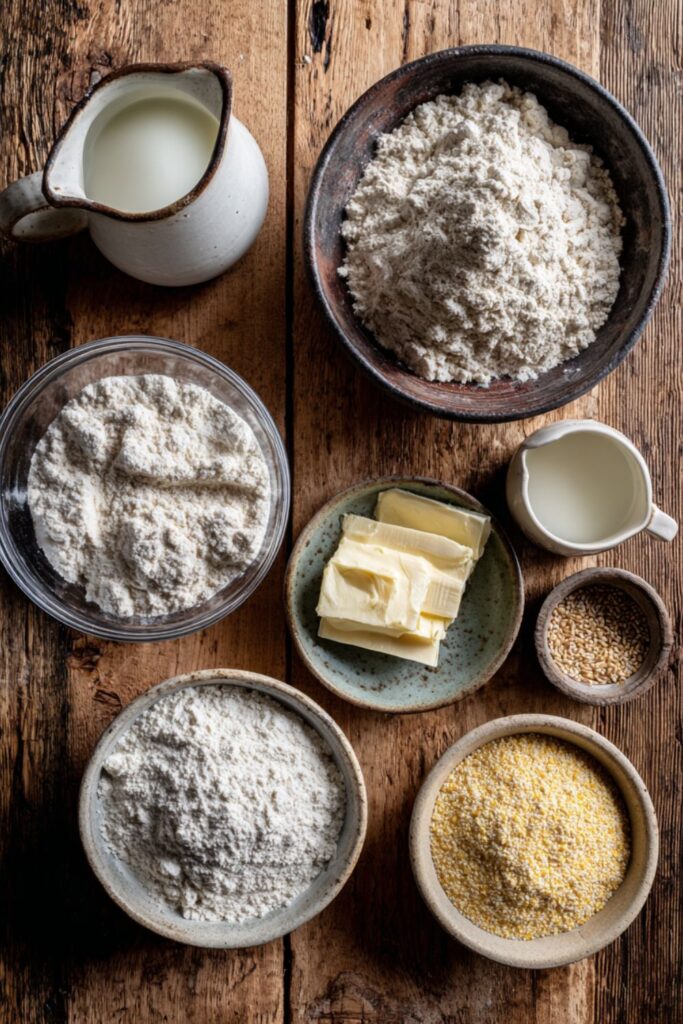
English Muffin Ingredients
- 95g (¾ cup) plain flour (all-purpose flour) for the starter
- 120ml (½ cup) warm water for the starter
- ½ tsp active dry yeast for the starter
- 240ml (1 cup) whole milk, warm
- 1 tsp active dry yeast
- 2 tbsp caster sugar (superfine sugar)
- 2 tbsp unsalted butter, melted
- 1½ tsp salt
- 375g (3 cups) plain flour (all-purpose flour)
- Cornmeal (polenta) for dusting
- Butter for the pan
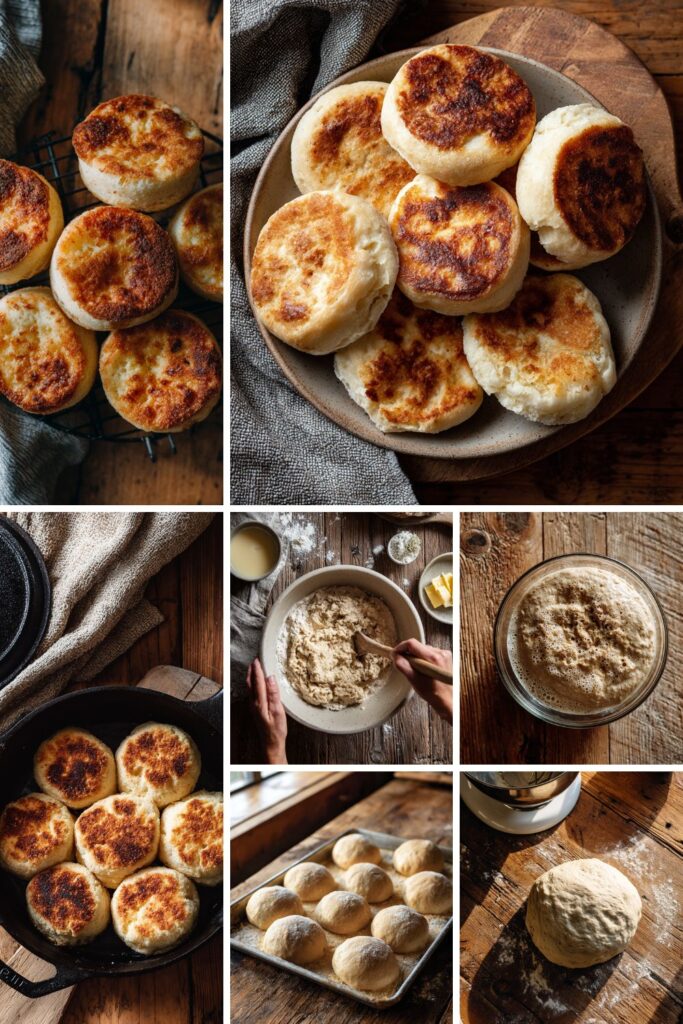
How To Make Gordon Ramsay English Muffins
- Build the starter: Mix the 95g flour, warm water, and ½ tsp yeast in a bowl. Cover loosely and leave at room temperature for at least 1 hour, or up to 10 hours, until bubbly and risen.
- Mix the dough: In a large bowl, whisk the warm milk and 1 tsp yeast together. Stir in the starter until mostly dissolved, then add the sugar, melted butter, and salt.
- Add the flour: Add the 375g plain flour gradually, stirring until you have a soft, sticky dough. Do not add extra flour to dry it out.
- Knead: Using a stand mixer with a dough hook, knead for 5 to 7 minutes until the dough is smooth and elastic. It should stretch without tearing.
- Overnight rise: Transfer the dough to a greased bowl, cover tightly, and refrigerate overnight or for up to 3 days.
- Shape: Turn the cold dough out onto a lightly floured surface and divide into 12 equal pieces. Shape each gently into a ball without overworking.
- Second rise: Place the balls on a cornmeal-dusted baking tray, dust the tops with cornmeal, and cover loosely. Leave to rise for 90 minutes to 2 hours until puffy.
- Cook in the pan: Heat a non-stick or cast iron pan on medium-low and brush with butter. Cook the muffins for 4 to 5 minutes per side with a lid on, until deep golden brown.
- Cool: Transfer to a wire rack and let them rest for at least 10 minutes. They finish cooking with carryover heat inside.
- Fork-split to serve: Push a fork into the sides all the way around and pull apart. Do not use a knife or you will flatten the nooks and crannies.
Do I Really Need a Starter
You can skip it and just use more yeast in the main dough, but you will lose the complexity that makes homemade English muffins worth the effort. The starter adds a subtle tang and a chewier crumb that a straight dough cannot replicate.
If you are short on time, a one-hour starter still helps. But if you can leave it for 6 to 10 hours, which just means mixing it before you go to bed, the flavour difference is significant.
Why Cook Them in a Pan Instead of the Oven
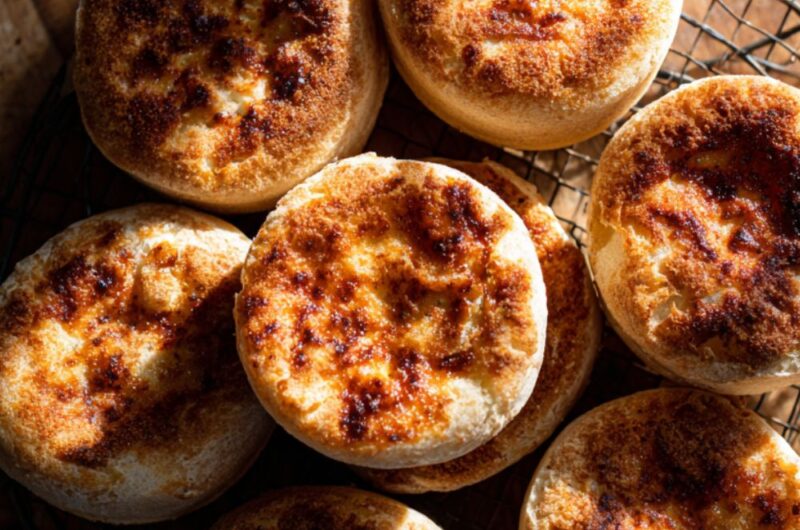
This confused me at first because every bread I had made before went in the oven. English muffins are different because the slow pan heat gives you that crisp golden crust on both sides while keeping the inside soft and open.
The key is medium-low heat with a lid, which traps steam so the inside cooks through without burning the bottom. I burnt my first batch because I had the heat too high and thought faster meant better.
What To Put on English Muffins
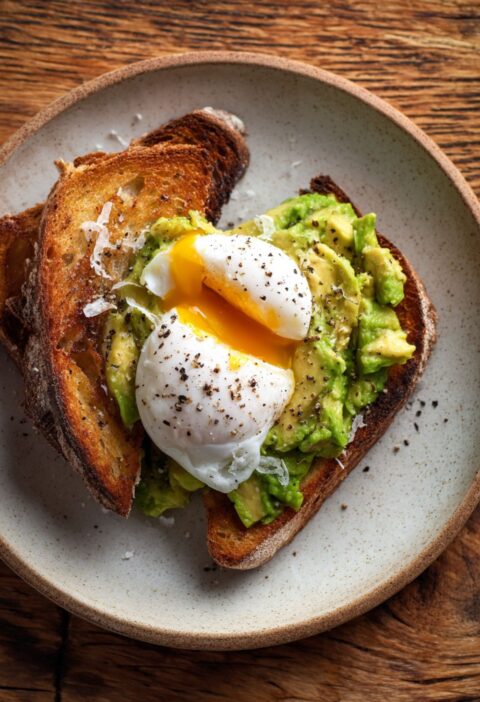
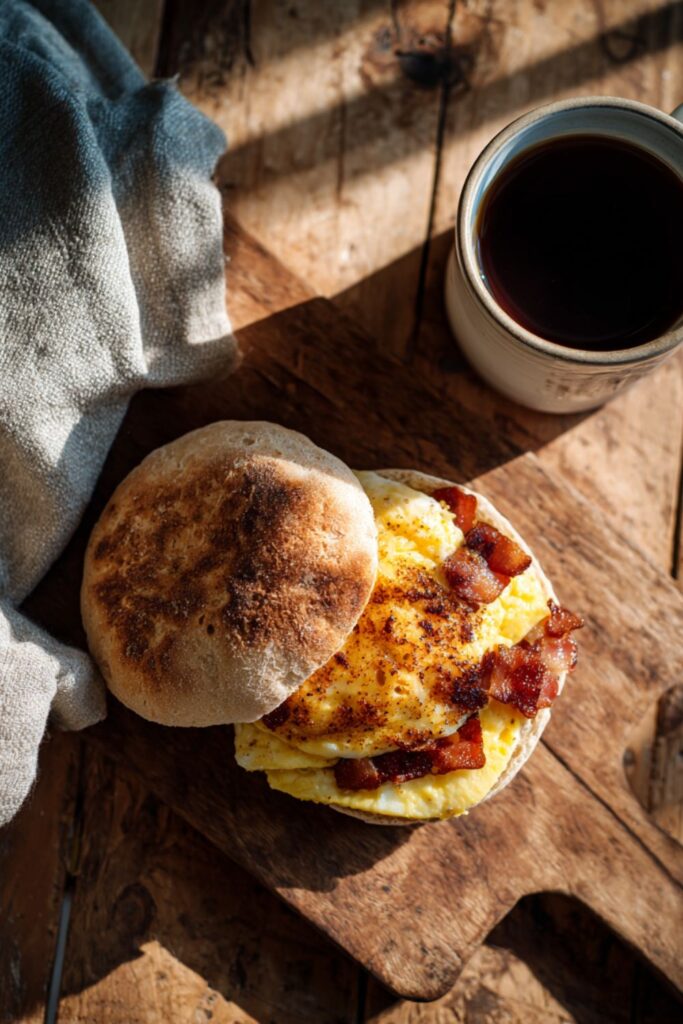
Butter and jam is the obvious answer, but the real reason I make these is for breakfast sandwiches: fork-split, toast, then load with a fried egg, bacon, and cheese. The nooks catch the runny yolk and that is when you understand why you made them from scratch.
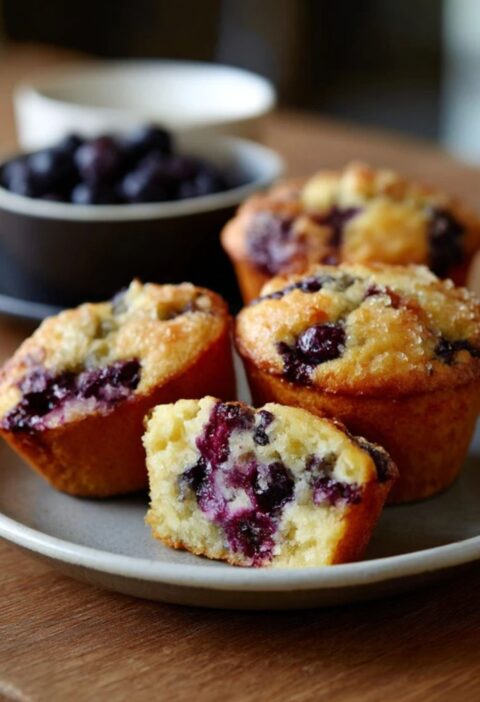
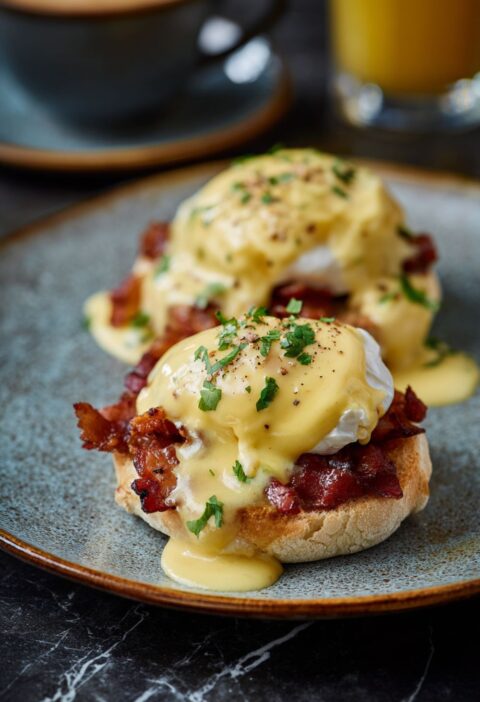
They also work as the base for a proper eggs Benedict with hollandaise. I keep a stash in the freezer, split and ready to toast, so I always have them for a weekend brunch spread alongside something like blueberry muffins.
How To Store English Muffins
Room temperature in a sealed bag for up to 3 days, or split and freeze for up to 3 months. I freeze mine the day I make them because they toast from frozen in about 3 minutes and taste just as good.
Do not refrigerate them because the fridge pulls moisture out of bread faster than leaving it on the counter. Freezer or counter, nothing in between.
FAQs
- Can I make these without a stand mixer? Yes. Knead by hand for about 10 minutes on a lightly floured surface. The dough is sticky so wet your hands regularly.
- Why are my muffins flat? Either the second rise was not long enough or your yeast was dead. Test yeast in warm water with a pinch of sugar first: if it does not foam in 10 minutes, it is old.
- Can I use bread flour instead of plain? You can but the texture will be chewier and denser. Plain flour (all-purpose flour) gives the softer, more open crumb you want.
- Do I need muffin rings? They help keep the shape uniform but are not essential. Without rings, your muffins will spread slightly wider and be a bit flatter, which is fine for home baking.
More Breakfast Recipes:
Nutrition Facts
(Per muffin, makes 12)
- Calories: 165 kcal
- Total Fat: 3g
- Saturated Fat: 1.5g
- Carbohydrates: 29g
- Sugar: 3g
- Protein: 5g
- Fibre: 1g
- Sodium: 290mg
Gordon Ramsay English Muffin Recipe
12
muffins30
minutes10
minutes40
minutesGordon Ramsay’s English muffin recipe uses an overnight fermented dough that you cook in a pan, not in the oven, and that slow cold rise is what gives you the nooks and crannies that shop-bought ones never have. Plain flour (all-purpose flour), milk, yeast, butter, a starter that bubbles for hours, then 4 to 5 minutes per side on medium-low heat.
If you have never made bread at home, start here. I am not saying that to be encouraging, I am saying it because this is genuinely one of the most forgiving doughs I have worked with, and the worst that happens is they come out slightly flat, which still tastes better than anything from a packet.
Ingredients
95g (¾ cup) plain flour for starter
120ml (½ cup) warm water for starter
½ tsp active dry yeast for starter
240ml (1 cup) whole milk, warm
1 tsp active dry yeast
2 tbsp caster sugar (superfine sugar)
2 tbsp unsalted butter, melted
1½ tsp salt
375g (3 cups) plain flour (all-purpose flour)
Cornmeal (polenta) for dusting
Butter for the pan
Directions
- Build the starter: Mix 95g flour, warm water, and ½ tsp yeast. Cover loosely and leave at room temperature for 1 to 10 hours until bubbly.
- Mix the dough: Whisk warm milk and 1 tsp yeast, stir in the starter, then add sugar, melted butter, and salt.
- Add the flour: Add 375g plain flour gradually until you have a soft, sticky dough. Do not add extra flour to dry it out.
- Knead: Using a dough hook, knead for 5 to 7 minutes until smooth and elastic.
- Overnight rise: Transfer to a greased bowl, cover, and refrigerate overnight or up to 3 days.
- Shape: Divide cold dough into 12 pieces and shape gently into balls without overworking.
- Second rise: Place on a cornmeal-dusted tray, dust tops, cover, and rise for 90 minutes to 2 hours until puffy.
- Cook in the pan: Heat a pan on medium-low, brush with butter, and cook muffins 4 to 5 minutes per side with a lid on until deep golden.
- Cool: Transfer to a wire rack and rest for at least 10 minutes to finish cooking inside.
- Fork-split to serve: Push a fork into the sides all the way around and pull apart. Do not use a knife.