
Gordon Ramsay’s watercress soup is watercress, thinly sliced potato and butter blitzed with boiling water and finished with a poached egg that sits in the centre and enriches the broth as you break into it. From The F Word, the whole thing takes about 5 minutes because the potatoes are sliced so thin they cook in seconds and the watercress barely touches the heat before it’s blended.
Ramsay has made this soup on camera at least four times, and the rules never change. The potatoes get rinsed first to wash off the starch because, as he explains in his chilled version, “otherwise it becomes gloopy, like a glue texture.” The watercress goes in last and gets blended almost immediately because “overcooking it makes it go grey.” Speed is what keeps this soup bright green and peppery instead of dull and bitter.
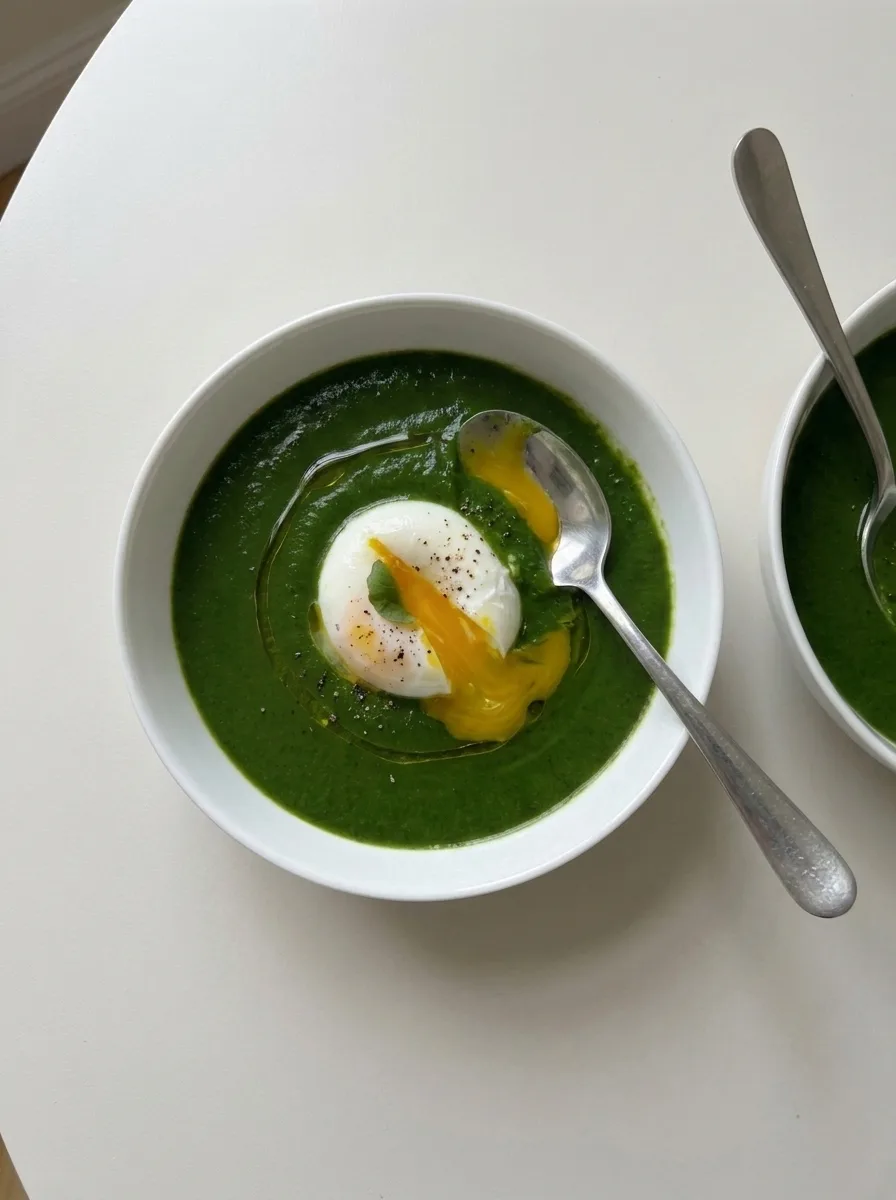
The poached egg is what turns it from a side into a starter. Ramsay says he’s “looking for that egg yolk to enrich the soup,” so when you cut into it the golden yolk runs into the green broth and makes every spoonful silky. On The F Word he serves it exactly like that: soup poured around the egg, a leaf on top, a touch of oil, done.
Cooked this recipe? Send a photo or tell me what you changed at fans@gordonramsayrecipes.uk and I’ll share your experience live on this page.
Gordon Ramsay Watercress Soup with Poached Egg
Course: Soup, Starter2
5
minutes5
minutes250
kcal10
minutesEasy
Watercress soup from Gordon Ramsay’s The F Word. Watercress and thinly sliced potato blitzed with boiling water and butter, topped with a poached egg. Five minutes, five ingredients. He also makes a chilled version with spinach and crème fraîche, and a minted pea and watercress velouté with bacon.
Ingredients
2 tbsp olive oil
200g (7 oz) watercress
1 medium potato, very thinly sliced and rinsed
500ml (2 cups) boiling water
2-3 knobs of butter
Sea salt and freshly ground black pepper
2 eggs, for poaching
Drizzle of olive oil, to serve
Directions
- Cook the watercress: Heat the olive oil in a pan. Add the watercress and season with salt and pepper.
- Add potato and water: Sprinkle the thinly sliced, rinsed potato over the watercress. Pour over the boiling water and add the butter. The potatoes cook in seconds and the watercress wilts down.
- Blitz: Take off the heat and blend for 30 seconds until smooth and bright green.
- Poach the eggs: Create a whirlpool in simmering water with a whisk. Crack each egg into a cup and slide into the spinning water. Poach for 2 to 3 minutes. Lift into ice water to stop the cooking.
- Serve: Pour the soup into warm bowls. Place a poached egg in the centre, season lightly and drizzle with olive oil.

FAQs
Why rinse the sliced potatoes first?
Raw potato is full of starch, and if it goes straight into the soup it thickens the liquid into something Ramsay describes as “gloopy, like a glue texture.” A quick rinse under cold water washes off the surface starch so the soup flows naturally and coats the back of a spoon without turning heavy.
Can you add spinach to this?
Ramsay’s chilled version uses watercress with baby spinach, sweated onion, vegetable stock instead of water, and a spoonful of seasoned crème fraîche with tarragon on top. He uses olive oil instead of butter for that one because “butter is liable to burn the onion and destroys the strength of the watercress.”
It works hot or cold, and the spinach mellows the peppery bite.
What about the pea and watercress version?
He also makes a minted pea and watercress velouté that starts with fried onion and bacon, adds mint leaves, sweats the watercress down first, then pours in the peas with boiling water. Finished with a swirl of cream.
It’s heartier than the plain version and the mint lifts the whole thing into something that feels like spring even in January.
How do you keep it bright green?
Speed. The watercress barely cooks: hot oil, water over, butter in, 30 seconds in the blender, done. The same principle as asparagus soup where the colour dies if you overcook it. Ramsay is direct about this: “Overcooking watercress makes it go grey.”
Why does Ramsay not pass it through a sieve?
Most chefs would strain a soup like this for a smoother finish, but Ramsay disagrees. In his chilled version he says passing it through a sieve means “all the goodness goes.” The blender gets it smooth enough, and keeping the fibre in means the soup has more body and more nutrition.
If you want it silkier, blend for longer rather than straining.