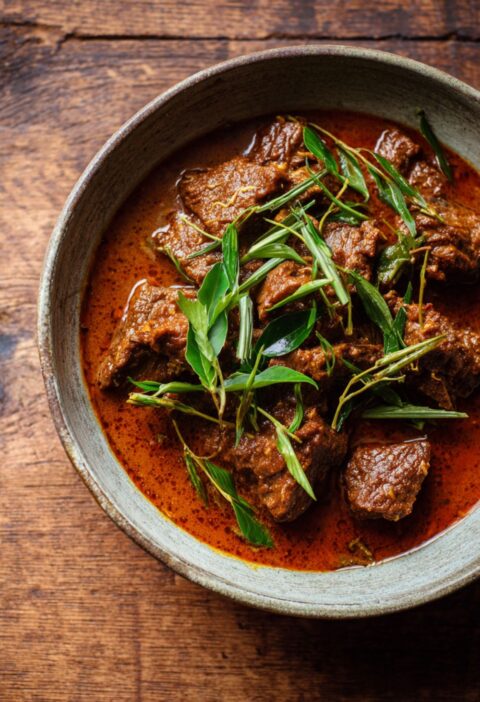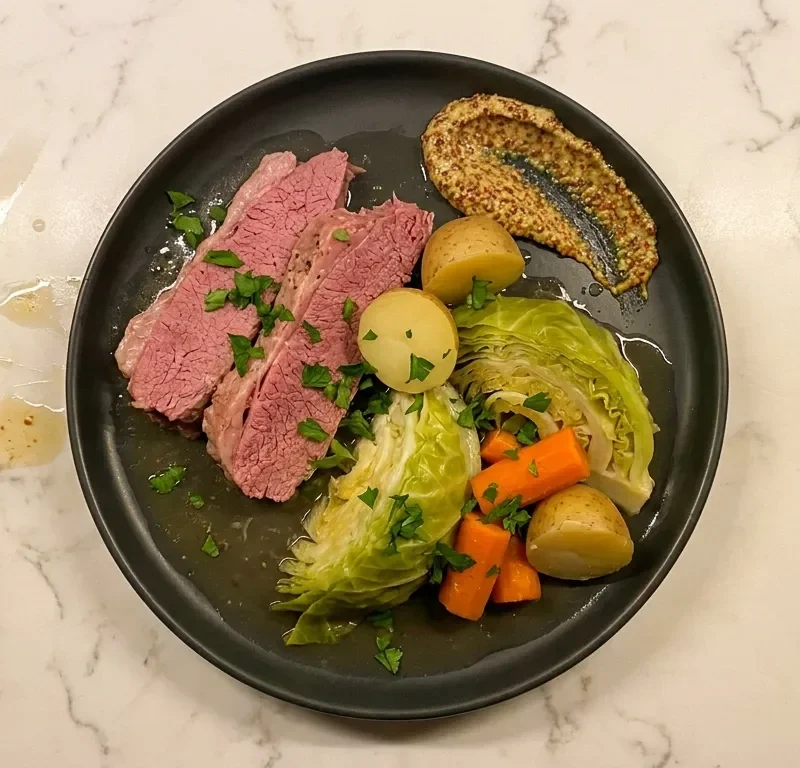
Gordon Ramsay’s corned beef and cabbage is a salt beef brisket simmered for 4 hours with star anise and peppercorns, then served hot with potatoes, carrots, and cabbage wedges added in stages so nothing overcooks. Serves 6 to 8, ready in about 4½ hours.
In Bread Street Kitchen, Ramsay publishes this as Potted Beef, where the brisket gets shredded cold and tossed in a Dijon and wholegrain mustard dressing. He writes that the dish is “just too delicious to allow this recipe to fall out of fashion.” I use his exact cooking method for the salt beef but serve it hot and sliced with the vegetables, which is the classic corned beef and cabbage way.
The step most people skip is the double boil. You bring the brisket to a rolling boil in cold water, then throw that water away because it’s full of excess cure salt and scum. The second fill of clean water is what actually cooks the meat, so the finished dish tastes of beef and spice rather than just salt.
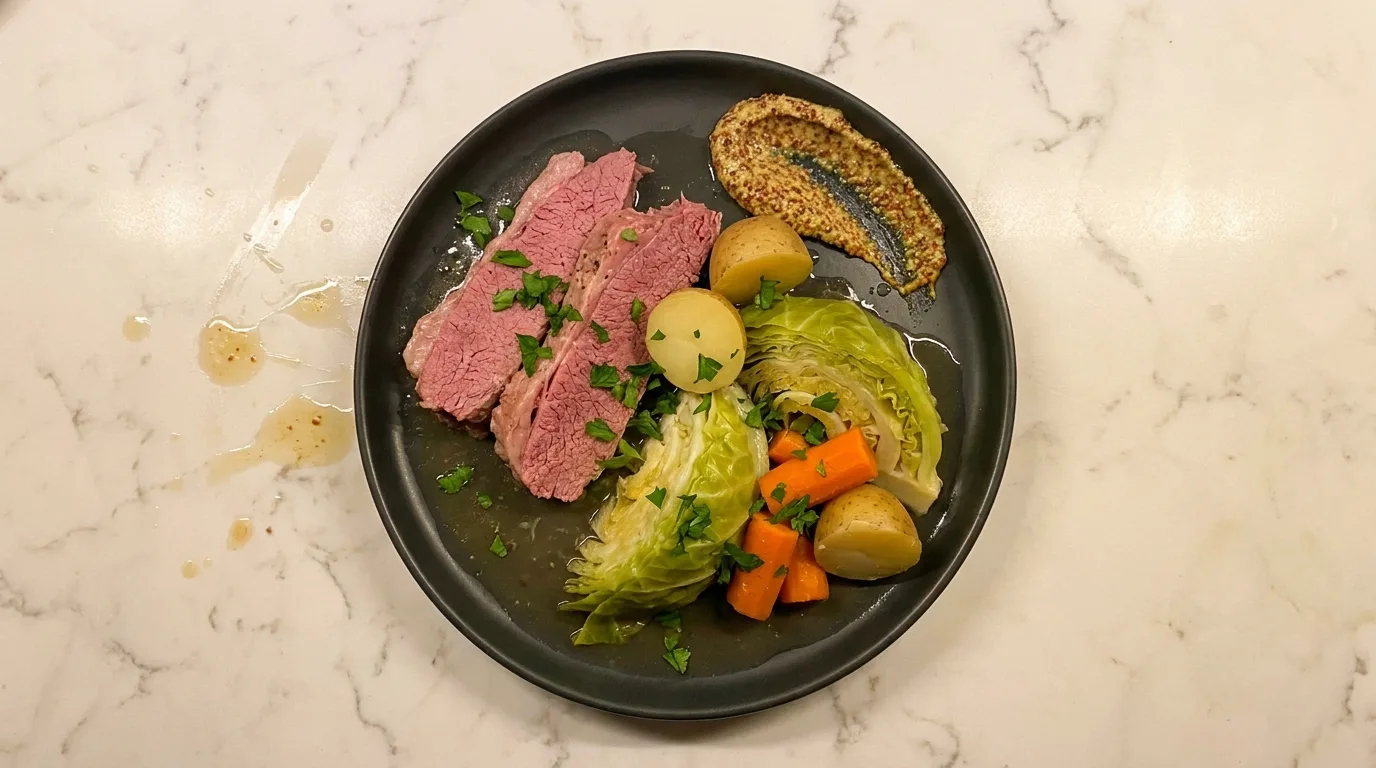
Gordon Ramsay’s Corned Beef and Cabbage
Course: DinnersCuisine: AmericanDifficulty: Easy6-8
15
minutes4
minutes440
kcal4 hr 30 min
Adapted from the Potted Beef in Ramsay’s Bread Street Kitchen. Salt beef brisket double-boiled to remove excess salt, then simmered for 4 hours with star anise before the vegetables go in.
Ingredients
- For the brisket:
1kg salt beef brisket (corned beef)
1 carrot, peeled and roughly chopped
1 white onion, roughly chopped
1 celery stick, trimmed and roughly chopped
½ leek, trimmed and roughly chopped
6 parsley sprigs
1 star anise
5 black peppercorns
- For the vegetables:
500g baby potatoes or waxy potatoes, halved
3 large carrots, peeled and cut into chunks
1 small green cabbage, cut into 6 wedges
- To serve:
Wholegrain or English mustard
Chopped fresh parsley
Directions
- First boil (remove the salt): Put the brisket in a large saucepan and cover with cold water. Bring to the boil over a medium heat. As soon as it boils, take the pan off the heat. Skim the scum, then drain and discard the water completely.
- Second boil (cook the meat): Fill the pan again with clean cold water, enough to cover the joint. Return to the heat and bring to a simmer. Skim any scum from the surface, then add the chopped carrot, onion, celery, leek, parsley sprigs, star anise, and peppercorns. Cover and cook over a low heat for 4 hours until completely tender.
- Add potatoes and carrots: About 45 minutes before the meat is done, add the baby potatoes and carrot chunks to the cooking liquid. Push them under the surface so they cook evenly.
- Add the cabbage: About 15 minutes before serving, lay the cabbage wedges on top. Cover again and let them steam in the broth so they soften but keep their colour and bite.
- Slice and serve: Lift the brisket out and rest for 10 minutes. Slice against the grain into thick pieces. Serve with the potatoes, carrots, and cabbage, a ladleful of the cooking broth, and a good spoonful of mustard on the side.
FAQs
Why does Ramsay boil the brisket twice?
The first boil draws out the excess cure salt and the grey scum that rises to the surface. If you skip this step and cook straight through, the broth and vegetables end up unpleasantly salty because all that brine has nowhere to go. In BSK he’s very specific about it: bring to the boil, then “remove the pan from the heat and discard the water.”
The second water is clean, so it becomes a proper cooking broth as the beef simmers for 4 hours. The star anise and peppercorns infuse the liquid while the salt level stays balanced. His beef brisket skips this step because it starts with uncured meat, while corned beef is cured in brine so it needs that salt flushed out first.
What does the star anise do in the cooking broth?
It adds a warm, faintly sweet background note that rounds out the saltiness of the beef without tasting like liquorice. Traditional corned beef recipes use a spice packet with coriander seeds, mustard seeds, and bay leaves, but Ramsay goes with star anise instead, which gives the broth a deeper, more complex flavour.
You only need one whole star anise for the entire pot because the flavour concentrates over 4 hours. Combined with the peppercorns, parsley, and root vegetables, it turns plain water into something worth ladling over the finished plate. His beef barley soup builds the same kind of slow-simmered broth, just with barley soaking up the flavour instead of brisket.
What’s the best side for corned beef and cabbage?
The potatoes and cabbage cooked in the broth are the classic sides, but the dish needs something sharp on the table to cut through the richness. Ramsay serves his potted beef version with piccalilli, and wholegrain mustard does the same job here. A spoonful on each slice wakes everything up.
If you want bread on the side, his soda bread is the traditional pairing and takes about 40 minutes from start to finish. For a more indulgent potato, his fondant potatoes are richer than boiled but they need cooking separately since they’re fried and then braised in stock.
Can you make corned beef hash from the leftovers?
Absolutely, and it’s one of the best reasons to cook more brisket than you need. Dice the leftover beef and some cooked potatoes into roughly 1cm cubes, then fry them together in butter with a sliced onion until the bottom forms a golden crust. Crack an egg on top and cover the pan so the egg steams while the hash stays crispy underneath.
The key is pressing the mixture down firmly and leaving it alone for 5 minutes so it gets that crust. If you keep stirring, it stays soft and pale. Ramsay doesn’t publish a hash recipe, but the technique is the same pan-frying principle he uses everywhere: high heat, don’t fiddle with it, let the food do the work.
Does corned beef and cabbage store well?
The beef stores brilliantly because the salt cure acts as a preservative. Sliced and kept in a covered container with some of the cooking broth poured over, it lasts 5 to 7 days in the fridge. Ramsay’s BSK tip confirms this: “the potted beef will keep in a covered container in the fridge for up to a week.”
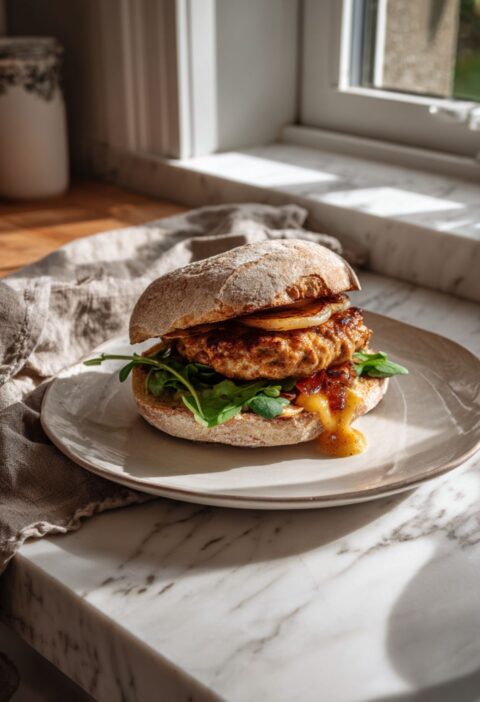
The vegetables are a different story. Cabbage goes limp within a day and the potatoes get waterlogged, so eat those fresh. Leftover beef on his beer bread with wholegrain mustard and a few pickled onions is one of the best sandwiches you’ll make all week.