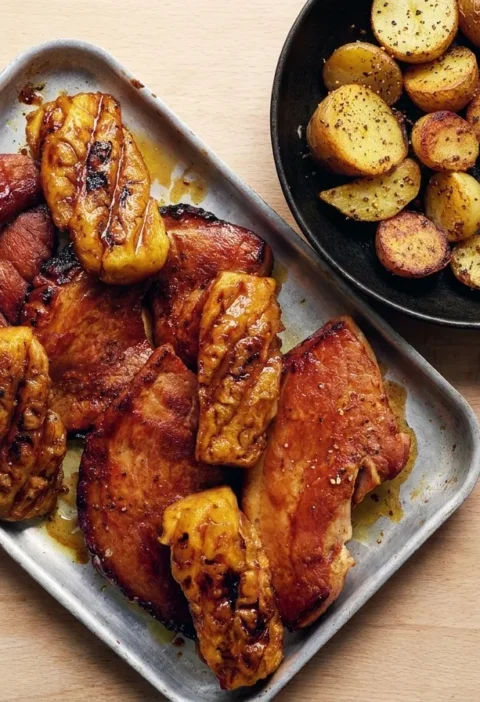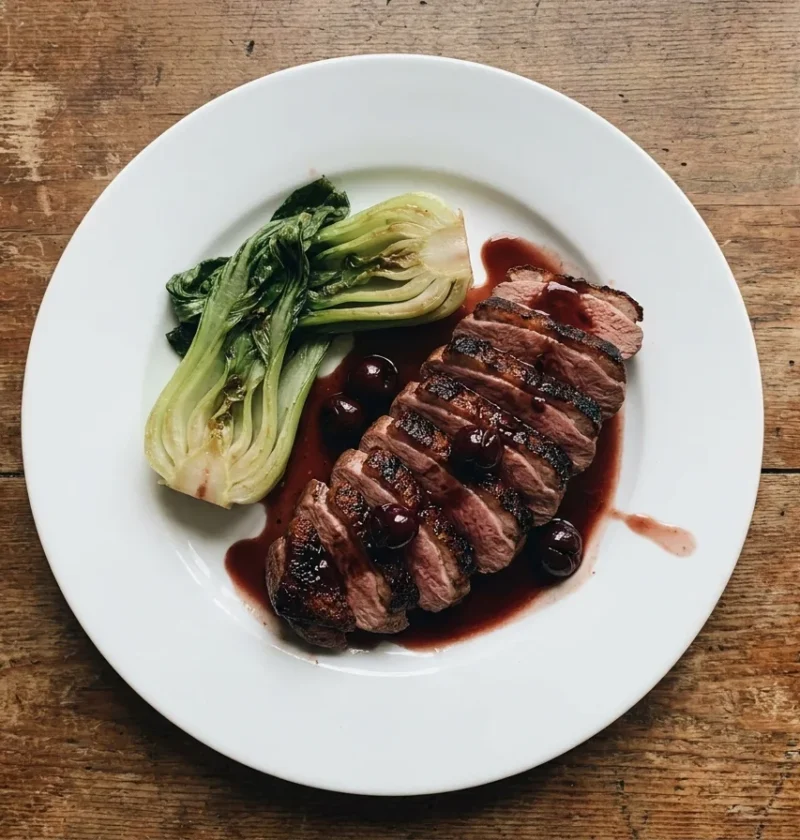
Gordon Ramsay’s duck breast is pan-fried to crisp, deep-golden skin and served pink under a sharp cherry and port sauce. The trick that makes it work is starting the duck in a cold, dry pan. It takes about 30 minutes, most of which is the fat rendering slowly while you barely touch it.
It pulls from two of his books. The cherry and port sauce is his dish from Cooking for Friends, where he calls duck and cherries “a classic pairing.” The method comes from Ultimate Cookery Course. There he’s blunt about the one rule, that duck breast “should be added to a cold pan and slowly brought up to temperature.” A hot pan just seals the fat in instead of letting it render out.
The second half of the dish is the sauce, and the trick is building it in the same pan, never a clean one. The duck leaves sticky browned juices stuck to the base, and deglazing with port lifts all of that back into the sauce. That stuck-on flavour, the fond, is the whole reason a pan sauce tastes deeper than one made separately.
Cooked this recipe? Send a photo or tell me what you changed at fans@gordonramsayrecipes.uk and I’ll share your experience live on this page.
Gordon Ramsay Duck Breast with Cherry Sauce
Course: Main, DinnerCuisine: BritishDifficulty: Medium4
servings10
minutes20
minutes520
kcal30
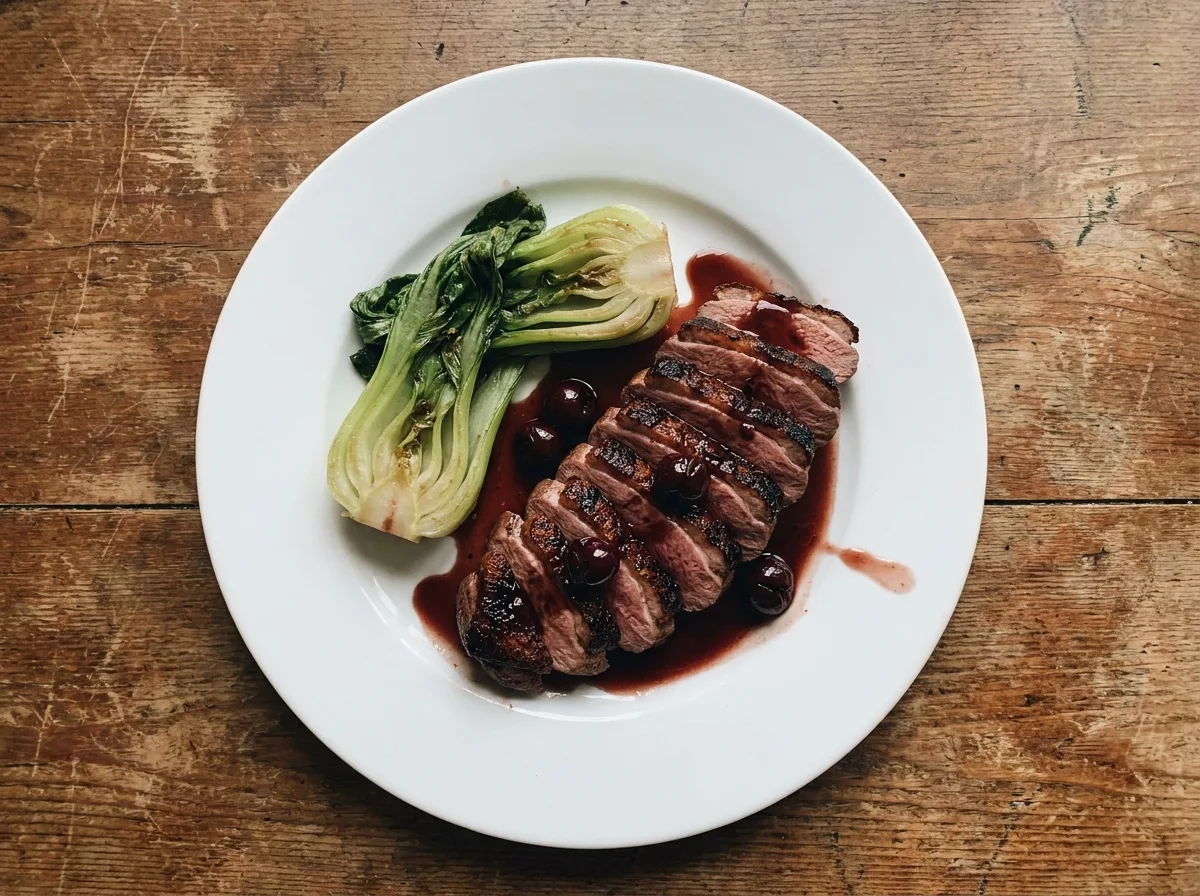
minutesGordon Ramsay’s Cooking for Friends duck breast, sliced over braised pak choi with a glossy cherry and port pan sauce. Serves four and comes together in about half an hour.
Ingredients
- For the duck:
4 duck breasts, skin on, about 200g (7 oz) each
Sea salt and freshly ground black pepper
- For the cherry and port sauce:
3 shallots, finely chopped
240ml (1 cup) port
300g (2 cups) cherries, pitted
2 tbsp black cherry jam
300ml (1¼ cups) chicken stock
½ tsp cornflour mixed with a little water (optional)
- For the pak choi:
1 tbsp butter
8 small pak choi, halved lengthways
Directions
- Render the skin: Season the duck and lay it skin-side down in a cold, dry frying pan, no oil. Set it over gentle heat and cook for 8 to 10 minutes, until most of the fat has rendered out.
- Crisp and cook: Turn the heat up and fry until the skins are golden. Flip the breasts and cook for 3 to 4 minutes, until the meat feels slightly springy and stays pink inside. Lift onto a warm plate to rest.
- Start the sauce: Pour off most of the fat and save it. Soften the shallots in the pan over medium-low heat for 4 to 5 minutes.
- Build the sauce: Turn the heat up, pour in the port and boil until the pan is almost dry. Add the cherries, jam and stock, then boil until well reduced and syrupy. Stir in the cornflour if you want it thicker.
- Braise the pak choi: Put 1 cup of water, the butter and some seasoning in a pan over high heat. Once the butter melts, add the pak choi and braise for 2 minutes until just wilted, then drain.
- Serve: Slice the duck on the diagonal, plate with the pak choi and spoon the cherry and port sauce over the top.
FAQs
What’s the secret to cooking duck breast?
It’s all in the start, because you give that thick layer of fat time to melt before anything else happens. Lay the breast in a cold, dry pan and bring it up gently, and over 8 to 10 minutes the fat renders out and the skin dries and crisps. Rush it on high heat and the fat stays trapped, leaving the skin soft and the meat greasy.
So the hardest part is doing very little. Don’t move it, don’t poke it, just let it sit and render until the skin is golden, then it only needs a few minutes on the other side to finish.
How do you know when duck breast is done?
Press the thickest part with your finger, because duck tells you by feel. It should be slightly springy with a little give, which is medium rare and how Gordon serves it, still pink and tender in the middle. Firm and solid means you’ve taken it too far and it’ll be dry.
If you’d rather be sure, a probe reads about 54°C for pink. Either way, rest it for five minutes before slicing, since cutting straight away lets all those juices run out onto the board.
What other sauces work with duck breast?
Cherry and port is his classic, but Gordon’s own point is that duck takes “anything with a little acidity to cut through the meat’s richness.” The base stays the same every time: soften shallots, deglaze with port or red wine, add stock, then stir in your fruit and reduce it to a syrup.
From there you just change the fruit. Swap the cherries for the same weight of blackcurrants, blackberries, cranberries or plums, and match the jam to it so the sauce still has body. For a plain red wine sauce, skip the fruit altogether and reduce the wine and stock down with a knob of butter at the end. If you want citrus instead, that’s his duck a l’orange, built on orange and soy rather than red wine.
Can you use jarred or frozen cherries?
Yes, and Gordon says as much: fresh cherries in summer, or a jar of preserved cherries in kirsch the rest of the year. Frozen work too, though they hold more water, so thaw and drain them first or the sauce turns thin.
The black cherry jam matters more than the cherries themselves, since that’s what gives the sauce its body and gloss. In a UK supermarket you’ll find it near the conserves, and a dark morello or black cherry one is best.
What do you serve with Gordon Ramsay’s duck breast?
The braised pak choi keeps it light, but the classic move is using that fat you poured off for roast potatoes cooked in duck fat. They crisp up far better than in oil, which is exactly why he tells you to keep it.
Beyond that, anything that soaks up the sauce works, like creamy mash, dauphinoise or simple greens. And if you’d rather cook the whole roast duck instead, the same cherry sauce carries straight over to the carved bird.
Can you make it ahead or use the leftovers?
The sauce is the make-ahead part, since it reheats well and even improves overnight as the flavours settle. Cook it fully, cool it, then warm it through gently while the duck rests on the day. The duck itself is best cooked fresh.
Any leftover duck is lovely cold the next day, sliced thin through a salad or folded into a wrap. Don’t reheat it hard, because it’s already pink and a hot pan will overcook it and dry it out.