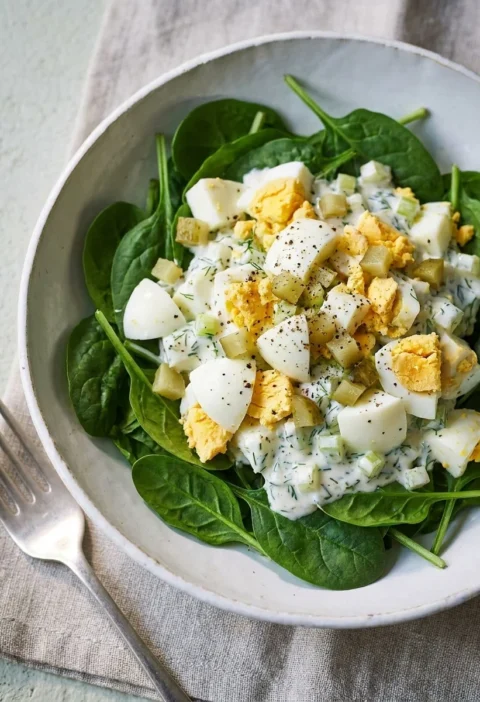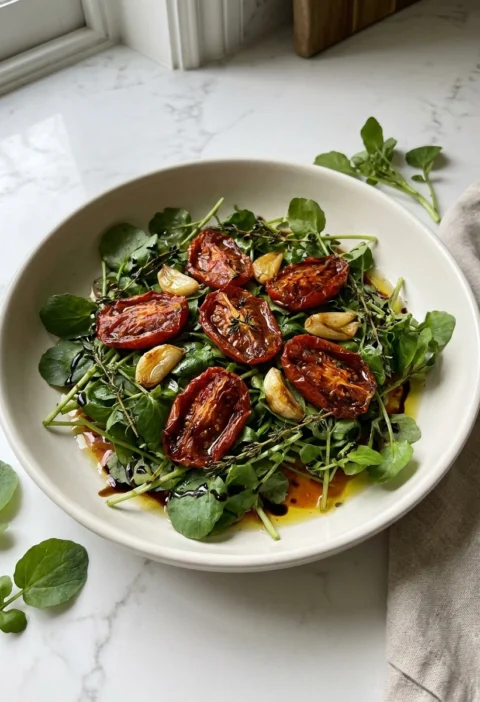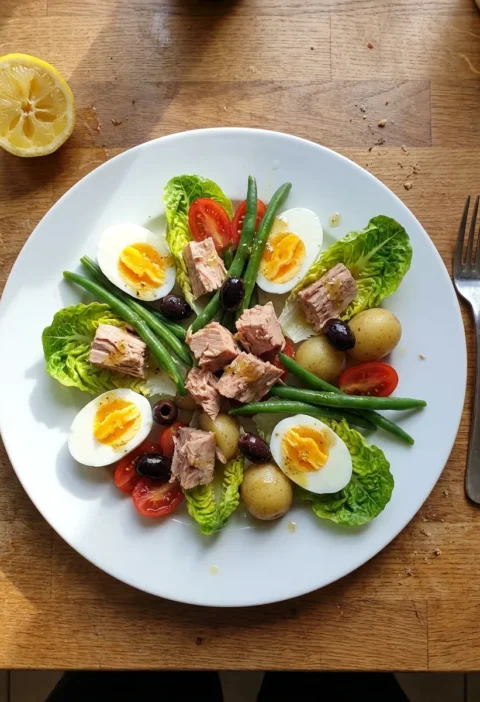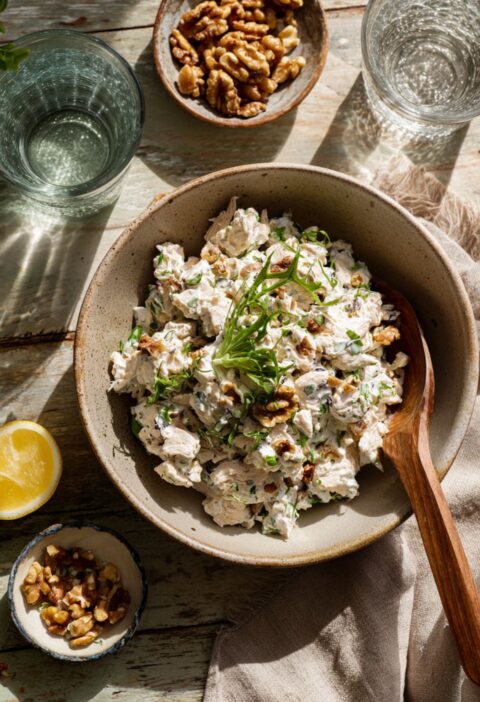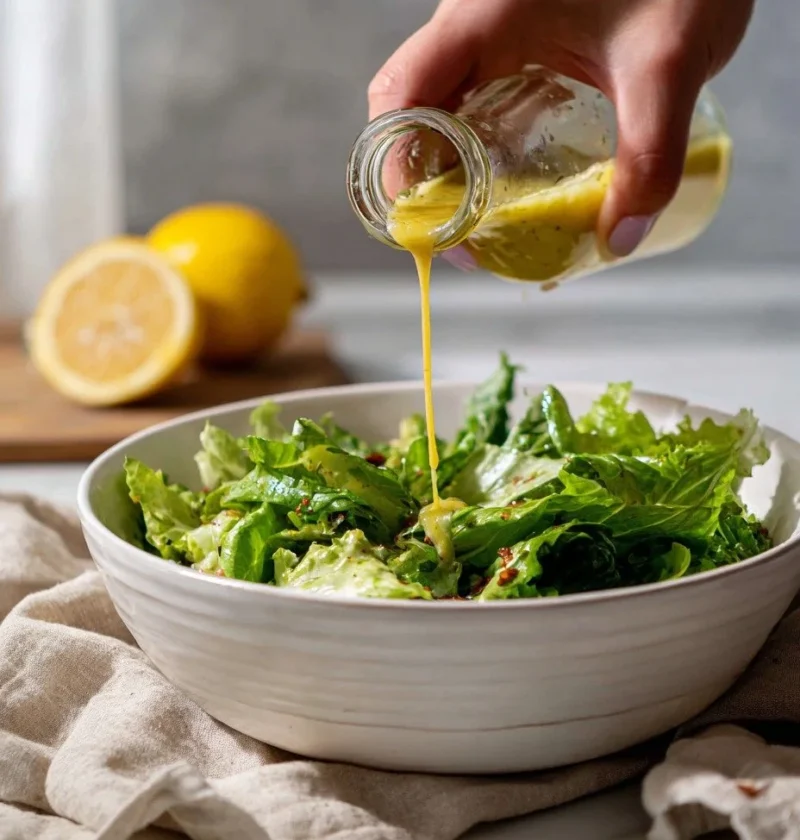
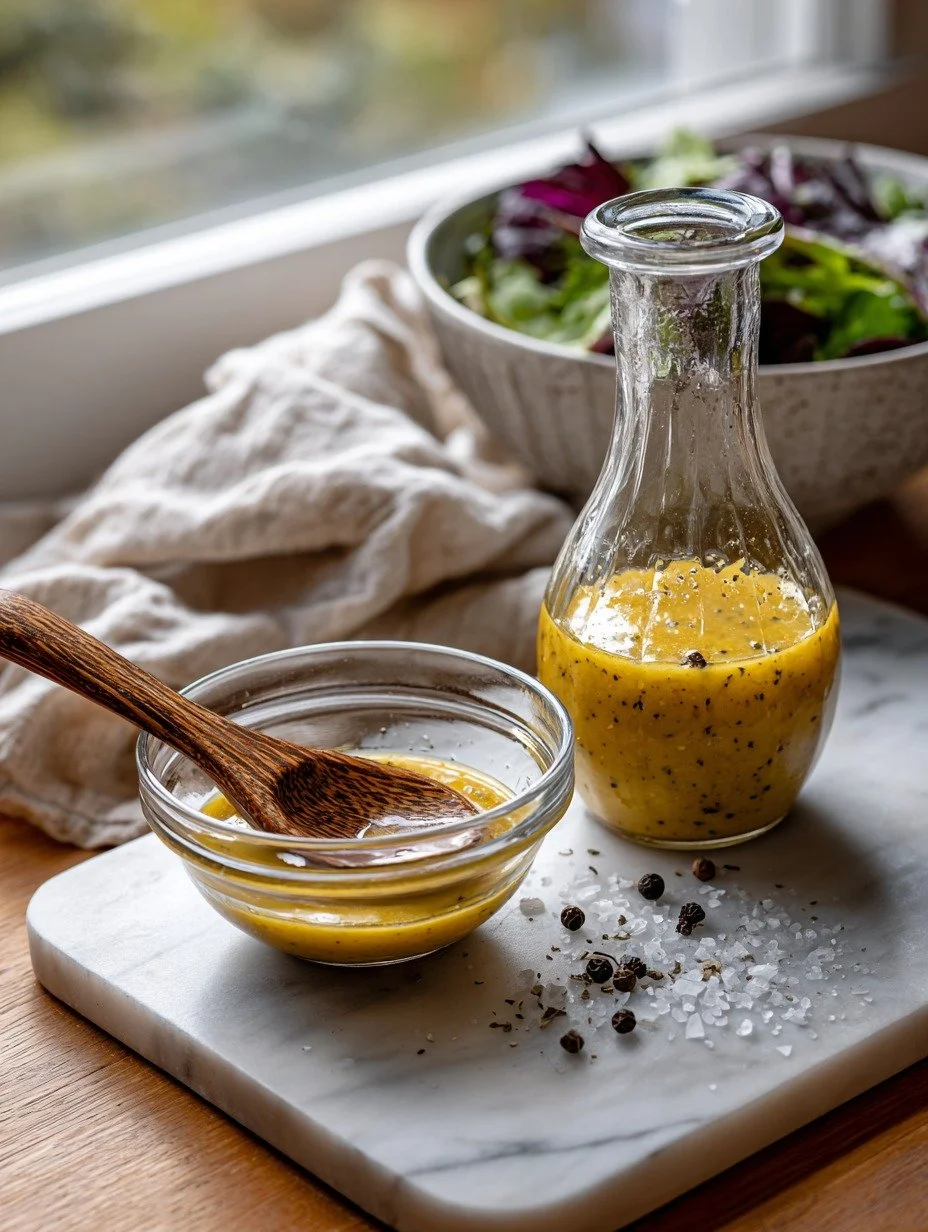
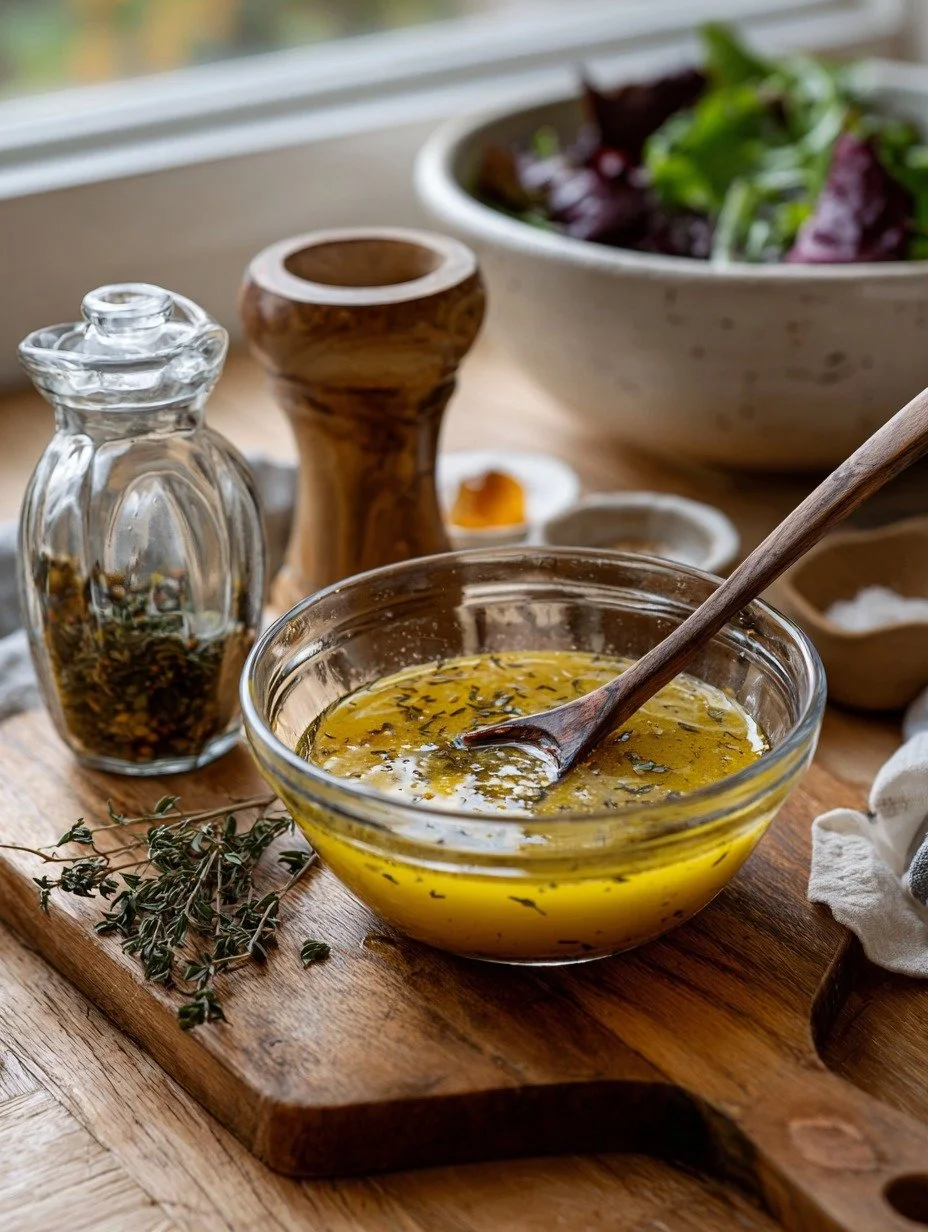
This Gordon Ramsay salad dressing is a classic vinaigrette made with olive oil, groundnut oil, Dijon mustard, lemon juice and white wine vinegar, whisked together in under two minutes. The secret is that Ramsay cuts the olive oil with groundnut oil so it is lighter and less cloying.
Across three cookbooks, Ramsay returns to the same 3:1 ratio of oil to vinegar but adjusts it per dish. He calls vinaigrette “a seasoning” not just a dressing. His French trick: smear a cut garlic clove around the salad bowl before whisking the dressing in it.
The food science is simple: whisking the mustard into the vinegar before adding oil creates a stable emulsion. The mustard binds water and fat together. Without it the dressing splits in minutes. With it, the vinaigrette holds for days.
Cooked this recipe? Send a photo or tell me what you changed at fans@gordonramsayrecipes.uk and I’ll share your experience live on this page.
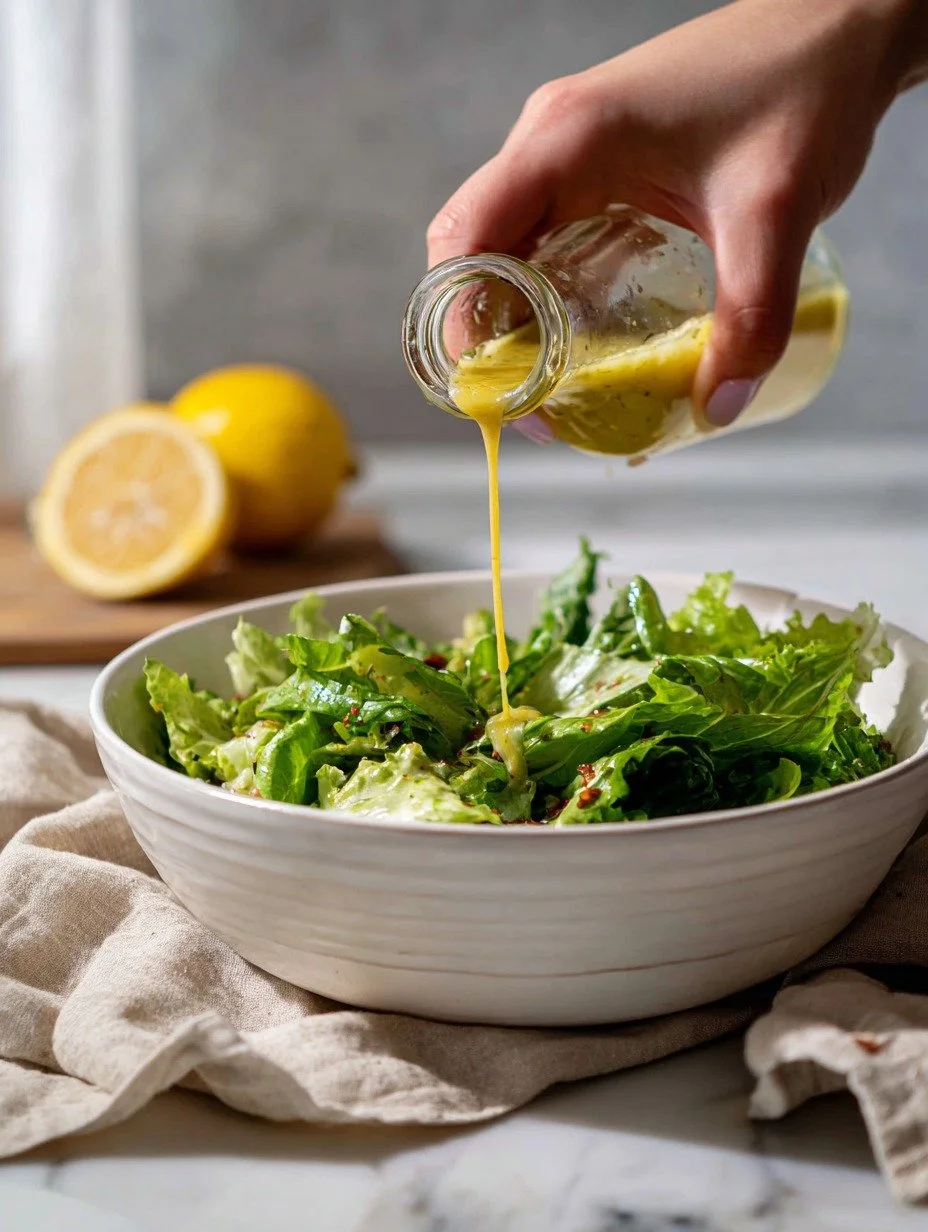
Gordon Ramsay Salad Dressing
Course: Salads, Basics10
servings2
minutes2
minutesGordon Ramsay’s classic vinaigrette from Sunday Lunch: a mix of extra virgin olive oil and groundnut oil with Dijon mustard, lemon juice and white wine vinegar. The base dressing behind most of his salad recipes.
Ingredients
100ml (3½ fl oz) extra virgin olive oil
100ml (3½ fl oz) groundnut oil
1 scant tsp Dijon mustard
1 tbsp lemon juice
2 tbsp white wine vinegar
Sea salt and freshly ground black pepper
Directions
- Combine everything: Put the olive oil, groundnut oil, Dijon mustard, lemon juice, white wine vinegar, salt and pepper in a measuring jug or clean jar with a tight-fitting lid.
- Whisk or shake: Whisk together until emulsified, or seal the jar and shake vigorously until combined. Taste and adjust the seasoning.
- Store: Pour into a clean bottle, seal and refrigerate. Shake well before each use. Keeps for up to one week in the fridge.
FAQs
Why does Ramsay mix olive oil with groundnut oil?
Pure olive oil dressings can be heavy and cloying, especially on delicate young salad leaves. Ramsay says in Ultimate Cookery Course that he substitutes a third of the olive oil with sunflower or groundnut oil to lighten it, and sometimes adds 2 to 3 tablespoons of iced water to thin it further. The result coats the leaves without weighing them down.
How do you make Ramsay’s Dijon mustard dressing?
His base vinaigrette already contains Dijon mustard. For a stronger mustard dressing like the one he uses on his piccalilli potato salad, increase the mustard to a full tablespoon and add a teaspoon of wholegrain mustard alongside the Dijon. The double mustard gives both heat from the Dijon and texture from the wholegrain seeds.
What other dressings does Ramsay use?
He has at least five distinct ones across his books. The walnut and garlic dressing on his rocket salad is pounded in a mortar. The Parmesan and lemon dressing on his orzo pasta salad skips vinegar entirely. The crème fraîche, caper and dill dressing on his mackerel potato salad is Scandinavian. His simple Asian dressing mixes equal parts honey and soy sauce with rice vinegar and sesame oil.
Can you use this as a Caesar salad dressing?
No. His caesar salad uses a completely different dressing: mayonnaise-based with anchovy, garlic, Parmesan and lemon juice. The vinaigrette here is oil-and-vinegar based, which is too thin and sharp for a Caesar. Use this on green salads, grilled vegetables, or as a finishing drizzle on fish.
How long does the dressing keep?
Up to a week in a sealed bottle in the fridge. The mustard acts as an emulsifier so it holds together better than a plain oil-and-vinegar dressing, but it will still separate after a few hours. Give it a good shake before each use. If it thickens in the fridge, add a splash of warm water and shake again to loosen it.
What is the best ratio for salad dressing?
Ramsay uses 3 parts oil to 1 part acid (vinegar or lemon juice) as his starting point across all his books. For a sharper dressing, drop to 2:1. For a milder one, go to 4:1. The key is tasting as you go: different vinegars have different strengths, so a dressing made with sherry vinegar needs less than one made with white wine vinegar. See all the salads that use this dressing for pairing ideas.