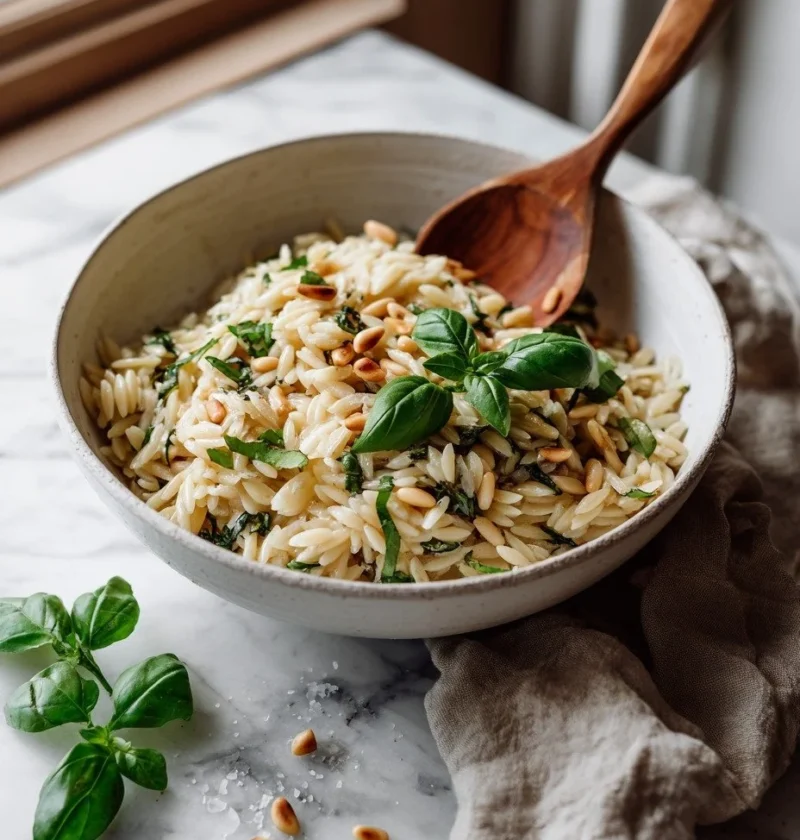
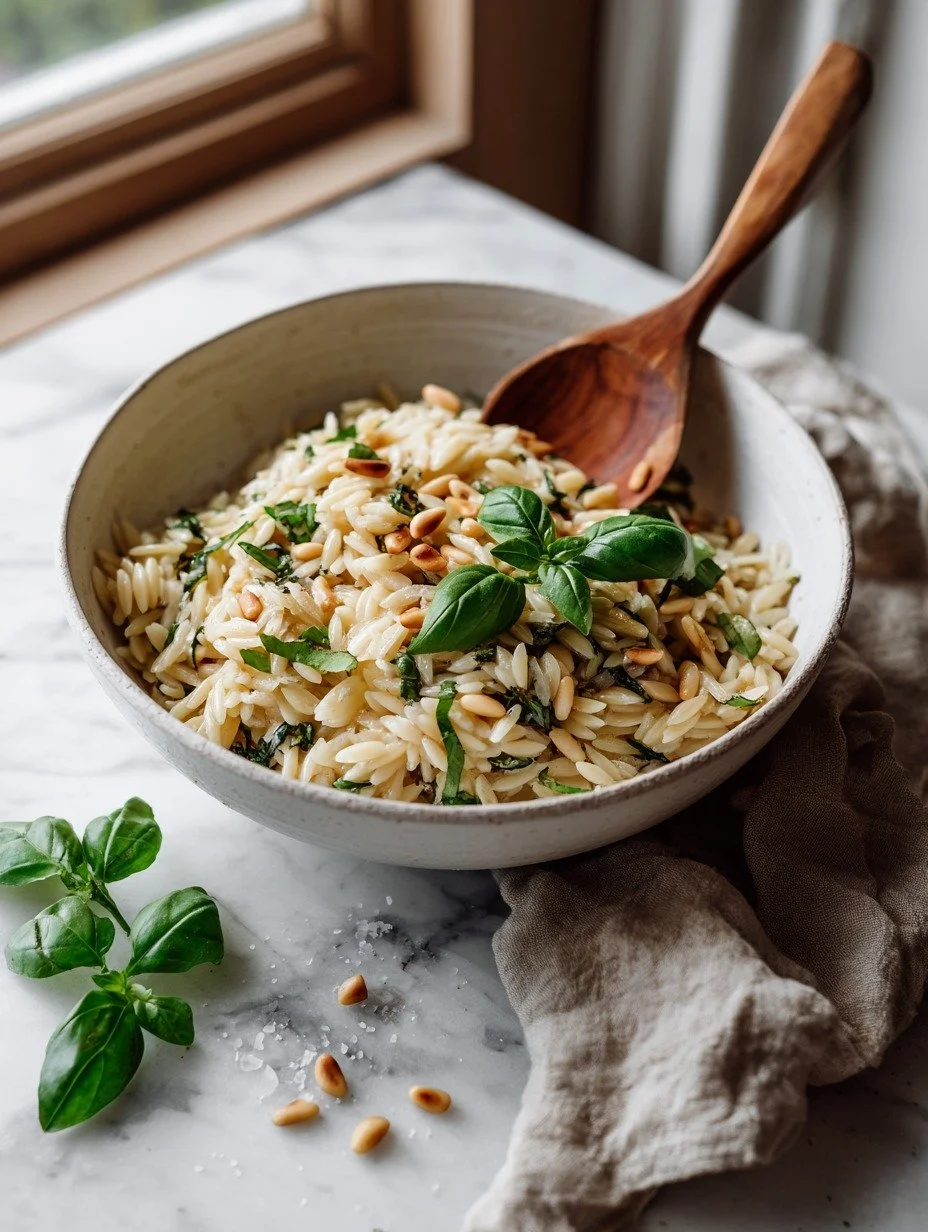
Gordon Ramsay’s orzo pasta salad is al dente orzo boiled with a bay leaf, tossed with toasted pine nuts, fresh rocket and basil, and finished with a Parmesan and lemon dressing, ready in about 15 minutes for around £1.50 per serving.
In Ultimate Home Cooking, Ramsay describes orzo as looking “like barley, but actually made of pasta” and notes that while it is traditionally used to add body to soups and casseroles, it works just as well in a cold salad. His dressing is deliberately minimal: finely grated Parmesan, lemon zest and juice, and extra virgin olive oil mixed together in the serving bowl before the orzo goes in. No vinegar, no mustard, no garlic. The Parmesan and lemon do all the heavy lifting.
The technique that makes this salad work is dressing the orzo while it is still slightly warm. Just like potatoes in a niçoise, warm pasta absorbs a dressing far better than cold does, so the Parmesan and lemon flavour gets right into each grain rather than sitting on the surface. Rinse the orzo briefly under cold water after draining to stop it overcooking, but do not chill it completely before tossing it through the dressing.
Gordon Ramsay Orzo Pasta Salad
Course: Salads, Sides4
servings5
minutes10
minutes15
minutesFrom Gordon Ramsay’s Ultimate Home Cooking (2013), this orzo pasta salad is boiled with a bay leaf and tossed while warm in a Parmesan and lemon dressing with rocket, basil and toasted pine nuts. Light, fresh and ready in 15 minutes.
Ingredients
200g (7 oz) orzo
1 bay leaf
50 to 100g (2 to 3½ oz) pine nuts
Large bunch of basil, chopped
100g (3½ oz) rocket, roughly chopped
Olive oil, for drizzling
Sea salt and freshly ground black pepper
For the dressing:
30g (1 oz) Parmesan cheese, finely grated
Zest and juice of 1 lemon
6 tbsp extra virgin olive oil
Directions
- Cook the orzo: Cook the orzo according to the packet instructions, adding the bay leaf to the cooking water. When al dente, drain and hold under running cold water for about 10 seconds to stop the cooking. Discard the bay leaf, drizzle with a little olive oil and mix through to stop the grains sticking.
- Make the dressing: In your serving bowl, mix the Parmesan with the lemon zest and juice. Add 3 tablespoons of the oil and mix well. Taste and season, adding more oil if needed.
- Toast the pine nuts: Toast the pine nuts in a dry frying pan over a medium heat until golden. Remove and set aside to cool.
- Toss and serve: While the orzo is still slightly warm, add it to the dressing and mix through the rocket, basil and pine nuts. Taste, adjust the seasoning and serve.
FAQs
Why add a bay leaf to the cooking water?
Ramsay says it gives the orzo “an intriguing background flavour” and he is right. Bay releases its aromatic oils slowly into boiling water, infusing each grain as it cooks. You would never identify it as bay in the finished dish, but without it the orzo tastes flat. This is a technique he uses across his books whenever he boils grains or pulses, and it costs nothing since one leaf is enough for the whole pan.
Can you serve this warm or cold?
Both. Ramsay says to add the orzo to the dressing “while still slightly warm” which suggests he intends it to be eaten at room temperature rather than fridge-cold. It also works reheated gently the next day with a splash of extra olive oil. Avoid serving it straight from the fridge as the oil solidifies and the Parmesan loses its flavour.
How does this compare to Ottolenghi’s orzo?
Ottolenghi takes a completely different approach: he toasts his orzo dry in a pan first, then cooks it risotto-style in stock with prawns, tomato and marinated feta spiced with fennel seeds and chilli. Ramsay’s version is a cold salad with no cooking beyond boiling the pasta, dressed simply with Parmesan and lemon. Ottolenghi’s is richer and more complex. Ramsay’s is lighter and faster, designed to sit alongside grilled fish rather than be the main event.
Can I use a different pasta shape?
Yes, and Ramsay does. In his Fast Food cookbook he makes a completely different pasta salad using fusilli with merguez sausage and olives, which is spicier and more North African in style. Orzo works best for this particular recipe because its small grains absorb the lemon-Parmesan dressing evenly, but penne or fusilli hold up well if you want a chunkier salad. Just keep the dressing the same and adjust the cooking time to whatever the packet says.
What should you serve orzo pasta salad with?
Ramsay pairs it with his griddled sardines with gremolata in the same book, and the lemon in both recipes ties them together. It also works well alongside grilled chicken, pan-fried salmon, or as part of a bigger salad spread. Set it next to his Italian rocket salad for a two-salad Italian lunch that takes under 20 minutes total.
Does orzo pasta salad keep well?
Better than most salads because the pasta holds its shape and the dressing does not wilt any leaves once stored separately. Keep it in a sealed container in the fridge for up to two days. The rocket and basil darken overnight, so stir in a fresh handful before serving the leftovers. Add a squeeze of lemon and a drizzle of oil to refresh the dressing, as the orzo absorbs liquid as it sits. Check the full comparison table for more that work as packed lunches.