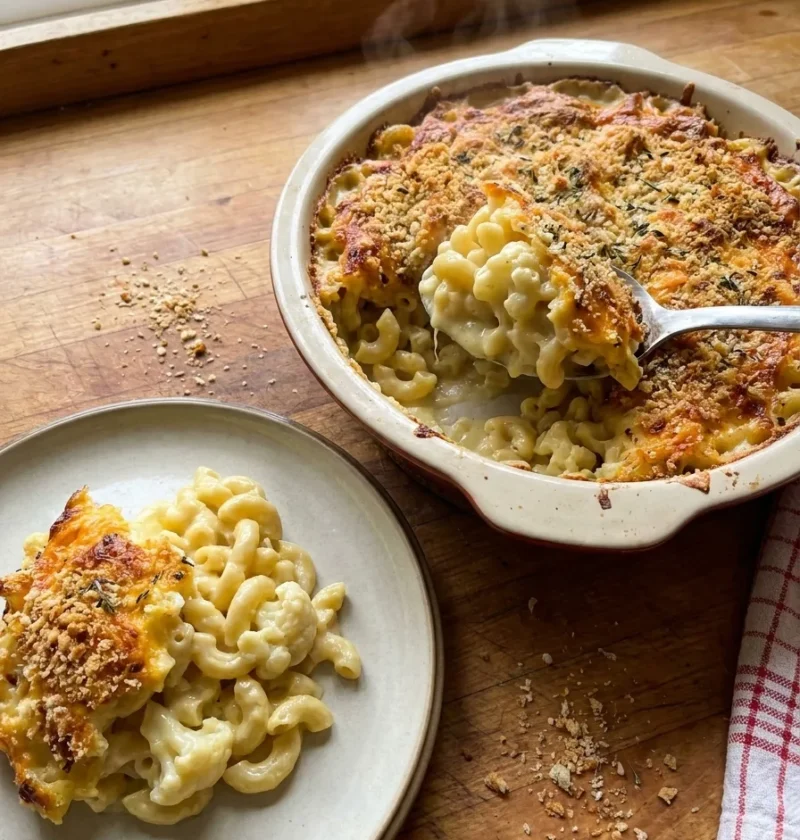
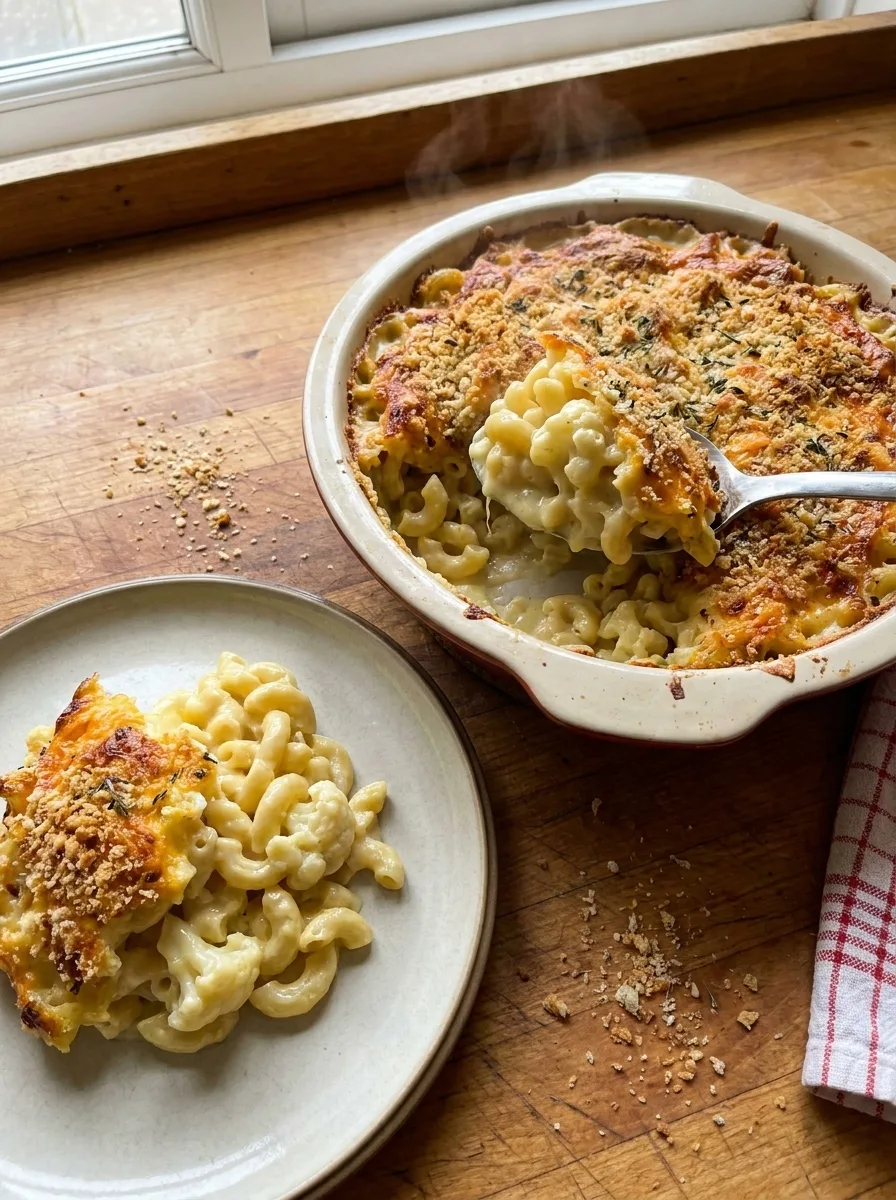
Gordon Ramsay’s cauliflower mac and cheese is macaroni and blanched cauliflower florets baked in a three-cheese sauce made with Cheddar, Lancashire, and Cheshire, topped with a cheesy breadcrumb and thyme crust. One dish, 35 minutes, feeds four.
This recipe comes from the Ultimate Cookery Course cookbook, where Ramsay calls it his “twist on the classic American mac ’n’ cheese, using a trio of English cheeses.” He says “mature Cheddar adds a tangy depth of flavour to the base, while the crumbly Lancashire and Cheshire cheeses melt into a smooth and creamy sauce.”
The technique that makes this work is cooking the cauliflower and pasta in the same water. Ramsay blanches the cauliflower first, lifts it out with a slotted spoon, then tips the macaroni into the same boiling water. One pan, no wasted heat, and the pasta picks up a subtle cauliflower flavour from the water.
Cooked this recipe? Send a photo or tell me what you changed at fans@gordonramsayrecipes.uk and I’ll share your experience live on this page.
Gordon Ramsay Cauliflower Mac and Cheese Recipe
Course: DinnerCuisine: BritishDifficulty: Easy4
servings15
minutes20
minutes620
kcal35
minutesMacaroni and cauliflower bake with three cheeses from Gordon Ramsay’s Ultimate Cookery Course. Cheddar, Lancashire, and Cheshire in a mustard-spiked béchamel with a crispy breadcrumb and thyme topping.
Ingredients
300g (10.5 oz) cauliflower florets
300g (10.5 oz) dried macaroni
60g (2 oz) butter, plus a few extra knobs
4 tbsp plain flour
2 tsp English mustard powder
600ml (1 pint) whole milk
Pinch of cayenne pepper
Sea salt
100g (3.5 oz) mature Cheddar, grated
100g (3.5 oz) Lancashire cheese, crumbled
100g (3.5 oz) Cheshire cheese, crumbled
3 tbsp fresh white breadcrumbs
1 tbsp thyme leaves
Directions
- Blanch the cauliflower: Bring a large pan of well-salted water to the boil. Add the cauliflower and cook for 4 to 5 minutes until just tender. Remove with a slotted spoon and refresh in a bowl of iced water. Drain well.
- Cook the macaroni: Tip the macaroni into the same boiling water and cook until al dente according to packet instructions. Drain, refresh under cold running water, and drain again. Mix the macaroni, cauliflower, and a few knobs of butter together in a large bowl.
- Make the sauce: Preheat the oven to 200°C (400°F) Gas 6. Heat the 60g butter in a pan and stir in the flour and mustard powder to make a roux. Gradually add the milk, beating continuously with a balloon whisk until smooth. Bring slowly to the boil over a low heat, whisking frequently, until the sauce thickens. Season with cayenne pepper and salt.
- Add cheese and combine: Mix the three cheeses together. Stir half into the white sauce until melted and smooth. Add the macaroni and cauliflower to the sauce, mix well to coat, and spread into a large wide gratin dish.
- Top and bake: Combine the remaining cheese with the breadcrumbs and thyme leaves. Sprinkle over the top. Bake for 15 to 20 minutes until the topping is golden and crisp. Serve immediately.
Notes
- This uses the same three-cheese sauce as Ramsay’s classic cauliflower cheese from his restaurants. The macaroni turns it from a side dish into a full meal. Cook the pasta one minute less than the packet says because it finishes cooking in the oven.
FAQs
Why does Ramsay cook cauliflower and pasta in the same water?
He blanches the cauliflower first, lifts it out, then drops the macaroni straight into the same pot. It saves time and washing up, but it also seasons the pasta.
The cauliflower releases starch and flavour into the water. When the macaroni cooks in it, it picks up a subtle vegetable sweetness that plain water wouldn’t give.
Ramsay refreshes the cauliflower in iced water immediately after blanching. This stops the cooking so it holds its shape through the 20-minute bake.
Why three British cheeses instead of one?
Ramsay says the Cheddar “adds a tangy depth of flavour,” the Lancashire is crumbly and milky, and the Cheshire melts into a smooth, creamy sauce. Together they give you sharpness, body, and creaminess that no single cheese can deliver.
100g of each keeps the balance even. If you use all Cheddar, the sauce tastes one-dimensional. The blend is the whole point.
If you can’t find Lancashire or Cheshire in your supermarket, Red Leicester and Double Gloucester are the closest substitutes.
What makes this different from regular mac and cheese?
Two things. The cauliflower adds texture and sweetness that plain macaroni doesn’t have. And the three-cheese blend is more complex than the usual single-Cheddar sauce most recipes use.
Ramsay also adds English mustard powder and cayenne to the béchamel. The mustard amplifies the cheesiness without tasting of mustard. The cayenne adds just enough warmth to cut through the richness.
For Ramsay’s version without the pasta, his classic cauliflower cheese uses the same sauce and topping as a side dish for roast dinners. For the regular version it twists, his four-cheese mac and cheese from Bread Street Kitchen is the full-dress original, star anise-infused milk and all. My lobster mac and cheese dresses that same sauce up for a celebration.
Can you use different pasta shapes?
Macaroni is what Ramsay uses, but any short pasta that holds sauce works. Penne, fusilli, and rigatoni all catch the cheese sauce in their ridges and tubes.
Avoid long pasta like spaghetti or linguine. The sauce slides off and pools at the bottom of the dish instead of coating every piece.
Whatever shape you use, cook it one minute less than the packet says. It finishes cooking in the oven, and overcooked pasta in a bake turns to mush.
How do you reheat leftovers without drying them out?
The sauce thickens as it cools because the roux sets. To reheat, splash a few tablespoons of milk over the top, cover with foil, and warm at 160°C for 15 minutes.
The milk loosens the sauce back to a creamy consistency. Without it, the reheated version is stodgy and dry. Take the foil off for the last 5 minutes if you want the topping to crisp up again.
It keeps in the fridge for 2 days. Don’t freeze it: the cauliflower goes watery and the sauce can split when thawed.