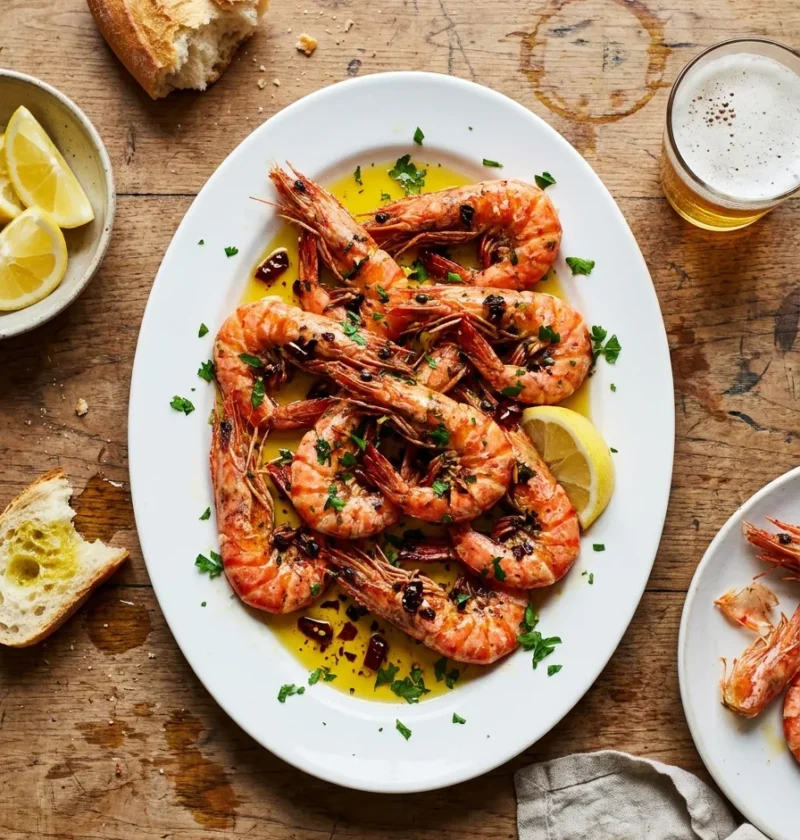
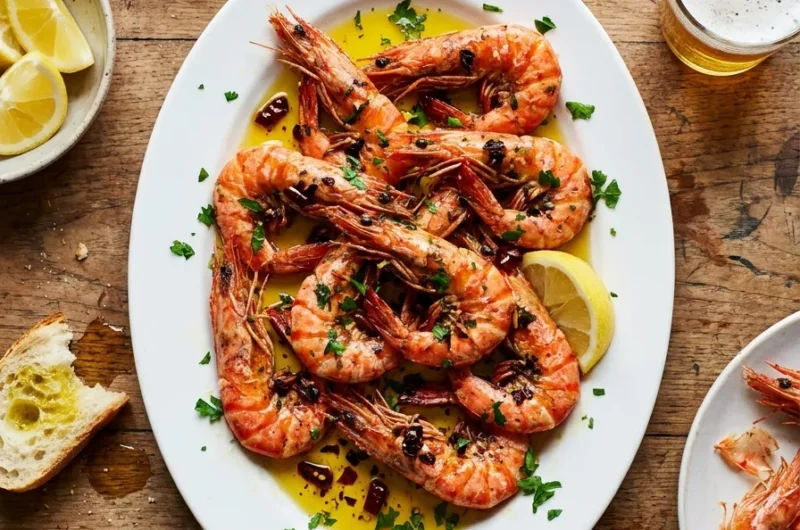
Gordon Ramsay’s garlic prawns are large shell-on prawns seared in olive oil with garlic and dried red chillies, finished with lemon juice and fresh parsley. Ten minutes, five ingredients, no sauce to build.
The recipe is from his Fast Food series, where Ramsay calls them “succulent, spicy, super simple to make and absolutely delicious.” The shells stay on the entire time, which he says is “the secret: cooking with the shells on protects the prawn from drying out.” You peel them at the table with your fingers, which is half the fun. You can watch the full cook in his Garlic Prawns video.
Before the prawns go in, he tests the oil temperature by dropping a flake of garlic into the pan, and when it sizzles immediately the oil is ready. That test takes two seconds and tells you more than any thermometer, because if the garlic sits there quietly the pan is too cold and you will end up steaming the prawns instead of searing them.
Cooked this recipe? Send a photo or tell me what you changed at fans@gordonramsayrecipes.uk and I’ll share your experience live on this page.
Gordon Ramsay Garlic Prawns
Course: StarterCuisine: MediterraneanDifficulty: Easy4
servings3
minutes5
minutes270
kcal10
minutesShell-on garlic prawns from Ramsay’s Fast Food series. Five ingredients, ten minutes, no sauce. The shells protect the prawns from drying out and you peel them at the table. Tapas-style eating at its simplest. Source: Gordon Ramsay’s Fast Food (Channel 4, 2007).
Ingredients
600g (1 lb 5 oz) large raw prawns, shell on
4 tbsp olive oil
3 garlic cloves, peeled and finely chopped
2 dried red chillies, finely chopped
Sea salt and freshly ground black pepper
Juice of 1 lemon
1 handful fresh flat-leaf parsley, roughly chopped
Lemon wedges, to serve
Directions
- Prep the prawns: Season the prawns with salt and pepper. Pat dry with kitchen paper to remove excess moisture, which stops them spitting in the hot oil. Leave the shells on.
- Heat the oil: Place a large frying pan over a high heat and add the olive oil. Test the temperature by dropping a small flake of garlic into the oil. When it sizzles immediately, the oil is ready.
- Cook the garlic and chilli: Add the chopped garlic and dried chillies to the hot oil and stir for 10-15 seconds until fragrant.
- Sear the prawns: Add the prawns and cook for about 2 minutes on each side until the shells turn bright red-orange and the flesh is opaque. Do not move them too much so they get proper colour.
- Finish with lemon: Squeeze the lemon juice over the prawns while they are still in the pan and toss everything together.
- Serve: Transfer to a warm plate and scatter the parsley over the top while the prawns are still piping hot so they absorb the flavour. Serve with lemon wedges and bread for mopping up the garlicky oil.
Notes
- Sear them just until they turn, here is how long to cook prawns so they stay tender not rubbery.
FAQs
Why does Ramsay cook the prawns with shells on?
He says “the secret here is cooking with the shells on, protect the prawn from drying out.” The shell acts like a barrier between the intense heat and the delicate flesh, so you get a seared, slightly charred shell on the outside while the prawn inside stays juicy and tender.
It also means the garlic and chilli oil gets trapped under the shell during cooking, so when you peel them at the table every prawn comes with its own little pocket of flavour. Messy to eat, but that is the whole point of tapas. He does the same in the prawn pilaf from the same cookbook, so it is probably his most consistent rule across everything he cooks with prawns.
Why dried chillies instead of fresh?
Dried red chillies give a smokier, more rounded heat than fresh ones, and they hold up better in the screaming hot oil without burning. Fresh chilli would char and turn bitter in seconds at this temperature because of the moisture content, whereas dried chillies crisp up and release their heat more slowly.
Ramsay uses just two finely chopped dried chillies for 600g of prawns, which gives warmth without overwhelming the garlic. If you prefer more heat you can add a pinch of chilli flakes as well, but start with two and taste before adding more.
Why does Ramsay add parsley at the end?
He says “make sure the parsley goes on when the prawns are piping hot, they absorb all that wonderful flavour.” Raw parsley scattered on hot food wilts just enough to release its oils without losing its colour or going slimy, and the residual heat in the prawns draws those oils into the shell.
If you add parsley to the pan while cooking it burns and turns brown in seconds because the oil is too hot. Off the heat, onto the hot prawns is the right moment.
Can you add butter or wine to make a sauce?
You could, but Ramsay deliberately does not, and that is the whole point of this recipe. The only liquid is lemon juice squeezed in at the end, which hits the hot oil and creates a light, sharp, garlicky dressing that coats the prawns and pools on the plate for bread.
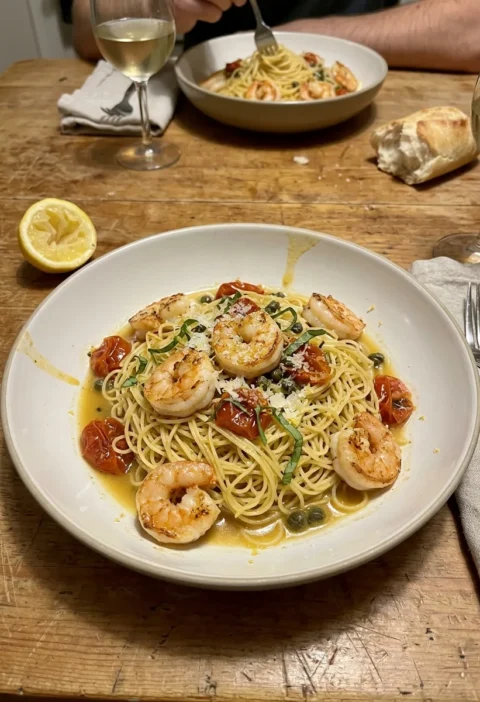
If you want that richer, saucy version, the chilli prawn linguine from Quick and Delicious builds a proper manzanilla sherry and cherry tomato sauce with a cold butter finish. This one stays stripped back on purpose.
Can you make these on the barbecue?
The pan method works best because you need the garlic and chilli in the oil around the prawns, which you lose on an open grill. If you sear them in a cast-iron pan on the barbecue you get the best of both worlds: the garlic oil stays in the pan while the smoky heat from the coals adds another layer underneath.
For prawns designed specifically for the griddle, Ramsay’s spiced grilled prawns from Bread Street Kitchen with the toasted cumin, paprika and cayenne paste hold up much better over direct heat because the thick paste sticks to the shell.
What goes alongside garlic prawns?
Bread. Tear it, drag it through the garlicky lemon oil left on the plate, eat. That is how Ramsay serves them and they do not need more than that.
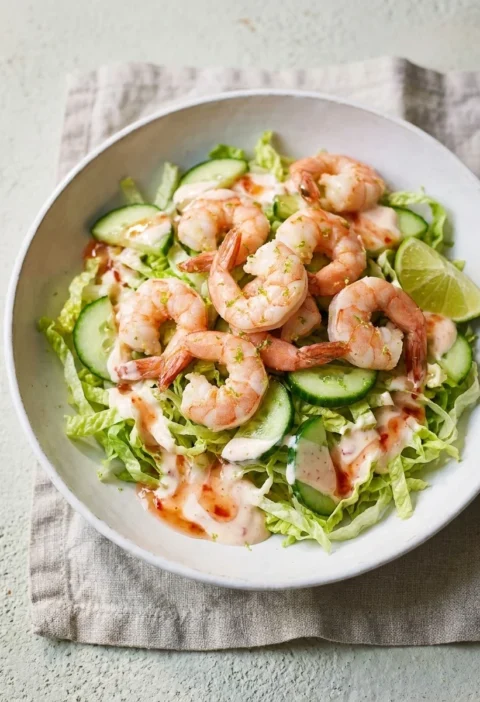
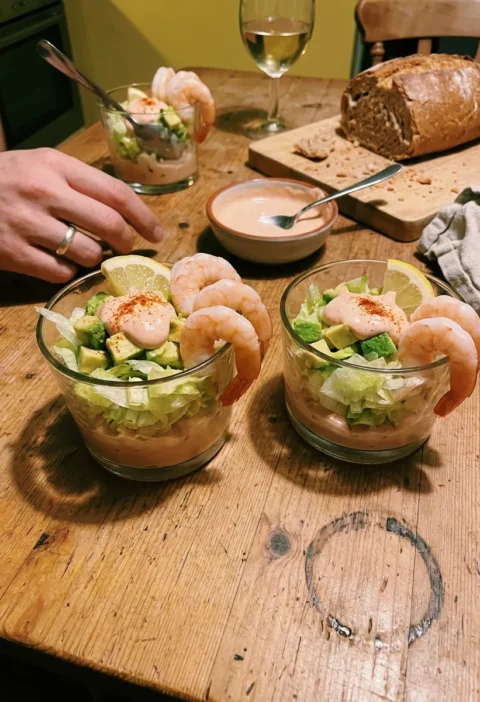
If you are serving these as part of a bigger spread and want a cold sauce on the side, a Marie Rose sauce with brandy, Tabasco and Worcestershire works because the creamy richness contrasts the hot garlicky prawns. It turns a simple tapas plate into something closer to a prawn cocktail you eat with your hands.