Gordon Ramsay cooks prawns in almost every cookbook he has written, from the shell-on garlic prawns in Fast Food to the Creole-spiced shrimp and grits in Ramsay in 10. The protein changes, the spices change, but four rules stay the same across every recipe: buy shell-on, pat dry, get the oil screaming hot, and never overcook them.
His strongest opinion is about the shells. In Fast Food he says “the secret here is cooking with the shells on, protect the prawn from drying out,” and he repeats this in the prawn pilaf from the same book where shell-on tiger prawns sit on top of the rice and steam in the oven. When he does peel them, it is because the dish needs it: the shrimp tacos need peeled prawns because you wrap and eat them, and the shrimp scampi poaches them in sauce so the shells would get in the way.
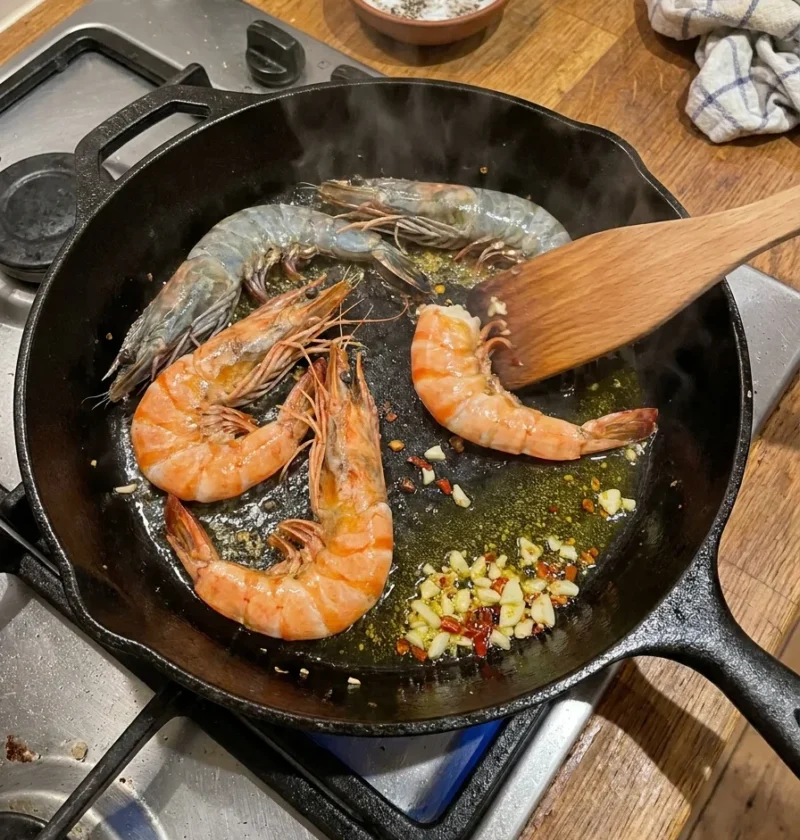
The technique that appears most often is the oil temperature test from the garlic prawns video: drop a flake of garlic into the oil, and when it sizzles immediately the pan is ready. If the garlic sits there quietly you are going to steam the prawns instead of searing them, and steamed prawns on a dry pan are rubbery.
Ramsay’s Prawn Rules
Pat them dry before they touch the pan
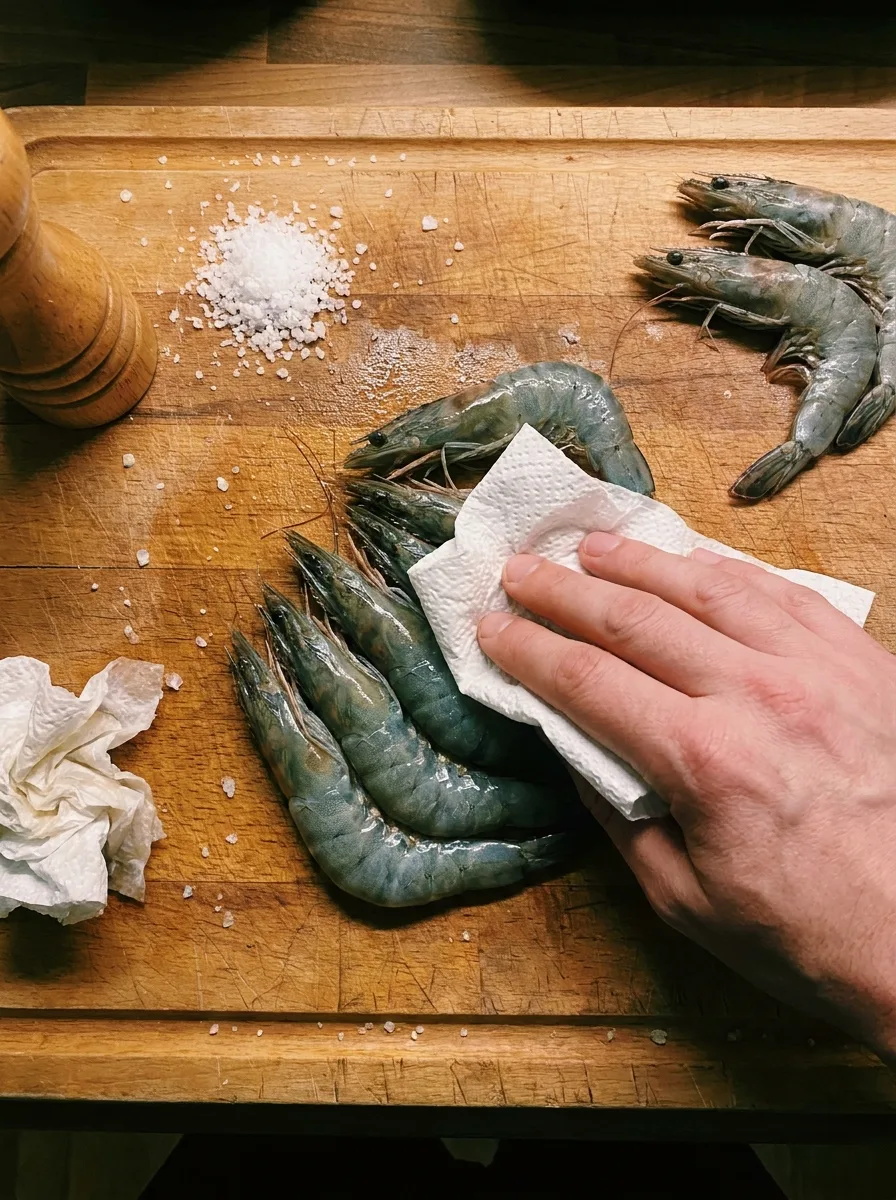
In the Fast Food garlic prawns video he says “salt and pepper, gets off all the excess moisture so the prawns don’t spit in the hot oil.” The salt draws out surface water, then you blot it with kitchen paper. Wet prawns hit hot oil and the temperature drops, which means no sear and no colour.
This applies whether they are shell-on or peeled. Frozen prawns need extra attention because they release more water as they thaw.
Two minutes each side for searing
Across his dry-heat prawn recipes the timing is consistent: 2 minutes on the first side, flip, 2 minutes on the second. The garlic prawns in Fast Food, the spiced prawns in Bread Street Kitchen, and the tequila shrimp on Conan all use this timing. He judges doneness by colour and opacity, saying “look, that real nice stunning colour” in the garlic prawns video.
Wet-heat is quicker. The shrimp scampi from Ramsay in 10 poaches prawns in wine and stock for about 1 minute per side because hot liquid transfers heat faster than oil. The pork and prawn balls simmer for 5-6 minutes but the prawns are minced inside the meatball so the rules are different again.
Build flavour in the pan first
Ramsay almost never puts plain prawns into plain oil. There is always an aromatic base underneath: garlic and dried chillies for the chilli prawn linguine, shallot and ginger for the pilaf, cumin and Creole spice for the grits. The prawns go in on top of flavour that is already in the oil, not the other way around.
The one exception is the prawn cocktail where he uses pre-cooked prawns and builds the flavour entirely in the sauce instead.
FAQs
Does Ramsay always cook prawns shell-on?
He tends to keep shells on when there is no sauce and the prawns are the star: prawn pilaf in the oven, garlic prawns in a hot pan. He peels when the prawns need to absorb flavour from a liquid or fit inside something: scampi poached in wine, prawn pasta in a sherry and tomato sauce, shrimp tacos wrapped in a tortilla.
The pork and prawn balls are the outlier: raw prawns are minced into the meatball mix, so the shell is removed but the prawn cooks inside the pork rather than exposed to direct heat.
Fresh or frozen?
He prefers fresh but every cookbook acknowledges frozen works. The key is thawing them fully in the fridge overnight and patting them completely dry before cooking. Never thaw under hot water or in the microwave because the outside cooks while the inside stays frozen.
If you are buying frozen, shell-on frozen prawns hold their texture better than pre-peeled because the shell protects them during freezing the same way it protects them during cooking.
What are the best Ramsay prawn recipes to start with?
The garlic prawns from Fast Food are the simplest: five ingredients, ten minutes, no sauce. If you want a full dinner the prawn pilaf is one pot with no stirring. For something to impress, the shrimp scampi from Ramsay in 10 has a proper wine and caper sauce and looks restaurant-level.
All three are recipes directly from his cookbooks, not adaptations.