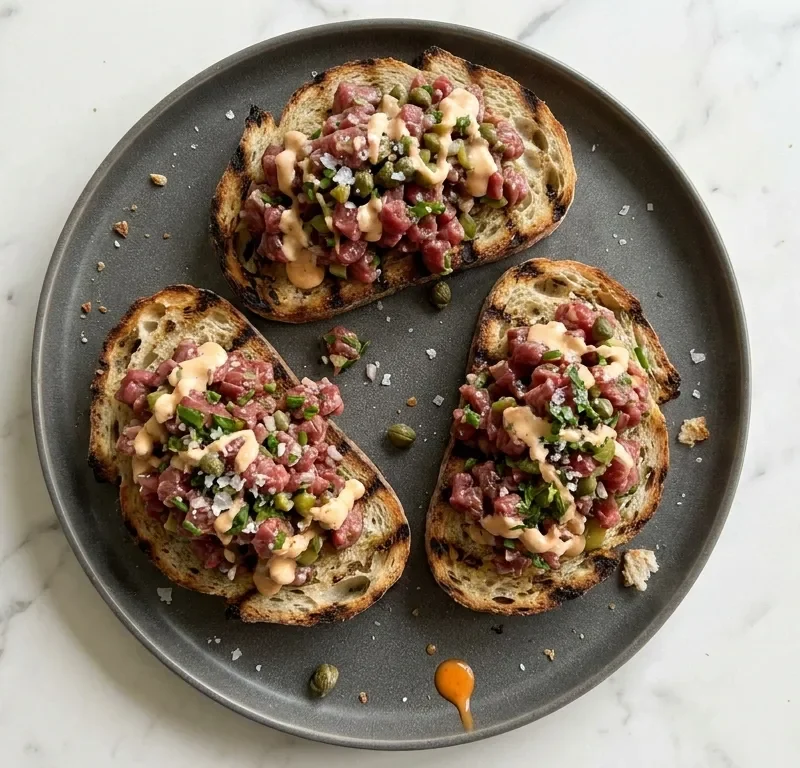
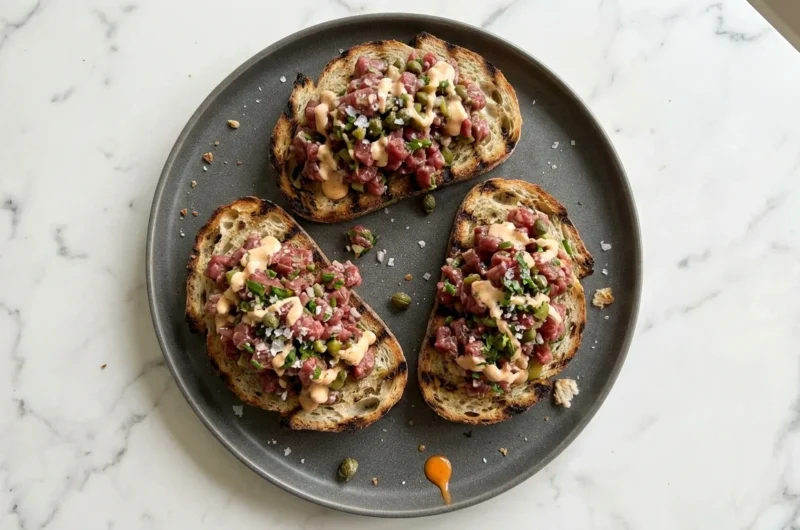
Gordon Ramsay’s beef tartare is 675g of finely diced raw beef fillet folded with capers, shallots, cornichons, and herbs, dressed in a whisked Worcestershire and ketchup sauce, then piled onto charred garlic-rubbed bread. There’s no cooking beyond the bread, so the whole thing comes together in about 30 minutes.
This comes from his Uncharted cookbook, where he makes it in Australia with wallaby and prints beef tenderloin as the alternative cut, which is fillet to us in the UK. The instruction he’s strict about is temperature: keep the diced meat in a chilled bowl “to prevent it from becoming warm and soft,” because warm tartare turns mushy before it ever reaches the plate.
What makes his version different is the sauce. While most steak tartare recipes crown the meat with a raw egg yolk and call it done, Ramsay whisks the yolks INTO a dressing with ketchup, mustard, Worcestershire, Tabasco, and oil, building it like a quick mayonnaise. Only a spoonful or two goes through the meat, so the beef stays the star while every bite carries that savoury background heat.
Cooked this recipe? Send a photo or tell me what you changed at fans@gordonramsayrecipes.uk and I’ll share your experience live on this page.
Gordon Ramsay’s Beef Tartare on Charred Bread
Course: AppetizersCuisine: FrenchDifficulty: Medium6
30
minutes5
minutes390
kcal35
minutesRaw beef fillet diced by hand and dressed the Uncharted way, with the egg yolks whisked into a Worcestershire sauce rather than sat on top. Serves 6 as a starter on garlic-rubbed charred bread.
Ingredients
- For the sauce:
2 egg yolks
4 tbsp tomato ketchup
2 tbsp mustard
2 tbsp Worcestershire sauce
Few dashes of Tabasco
180ml grapeseed oil
1 tsp salt
- For the tartare:
675g beef fillet (3 x 225g pieces), well chilled
2 tbsp capers, chopped
2 tbsp shallots, finely diced
2 tbsp cornichons, chopped
1 tbsp parsley, finely chopped
1 tbsp chives, chopped
1 tbsp ground peppercorns
- For serving:
6 slices thick country bread
3 tbsp extra virgin olive oil
1 tsp salt
½ tsp freshly ground black pepper
2 garlic cloves, smashed
Fleur de sel or flaky sea salt
Directions
- Make the sauce: In a large mixing bowl, combine the egg yolks, ketchup, mustard, Worcestershire sauce, and a few dashes of Tabasco. Gradually whisk in the grapeseed oil as you would a mayonnaise, then season with the salt.
- Dice the beef: Chop the beef fillet into a very fine dice with a sharp knife, keeping the meat in a chilled bowl as you work so it stays cold and firm.
- Add the aromatics: Add the capers, shallots, cornichons, parsley, chives, and ground peppercorns to the meat, then toss to combine evenly.
- Dress lightly: Add 1 to 2 tablespoons of the sauce and mix with a fork. Taste, adjust the seasoning or add a touch more sauce if needed, then refrigerate until ready to serve.
- Char the bread: Heat a cast iron pan or grill over a medium-high heat. Drizzle the bread with olive oil, season with salt and pepper, and grill until charred. Rub the smashed garlic over each hot slice.
- Serve: Spoon the tartare onto the charred bread and finish with fleur de sel.
FAQs
Is beef tartare the same as steak tartare?
Same dish, two names. Steak tartare is the classic French term, beef tartare is what menus increasingly call it, and both mean raw beef diced by hand and dressed with sharp, salty aromatics. The name people actually confuse it with is his classic tartar sauce, which is a creamy gherkin and caper sauce for fish and shares nothing with this except the word.
The hand-dicing matters more than the name, because a food processor smashes the meat into paste while a sharp knife keeps each piece distinct. Ramsay applies the same knife-work to fish in his tuna tartare recipe, where the technique is identical and only the dressing changes.
What cut of beef is best for tartare?
Ramsay’s recipe calls for beef tenderloin, sold as fillet in the UK, because you’re eating it raw and fillet has almost no fat or connective tissue to chew through. Tell your butcher it’s for tartare and buy it the day you’re making it, since freshness does the heavy lifting in a raw dish.
Fillet is also the cut in his steak au poivre recipe, so if raw beef isn’t your crowd’s thing, the same piece of meat goes into the pan with crushed peppercorns instead. Either way you’re paying for the most tender cut there is, which is exactly why it works uncooked.
Why doesn’t Ramsay put a raw egg yolk on top?
Because his yolks are already in the sauce. He whisks two of them with ketchup, mustard, Worcestershire, and Tabasco, then builds it up with oil the same way, which spreads that richness through every bite instead of leaving it sitting on top for one person to break. His Marie Rose sauce works from almost the same base, so if you’ve made that, this will feel familiar.
At his Savoy Grill restaurant the tartare goes further, with an egg yolk confited in olive oil at 65°C for a full hour placed on top. That’s the restaurant flourish, but the book version stays simple and travels better onto bread.
Is it safe to eat raw beef at home?
It is, provided you treat the meat seriously. Buy fresh fillet from a butcher the same day, tell them you’re serving it raw, keep it cold at every step, and dice it just before serving. Ramsay’s chilled bowl instruction is about texture, but it doubles as the safety habit, since raw beef should never sit at room temperature.
Skip supermarket pre-minced beef entirely, because mincing spreads surface bacteria through the meat and the grinding date is unknown. A whole piece of fillet diced at home with a clean knife is a different risk category, which is why every serious tartare recipe insists on it.
Can you make beef tartare ahead?
Honestly, no. The sauce holds in the fridge for 2 days and you can chop the capers, shallots, and cornichons in the morning, but the beef should be diced as close to serving as possible and dressed at the last minute. Once the seasoning hits the raw meat, salt starts pulling moisture out and the texture slides from bouncy to soft within a couple of hours.
Leftovers don’t keep either, so make only what gets eaten. That’s not a flaw, it’s the nature of the dish, and it’s why tartare feels like an occasion rather than a meal-prep option.