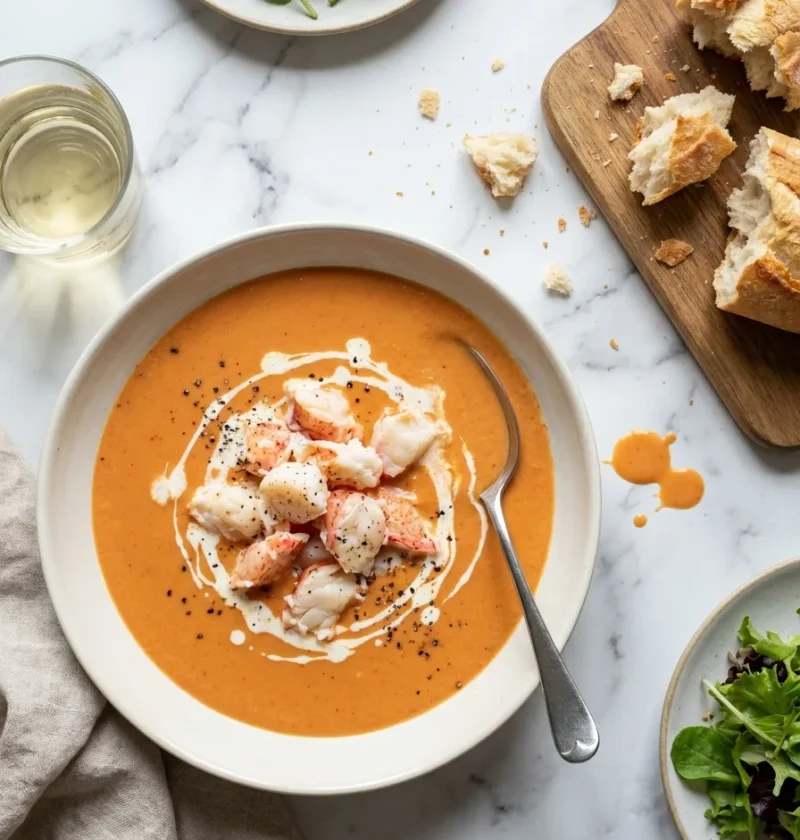
Gordon Ramsay’s lobster bisque is rich, silky and deeply savoury, built by simmering lobster shells with fennel, star anise, saffron and cayenne, deglazed with brandy and white wine, then blended and strained through a fine chinois until completely smooth. The lobster meat goes in at the very end so it stays tender. Serves 4, about 1 hour 30 minutes.
I built this from Ramsay’s Seafood Bisque in Make It Easy, adapted for lobster. The bisque base is his exact technique: sauté aromatics with the shells, deglaze with brandy, reduce wine to a syrup, simmer with fish stock for an hour, then blend and strain. His lobster handling comes from Bread Street Kitchen where he writes: “Put the live lobster into the freezer for about 2 hours to put it to sleep,” then simmers it in salted water with thyme and bay until pink.
What makes a bisque different from a soup is that the flavour comes from the shells, not the meat. The shells go into the pan with the vegetables and release their flavour into the brandy, the wine and the stock as they simmer for a full hour. That’s an hour of lobster extraction you can’t get any other way. The meat is just the finishing touch, stirred in at the end so it warms through without going rubbery.
Cooked this recipe? Send a photo or tell me what you changed at fans@gordonramsayrecipes.uk and I’ll share your experience live on this page.
Gordon Ramsay’s Lobster Bisque Recipe
Course: Soup, StarterCuisine: FrenchDifficulty: Intermediate4
30
minutes1
hour380
kcal90
minutesLobster bisque built from Gordon Ramsay’s bisque technique in Make It Easy, adapted for lobster. Shells simmered with fennel, star anise, saffron and cayenne, deglazed with brandy and white wine, blended smooth and strained through a chinois. Tender lobster meat stirred in at the end with double cream. About 1 hour 30 minutes.
Ingredients
- For the Lobster:
2 whole lobsters, about 500-600g (1-1.3 lb) each
Sea salt
Few thyme sprigs
1 bay leaf
- For the Bisque:
2 tbsp olive oil
1 shallot, finely chopped
1 fennel bulb, trimmed and finely sliced
2 celery sticks, sliced
1 carrot, chopped
1 star anise
1 tsp cayenne pepper
Pinch of saffron threads
Few thyme sprigs
1 bay leaf
2 beef tomatoes, deseeded and chopped
50ml brandy
200ml dry white wine
1L fish stock
150ml double cream
Squeeze of lemon juice
Sea salt and freshly ground black pepper
Directions
- Cook the lobsters: Place the lobsters in the freezer for 2 hours to put them to sleep. Bring a large pan of salted water to the boil with the thyme sprigs and bay leaf. Add the lobsters and simmer for 8 to 10 minutes until the shells turn pink. Remove and leave to cool.
- Extract the meat: Twist off the claws and crack them with the back of a heavy knife. Pull out the claw meat in whole pieces. Split the tails lengthways, remove the tail meat and discard the intestinal tract. Chop the meat into bite-sized pieces and set aside in the fridge. Keep every piece of shell.
- Build the bisque base: Heat the olive oil in a large pan over a medium heat. Add the lobster shells and sauté for 3 to 4 minutes, pressing them down so they release their flavour. Add the shallot, fennel, celery, carrot, star anise, cayenne, saffron, thyme and bay leaf. Cook, stirring, for a few more minutes.
- Deglaze and reduce: Add the chopped tomatoes and cook for 5 minutes. Pour in the brandy and let it bubble until almost evaporated. Add the white wine and cook until reduced to a syrupy consistency.
- Simmer: Pour in the fish stock, bring to a gentle simmer and cook for 1 hour. The longer this simmers, the more flavour the shells give up.
- Blend and strain: Remove the shells with a slotted spoon. Blend the soup until smooth using a stick blender. Pass through a fine sieve or chinois into a clean pan, pressing down hard on the solids to extract every drop of liquid.
- Finish: Reheat the bisque gently. Stir in the double cream and a squeeze of lemon juice. Taste and adjust the seasoning. Add the reserved lobster meat and warm through for 2 minutes. Do not boil or the lobster will toughen.
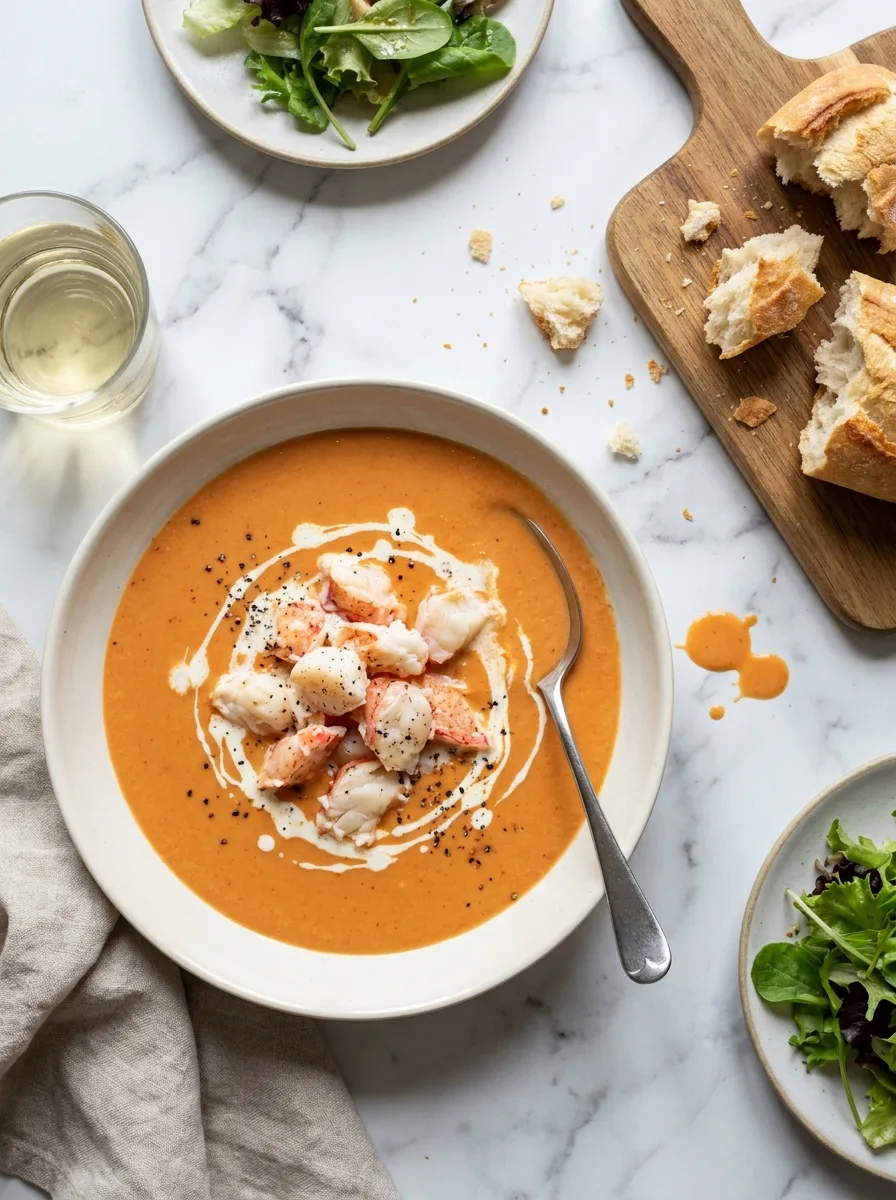
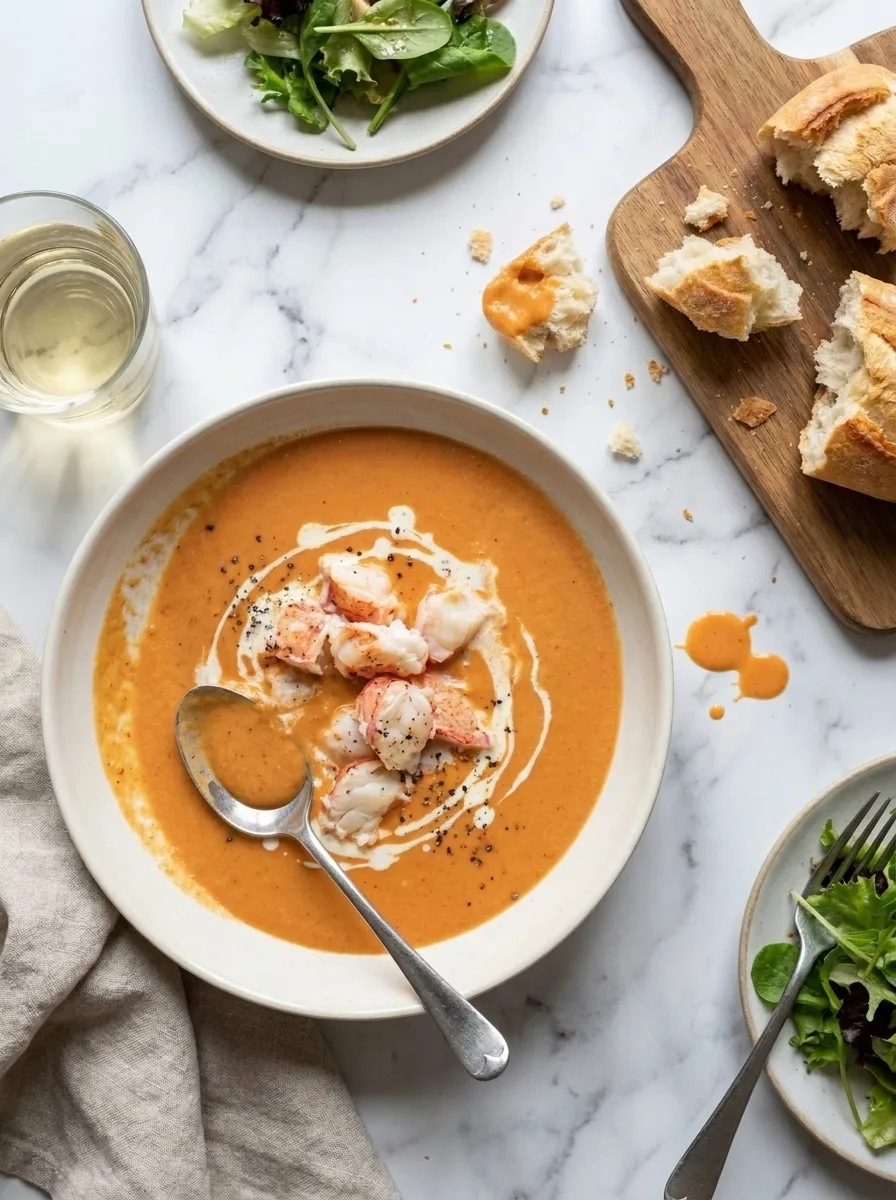
- Serve: Ladle into warm bowls with the lobster meat on top. A drizzle of cream and a crack of black pepper.
FAQs
Why sauté the shells before adding stock?
The shells hold most of the lobster’s flavour. Sautéing them in hot oil starts breaking them down and releases the pigments and oils trapped inside. When the brandy hits the hot shells, it extracts flavour compounds that water alone can’t reach.
This is how Ramsay builds the base for his Seafood Bisque in Make It Easy. Aromatics and shells together, brandy deglaze, wine reduction, long simmer.
Why does Ramsay use star anise and saffron in a bisque?
Most bisque recipes just use onion, carrot and celery. Ramsay adds star anise for a warm aniseed depth and saffron for colour and a floral note that pairs naturally with shellfish. Both are in his Make It Easy bisque base.
The fennel reinforces the star anise from a different direction. Together they give the bisque a complexity that’s hard to pin down but impossible to miss.
Can I use lobster tails instead of whole lobsters?
Yes. Four tails (about 150g each) give you enough meat and shell to build the stock. You won’t get claw meat, which is sweeter, but the tail shells carry plenty of flavour.
Ramsay writes: “Ready-cooked lobsters are never as good as those you cook yourself. You might end up with a dry, rubbery texture.” Raw tails you cook yourself are the next best thing.
Can you make this as a seafood bisque instead?
The bisque base is identical to Ramsay’s original Seafood Bisque in Make It Easy, which uses mussels, monkfish and red mullet. Swap the lobster for those, use fish shells instead, and scale to his original 10-serving quantities with 3 litres of stock.
What’s the best way to serve lobster bisque?
It’s rich enough as a main for two or a starter for four. Crusty bread is essential. A light salad cuts the richness. For a dinner party, serve as a starter before a crispy salmon or roast pork loin.
How far ahead can you make lobster bisque?
The bisque base keeps in the fridge for two days or freezes for up to three months. Make the full batch, strain it, cool it, then store. When you’re ready to serve, reheat gently, stir in the cream and warm the lobster meat through for the last two minutes.
Don’t add the lobster meat before storing. It overcooks when reheated and turns rubbery. The meat should always go in fresh at the end, whether you’re serving straight away or reheating from frozen. That makes this a perfect dinner party starter because all the hard work is done the day before.