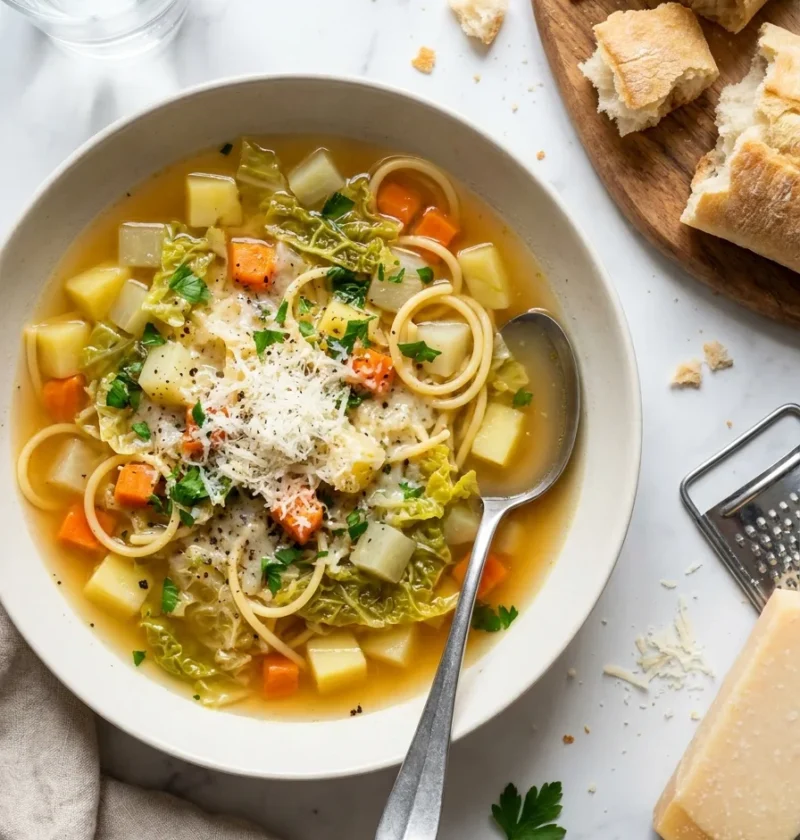
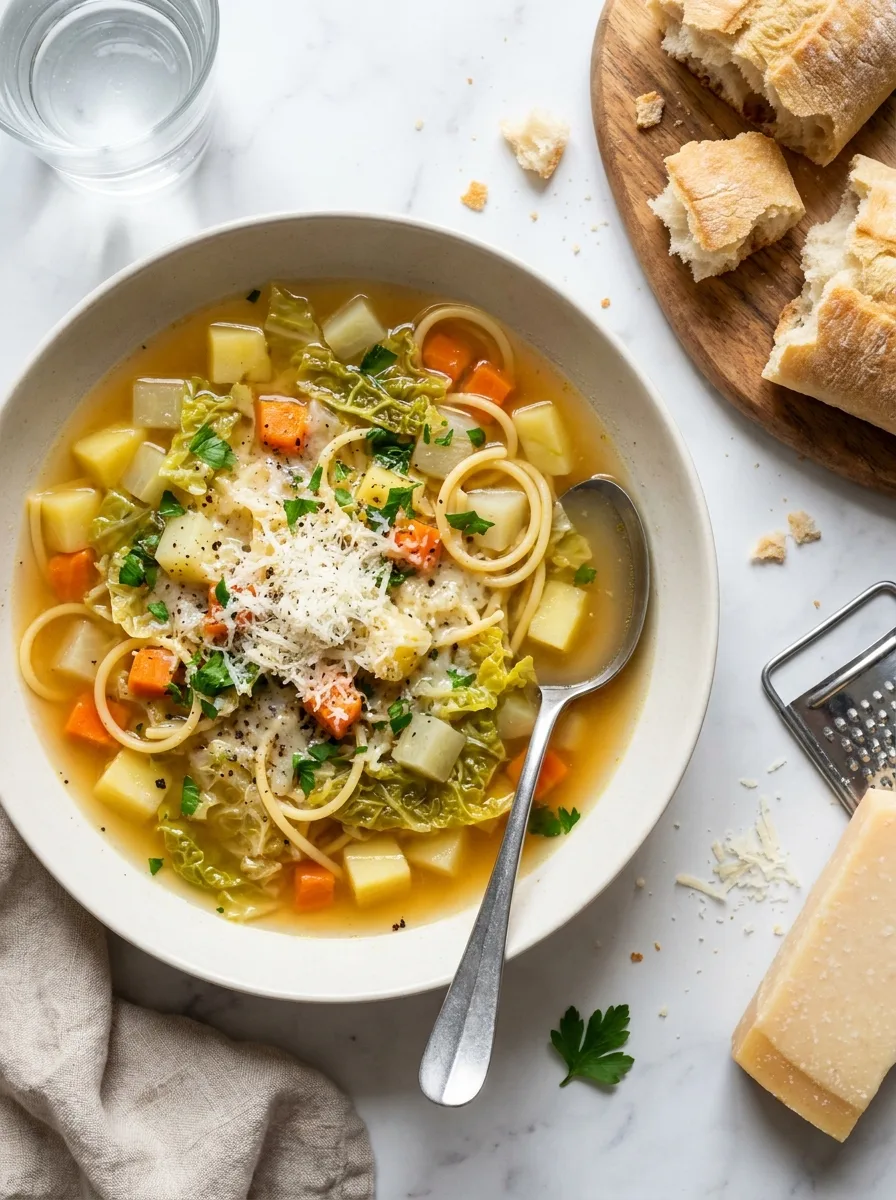
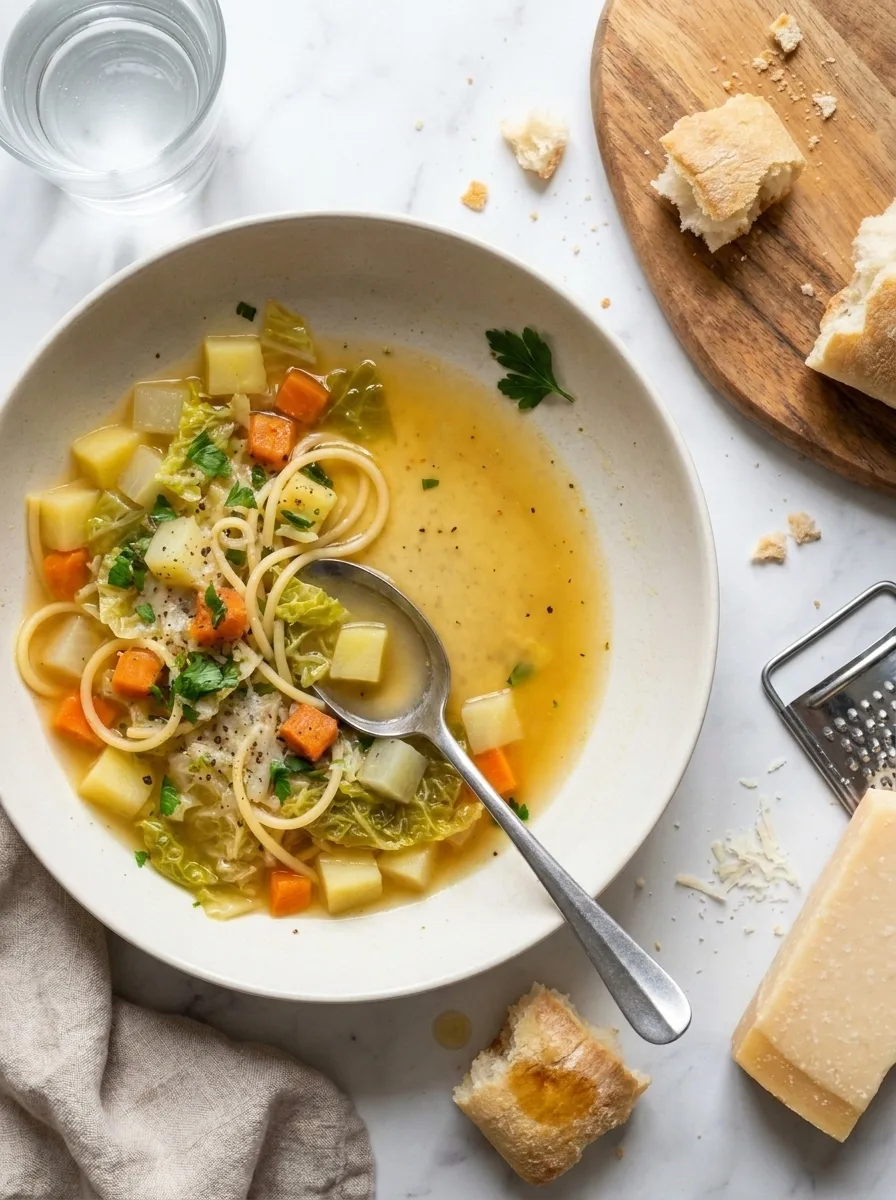
Gordon Ramsay’s minestrone soup is a fast, chunky Italian vegetable soup with potato, carrot, savoy cabbage, broken spaghetti and Parmesan, ready in under 25 minutes. It’s one of the simplest recipes in his collection and everything cooks in a single pan.
This is his Quick Minestrone from Gordon Ramsay’s Fast Food, and the same principles appear in his Cod Minestrone video where he says “nothing worse than a soup that’s watery.” His rule is to sauté the vegetables at high heat first for colour, because “more colour, more flavour,” and to keep the ratio at two-thirds content to one-third stock.
The technique that matters is cooking the vegetables hard before any liquid goes near them. Eight to ten minutes at high heat with just oil, stirring frequently, until they soften and start to colour. Only then does the boiling water go in. The spaghetti cooks directly in the soup, which thickens the broth with starch as it simmers.
Cooked this recipe? Send a photo or tell me what you changed at fans@gordonramsayrecipes.uk and I’ll share your experience live on this page.
Gordon Ramsay Minestrone Soup
Course: Soup, Dinner4
10
minutes18
minutes295
kcal28
minutesEasy
Quick minestrone from Gordon Ramsay’s Fast Food. Potato, carrot, kohlrabi, savoy cabbage and broken spaghetti sautéed at high heat then simmered in one pan. Finished with fresh parsley and a generous grating of Parmesan. A 25-minute weeknight dinner from a handful of vegetables.
Ingredients
3-4 tbsp (45-60ml) olive oil
1 onion, peeled and diced
1 potato, peeled and diced
1 medium carrot, peeled and diced
1 kohlrabi, peeled and diced
2 bay leaves
Few thyme sprigs
90g (3 oz) dried spaghetti, broken into short pieces
½ savoy cabbage, cored and chopped
Sea salt and freshly ground black pepper
Handful of Italian parsley, chopped
90g (3 oz) Parmesan, freshly grated
Directions
- Sauté the vegetables: Heat the olive oil in a large pan over a high heat. Add the onion, potato, carrot, kohlrabi, bay leaves and thyme. Cook, stirring frequently, for 8 to 10 minutes until the vegetables are soft and starting to colour.
- Add water and pasta: Pour enough boiling water over the vegetables to just cover them. Bring back to the boil. Add the broken spaghetti and chopped cabbage, then simmer for 8 minutes or until the spaghetti is al dente.
- Season and serve: Season liberally with salt and pepper. Ladle into warm bowls and sprinkle generously with chopped parsley and freshly grated Parmesan.
FAQs
Why does Ramsay sauté vegetables at high heat before adding water?
Colour equals flavour. In his Cod Minestrone video he says “the secret behind this particular soup is colouring it, sautéing it. Nothing worse than a soup that’s sort of watery and looks insipid and tastes very weak.” Eight to ten minutes of high heat builds a flavour base that boiling water alone can never match.
This is the same principle behind every Ramsay soup. Sweat the base hard, get colour on the vegetables, then add liquid. Skip this step and you get vegetable-tinted water.
Why broken spaghetti instead of small pasta shapes?
Spaghetti releases more starch as it cooks than shaped pasta like macaroni or penne, which naturally thickens the broth. Breaking it into short pieces means it fits on a spoon and cooks evenly in the soup. The starch does the thickening work so you don’t need flour or potato to break down.
If you can’t find kohlrabi, swap it for turnip or celeriac. Same texture, same sweetness once cooked. If you want a lighter meal for a different day that week, a salmon niçoise works well.
Can you add fish to this?
Yes. Ramsay makes a Cod Minestrone where he steams a cod fillet directly on top of the vegetables for 2 to 3 minutes. He lifts it out slightly undercooked, breaks it gently with a fork, then sets it back on the soup to finish in the residual heat.
That version also uses barley instead of pasta, adds tinned tomatoes, green beans and a splash of Tabasco, and finishes with lemon zest and celery leaves. A completely different dish from the same starting point.
What about the famous MasterChef version?
That’s his potato-crusted sea bass with minestrone and clams, the dish that helped earn his three Michelin stars. It uses pancetta, celery, courgette, fennel, a white bean purée, fresh clams and potato-scaled sea bass. Restaurant cooking, not a weeknight dinner.
A caesar salad as a starter before a simple grilled fish would be more realistic for a home version of that meal.
Why finish with Parmesan instead of more salt?
In the Cod Minestrone video Ramsay says “I like to use other ingredients as a way of seasoning food as opposed to using salt.” Parmesan is naturally salty and savoury, so 90g grated over four bowls adds umami depth and nuttiness that pure salt can’t give you.
Season the soup liberally first, then add the Parmesan generously on top. Taste before and after, and you’ll notice the difference isn’t just saltiness but richness.