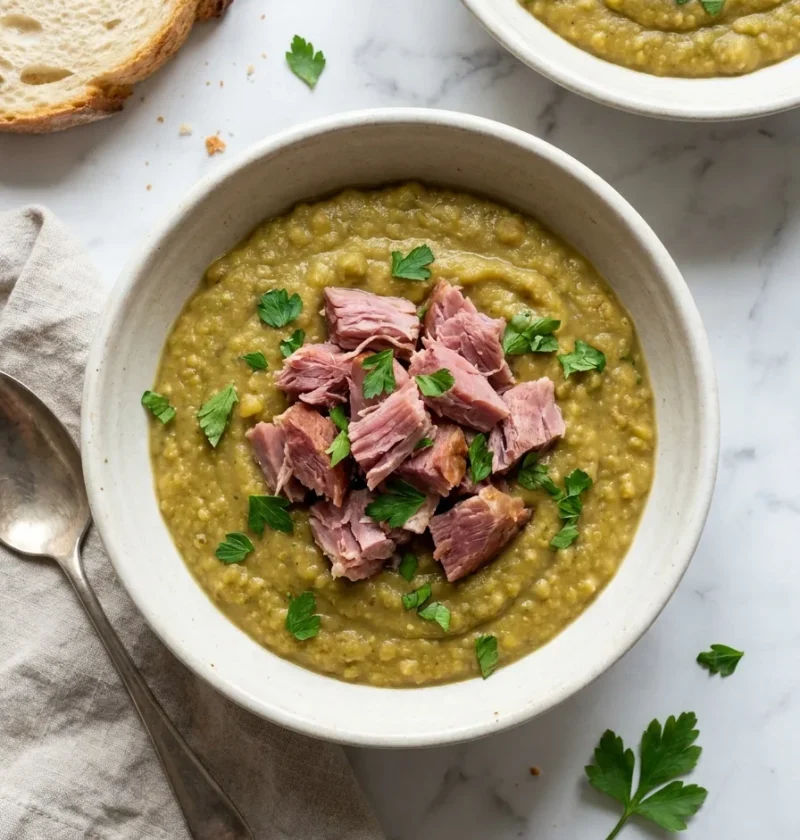
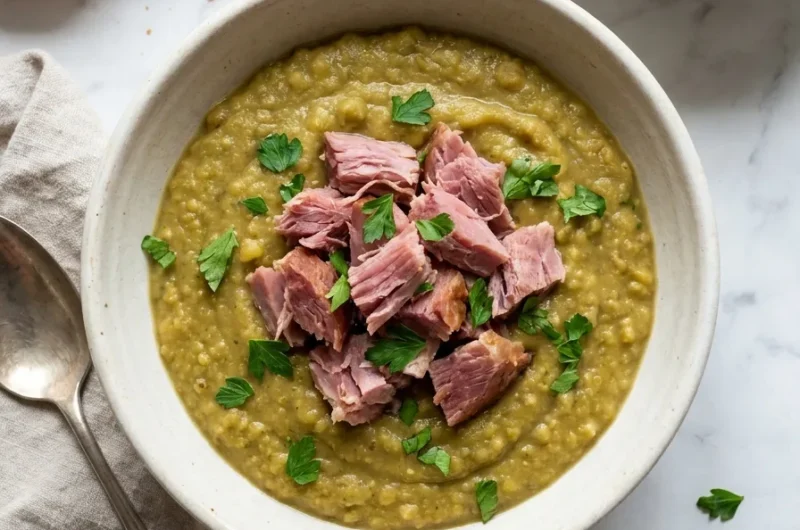
Gordon Ramsay’s pease pudding is split green peas slow-cooked in smoked ham hock stock with butter and Worcestershire sauce until thick enough to hold a spoon upright, served with flaked ham piled on top. This is a main course, not a soup. Both the peas and ham need overnight soaking, so plan ahead.
This comes from Great British Pub Food, where Ramsay pairs it with a whole smoked ham hock poached for 2 to 3 hours. The pease pudding cooks in the ham stock, which gives it a smoky depth you can’t get from water or vegetable stock alone. He says it’s “a fantastic recipe for a crowd” and to simply double the pease pudding and add another hock if you’re feeding more.
The step that makes the difference is cooking the split peas in the ham poaching stock instead of plain water. The stock carries all the salt, smoke and collagen from the hock, so the peas absorb it as they break down. After 2½ to 3 hours you get a thick, savoury puree without adding any extra seasoning.
Cooked this recipe? Send a photo or tell me what you changed at fans@gordonramsayrecipes.uk and I’ll share your experience live on this page.
Gordon Ramsay Pease Pudding with Ham Hock
Course: Main CourseCuisine: BritishDifficulty: Easy4
servings20
minutes3
minutes520
kcal200
minutesFrom Great British Pub Food: split green peas soaked overnight, slow-cooked in smoked ham hock poaching stock with butter and Worcestershire sauce. Served with flaked ham and chopped parsley. A main course, not a soup.
Ingredients
- For the ham hock:
1 large smoked ham hock with bone, about 1.2kg, soaked overnight
2 leeks, trimmed and cut into 5cm lengths
2 celery sticks, trimmed and cut into 5cm lengths
1 large carrot, peeled and cut into 5cm lengths
1 large onion, peeled and halved
1 head of garlic, halved horizontally
2 bay leaves
Few thyme sprigs
Few rosemary sprigs
1 tsp black peppercorns
- For the pease pudding:
300g split green peas, soaked overnight
1 small onion, peeled and finely chopped
1 tbsp butter
Few dashes of Worcestershire sauce
Black pepper
Small bunch of flat-leaf parsley, leaves chopped
Directions
- Poach the ham: Rinse and drain the ham hock, put into a large pan with the leeks, celery, carrot, onion, garlic, herbs and peppercorns. Cover with cold water. Bring to the boil, skim off any scum, then cover and simmer gently for 2 to 3 hours until the meat comes away from the bone easily.
- Flake the ham: Remove the hock from the stock and cool slightly. Flake the meat into large pieces, discarding the skin and bones. Measure out 600ml of the stock for the peas. Save the rest for soups.
- Cook the pease pudding: Drain the split peas and put into a saucepan with the chopped onion. Pour in the 600ml ham stock, bring to a simmer, cover and cook for 2½ to 3 hours until the peas are soft and the liquid is mostly absorbed.
- Finish: Add the butter and Worcestershire sauce, season well with black pepper. For a smoother result, use a stick blender to work into a coarse puree.
- Serve: Warm the ham pieces in a little reserved stock if needed. Serve the pease pudding piping hot with flaked ham on top and a sprinkling of chopped parsley.
FAQs
Why does Ramsay cook the peas in ham stock?
The stock carries the salt, smoke and collagen from poaching the hock for 2 to 3 hours. The peas absorb all of that as they break down, so the pudding tastes deeply savoury without adding extra salt or stock cubes. Water or vegetable stock won’t give you the same result.
He specifically says to measure out 600ml of the poaching stock and save the rest for soups. In GBPF he suggests using it for London Particular, a thick pea and ham soup.
Do the split peas need soaking overnight?
Yes. Both the ham hock and the peas need overnight soaking. The ham needs it to draw out excess salt, and the peas need it to soften enough to cook evenly. Without soaking, the peas take much longer and cook unevenly, with some turning to mush while others stay hard.
Plan this dish a day ahead. Soak both the night before, then the whole thing comes together the next day.
How smooth should pease pudding be?
Ramsay says “for a smoother result, use a hand-held stick blender to work the peas to a coarse-textured puree.” So not completely smooth like baby food, but not whole peas either. A rough, thick puree with some texture left is what he’s after.
The butter and Worcestershire sauce go in at this stage, which adds richness and a savoury tang.