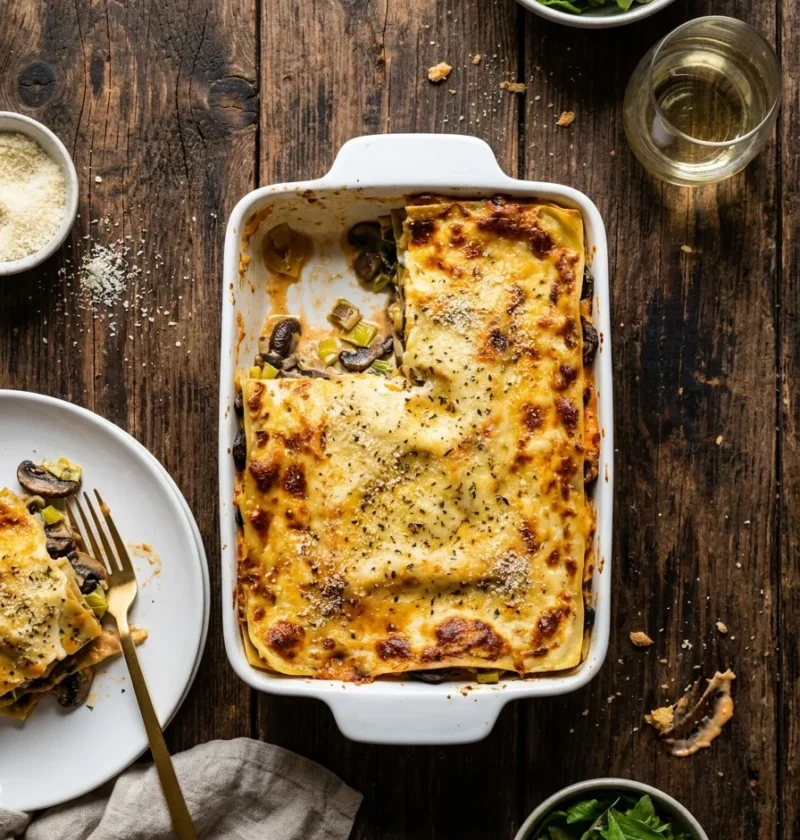
Gordon Ramsay’s vegetable lasagne is rich and earthy, with layers of sautéed mushrooms and leeks, a mascarpone tomato sauce and golden Cheddar béchamel, baked in under an hour. No meat, no compromise. The mushrooms do all the heavy lifting.
In Quick and Delicious, Ramsay explains how his tomato mascarpone sauce works as “a really tasty, meat-free pasta sauce or base for pizza or vegetarian lasagne,” swapping pancetta for vegetable stock. The mushroom and leek filling comes from his open lasagne in the Ultimate Cookery Course, where he writes: “Respect your main ingredients and they won’t let you down.”
The step most people rush is browning the mushrooms. In the Ultimate Cookery Course, Ramsay sautés them for a full 6-8 minutes until “coloured on the outside,” not pale and steaming. That browning concentrates the flavour and drives off moisture, so you get deep savoury taste in every layer instead of a watery filling that makes the pasta soggy.
Cooked this recipe? Send a photo or tell me what you changed at fans@gordonramsayrecipes.uk and I’ll share your experience live on this page.
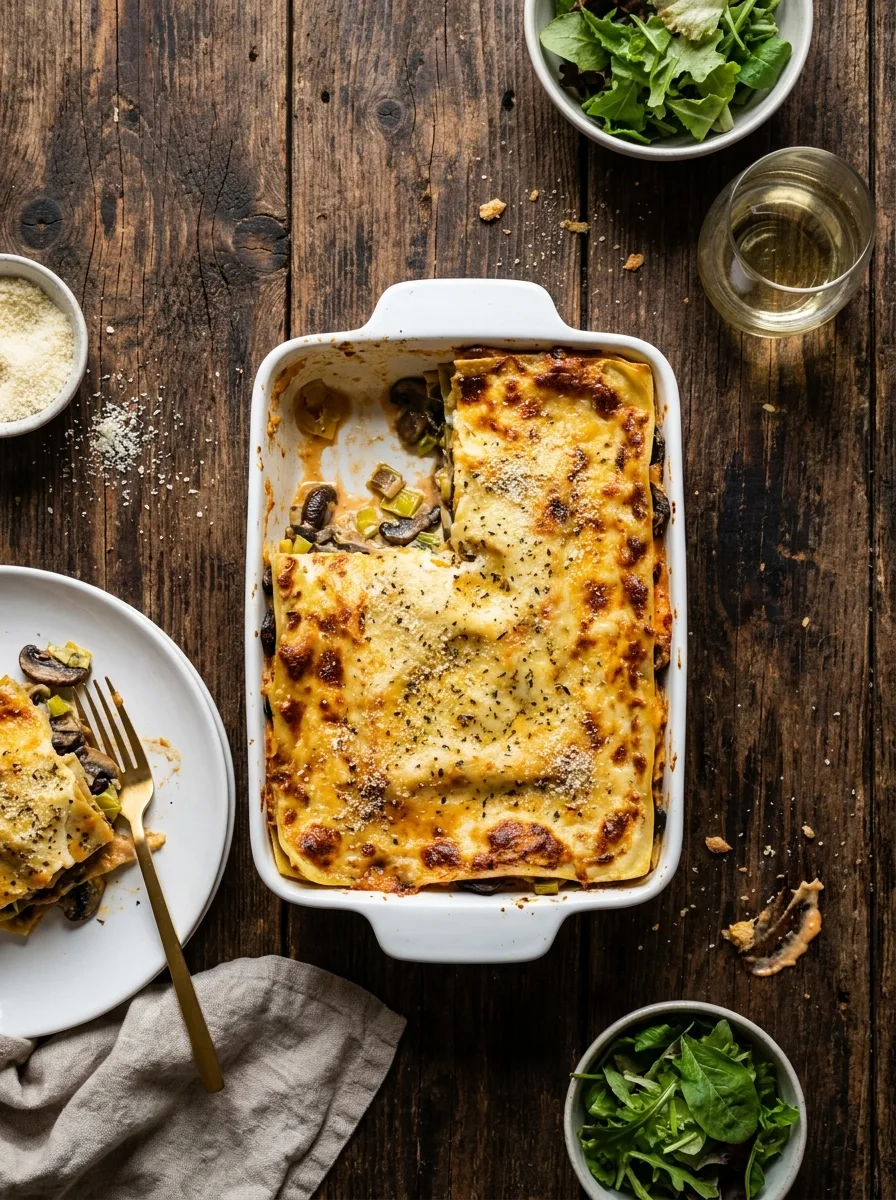
Gordon Ramsay Vegetable Lasagne
Course: DinnerCuisine: British, ItalianDifficulty: Intermediate4
servings15
minutes35
minutes460
kcal55
minutesBuilt from three Ramsay cookbooks: the mascarpone tomato sauce from Quick and Delicious, the mushroom and leek filling from Ultimate Cookery Course, and the Cheddar bechamel from Bread Street Kitchen. A proper vegetarian lasagne with real depth.
Ingredients
- For the mushroom and leek filling:
1 tbsp olive oil
250g (9 oz) chestnut mushrooms, sliced
1 garlic clove, chopped
1 leek, trimmed and sliced
2 tbsp roughly chopped tarragon
Salt and freshly ground black pepper
- For the tomato mascarpone sauce:
1 tbsp olive oil
1 large onion, finely diced
3 garlic cloves, chopped
1 tsp Italian seasoning
100g (3.5 oz) sunblush tomatoes, roughly chopped
1 x 400g tin chopped tomatoes
200ml (¾ cup) vegetable stock
200g (7 oz) mascarpone
- For the cheese sauce:
25g (1 oz) butter
25g (1 oz) plain flour
300ml (1¼ cups) milk
1 pinch ground nutmeg
60g (2 oz) Cheddar, grated
30g (1 oz) Parmesan, grated
- To assemble:
6 dried lasagne sheets (non pre-cook)
Extra Parmesan for topping
Directions
- Sauté the mushrooms: Heat olive oil in a large frying pan over high heat. Add the sliced mushrooms, season and sauté for 2 minutes. Add the garlic, cook 2 minutes more, then add the leek. Cook for 6-8 minutes total until the leeks are soft and the mushrooms are well coloured. Stir in the tarragon and set aside.
- Make the tomato sauce: Heat olive oil in a separate pan. Fry the onion until soft, add the garlic and cook for 2 minutes. Stir in the Italian seasoning, sunblush tomatoes, tinned tomatoes, vegetable stock and mascarpone. Simmer for 10 minutes until slightly thickened.
- Combine the filling: Stir the mushroom and leek mixture into the tomato sauce. Taste and adjust seasoning.
- Make the béchamel: Melt butter in a saucepan, stir in flour to make a paste. Add milk in thirds, whisking after each addition until smooth. Season with salt, pepper and nutmeg. Cook for 1 minute, then remove from heat and stir in the Cheddar and Parmesan.
- Layer the lasagne: Preheat oven to 200C (400F/Gas 6). Spoon half the vegetable filling into a baking dish. Lay lasagne sheets on top. Pour just under half the cheese sauce over the pasta. Spoon in the remaining filling. Add another layer of lasagne sheets. Pour the rest of the cheese sauce over the top.
- Bake and serve: Scatter extra Parmesan over the top. Bake for 30-35 minutes until golden and bubbling. Rest for 10 minutes before cutting.
FAQs
Why mascarpone in the tomato sauce instead of cream?
Mascarpone has 60-75% fat content, much higher than double cream. When you stir it into a hot tomato sauce, the fat emulsifies with the liquid and creates a smooth, velvety texture without needing a long reduction.
Cream can split in acidic tomato sauces if the heat is too high. Mascarpone almost never does because of its different protein structure. It also thickens the sauce on contact, so the 10 minute simmer is all you need.
Can you add spinach to this lasagne?
Yes. In Bread Street Kitchen, Ramsay uses spinach, ricotta, mascarpone and Parmesan as a filling for his vegetarian cannelloni. The same mixture works as an extra layer in this lasagne, spread between the mushroom filling and the cheese sauce.
The key is to wilt the spinach in boiling water for 30 seconds, drain it immediately, then squeeze out every drop of liquid. If you skip the squeezing, the water leaks into your layers and makes the whole thing soggy.
Why pair tarragon with mushrooms and leeks?
In the Ultimate Cookery Course, Ramsay adds tarragon to his mushroom and leek open lasagne, saying it “marries the two ingredients together.” It has an anise-like warmth that bridges the earthiness of mushrooms with the sweetness of cooked leeks.
Most vegetable lasagne recipes default to basil or oregano. Tarragon is the detail that makes this taste noticeably different from every other version.
What is the difference between this and Ramsay’s open lasagne?
In the Ultimate Cookery Course, Ramsay makes a mushroom and leek open lasagne that never goes near the oven. He boils the pasta sheets, tosses them in a cream sauce with the filling and serves them stacked on a plate. Ten minutes, start to finish.
This baked version uses the same mushroom and leek base but layers it with a mascarpone tomato sauce and Cheddar béchamel, then bakes until golden. Deeper flavour, firmer structure, feeds more people. Serve it alongside a simple beetroot salad to cut through the richness.
Does vegetable lasagne store as well as meat?
Just as well. In Bread Street Kitchen, Ramsay says his vegetarian cannelloni “freezes beautifully for up to a month,” and the same applies here because the béchamel and mascarpone sauce both hold up well.
If anything, the mushroom filling improves overnight because the tarragon infuses through the sauce as it sits. The béchamel firms up too, which means cleaner slices the next day. Same as the beef lasagne al forno: fridge 3-4 days, freezer up to 3 months.