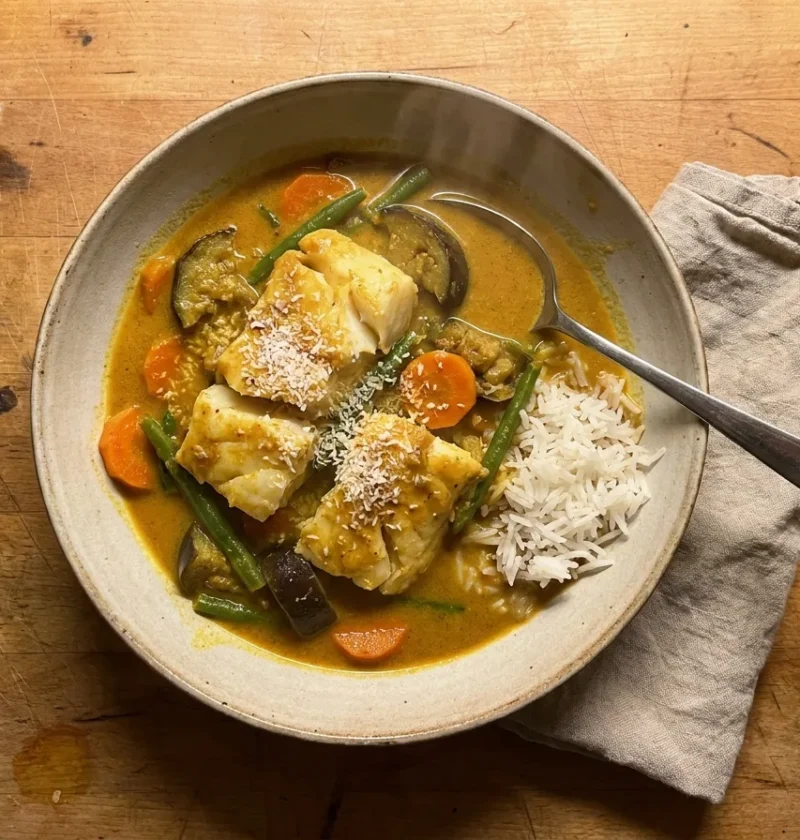
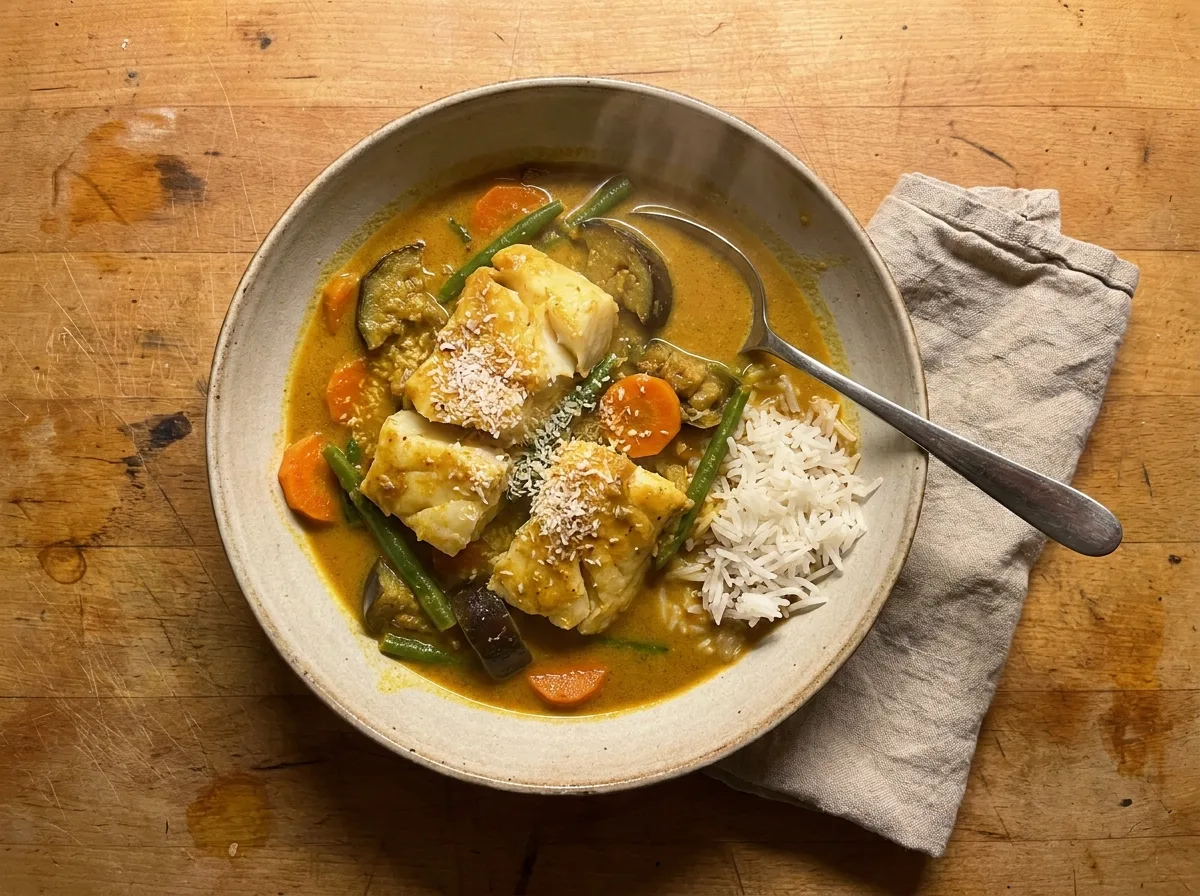
Gordon Ramsay’s fish curry simmers chunks of white fish in a coconut and tamarind sauce with mustard seeds, aubergine, carrots and green beans. The fish goes in last for just 3 to 4 minutes, so it stays in flakes. About 45 minutes start to finish.
It’s the Southern Indian fish curry from his Ultimate Fit Food book, written in his Ironman training years. The book pairs it with rice as “a perfectly balanced pre-exercise meal,” and his headnote explains why: coconut fat burns faster than animal fat, which makes it fuel, not just flavour.
The whole recipe works because nothing goes into the pot at the same time. Aubergine first, fish dead last, each ingredient timed to finish together. Four textures out of one pan, and the sauce does its thickening while you wait.
Cooked this recipe? Send a photo or tell me what you changed at fans@gordonramsayrecipes.uk and I’ll share your experience live on this page.
Gordon Ramsay’s Fish Curry
Course: DinnersCuisine: IndianDifficulty: Easy6
servings15
minutes30
minutes342
kcal45
minutesA proper Southern Indian coconut fish curry from Ultimate Fit Food’s carb-loading chapter, the dinner he ate the night before races: flaky white fish in a sweet-and-sour tamarind sauce.
Ingredients
½ tbsp flavourless oil, such as groundnut
2 onions, peeled and finely sliced
2 tsp mustard seeds
1 tsp ground turmeric
2 tsp ground cumin
3cm (1¼ in) piece of fresh root ginger, peeled and grated
1-2 long red chillies, deseeded and finely chopped, to taste
1 x 400ml (14 fl oz) tin reduced-fat coconut milk
1-2 tbsp tamarind paste or watered-down tamarind block (see note)
1 small aubergine, cut into bite-sized pieces
2 carrots, chopped into bite-sized rounds
200g (7 oz) green beans, topped and tailed and cut in half
600g (1.3 lb) meaty white fish, such as cod, pollock, haddock or coley, cut into bite-sized pieces
Sea salt and freshly ground black pepper
2 tbsp desiccated coconut, toasted, to serve (optional)
Directions
- Soften the onions: Place a large, shallow saucepan or high-sided frying pan over a medium heat and add the oil. Once hot, add the sliced onions with a pinch of salt and sauté for 8 to 10 minutes until completely soft.
- Wake the spices: Add the mustard seeds, turmeric and cumin and cook for a minute or until you can really smell them, then add the ginger and chillies and stir for a further minute.
- Build the sauce: Pour in the coconut milk, tamarind paste and 400ml of water, using the empty coconut milk tin to measure it. Season with salt and pepper, stir well and bring to a simmer.
- Stage the vegetables: Once simmering, add the aubergine and cook for 5 minutes. Then add the carrots and simmer for 10 to 15 minutes, until both are tender and the sauce has thickened a little.
- Beans, then fish: Add the green beans and cook for 3 minutes. Then add the fish, stir gently to coat, and cook for 3 to 4 minutes until just cooked through. Taste and adjust the seasoning.
- Serve: Ladle into warmed bowls over rice and sprinkle with toasted desiccated coconut, if using.
Notes
- His tip for tamarind block: soak it in a little hot water, remove the seeds, and mash it into a thick juice. The paste version stirs straight in.
FAQs
Why does the fish go in last?
That last-minute entrance from the intro has hard science behind it. White fish flakes at around 60C, a point a simmering sauce reaches almost instantly. Any longer than a few minutes and the flakes let go of each other and dissolve.
The same clock protects his Bengali prawn curry, where the prawns get just 2 to 3 minutes. Cut the fish in even, generous pieces and stir gently once, the sauce should poach it, not break it.
What fish is best for curry?
His own list runs cod, pollock, haddock or coley, and the word doing the work is “meaty.” You want thick fillets that hold in chunks, not thin flaky fish that vanishes. Coley is the quiet winner, firm, always overlooked, and it holds a simmer as well as cod.
Firmer fish can even take direct heat before any sauce, which is how his tandoori spiced halibut survives a hard sear. For this curry, skip anything delicate like plaice or sole, the simmer defeats them.
What is tamarind and what can replace it?
The sour backbone of the dish, a dark fruit paste that gives Southern Indian curries their sweet-and-sour edge against the coconut. UK supermarkets carry it as jarred tamarind paste in the world foods aisle, and Asian grocers sell the solid blocks his card note covers.
If you’re stuck, the honest emergency swap is lime juice added at the end, sharpness without the depth. Start with 1 tablespoon of tamarind and taste, his own range is 1 to 2 because brands vary wildly in strength.
What’s the fish curry Ramsay ate in Assam?
A dish called tenga, cooked for him by Assam chef Atol Lacar on Great Escape, in a region of freshwater ponds where “99% of the village live on fish.” The sourness comes from elephant apples, a tropical fruit that does the job tamarind does here.
The detail worth stealing: it uses no spices at all, just chilli, and he says so to Atol on camera. The clip is worth watching on YouTube, ending with his trip verdict that the curry we know in the UK “is really a narrow selection of the amazing dishes India has to offer.”
Is this fish curry actually healthy?
That Ironman line in the intro is literal, he wrote this for the night before endurance events. The coconut milk is deliberately the reduced-fat tin, and the only added oil is half a tablespoon for the onions.
The numbers are the book’s own, printed in its nutrition panel: 342 calories, 8g of fat and 23g of protein per serving. For similar light logic without the fish, his lentil curry recipe runs the same lane.
Does fish curry keep well?
The sauce does, the fish doesn’t, and pretending otherwise ruins it. Reheating cooked white fish overcooks it into dry threads, so eat the fish portion fresh and expect day-two fish to be softer at best.
The smart move for leftovers: lift the fish out and reheat the sauce and vegetables alone. Slide the fish back in off the heat for a minute, and my roundup of his curry recipes lines up the next pot.