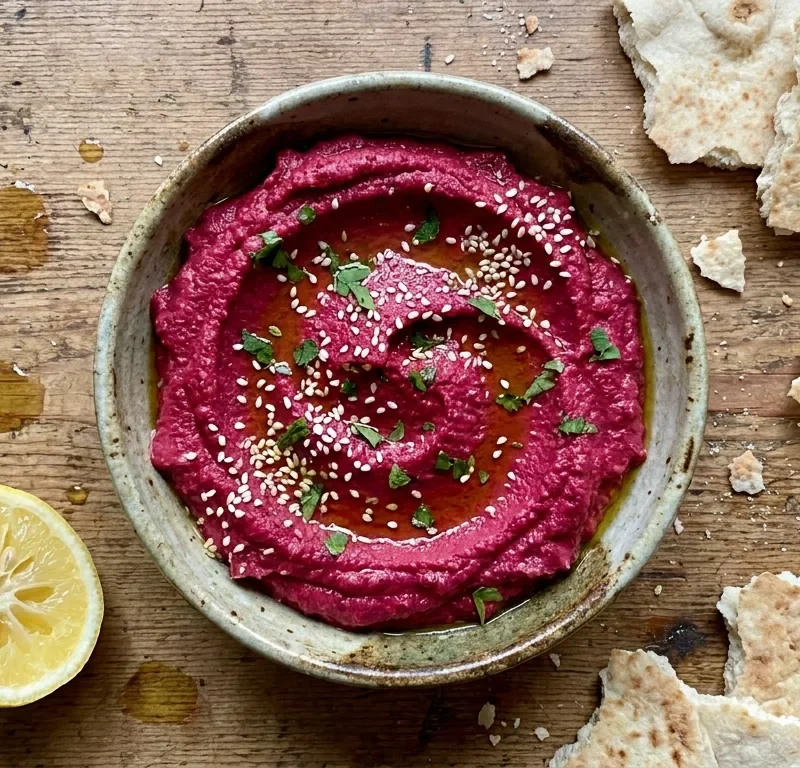
Gordon Ramsay’s beetroot hummus is made with cooked chickpeas, beetroot, tahini, toasted cumin and fresh lemon juice, finished with a homemade za’atar sprinkle of sumac, sesame and marjoram. The recipe comes from Ultimate Home Cooking, one of six different hummus recipes he publishes across his cookbooks, and takes about 10 minutes once you have cooked beetroot ready.
He describes it in the headnote as “a nice twist” on hummus that has “become almost commonplace,” where the beetroot adds “colour, of course, but also a lovely sweetness.” He also includes his own za’atar recipe rather than using shop-bought, because homemade is “much nicer” with freshly toasted cumin seeds and real sumac.
The technique that lifts this above every other beetroot hummus online is the cumin. He toasts whole seeds and grinds them rather than reaching for pre-ground, which releases the oils and gives a smokier, deeper flavour. The same toasted cumin appears twice: ground into the hummus base and whole in the za’atar on top, so the spice runs through every layer.
Cooked this recipe? Send a photo or tell me what you changed at fans@gordonramsayrecipes.uk and I’ll share your experience live on this page.
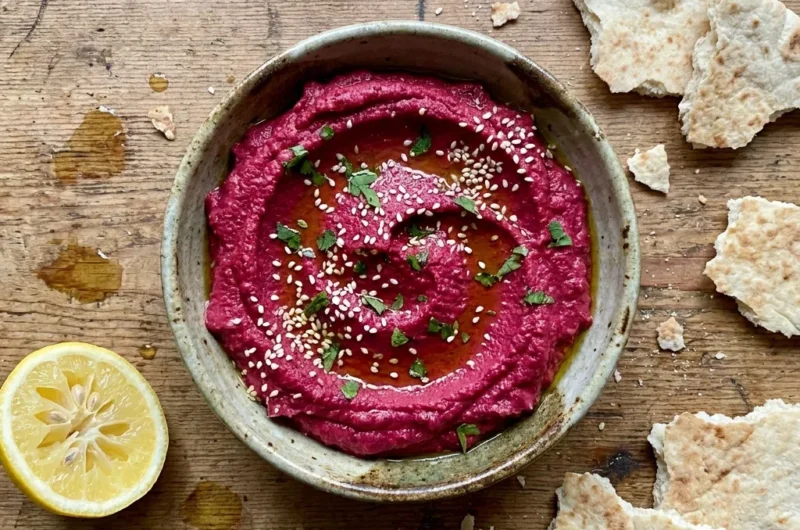
Gordon Ramsay Beetroot Hummus Recipe
Course: AppetisersCuisine: Middle EasternDifficulty: Easy6
servings10
minutes2
minutes140
kcal12
minutesBeetroot houmous with za’atar sprinkle from Ultimate Home Cooking, where Ramsay serves it alongside his lamb koftas with mint and yoghurt dressing. Includes his homemade za’atar recipe using sumac, sesame, cumin and marjoram.
Ingredients
- For the hummus:
1 tbsp cumin seeds, toasted
250g (9 oz) cooked chickpeas (one 400g tin, drained)
250g (9 oz) cooked beetroot, chopped
1 tbsp tahini paste
1 garlic clove, peeled and crushed
Juice of 1 lemon
1 to 2 tbsp olive oil
Sea salt and freshly ground black pepper
- For the za’atar sprinkle:
1 tsp cumin seeds, toasted
1 tsp sesame seeds
1 tsp ground sumac
½ tbsp marjoram leaves
Directions
- Make the za’atar sprinkle: Combine the toasted cumin seeds, sesame seeds, sumac and marjoram leaves. Mix well and set aside.
- Toast and grind the cumin: Grind the tablespoon of toasted cumin seeds to a powder using a pestle and mortar.
- Blend the hummus: Put the chickpeas, beetroot, tahini and garlic into a food processor along with the ground cumin and whiz until smooth. Add a tablespoon of olive oil, half the lemon juice and a good pinch of salt and pepper, then whiz again.
- Adjust and serve: Taste and adjust the seasoning, lemon juice and oil as needed. If the mixture seems thick and sticky, loosen it with a tablespoon of water. Serve dusted with the za’atar sprinkle, with toasted flatbreads or pitta alongside.
FAQs
What is za’atar and why does Ramsay make his own?
Za’atar is a Lebanese spice mix of dried herbs, sumac and toasted sesame seeds that you can buy in most supermarkets. Ramsay makes his own because the shop-bought version uses dried herbs that have been sitting on a shelf, while his combines freshly toasted cumin seeds with whole sesame, ground sumac and fresh marjoram leaves. He says homemade is “much nicer,” and once you taste the difference the toasted cumin makes, it’s hard to go back.
His version takes about a minute to throw together and works well beyond this hummus. Sprinkle it over roasted vegetables, grilled chicken or yoghurt for an instant Middle Eastern finish.
Why does Ramsay add the lemon juice at the end?
In the YouTube video where he makes this alongside lamb koftas, he calls the lemon juice “pivotal” and says it “really brings the beetroot and the chickpeas together.” He adds it after the initial blending rather than at the start, so the acidity stays sharp instead of dulling in the processor.
Chickpeas are dense and protein-heavy, which is why he says they need “that kind of acidity” to stop the hummus tasting flat. Beetroot is naturally sweet and earthy, so without enough lemon the dip can taste muddy rather than bright. Taste after the first squeeze and add more if it needs waking up.
What does Ramsay serve beetroot hummus with?
He gives three options in the UHC headnote: grilled meats like his lamb koftas with yoghurt dressing, crudités as a simple dip, or his saffron flatbreads. In the video he goes the kofta route and builds a full spread with minted yoghurt on the side.
For a simpler meal, tear his homemade naan bread straight into the hummus. The sweetness of the beetroot works especially well against charred bread because the smoky edges contrast with the earthy dip.
Can I use vacuum-packed beetroot instead of roasting my own?
Yes. The UHC recipe calls for “cooked beetroot” without specifying how, so vacuum-packed works and saves about 45 minutes of roasting time. Make sure it’s plain cooked beetroot and not pickled, because the vinegar in pickled beetroot fights the tahini and throws the balance off.
If you do roast your own, the sugars concentrate in the oven and give a slightly deeper, sweeter flavour. But the difference is small enough that for a weeknight dip, the packet version is an honest shortcut Ramsay clearly allows.
How is this different from his roasted squash hummus?
The beetroot version blends raw ingredients cold while the squash version from Ultimate Cookery Course roasts butternut squash first with garlic and ginger, then blends it with a homemade ras el hanout spice mix that includes cinnamon, cloves, fenugreek and fennel seeds. Two completely different techniques for two different results.
The beetroot hummus is lighter and sharper because the lemon and sumac cut through the sweetness, while the squash version is warmer and more aromatic because the roasted spice blend runs deep. Ramsay treats them as two separate dips for two different moods, which is why he puts them in different books rather than side by side.