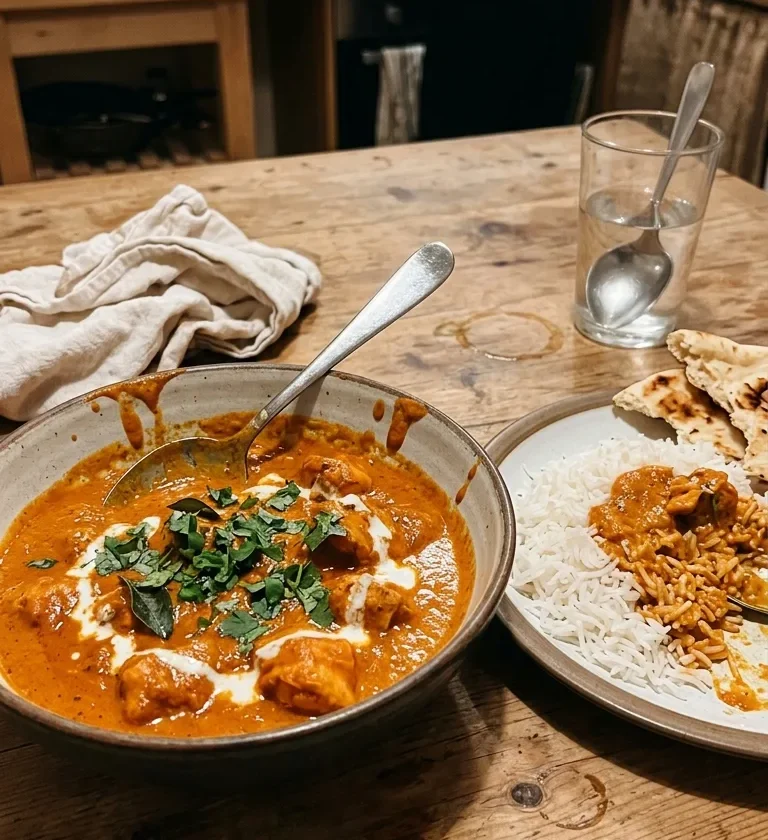
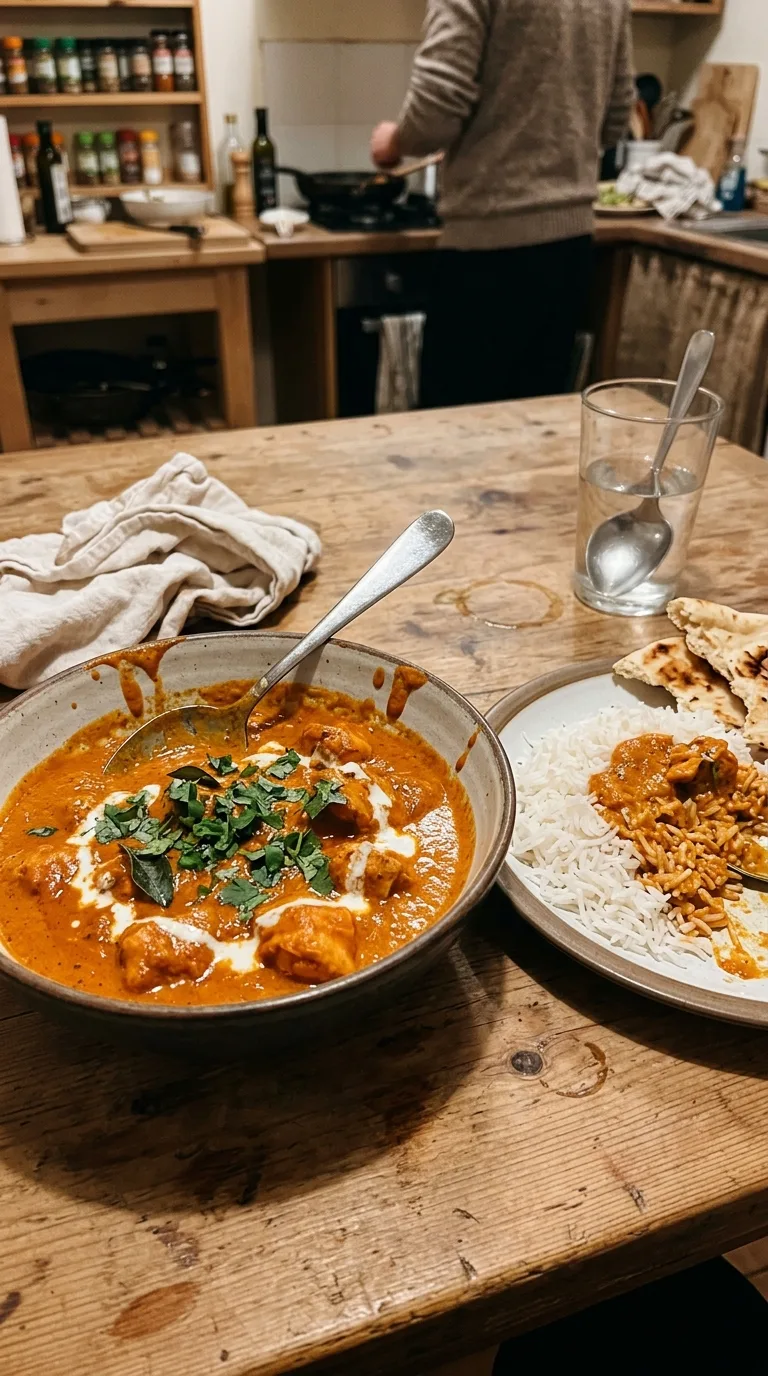
Gordon Ramsay’s chicken tikka masala is diced chicken seared until golden, then simmered in a spiced tomato sauce blended completely smooth and finished with yoghurt and fresh coriander. The whole thing takes 30 minutes and serves 4.
The recipe comes from his Cookalong Live show, where Ramsay says “the secret here is to fry the base of the tikka masala sauce” before blending it. That blending step is what separates this from every lumpy homemade version. He also says “don’t worry about the ginger becoming too fine because we’re going to blend this sauce,” so rough chopping is fine.
The spice ratios match his butter chicken and tandoori recipes in Gordon Ramsay’s Great Escape: 1 teaspoon each of garam masala, turmeric and chilli powder. Simple, balanced, not overloaded. The yoghurt goes in at the end, off the heat, swirled through rather than stirred in so it stays creamy instead of splitting.
Cooked this recipe? Send a photo or tell me what you changed at fans@gordonramsayrecipes.uk and I’ll share your experience live on this page.
Gordon Ramsay Chicken Tikka Masala
Course: DinnerCuisine: IndianDifficulty: Easy4
servings10
minutes20
minutes340
kcal30
minutesSeared chicken in a smooth blended spice and tomato sauce, finished with yoghurt and coriander. From Ramsay’s Cookalong Live show, with spice ratios matching his Great Escape cookbook. 30 minutes, serves 4.
Ingredients
500g boneless chicken thighs or breasts, cut into bite-sized pieces
1 large onion, sliced
3 garlic cloves, crushed
2cm piece fresh ginger, roughly chopped
1-2 green chillies, roughly chopped
1 tsp chilli powder
1 tsp ground turmeric
1 tsp garam masala
1 tsp sugar
2 tbsp tomato puree
400g tin chopped tomatoes
4-5 curry leaves (optional but worth finding)
3 tbsp natural yoghurt
Handful fresh coriander, chopped
1-2 tbsp vegetable oil
Sea salt and freshly ground black pepper
Directions
- Fry the sauce base: Heat oil in a large pan over a medium heat. Add the sliced onion and fry for 3-4 minutes until softening. Add the chillies, ginger and garlic. Cook for 2 minutes until fragrant.
- Add the spices: Stir in the chilli powder, turmeric, garam masala and sugar. Fry for 1 minute so the spices toast in the oil and coat the onions.
- Add the tomatoes and blend: Stir in the tomato puree and tinned tomatoes. Cook for 3-4 minutes until slightly thickened. Transfer to a blender and blitz until completely smooth.
- Sear the chicken: Wipe out the pan and add a tablespoon of fresh oil over a high heat. Season the chicken pieces and fry for 3-4 minutes until lightly coloured on all sides. The chicken does not need to be cooked through yet.
- Simmer: Pour the blended sauce back over the chicken. Add the curry leaves. Cover and simmer gently for 10 minutes until the chicken is cooked through.
- Finish with yoghurt: Take the pan off the heat. Swirl in the yoghurt rather than stirring it in completely. Scatter over half the coriander. Serve with basmati rice and the remaining coriander on top.
Notes
- Recipe from Gordon Ramsay’s Cookalong Live show. Spice ratios confirmed against his tandoori chicken and butter chicken recipes in Gordon Ramsay’s Great Escape. Two YouTube videos: Cookalong Live with Alan Carr and the standalone Chicken Tikka Masala upload (2.7M views).
FAQs
Why does Ramsay blend the sauce smooth?
Most homemade tikka masala has bits of onion and chunks of tomato floating in it. That is what makes it taste homemade rather than restaurant-quality. Ramsay’s method fixes this in one step: blitz everything until completely smooth, which is exactly what takeaway kitchens do.
A stick blender works if you are careful, but a jug blender gives a smoother result. The sauce should pour like double cream with no visible pieces.
Should you use chicken thighs or breasts?
Thighs are better here. They stay juicier during the 10-minute simmer because they have more fat running through the meat. Breast pieces can dry out and go chalky if you overcook them even slightly.
If you use breast, cut the pieces slightly larger so they hold together and check at 8 minutes instead of 10. Pull the pan off the heat as soon as the thickest piece is white all the way through.
Why does the yoghurt go in last and off the heat?
Yoghurt splits when it hits boiling liquid. The proteins seize up and you get a grainy, curdled sauce instead of the creamy finish you want. Ramsay takes the pan off the heat first, then swirls the yoghurt through rather than stirring it in completely. The white streaks through the orange sauce look better and give you different flavour intensities in each bite.
Three tablespoons is enough. More than that and the sauce becomes too pale and loses its colour.
What is the difference between tikka masala and butter chicken?
Both use spiced chicken in a tomato-based sauce, but butter chicken is richer. Ramsay’s butter chicken recipe in Gordon Ramsay’s Great Escape finishes with 40g butter and 100ml double cream. His tikka masala uses yoghurt instead, which makes it lighter and tangier.
The spice base is almost identical across both: garam masala, turmeric and chilli powder at 1 teaspoon each. Tikka masala is the weeknight version, butter chicken is the weekend one.
How do you make it spicier or milder?
The heat comes from two places: the fresh chillies and the chilli powder. For mild, use one chilli with the seeds removed and half a teaspoon of chilli powder. For hot, use two chillies with seeds in and a full teaspoon plus a pinch of cayenne.
Adding cream instead of yoghurt at the end also tames the heat without reducing the flavour. A tablespoon of honey works the same way if you want to keep it dairy-light.
What should you serve with tikka masala?
Basmati rice is the classic and the easiest option. Rinse it twice before cooking so the grains stay separate and fluffy rather than clumping together.
A cucumber salad on the side does the same job as raita: cool, crisp and fresh against the warm spiced sauce. Naan bread is the other obvious choice for scooping up the last of the sauce from the bowl.
Does tikka masala reheat well?
It is one of the best curries for reheating. The sauce actually improves overnight as the spices meld together. Store covered in the fridge for up to 3 days. Reheat gently in a pan with a splash of water if the sauce has thickened.
The yoghurt streaks disappear when you reheat, so add a fresh spoonful and swirl it through before serving. A squeeze of lemon juice brightens everything back up.