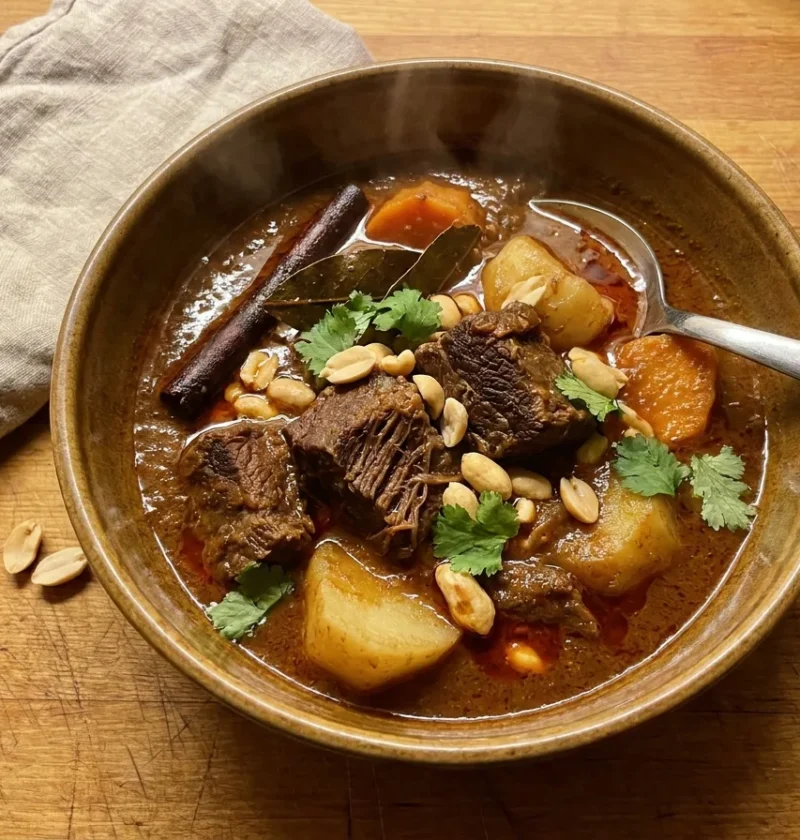
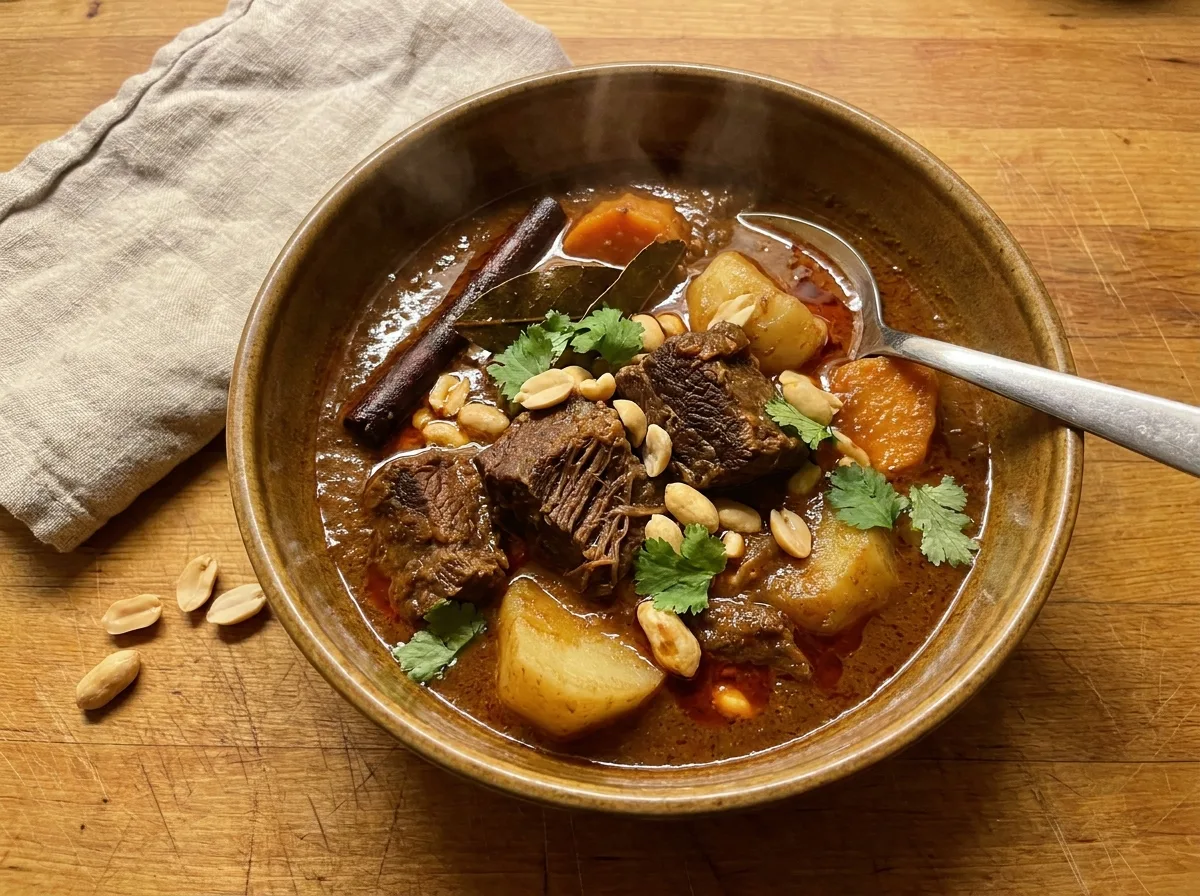
Gordon Ramsay’s massaman curry slow-simmers stewing steak with potato, sweet potato and a homemade paste in coconut milk for up to 2 hours, until the beef gives way at a spoon. Roasted peanuts go over the top, and it’s the mildest curry he makes.
The recipe is from his Great Escape Southeast Asia book, where he says it “reminds me of a winter stew,” and that’s exactly the right way to think about it. He learned it in southern Thailand, and it’s a proper from-scratch version, paste and all.
The step that separates it from jar-paste versions comes right after the paste hits the pan. The coconut milk goes in alone first and reduces by a third BEFORE any stock, which concentrates it into the rich base the long simmer builds on.
Cooked this recipe? Send a photo or tell me what you changed at fans@gordonramsayrecipes.uk and I’ll share your experience live on this page.
Gordon Ramsay’s Massaman Curry
Course: DinnersCuisine: ThaiDifficulty: Medium4
servings25
minutes2
hours950
kcal2 hr 25 min
His from-scratch massaman from Great Escape Southeast Asia: toasted whole spices in a homemade paste, beef simmered with two kinds of potato, and the coconut milk reduced before the stock goes anywhere near it.
Ingredients
- For the massaman curry paste:
1 tsp fennel seeds
1 tsp cumin seeds
1 tsp coriander seeds
1 tsp cloves
Vegetable oil, for frying
4 shallots, peeled and chopped
4 garlic cloves, peeled and chopped
2.5cm (1 in) knob of galangal, peeled and chopped
2 lemongrass stalks, trimmed and chopped
3 kaffir lime leaves, roughly chopped
4 tbsp chilli paste
1 tsp shrimp paste
Small handful of coriander stalks
- For the curry:
1kg (2.2 lb) stewing steak (US: beef chuck)
Sea salt and freshly ground black pepper
4 shallots, peeled and sliced
1 x 400ml (14 fl oz) tin coconut milk
1-1.2 litres (4-5 cups) beef stock
1 potato, peeled and diced
1 sweet potato, peeled and diced
1 tbsp fish sauce
1 tsp palm sugar
1 tbsp tamarind paste
2 bay leaves
1 cinnamon stick
- To garnish:
4 tbsp roasted peanuts
Small handful of coriander leaves
Directions
- Toast the spices: Toast the fennel, cumin and coriander seeds and the cloves in a small dry frying pan over medium heat for 2 minutes, until golden brown and fragrant. Set aside.
- Make the paste: Heat 2 tablespoons of oil in a wok and lightly fry the chopped shallots, garlic, galangal and lemongrass for 2-3 minutes until lightly browned. Tip into a blender or mortar with the toasted spices, add the remaining paste ingredients, and blend or mash until smooth.
- Brown the beef: Cut the steak into 2cm (¾ in) chunks and season. Brown in 2 tablespoons of oil in the wok, in batches if needed, then remove and set aside.
- Caramelise and fry the paste: Add the sliced shallots and cook for 30 seconds until slightly caramelised. Add the curry paste and fry for 2 minutes, until golden brown.
- Reduce the coconut milk: Pour in the coconut milk, mix well, and let it reduce by a third before pouring in the beef stock.
- Simmer: Return the beef with the potato and sweet potato, then add the fish sauce, palm sugar, tamarind, bay leaves, cinnamon stick and a pinch of salt. Lower to a simmer, cover, and cook for 1½ to 2 hours until the beef is tender, topping up with stock if needed.
- Serve: Spoon into warmed bowls and garnish with the roasted peanuts and coriander leaves.
Notes
- The book adds both potatoes at the start so they half-melt and thicken the sauce. Add them for the last 45 minutes instead if you want distinct chunks.
FAQs
What is massaman curry?
It’s a southern Thai curry of Muslim origin, and the name is a variation of the Thai word for Muslim, as Ramsay explains in Great Escape Southeast Asia. What makes it different from other Thai curries is the Indian spice set: cloves, fennel, coriander and cumin seeds.
That’s why this beef massaman eats like a stew rather than a typical Thai curry. His book adds the potatoes at the start of the simmer, so their edges melt and thicken the sauce into what he calls “a hearty meal where little else is needed to fill you up.” If you want firm chunks, add them for the last 45 minutes instead.
Is massaman curry spicy?
It’s the mildest of the Thai curries, and the mildest thing I’ve cooked from his curry chapters. The warmth comes from cinnamon, cloves and cumin rather than chilli heat, so it lands closer to a spiced stew than a hot curry. His pork neck curry sits one step up the heat ladder if you want more bite.
The one place heat hides here is the chilli paste in the massaman paste itself. Use a mild one and the dish stays family-friendly, or a hot one if you want it to fight back.
What’s in massaman curry paste?
His version is toasted fennel, cumin, coriander seeds and cloves, blended with fried shallots, garlic, galangal and lemongrass, then lime leaves, chilli paste, shrimp paste and coriander stalks. The toasting and frying happen BEFORE blending, so the paste starts cooked, not raw, the same fresh-paste logic as his Thai green curry rice.
Shop paste works on a weeknight, but check the label for shrimp paste if you’re cooking for vegetarians. The homemade one takes 15 minutes and is most of what you taste in the finished dish.
Can I make massaman curry in a slow cooker?
Yes, and this time it’s not my adaptation, it’s his. The book says it’s “the perfect dish for preparing in the morning for eating that evening.” He doesn’t give slow cooker timings, so from my testing: brown the beef, fry the paste and reduce the coconut milk in a pan first, then everything into the slow cooker on low for 6-7 hours.
He also notes it’s “good made with lamb too.” Diced lamb shoulder takes the same time and drinks up the spices the same way.
What do you serve with massaman curry?
Less than you’d think, because the potatoes mean the carbs are already in the pot. Plain jasmine rice is the classic, and his pilau rice works if you want the rice to bring its own perfume.
Skip naan and heavy sides. He calls it a meal where little else is needed, and after 2 hours of reducing, the sauce is rich enough on its own.
Does massaman curry keep and can you freeze it?
It’s genuinely better the next day. The book itself suggests making it a day ahead so “the aromas and flavours deepen overnight.” Three days in the fridge, and it freezes for 2 months. The coconut sauce can separate slightly as it thaws, and a stir while it reheats brings it back together.
The potatoes soften further with each reheat, which suits this dish. Add the peanuts fresh each time though, they go soggy in storage. And for what to cook next, my roundup of his curry recipes ranks every one of them by where to start.