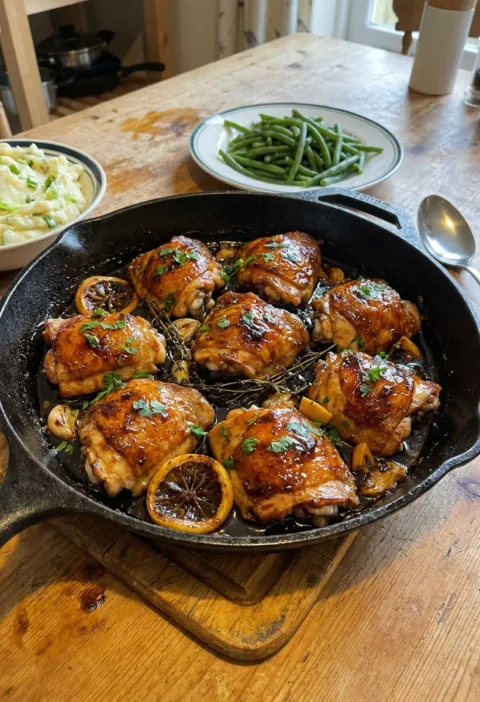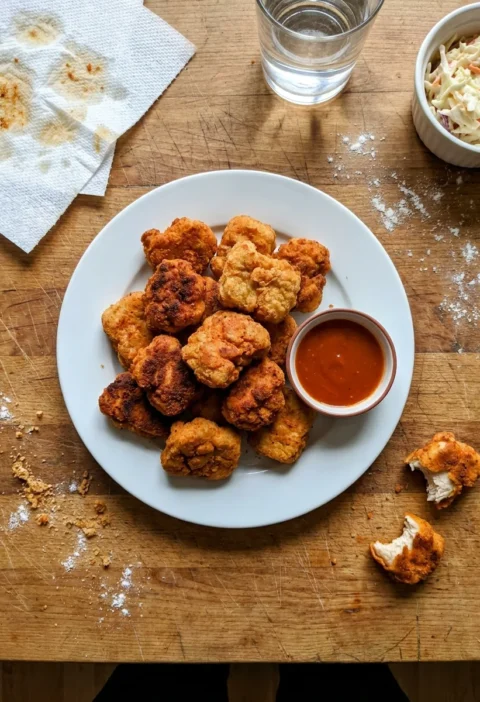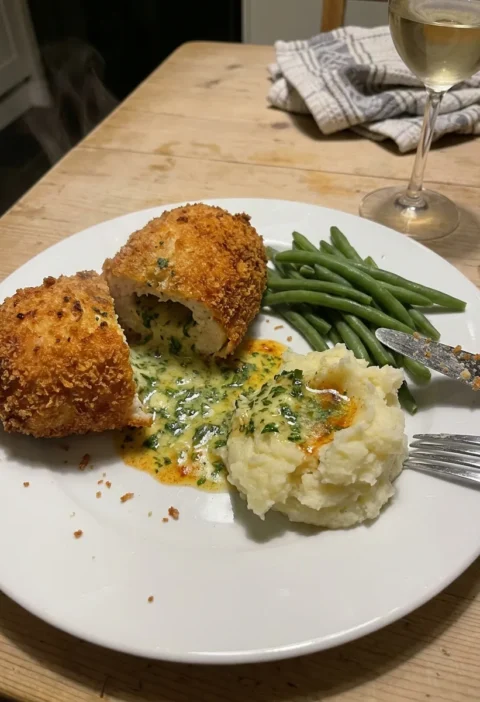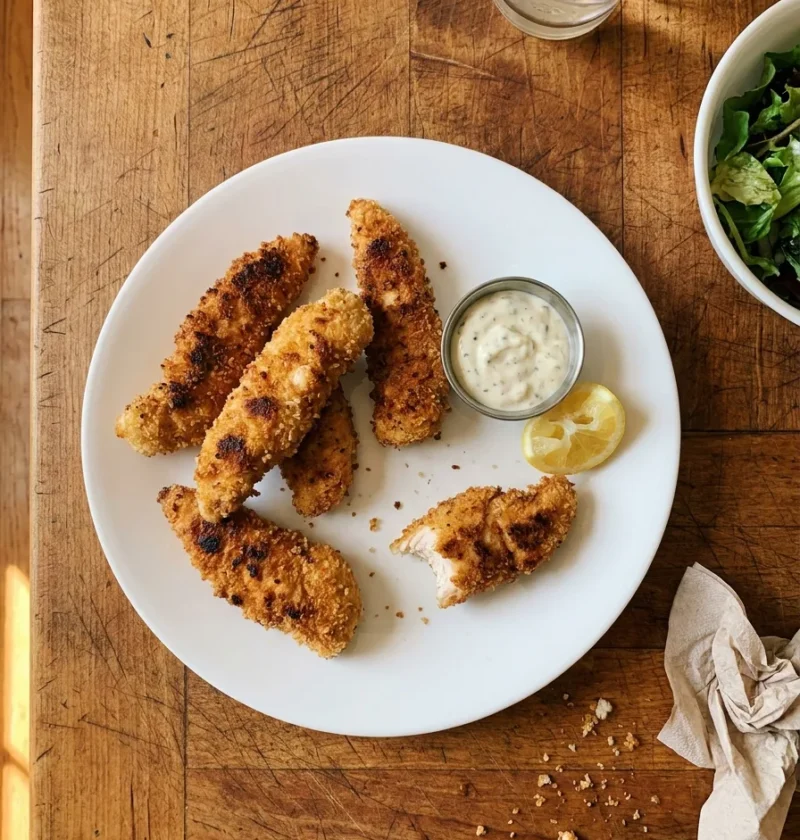
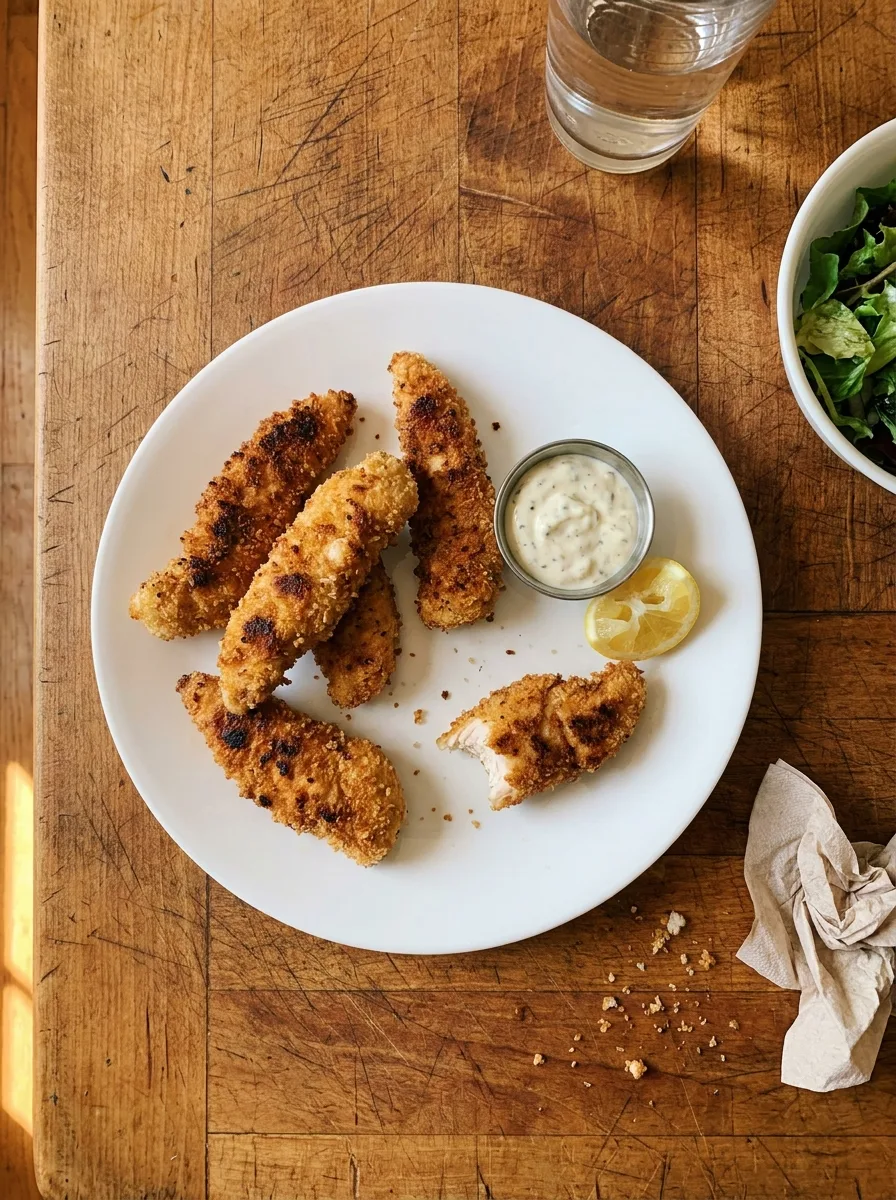
Gordon Ramsay’s chicken tenders are thick strips of breast coated in seasoned flour, an egg wash spiked with soy sauce, and crunchy panko breadcrumbs, then shallow fried with a butter finish until deep golden. They take about 25 minutes start to finish and the coating stays crispy long enough to actually eat them.
The coating method comes from two recipes in Ramsay’s books. His chicken schnitzel in Ramsay in 10 uses a flour, egg and panko system with soy sauce beaten into the egg, which adds umami and helps the crust brown faster. His home-made fish fingers in Ultimate Home Cooking add butter to the pan at the end for deeper colour and flavour. Both techniques combined give you a tender that’s crunchy on the outside and juicy through the middle.
The soy sauce in the egg wash is the detail most recipes miss. It seasons the chicken from the inside of the coating, not just the outside, so every bite has flavour all the way through. It also darkens the crust slightly, which means you get that deep golden colour without overcooking.
Cooked this recipe? Send a photo or tell me what you changed at fans@gordonramsayrecipes.uk and I’ll share your experience live on this page.
Gordon Ramsay Chicken Tenders
Course: DinnerCuisine: BritishDifficulty: Easy4
servings10
minutes15
minutes430
kcal25
minutesBuilt on the coating technique from Gordon Ramsay’s chicken schnitzel in Ramsay in 10 and his home-made fish fingers in Ultimate Home Cooking. The soy sauce egg wash and panko breadcrumbs create a crust that shatters when you bite through it and stays crispy longer than regular breadcrumbs.
Ingredients
- For the Chicken:
4 chicken breasts, cut into thick strips about 2cm wide
- For the Coating:
100g plain flour
3 eggs
2 tbsp soy sauce
150g panko breadcrumbs
1 tsp dried thyme
Sea salt and freshly ground black pepper
- For Frying:
Vegetable oil, for shallow frying
Knob of butter
Directions
- Cut the chicken: Slice each breast lengthways into strips about 2cm wide and 8cm long. Pat them dry with kitchen paper and season with salt and pepper.
- Set up the coating station: Put the flour in a shallow bowl and season with salt and pepper. Beat the eggs with the soy sauce in a second shallow bowl. Mix the panko breadcrumbs with the dried thyme in a third bowl.
- Coat the tenders: Take each strip and press it into the flour, shaking off any excess. Dip into the egg and soy mixture, letting any excess drip off. Press firmly into the panko, turning to coat all sides. Lay on a plate or board as you go.
- Heat the oil: Pour a 2cm depth of vegetable oil into a large heavy-based frying pan and place over a medium-high heat. The oil is ready when a pinch of panko sizzles immediately on contact.
- Fry in batches: Add the tenders in batches of 4 or 5, making sure they aren’t touching. Fry for 3 to 4 minutes on each side until deep golden brown and cooked through.
- Finish with butter: In the last minute of frying, add a knob of butter to the pan. It foams and helps the coating turn a deeper golden colour. Spoon the butter over the tenders as they finish.
- Drain and serve: Move the tenders to a wire rack or kitchen paper. Serve hot with your choice of dipping sauce.
Notes
- Coating technique adapted from the chicken schnitzel in Ramsay in 10 (soy sauce egg wash) and the home-made fish fingers in Ultimate Home Cooking (panko with herbs and butter finish).
FAQs
What dipping sauces does Gordon Ramsay recommend?
Ramsay’s books pair fried chicken with a few different sauces depending on the dish. His tartar sauce is the classic fried food dip, sharp and creamy against the crunchy coating. His Marie Rose sauce works just as well if you want something sweeter and more tangy.
For a simpler option, his homemade mayo with a teaspoon of Dijon mustard stirred through makes a quick dip that lets the chicken do the talking.
Why does Ramsay add soy sauce to the egg wash?
It’s a trick from his chicken schnitzel in Ramsay in 10. The soy sauce does three things at once: it seasons the chicken from inside the coating, it adds umami depth that plain egg doesn’t have, and the sugars in the soy help the panko brown faster in the pan.
You only need a couple of tablespoons. Any more and the egg wash gets too salty. Standard soy sauce works fine, no need for anything fancy.
Can you bake these tenders instead of frying?
Yes. Lay them on a wire rack over a baking tray, spray or brush with oil, and bake at 220°C (425°F) for 18 to 20 minutes, turning halfway. The panko still crisps up nicely in the oven, especially if you spray a little more oil on the top before flipping.
You lose the butter finish, which means slightly less colour and richness. But baked tenders hold their crunch better than baked nuggets because the panko flakes are sturdier than plain flour.
What makes panko better than regular breadcrumbs?
Ramsay explains it in Ultimate Home Cooking: panko breadcrumbs are “flakier than other crumbs and give fried food a lighter coating that stays crispy for longer.” Regular breadcrumbs pack down tightly and absorb more oil, which makes them go soggy faster.
The trick is to press the panko on firmly before frying but not crush it flat. You want those flaky shards standing up so they catch the oil and crisp individually.
What should you serve alongside these?
A Caesar salad is the classic pairing: the sharp, creamy dressing cuts through the fried coating. If you want something lighter, a potato salad served cold alongside hot tenders gives you a good contrast of temperatures.
For a meal deal feel, pile the tenders into a soft roll with shredded lettuce and a squeeze of chimichurri for a South American twist that works better than you’d expect.
Do leftover tenders stay crispy?
Better than nuggets, because the panko coating is sturdier. They’ll keep covered in the fridge for two days.
Reheat on a wire rack in a 200°C (400°F) oven for 8 to 10 minutes. The panko crisps back up surprisingly well compared to a flour-only coating. Still skip the microwave though, same rule as any fried food.