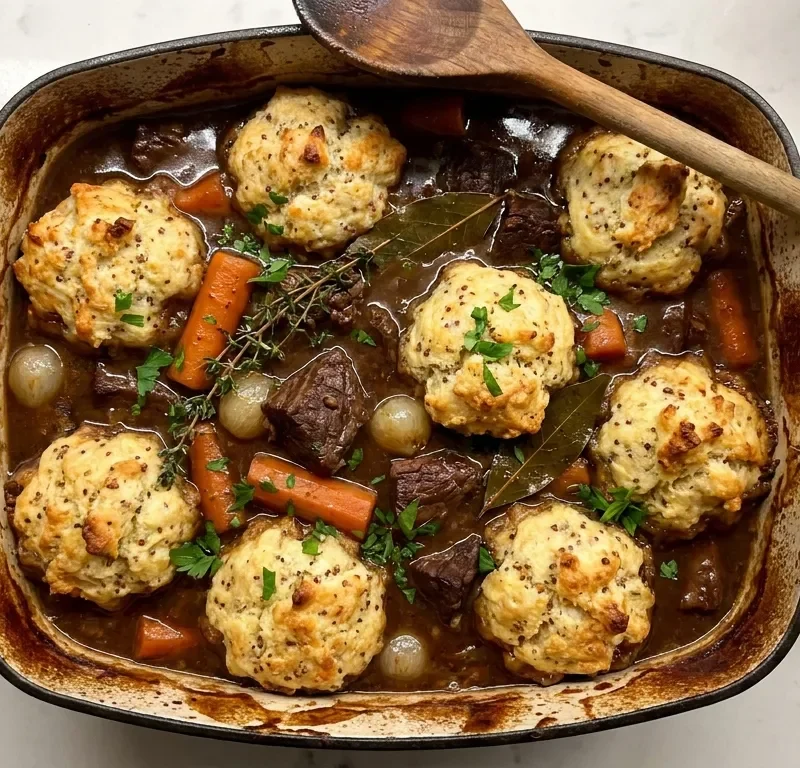
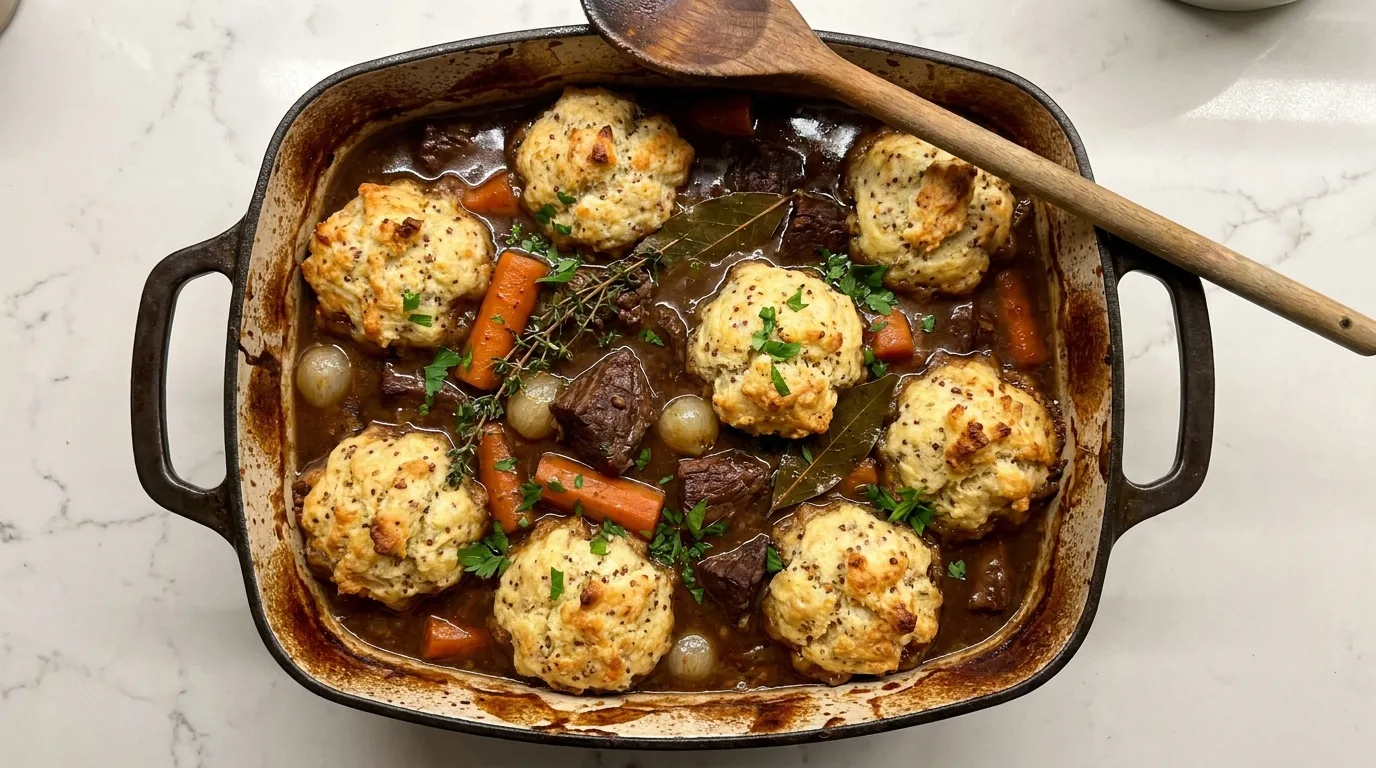
Gordon Ramsay’s beef stew and dumplings is 700g of braising beef slow-cooked in ale with pearl onions, carrots, and thyme, then topped with wholegrain mustard suet dumplings for the last 20 minutes. Serves 4, ready in about 3 hours.
In his Ultimate Home Cooking cookbook he calls this “British cooking at its best” and says it’s “the sort of recipe everyone should have in their repertoire.” In the YouTube video he cooks it with his daughter Tilly, who asks if stews are easy to make. His answer: “very easy, providing at the beginning you give it a little bit of love.”
That love is the browning. He dusts the beef in seasoned flour before it hits the hot oil, which does three things at once: builds a crust, adds flavour, and thickens the gravy as it cooks. In the video he explains “the flour helps to brown the beef, and seasoned flour will also add flavour and thicken the stew.” Skip this step and you end up with grey meat in thin liquid.
Cooked this recipe? Send a photo or tell me what you changed at fans@gordonramsayrecipes.uk and I’ll share your experience live on this page.
Gordon Ramsay’s Beef Stew with Mustard Suet Dumplings
Course: DinnersCuisine: BritishDifficulty: Easy4
20
minutes2
minutes580
kcal3 hr 10 min
From Ramsay’s Ultimate Home Cooking. Braising beef slow-cooked in ale at 150°C for 2½ hours, then topped with wholegrain mustard dumplings that puff up golden in 20 minutes.
Ingredients
- For the stew:
700g braising beef, cut into chunks
2 tbsp plain flour, for dusting
Olive oil, for frying
2 carrots, peeled and cut into thick slices
150g pearl onions or baby shallots, peeled and trimmed
4 garlic cloves, bashed
4 thyme sprigs
3 bay leaves
500ml beer or ale
2-3 tsp tomato purée
300ml beef or chicken stock
Sea salt and freshly ground black pepper
- For the dumplings:
125g self-raising flour, plus extra for dusting
75g suet
1 tbsp wholegrain mustard
Directions
- Season and dust the beef: Preheat the oven to 150°C (300°F/Gas 2). Season the beef chunks with salt and pepper, then dust in the plain flour and toss to coat.
- Brown the beef: Place a large hob-proof casserole dish over a medium heat and add a dash of oil. When hot, brown the beef in batches until coloured on all sides. Remove and set aside.
- Cook the vegetables: Add the carrots, pearl onions, garlic, thyme, and bay leaves to the same dish. Stir over a medium heat for 2 to 3 minutes.
- Deglaze and braise: Pour in the beer to deglaze the pan, scraping up the bits from the bottom. Boil for 2 to 3 minutes, then stir in the tomato purée. Add the stock and bring to a simmer. Return the beef, mix well, then cover with the lid placed very slightly askew to allow some steam to escape. Transfer to the oven for 2½ hours until the beef is really tender.
- Make the dumplings: Place the self-raising flour and suet in a bowl with a pinch of salt and pepper. Add the mustard and mix to combine. Add a touch of warm water and bring together to form a thick dough. With floured hands, roll into 8 to 12 balls.
- Cook the dumplings: Remove the stew from the oven and increase to 180°C (350°F/Gas 4). Place the dumplings in the stew. For fluffy dumplings, replace the lid. For a crisp top, leave uncovered. Cook for a further 20 to 25 minutes until the dumplings have doubled in size.
FAQs
Can you use red wine instead of ale?
Ramsay says in the cookbook “you could equally use red wine instead of beer if you like,” so yes. Red wine gives a darker, richer gravy with more acidity, while ale makes it rounder and slightly sweeter. Both work because the alcohol evaporates during the 2½ hours in the oven, leaving behind concentrated flavour.
If you go with red wine, use something you’d actually drink because cheap cooking wine tastes sharp once it reduces. A full-bodied Merlot or Côtes du Rhône works well. His red wine jus reduces a whole bottle down to a sauce, so you can see how seriously he takes wine selection even when it’s just a braising liquid.
What’s the difference between this and his steak and ale pie?
The filling is almost identical: braised beef in ale with onions, carrots, and thyme. The pie wraps it in puff pastry while this version tops it with mustard dumplings instead. If you’ve made one, you can make the other because the base recipe is the same.
The stew is quicker because you skip the pastry rolling, egg wash, and blind baking. His steak and ale pie needs the filling cooled completely before wrapping, which adds hours to the total time. The stew goes straight from oven to table with the dumplings dropped in at the end.
Why does Ramsay leave the lid slightly askew?
He tells Tilly in the video: “we always put the lid with a little bit, just a little bit, so it can breathe, not make the stew all watery.” The gap lets steam escape slowly, so the gravy reduces and thickens as the beef cooks. A fully sealed lid traps all the moisture and leaves you with thin, watery liquid.
The flour on the beef helps too because it dissolves into the gravy and acts as a natural thickener. Between the askew lid reducing the liquid and the flour thickening what’s left, you end up with a glossy, rich gravy without needing cornflour or any last-minute fixes. His dauphinoise potatoes on the side would soak up every drop.
Should you use self-raising or plain flour for the dumplings?
In the video Ramsay is specific about this: “I’m using self-raising flour for a fluffy result, but if you like your dumplings hard, use plain flour.” He also calls suet “the dumpling essential” because “that makes the dumplings nice and moist.”
The wholegrain mustard adds a gentle heat that works with the ale gravy without overpowering it. Roll them with floured hands so they don’t stick, and don’t make them too big because they double in size in the oven. If you want crispy tops, leave the lid off for the last 20 minutes. If you want them soft all the way through, keep it on. His garlic bread on the side is good for tearing apart and dragging through the gravy if you skip the dumplings.
Does beef stew get better the next day?
In the video, after Tilly asks if they can reheat it for the rest of the family, Ramsay says “even 2 or 3 days later, tasty.” The braised beef absorbs more of the ale gravy overnight, so the flavour deepens every time you reheat it. The gravy also thickens as it cools because of the flour and the collagen from the beef.
Make the dumplings fresh though, because they go dense and stodgy once they cool. Reheat the stew on the hob until bubbling, then drop fresh dumplings in and give them 20 minutes. His beef curry stores the same way: braised beef just gets better with time while the fresh elements need adding at the last minute.