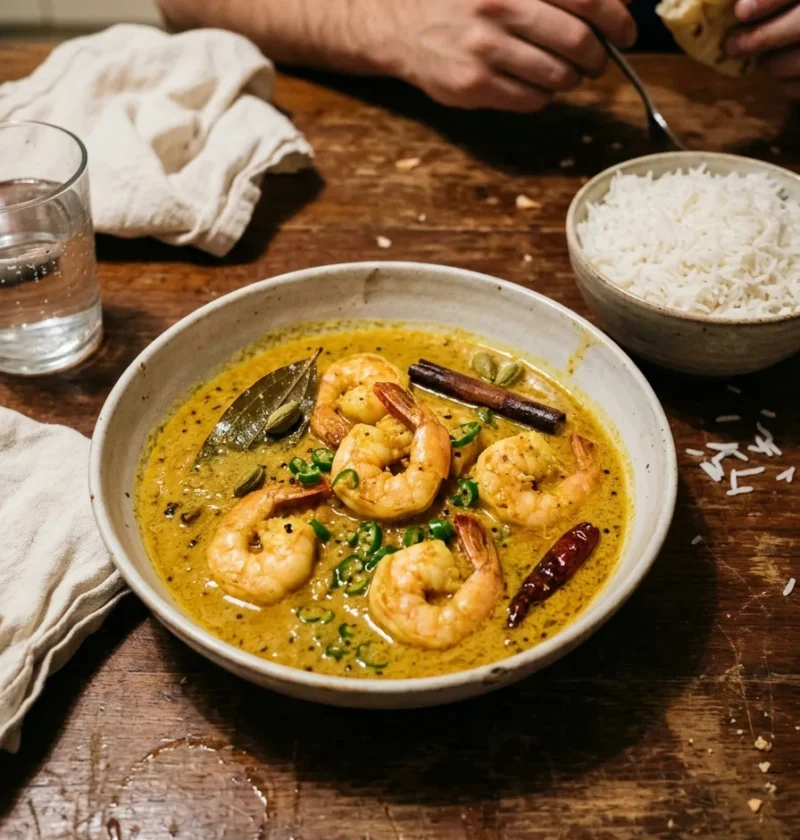
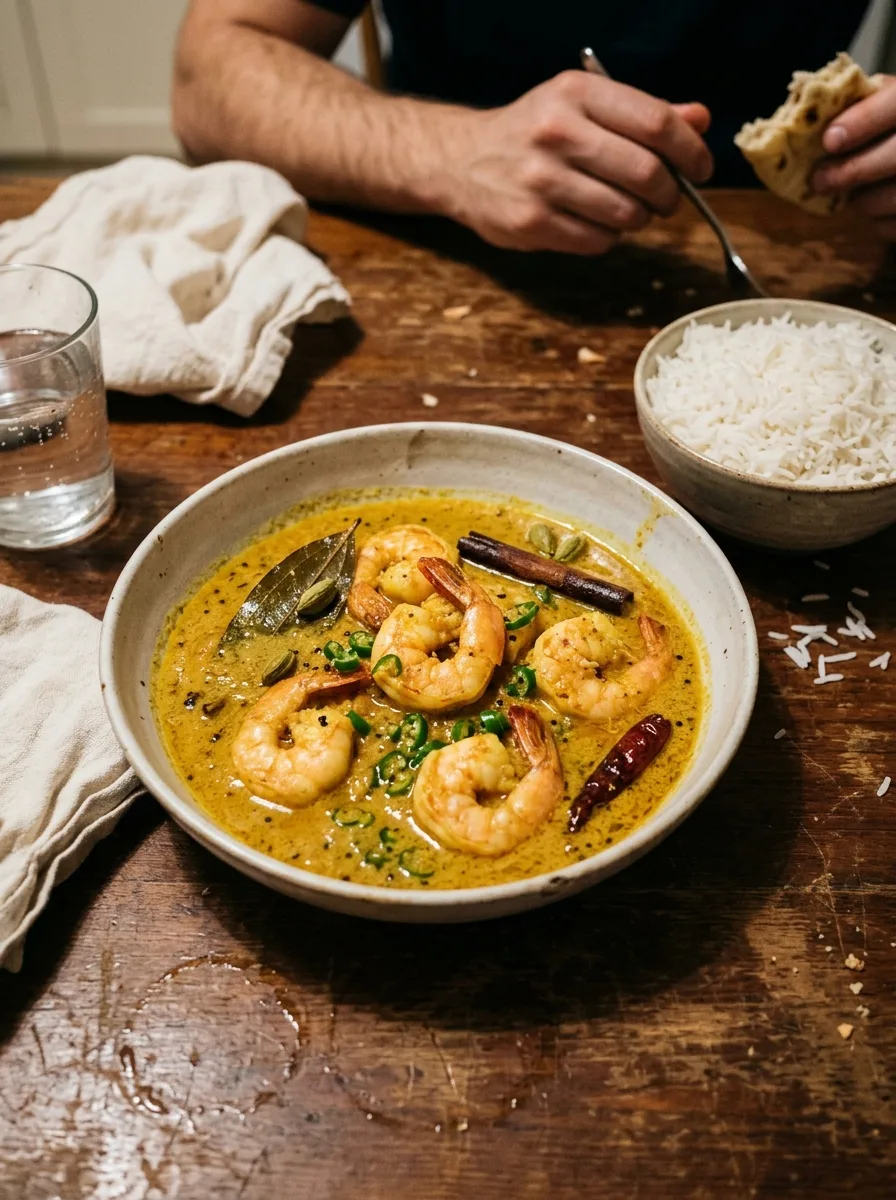
Gordon Ramsay’s prawn curry is a Bengali coconut curry where the prawns marinate in turmeric and salt, then simmer in a spiced coconut sauce for just 2-3 minutes. Ready in about 25 minutes.
The recipe is from his Great Escape book, where he calls it a “classic dish” and explains that “marinating seafood or meat with a combination of salt and turmeric is characteristic of Bengali cooking.” He picked this technique up during filming in India, and it is the one step that separates this from every other coconut prawn curry.
The wet paste of onion, ginger, garlic and chillies cooks for 12-15 minutes on low heat before anything else goes in. That long, slow fry is what builds the base flavour, so the coconut milk has something to hold onto rather than tasting thin and watery.
Cooked this recipe? Send a photo or tell me what you changed at fans@gordonramsayrecipes.uk and I’ll share your experience live on this page.
Gordon Ramsay Prawn Curry
Course: DinnerCuisine: IndianDifficulty: Easy4
servings10
minutes15
minutes310
kcal25
minutesBengali prawn curry from Gordon Ramsay’s Great Escape. Prawns marinated in turmeric and salt, simmered in a coconut sauce built on a slow-cooked onion paste with mustard seeds, cardamom, cinnamon and green chillies. Source: Gordon’s Great Escape (Quadrille, 2010), page 65.
Ingredients
400g (14 oz) large raw prawns, shell on
½ tsp ground turmeric
Pinch of sea salt
2 onions, peeled and roughly chopped
2cm (1-inch) piece fresh ginger, peeled and roughly chopped
3 garlic cloves, peeled and roughly chopped
2 green chillies, deseeded and chopped
2 tbsp vegetable oil
2 tsp mustard seeds
½ tsp hot chilli powder
2 whole cloves
4 green cardamom pods
1 cinnamon stick
2 bay leaves
1 whole dried chilli
400ml tin coconut milk
Directions
- Marinate the prawns: Shell and devein the prawns, leaving tails on if you like. Toss with the turmeric and a pinch of salt. Leave for 5-10 minutes.
- Make the paste: Blend the onions, ginger, garlic and chillies with 2 tablespoons of water in a food processor until you have a fine wet paste.
- Fry the spices: Heat the oil in a large pan. Add the mustard seeds, chilli powder, cloves, cardamom, cinnamon, bay leaves and dried chilli. Fry for 1-2 minutes until the spices are fragrant and the mustard seeds begin to pop.
- Cook the paste: Add the wet paste and fry over a low heat for 12-15 minutes, stirring frequently so it does not catch.
- Add coconut milk: Pour in the coconut milk and bring to a gentle simmer over a low heat.
- Cook the prawns: Add the marinated prawns and simmer for 2-3 minutes until they turn opaque and are just cooked through. Serve immediately with warm naan or steamed basmati rice.
FAQs
Why does Ramsay marinate the prawns in turmeric first?
It is not about adding turmeric flavour to the prawns. The salt draws out moisture and the turmeric removes that raw fishy smell that cheaper prawns sometimes have. Even five minutes makes a noticeable difference, and the prawns pick up a golden colour before they hit the pan.
I skipped this step once because I was in a rush and the curry tasted fine, but the prawns themselves had that slight ocean smell that puts some people off. Now I always do it.
What happens if you cook the prawns too long?
They shrink, go rubbery and lose their snap. Ramsay simmers them for 2-3 minutes only, which is why they go in last. The residual heat of the sauce keeps cooking them after you take the pan off the hob, so pull them a touch early if anything.
This is the same principle he uses in his paella, where the prawns go in during the final few minutes so they do not overcook while the rice finishes.
Can you use frozen prawns instead of fresh?
Yes, though Ramsay says “very fresh prawns are essential for this recipe.” Frozen king prawns work well if you defrost them properly: overnight in the fridge on a plate lined with kitchen paper, never in warm water. Pat them completely dry before marinating or they will steam rather than cook.
Why does the paste need 12-15 minutes on low heat?
That slow fry is where all the depth comes from. Raw onion paste tastes sharp and harsh. After 12-15 minutes it turns golden, the water cooks out, and the natural sugars caramelise. If you rush it to five minutes, the coconut milk has nothing rich to cling to and the whole curry tastes flat.
Ramsay stirs frequently because the paste catches easily at low heat. A heavy-based pan helps here.
What do you serve this with?
Ramsay says “warm Indian breads or rice.” I usually go with basmati because the curry is rich enough on its own, though naan is brilliant for scooping up the last of the coconut sauce.
For a starter before this, his prawn salad with spicy yoghurt dressing works well because it is light and sharp, which contrasts the creamy curry.
Is this the same as a Thai prawn curry?
Completely different. This is Bengali, so the spice profile is mustard seeds, cardamom, cinnamon and cloves rather than lemongrass, galangal and kaffir lime. The coconut milk is added plain, not cooked down with curry paste first.
If you want prawns without the spice at all, the Marie Rose sauce is the classic British way to serve them cold with a cocktail.