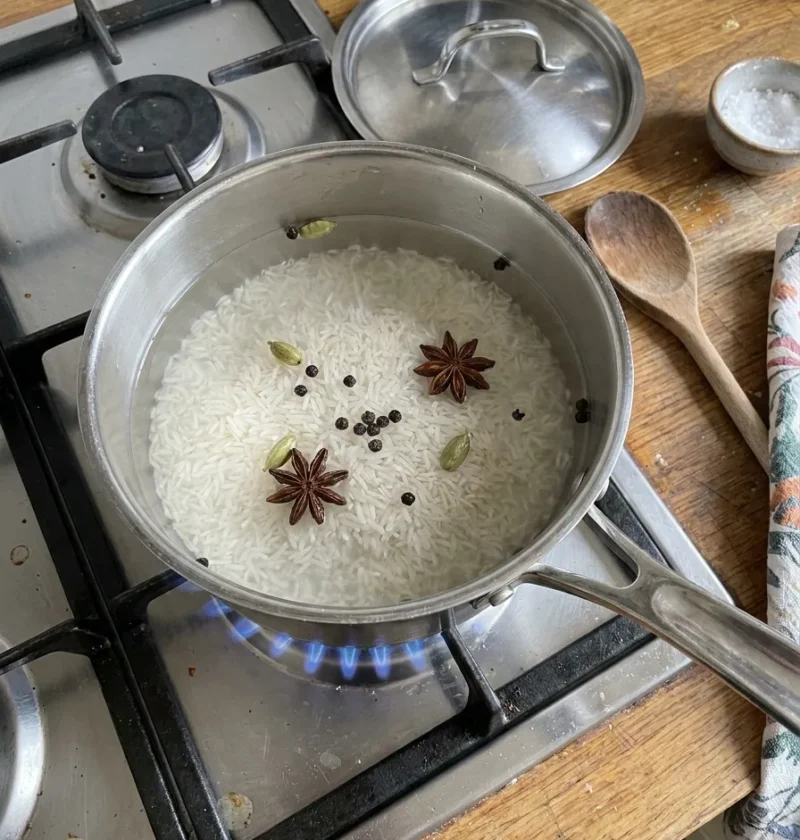
Gordon Ramsay’s rice method is the same across nearly every cookbook he’s written. Wash the basmati, add cardamom and star anise, use a 1:1.5 water ratio, and simmer for 8-10 minutes with the lid on. He calls basmati “the king of all rices.”
This technique appears in the Ultimate Cookery Course, Gordon Ramsay’s Secrets, and his YouTube video where he says “that’s the secret behind cooking great rice: allow it to steam as it’s cooking. Do not lift that lid up.”
What separates his method from packet instructions is the whole spices. Piercing cardamom pods and adding star anise turns plain rice into something fragrant. Seasoning before cooking, not after, means the salt gets absorbed into each grain instead of sitting on the surface.
Ramsay’s Method Step by Step
Wash the rice until the water runs clear
In the UCC he says to “always wash rice in a sieve under a running tap to rinse away the starch.” His Secrets cookbook is more specific: “swish the rice grains with your fingers, repeat twice more until the water runs clear.”
Surface starch is what makes rice sticky and clumpy. Three or four washes is usually enough.
Season and add spices before cooking
Ramsay seasons his rice with salt, pepper, pierced cardamom pods, and star anise before any heat goes on. He says it’s “a lot easier to season the rice now than it is once it’s cooked, you start to break it up when you season once it’s cooked.”
The spices float to the top during cooking, so they’re easy to pick out before serving.
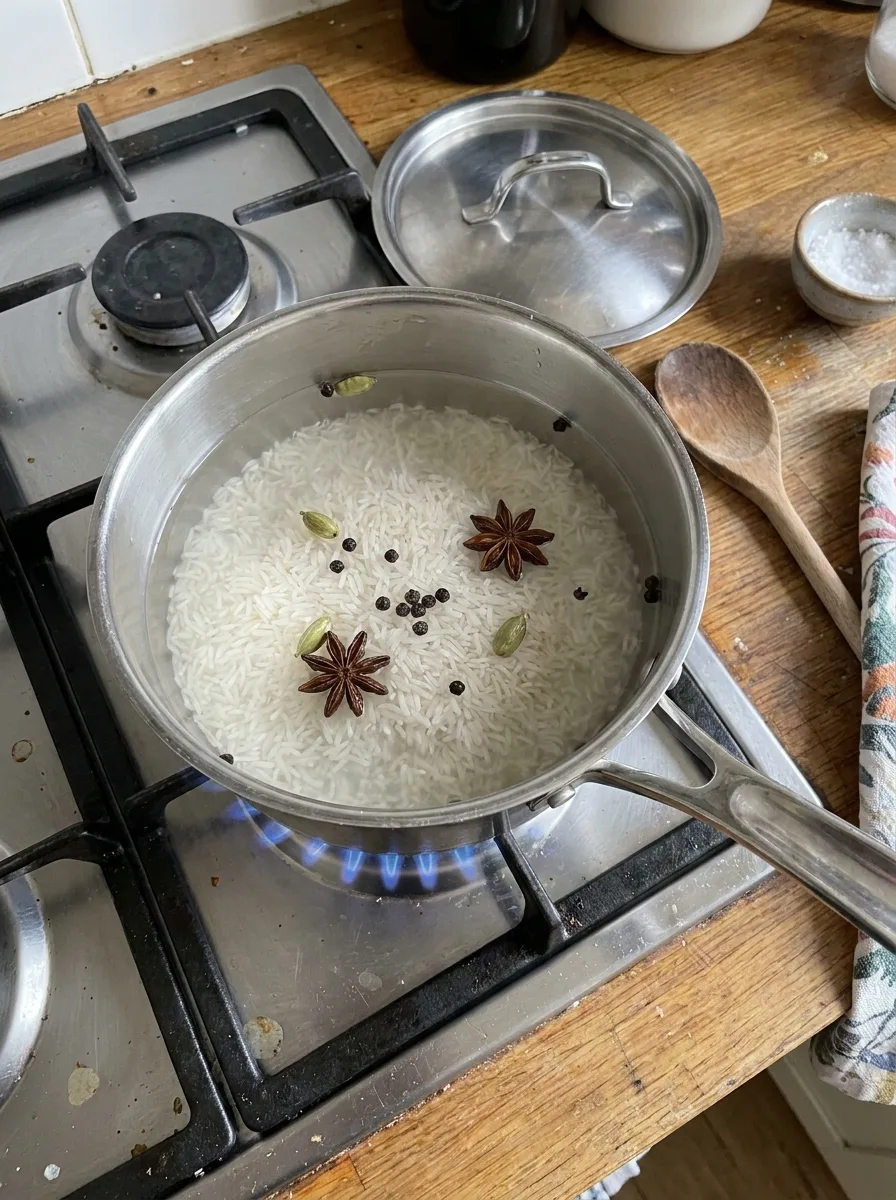
Cold water, 1:1.5 ratio, lid on
For basmati: 400g rice to 600ml cold water. Always start cold. Lid on, bring to the boil as fast as possible, then turn the heat right down and simmer for 8-10 minutes.
“Do not lift that lid up.” The steam does the work. When you open the lid, you lose steam and the rice cooks unevenly.
Rest and fork through
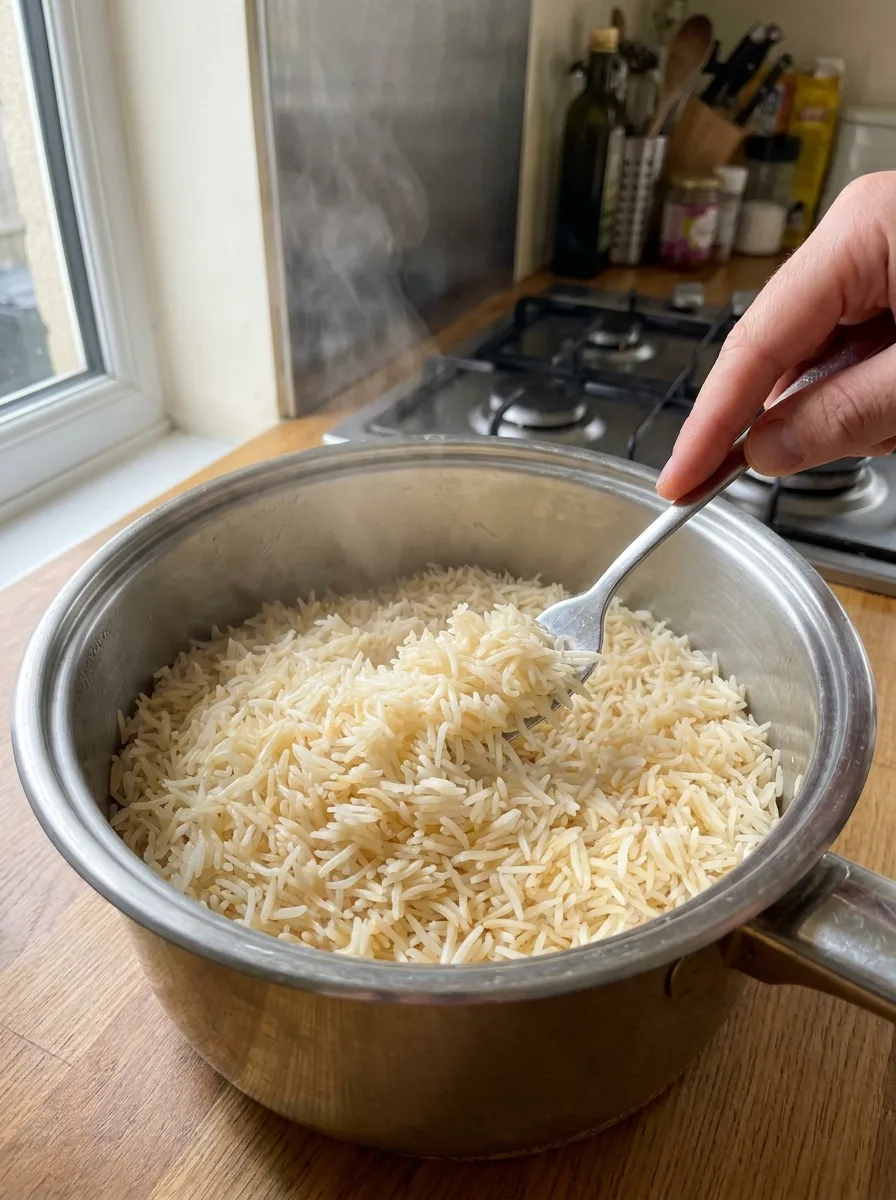
After 8-10 minutes, all the water should be absorbed and the rice doubled in size. Remove the cardamom and star anise, then “take your fork, fluff it through” to separate every grain.
The resting step matters. The residual heat finishes the last bit of cooking without any risk of burning the bottom.
FAQs
Does the ratio change for different rice types?
Yes. Basmati is 1:1.5 but jasmine rice needs 1:2. His Great Escape cookbook uses 400g jasmine to 800ml water. Brown basmati needs even more liquid and 30-35 minutes of cooking.
Sticky rice is completely different. He soaks it overnight before cooking.
Does Ramsay ever skip the wash?
Only for rice pudding. He says “don’t wash it beforehand because the starch helps thicken the rice pudding in the oven.”
For every savoury dish, he washes without exception.
How does he cook rice for stir-frying?
He doesn’t stir-fry freshly cooked rice. For his fragrant fried rice and Thai green curry rice he uses day-old rice from the fridge.
“It is essential to use cooked rice that has spent at least a few hours in the fridge, as this helps to dry it. Otherwise you will end up with a mushy mess.”
What about cooking rice in stock?
This is what turns plain rice into a pilau. His saffron pilau rice swaps water for chicken stock, adds ghee and whole spices.
The spicy sausage rice goes further by searing the rice in sausage fat first. He calls that technique “blasting the rice” because the dry grains absorb all the fat and spice before any liquid goes in.
Can you cook rice in the oven?
Ramsay has an oven method in his Secrets cookbook. Rice goes into a cast-iron casserole with stock and a cartouche (parchment circle with a steam vent), then bakes at 180°C (350°F) for 25 minutes.
He says “a round cast-iron casserole is the ideal cooking pot; a roasting tin is not suitable.” The oven gives more even heat than the hob, so there’s no risk of the bottom burning.