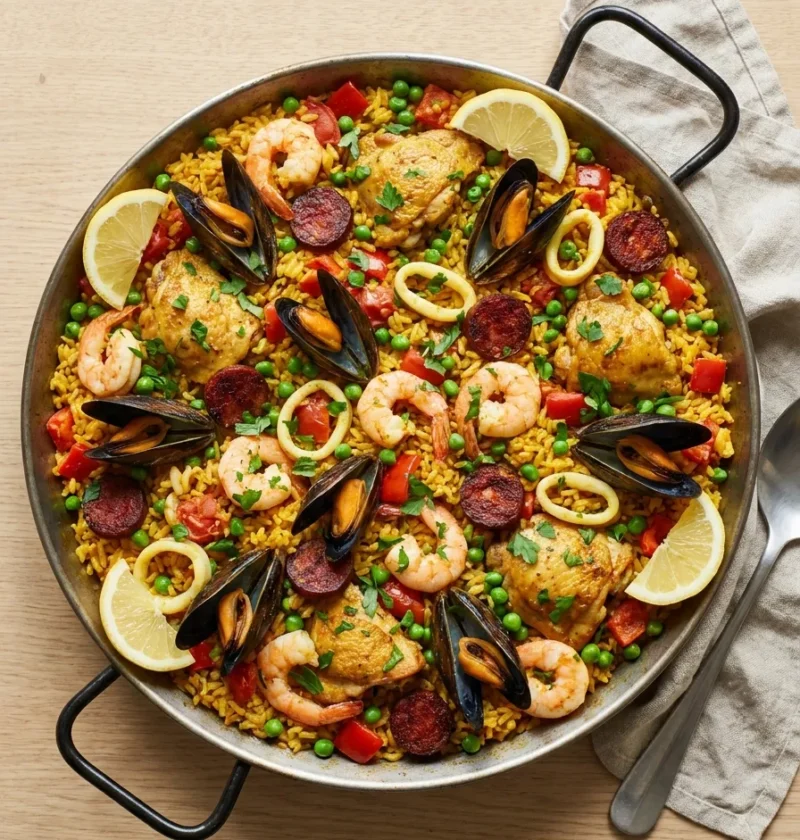
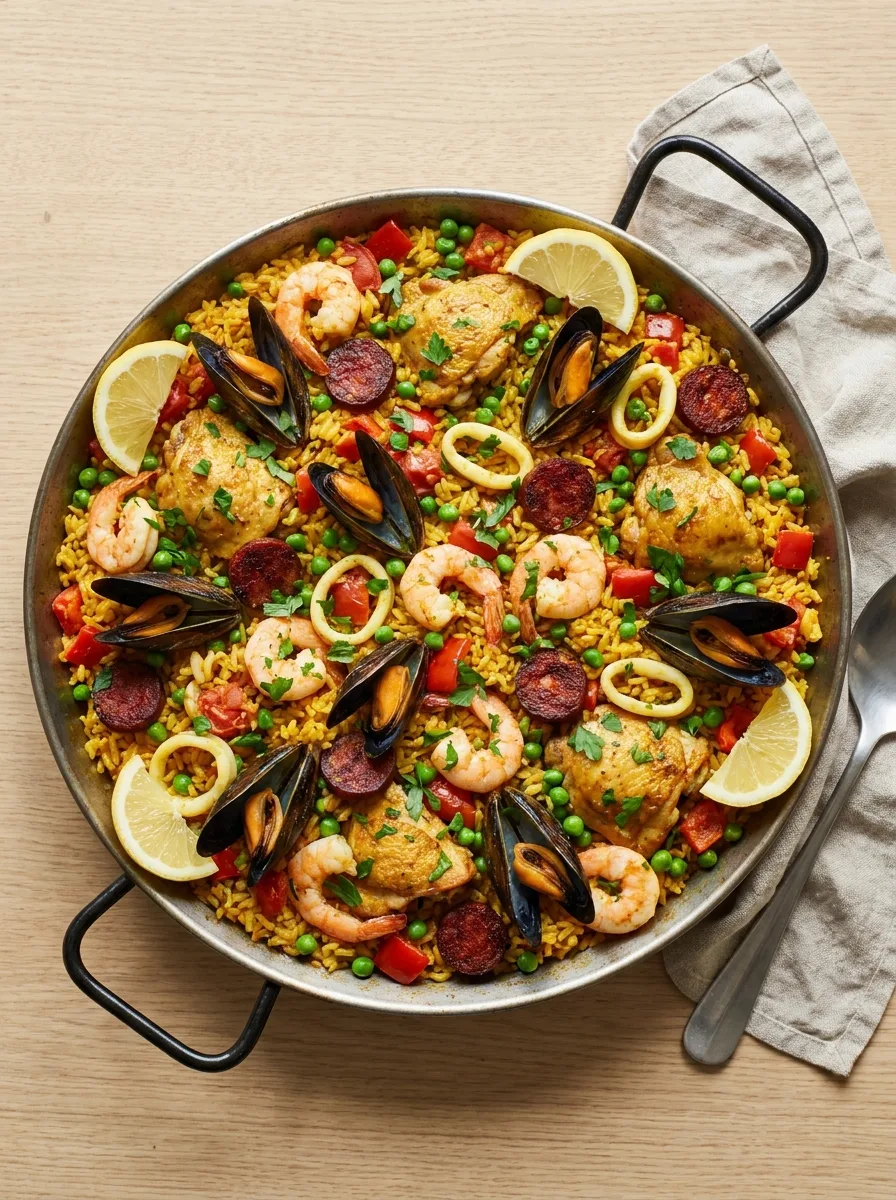
Gordon Ramsay’s paella is a one-pan feast of chicken, chorizo, prawns, mussels, and squid cooked with saffron-infused paella rice. It serves 8-10 and takes about 45 minutes from pan to table.
This recipe comes from the Ultimate Cookery Course and the F Word episode where Ramsay makes it as a Sunday lunch alternative. He says “adding sherry gives it a deeper flavour” and “the saffron gives it an amazing colour and gives a really nice flavour.”
The technique that makes this work is adding the seafood in stages. Mussels and prawns go in first because they need 5 minutes, then squid goes in last because “it becomes rubbery if cooked for too long.” Two minutes is all squid needs.
Cooked this recipe? Send a photo or tell me what you changed at fans@gordonramsayrecipes.uk and I’ll share your experience live on this page.
Gordon Ramsay Paella
Course: DinnerCuisine: SpanishDifficulty: Medium8
servings15
minutes30
minutes540
kcal45
minutesOne-pan paella from the Ultimate Cookery Course with chicken, chorizo, and mixed seafood on saffron rice. Ramsay rests it covered with foil for 10 minutes so the flavours meld together. Serves 8-10, roughly 540 kcal per serving.
Ingredients
Olive oil, for frying
1 large onion, peeled and chopped
1 large red pepper, deseeded and diced
3-4 garlic cloves, peeled and thinly sliced
200g cooking chorizo, skinned and sliced
1 tsp smoked paprika
400g (14 oz) boneless, skinless chicken thighs
500g (1 lb 2 oz) paella rice, such as calasparra or bomba
200ml (7 fl oz) dry white wine
1 litre (1¾ pints) hot chicken stock
Generous pinch of saffron strands
1 x 400g tin chopped tomatoes
24 mussels, cleaned
300g (10 oz) raw king prawns, whole or heads removed
300g (10 oz) squid, cleaned and sliced into thin rings
400g (14 oz) peas, thawed if frozen
Sea salt and freshly ground black pepper
- To serve:
Handful of chopped flat leaf parsley
2 lemons, cut into wedges
Directions
- Sauté the base: Heat a little olive oil in a large paella pan or frying pan. Add the onion and red pepper and sauté for 2-3 minutes to soften. Add the garlic and sauté for 2 more minutes, then add the chorizo and paprika.
- Seal the chicken: Cut the chicken into bite-sized pieces and season with salt and pepper. Add to the pan and fry for a few minutes over a high heat, stirring frequently, to lightly seal the meat.
- Toast the rice and add liquid: Tip in the rice and stir for 2-3 minutes. Add the wine and cook for about 5 minutes to evaporate. Add the hot stock, then stir in the saffron and tomatoes. Season with salt and pepper and stir well.
- Add the seafood in stages: Simmer for 10 minutes, then gently push the mussels and prawns into the top of the rice. Cook over a medium heat for 5 minutes until the prawns are opaque and the mussels have opened. Discard any mussels that haven’t opened. Stir in the squid and peas and cook for a further 2-3 minutes.
- Rest and serve: Remove from the heat, cover tightly with foil, and rest for 10 minutes. Garnish with parsley and lemon wedges and serve straight from the pan.
FAQs
Why does Ramsay add the seafood in stages?
Each type of seafood cooks at a different speed. Mussels and prawns need about 5 minutes, so they go in first. Squid only needs 2-3 minutes.
If you add everything at once, the squid turns rubbery while the prawns are still raw. Ramsay says squid “becomes rubbery if cooked for too long” and to watch for it turning opaque. This staged approach is the same principle he uses in his fish curry where delicate fish goes in at the very end.
Can you make a seafood-only version?
Yes. Ramsay has a Christmas paella video that drops the chicken and chorizo entirely. He uses squid, monkfish, mussels, and prawns with saffron rice, white wine, and smoked paprika.
He calls it a “festive feast of a main course” and says “the secret is the lemon seasons the fish across the paella, more importantly, brings everything to life.” Skip the chorizo, double the seafood, and you’ve got a lighter version that works well in summer too.
Is paella good for Christmas dinner?
Ramsay clearly thinks so. He specifically made his Christmas paella as an alternative to the traditional roast. It’s actually easier to manage for a crowd because everything cooks in one pan and you serve it straight from the middle of the table.
His Sunday Lunch cookbook includes paella as the centrepiece of a full entertaining menu alongside roasted tomato salad with anchovies and poached apricots for dessert.
Can you use long-grain rice instead of paella rice?
In the F Word episode Ramsay says “if you can’t find paella rice then choose the long grain.” So yes, it works. But the texture is different.
Paella rice (bomba or calasparra) absorbs more liquid without going soft, which is how you get separate grains with flavour cooked into each one. Long-grain rice is drier and doesn’t absorb stock the same way. If you swap, reduce the stock by about 200ml and check earlier. The approach is the opposite of Ramsay’s rice cooking method where basmati uses a 1:1.5 ratio.
Why does Ramsay rest the paella under foil?
The 10-minute rest under foil lets the rice finish absorbing the last of the stock and the flavours from the seafood spread through the dish. Without it, the bottom layer is overcooked while the top is still slightly wet.
It’s the same resting principle as his saffron pilau rice where he turns off the heat and leaves the lid on. The carry-over heat does the final work.
Does paella store well?
The rice reheats fine the next day, but the seafood suffers. Mussels go tough, prawns lose their bounce, and squid turns chewy. If you know you’ll have leftovers, make the rice and chicken-chorizo base only and save the seafood to add fresh when you reheat.
Cool any leftovers within an hour and refrigerate. Reheat in a hot pan with a splash of stock, not the microwave.