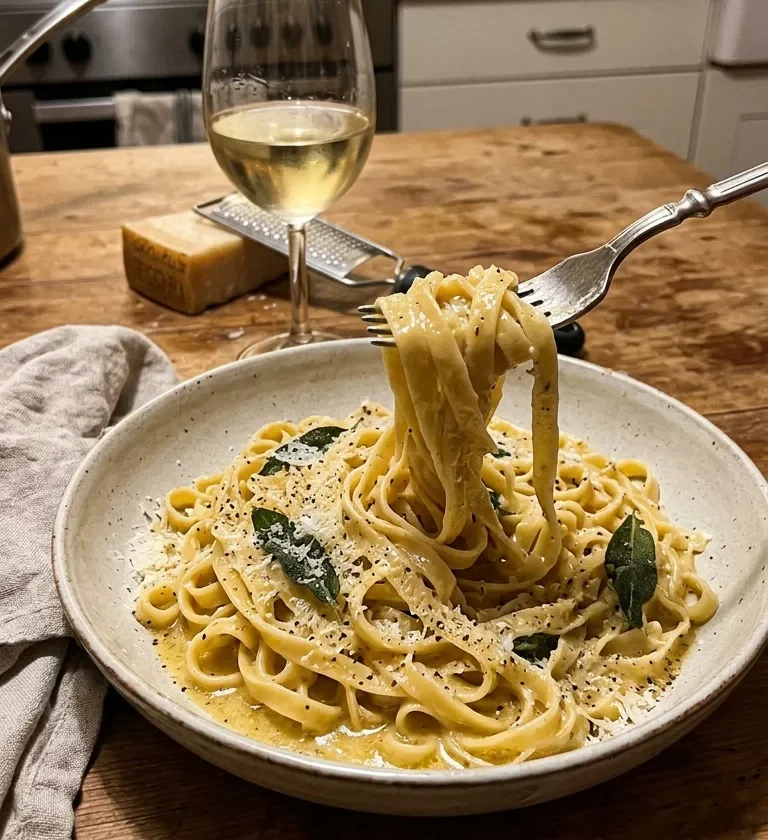
Gordon Ramsay’s alfredo sauce is butter browned until nutty and sweet, garlic stirred in off the heat, then tossed with Parmesan and a ladleful of starchy pasta water until the cheese melts into a silky coating. No cream, no flour, no shortcuts. The whole sauce takes 5 minutes.
The technique comes from his farfalle recipe in Quick and Delicious, where he says “browning the butter completely transforms the flavour into something much richer and more interesting. Hold your nerve during the browning, and don’t take the pan off the heat until you smell the tell-tale aroma: it should be sweet and nutty with rich caramel notes.” That browned butter is what makes this alfredo taste like a restaurant’s, not a jar.
The other half of the sauce is the pasta water. Ramsay uses this trick across multiple books: “It’s important to add just enough water to cover the pasta so that the water will become as starchy as possible.” The starch emulsifies with the butter and cheese to create the silky texture. Without it, you get greasy butter and clumpy Parmesan.
Cooked this recipe? Send a photo or tell me what you changed at fans@gordonramsayrecipes.uk and I’ll share your experience live on this page.
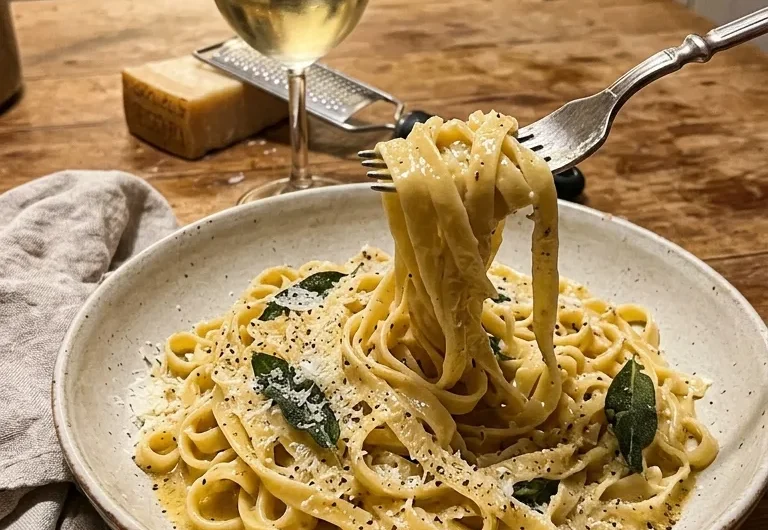
Gordon Ramsay Alfredo Sauce
Course: DinnerCuisine: ItalianDifficulty: Easy4
servings2
minutes5
minutes380
kcal7
minutesBuilt from the butter, Parmesan and pasta water technique in Gordon Ramsay’s Quick and Delicious. Brown butter with garlic and sage, tossed with freshly grated Parmesan and starchy pasta water for a silky coating. No cream, no flour, ready in 5 minutes.
Ingredients
200g butter
3 garlic cloves, finely chopped
Large handful of sage leaves (optional)
80g Parmesan cheese, freshly grated, plus extra to serve
1 ladleful of reserved starchy pasta water
Sea salt and freshly ground black pepper
Directions
- Brown the butter: Place the butter in a sauté pan over a high heat. Let it foam, then watch as it turns from golden to brown. Don’t take it off the heat until you smell the sweet, nutty aroma. This takes about 3 minutes.
- Add the garlic: Remove the pan from the heat. Stir in the garlic and sage leaves if using. The residual heat cooks the garlic without burning it.
- Add the pasta water: Pour in a ladleful of the reserved starchy pasta water. Return the pan to the heat and stir for 1 to 2 minutes.
- Finish with Parmesan: Add the cooked pasta directly to the pan with the Parmesan. Toss until the cheese melts and the sauce coats every strand. Add a little more pasta water if it needs loosening. Season with black pepper.
- Serve immediately: Alfredo sauce thickens as it cools. Get it to the bowl while it’s still glossy.
Notes
- Technique from Gordon Ramsay’s Quick and Delicious. Brown butter is the key to restaurant-quality alfredo. Always use freshly grated Parmesan and reserve the starchy pasta water.
FAQs
Why does Ramsay brown the butter instead of just melting it?
He says it “completely transforms the flavour into something much richer and more interesting.” Regular melted butter tastes flat. Browned butter has toasted milk solids that give it a nutty, caramel depth. The French call it beurre noisette and use it the same way.
Hold your nerve and don’t pull the pan off too early. The colour should be a deep golden brown, not light yellow. If you see black specks and smell burning, you’ve gone too far.
Does Ramsay add cream to his alfredo?
He has two approaches across his books. The version here from Quick and Delicious uses no cream at all, just butter, Parmesan and pasta water, which is closer to the original Italian alfredo. In another pasta recipe he uses heavy cream reduced with garlic and Parmesan, which is the American style.
Both work. The butter-only version is lighter and lets the Parmesan do the talking. The cream version is richer and more forgiving because the cream stops the sauce from splitting as easily.
Why is the pasta water so important?
Ramsay’s tip from Quick and Delicious: “Add just enough water to cover the pasta so that the water will become as starchy as possible.” That starch is what turns butter and cheese into a sauce instead of a greasy mess. It emulsifies everything together.
His other rule from the Ultimate Cookery Course: “Whenever you make a creamy pasta dish, always stir in a little of the pasta water to make the sauce silky smooth.” And his chef’s tip: “Get into the habit of putting a bowl under the colander so you never pour the starchy cooking water down the plughole.”
What pasta works best with alfredo sauce?
Fettuccine is the classic because the wide, flat noodles hold the sauce. But Ramsay serves this sauce on farfalle in the cookbook, so any pasta with ridges or folds that trap the sauce works. Rigatoni, penne and tagliatelle are all fair game.
Cook the pasta in less water than you think. Ramsay is specific: use just enough to cover. More water means less starch, which means a thinner sauce.
Can you add protein to this sauce?
Seared chicken breasts or thighs sliced and laid on top turns this into a chicken alfredo. Sear the chicken separately and don’t cook it IN the sauce or it dilutes everything.
For a seafood version, sautéed prawns tossed through at the end make a shrimp alfredo. The sweetness of the prawns against the nutty brown butter is a combination worth trying.
How do you stop the sauce going grainy?
Two rules. First, take the pan off the heat before adding the Parmesan. If the cheese hits boiling liquid it seizes up and goes grainy. The residual heat is enough to melt it. Second, use freshly grated Parmesan, not the pre-grated bags. The anti-caking agents in pre-grated cheese stop it melting smoothly.
If it does go grainy, add another splash of pasta water and whisk vigorously off the heat. It usually comes back together.