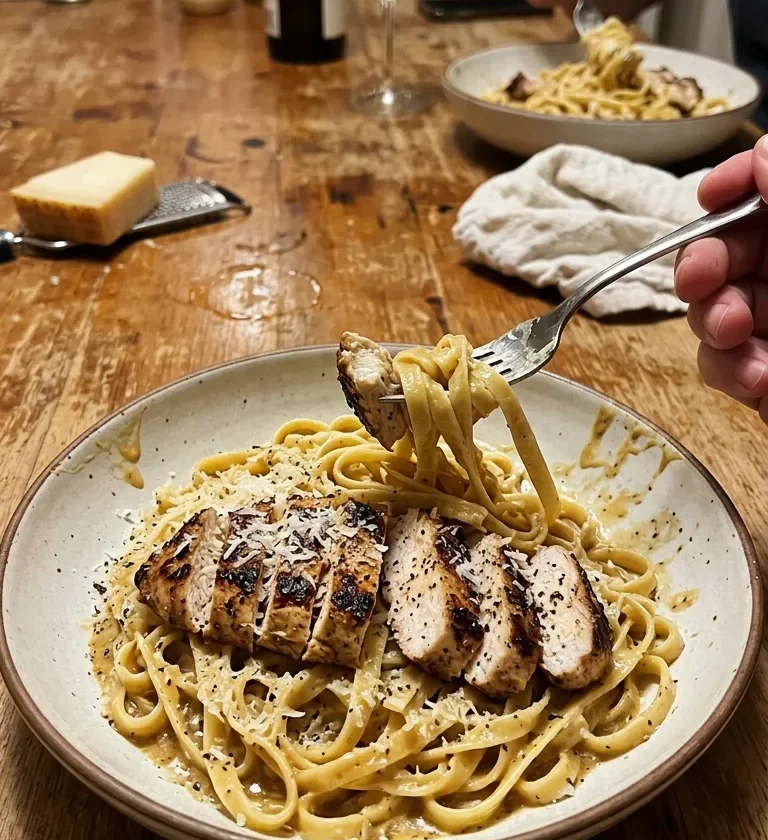
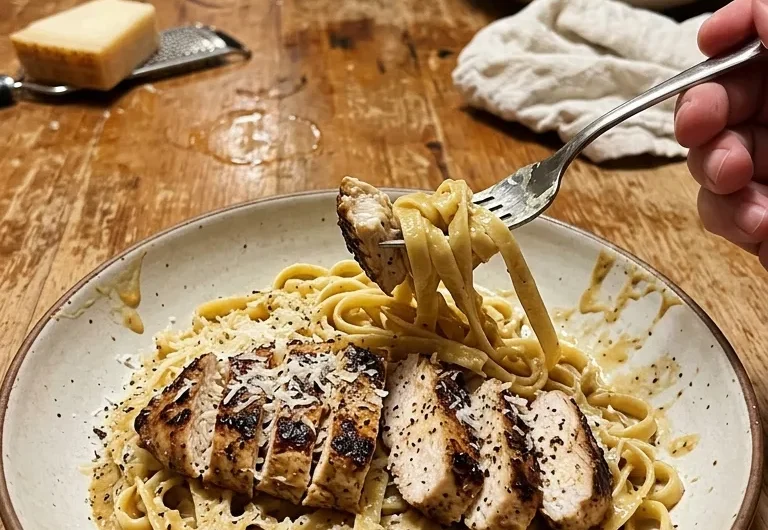
Gordon Ramsay’s chicken alfredo is butterflied chicken breast seared golden on a griddle, sliced and laid over fettuccine tossed in a brown butter, garlic and Parmesan sauce. The same searing technique from his Bread Street Kitchen cookbook, the same sauce base from Quick and Delicious. Together they make a 20-minute dinner that tastes like it took an hour.
Ramsay says in Bread Street Kitchen that “butterflying helps them cook more evenly so there is less chance of the meat drying out.” For alfredo this matters even more, because the chicken sits on top of hot pasta and keeps cooking from the residual heat. A thick breast dries out. A thin seared piece stays juicy.
The sauce is his brown butter and Parmesan method: butter browned until nutty, garlic stirred in off the heat, then tossed with starchy pasta water and Parmesan until it emulsifies into a silky coating. His rule from Quick and Delicious: “Add just enough water to cover the pasta so the water becomes as starchy as possible.”
Cooked this recipe? Send a photo or tell me what you changed at fans@gordonramsayrecipes.uk and I’ll share your experience live on this page.
Gordon Ramsay Chicken Fettuccine Alfredo
Course: DinnerCuisine: ItalianDifficulty: Easy4
servings5
minutes15
minutes580
kcal20
minutesSeared butterflied chicken breast from Bread Street Kitchen over fettuccine in a brown butter alfredo sauce from Quick and Delicious. Two cookbook techniques combined for a 20-minute restaurant-quality pasta that uses no cream and no flour.
Ingredients
- For the Chicken:
4 chicken breasts, butterflied and flattened to 1cm thick
Olive oil
Sea salt and freshly ground black pepper
- For the Alfredo Pasta:
400g fettuccine
200g butter
3 garlic cloves, finely chopped
80g Parmesan cheese, freshly grated, plus extra to serve
Sea salt and freshly ground black pepper
Directions
- Cook the pasta: Bring a pan of salted water to the boil. Use just enough water to cover the fettuccine so it becomes as starchy as possible. Cook until al dente and drain, reserving a mugful of the pasta water.
- Sear the chicken: Butterfly each breast and flatten to 1cm thick between cling film with a rolling pin. Season with salt and pepper, brush with oil. Sear on a hot griddle or frying pan for 2 to 3 minutes on each side until golden. Rest for 2 minutes, then slice into strips.
- Brown the butter: In a large sauté pan, melt the butter over a high heat. Let it foam and turn golden brown until it smells sweet and nutty, about 3 minutes. Remove from the heat and stir in the garlic.
- Build the sauce: Pour in a ladleful of the reserved pasta water. Return to the heat. Add the drained fettuccine and the Parmesan, tossing until the cheese melts and coats every strand. Add more pasta water if needed. Season with black pepper.
- Serve: Divide the pasta between warm bowls. Lay the sliced chicken on top. Finish with extra Parmesan and a twist of pepper.
Notes
- Chicken searing technique from Bread Street Kitchen. Alfredo sauce technique from Quick and Delicious. Brown butter is the key: don’t take the pan off the heat until you smell sweet, nutty caramel notes.
FAQs
Why butterfly the chicken instead of cooking it whole?
Ramsay’s reasoning from Bread Street Kitchen: “Butterflying helps them cook more evenly so there is less chance of the meat drying out. It also means the cooking time is reduced.” A thick breast takes 15 minutes to cook through and dries out on the outside. A butterflied breast takes 5 minutes and stays juicy all the way through.
For alfredo this is especially important because the sliced chicken sits on hot pasta. If the breast is even slightly overcooked before it hits the bowl, it turns chewy by the time you eat it.
Why no cream in this alfredo?
Traditional Italian alfredo never had cream. The original recipe from Rome was just butter, Parmesan and pasta water. Cream is the American addition. Ramsay’s brown butter version in Quick and Delicious follows the Italian approach, where the starchy pasta water emulsifies with the butter and melted cheese to create the silky texture.
If you want the creamier American version, add 150ml of double cream to the butter after browning and simmer for 2 minutes before adding the Parmesan. For the full alfredo sauce method with all of Ramsay’s tips, we have a dedicated page.
What makes brown butter alfredo better than regular?
The toasted milk solids in brown butter give the sauce a nutty, caramel depth that plain melted butter doesn’t have. It’s the difference between a flat one-note sauce and one with layers. Ramsay calls it “something much richer and more interesting.”
The colour matters too. Regular alfredo is pale white. Brown butter alfredo has a golden tint that looks more appetising on the plate.
Can you use a different pasta?
Fettuccine is the classic because the wide, flat noodles hold the buttery sauce. Tagliatelle works just as well. Ramsay uses farfalle in his cookbook version.
Avoid thin pasta like spaghetti or angel hair. The sauce slides off and pools at the bottom of the bowl instead of coating the strands. You want something with surface area.
Can you add prawns instead of chicken?
Yes. Sautéed king prawns tossed through at the end make a shrimp alfredo. Cook them separately in a little butter and garlic for 2 minutes per side until pink and curled, then lay them on top. The sweetness of the prawns against the nutty brown butter is a natural pairing.
Don’t cook the prawns in the sauce itself. They release water which thins the alfredo and makes it watery.
Does this reheat well?
The pasta reheats better than most alfredo because the brown butter doesn’t split as easily as a cream-based sauce. Add a splash of water and reheat gently in a pan, tossing until the sauce loosens.
The chicken is best reheated separately in a hot pan for a minute per side to warm it through without drying it out. Microwaving turns the butterflied breast rubbery.