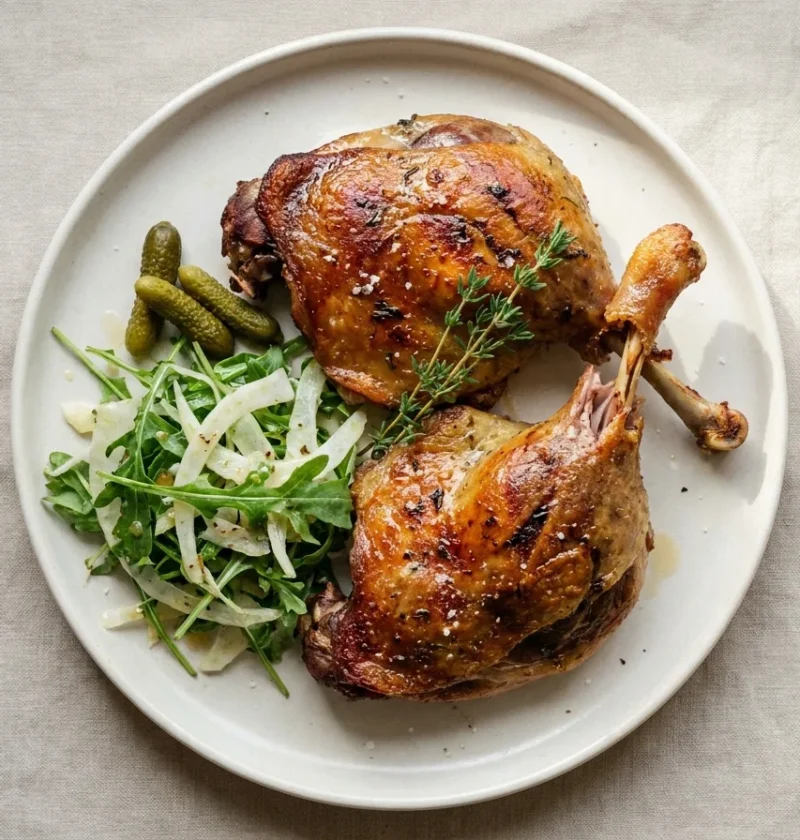
Gordon Ramsay’s duck confit is duck legs cured with thyme and rosemary, then slow-cooked in duck fat until the meat falls off the bone. It needs about two hours in a low oven, then a quick crisp in a hot oven to finish.
The method comes from his Passion for Flavour, where he cooks the legs under a wet greaseproof lid to hold them beneath the fat. He calls confit “an old technique, once used to preserve meat such as duck” in Make It Easy.
The make-or-break is the heat, because confit should never boil hard. Keep the fat barely trembling in a low oven, so the duck poaches gently and turns meltingly tender, never stringy or dry. That gentle fat bath is what makes confit, not frying.
Cooked this recipe? Send a photo or tell me what you changed at fans@gordonramsayrecipes.uk and I’ll share your experience live on this page.
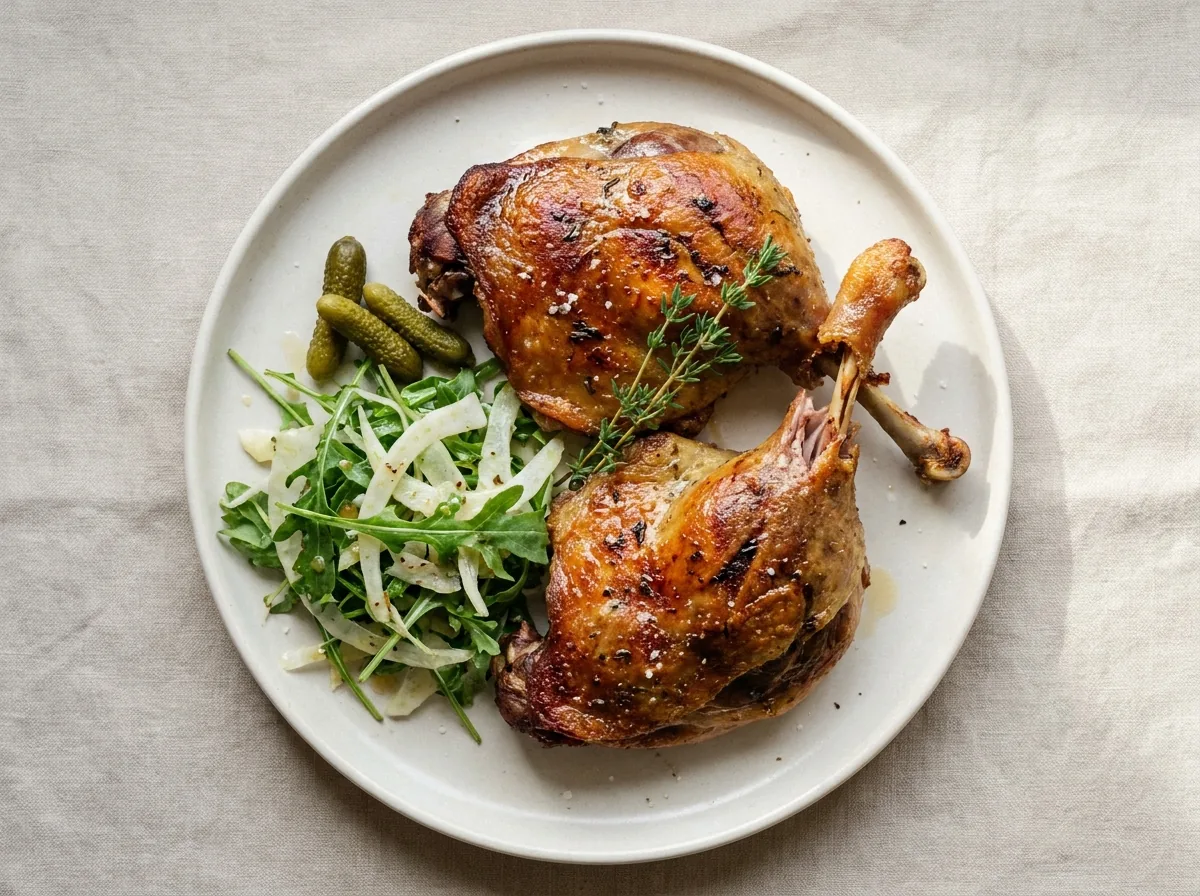
Gordon Ramsay’s Duck Confit
Course: Main CourseCuisine: FrenchDifficulty: Intermediate4
servings15
minutes2
minutes2 hr 30 min
430
kcal5 hr
A proper French duck confit built from Gordon’s own method across Passion for Flavour and Great British Pub Food. The legs cure in herbs, poach slowly under a layer of fat until they collapse, then crisp under high heat. Save the fat afterwards, because it keeps for months.
Ingredients
4 duck legs (preferably Gressingham)
2 tbsp coarse sea salt
2 sprigs thyme
1 sprig rosemary
2 garlic cloves, lightly crushed
Freshly ground black pepper
About 500g goose or duck fat, melted (enough to cover the legs)
Directions
- Cure the legs: Pat the duck legs dry and pull off any stray feathers. Rub all over with the sea salt and pepper, then scatter over the thyme and rosemary leaves with the crushed garlic. Cover and chill for 2 hours so the flavour soaks in.
- Settle in the fat: Preheat the oven to 150C (300F/Gas 2). Brush off most of the salt, then sit the legs snugly skin-side up in a small roasting tin or cast-iron dish. Pour over enough melted goose or duck fat to cover them completely.
- Add the cartouche: Wet a sheet of greaseproof paper, scrunch it, then press it over the surface so the legs stay submerged. This stops them browning or drying out as they cook.
- Slow-cook: Bring the fat to a gentle simmer on the hob, then transfer to the oven. Cook for 2 to 2 and a half hours, until the meat is meltingly tender and pulls easily from the bone. Leave to cool in the fat.
- Crisp the skin: Turn the oven up to 200C (400F/Gas 6). Lift the legs from the fat, pat them dry, then roast skin-side up for 15 to 20 minutes until the skin is deeply crisp.
- Serve: Rest for a couple of minutes, then serve the legs crisp and golden, with the strained fat saved for roasting potatoes.
FAQs
Why season the duck legs before they go in the fat?
This step seasons the meat itself, not just the surface. You scatter the duck legs with salt, thyme and rosemary, then chill them for a couple of hours. Gordon does this, he says in Passion for Flavour, to let the flavours work into the meat before it cooks.
That short rest is what makes confit taste seasoned all the way through. Skip it and go straight into the fat, and the duck can taste flat in the middle. The fat cooks the legs gently, but it cannot season them from the inside, so the salt and herbs have to get in first.
What fat does Gordon use, and can you reuse it?
He uses goose or duck fat, both of which you can buy in tubs from most UK supermarkets near the cooking oils. Either works, though duck fat gives the cleanest duck flavour.
The best part is the fat barely gets used up, so strain it and keep it in the fridge once cool. That duck fat is exactly what makes his roast potatoes crisp, and it keeps for months.
How does Gordon get the skin crispy on duck confit?
Confit cooks the duck gently in fat, so the skin comes out tender rather than crisp. To finish, lift the legs from the fat, pat them dry, then roast them skin-side up in a hot oven until the skin crackles.
This mirrors how he crisps his roasted duck legs in Secrets, where he leaves them undisturbed so the skin can colour properly. Don’t move them around, because fiddling stops the skin from going truly crisp.
What do you serve with duck confit?
The duck is rich, so a sharp, crisp side balances it best. His fennel salad with shaved fennel, pear and a mustard dressing cuts straight through the fat.
For something saucy, a glossy reduction stands up to the meat without fighting it, so his red wine jus is a natural match. Crisp roast potatoes and a few cornichons round the plate off nicely.
Can you make Gordon’s duck confit ahead of time?
Yes, and confit is built for it, because it was invented to preserve meat long before fridges existed. Once cooked, let the legs cool, then cover them completely in their fat and chill.
Sealed under fat like this, the confit keeps for a good month in the fridge, which makes it the rare dish that improves with waiting. Just bring it back to room temperature and crisp the skin before serving.
What can you make with leftover duck confit?
Because confit keeps for weeks, you usually end up with more than you serve whole, and the shredded meat is gold. Crisp it in a hot pan for a main, toss it cold through a salad, or pack it into jars as potted duck. It also makes a rich filling for duck ravioli, which is where a lot of people first meet the meat.
For the ravioli, shred the confit finely and bind it with a spoonful of its own fat, so it holds together inside the pasta. Some cooks add a little ricotta or parmesan to lighten it. Gordon doesn’t give a duck ravioli recipe himself, but the confit is exactly the slow-cooked, salty meat that filling wants.
How is duck confit different from Gordon’s roast duck legs?
Both start with duck legs, but the methods pull in opposite directions. Confit poaches them slowly in fat until they collapse, while his roasted version in Secrets dry-roasts them at 180C for a crisp, quicker result.
The flavour differs too, because the fat bath makes confit deeply savoury and silky. His roast legs get a sweet-sour citrus sauce, while confit loves a tart cranberry sauce to cut through the richness. And if you would rather roast the whole bird than the legs, that is his whole roast duck.